
15 February 2026 The Future is the Product of the Past

5,000-Year-Old Fortress Discovered in Romania Using LiDAR Technology

Archaeologists have unveiled a 5,000-year-old fortress hidden deep within the forests of Neamț County, Romania. This remarkable find, made possible through advanced LiDAR (Light Detection and Ranging) technology, sheds light on a significant period in human history, marking the transition from the Neolithic to the Bronze Age.

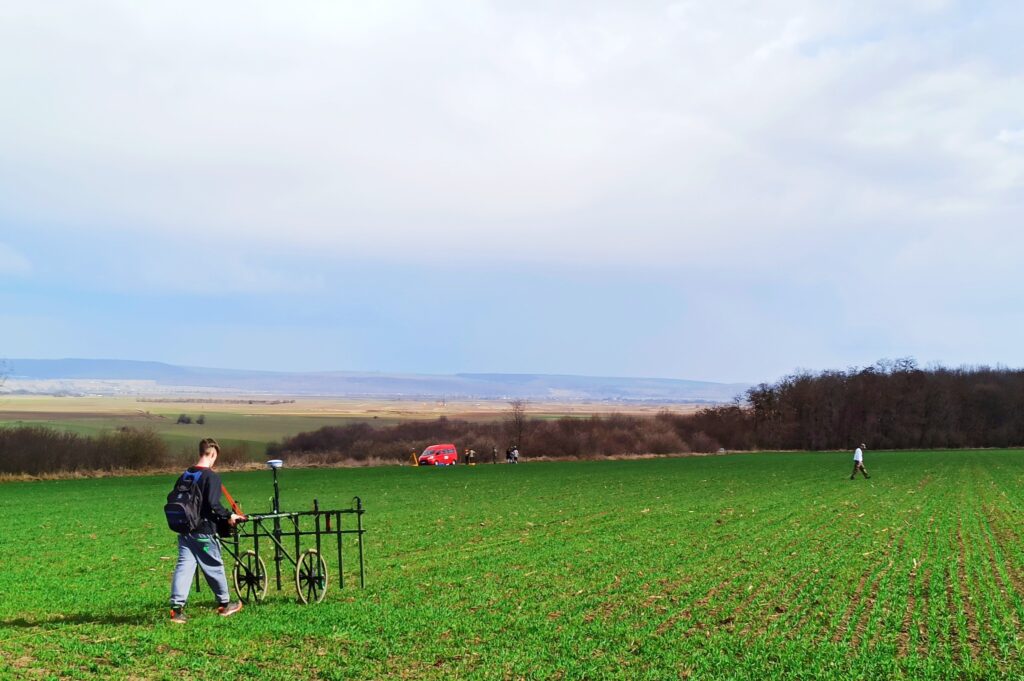
The fortress, obscured by centuries of dense vegetation, was mapped with precision using drones equipped with LiDAR, which emits laser pulses to create high-resolution terrain models.

Archaeologist Vasile Diaconu, who led the study, emphasized the importance of this technology, stating, “Only by using modern technologies will we be able to better understand the complexities of archaeological sites.” The LiDAR scans revealed intricate details of the fortification, including large ditches and earthen mounds designed to enhance its defensive capabilities.
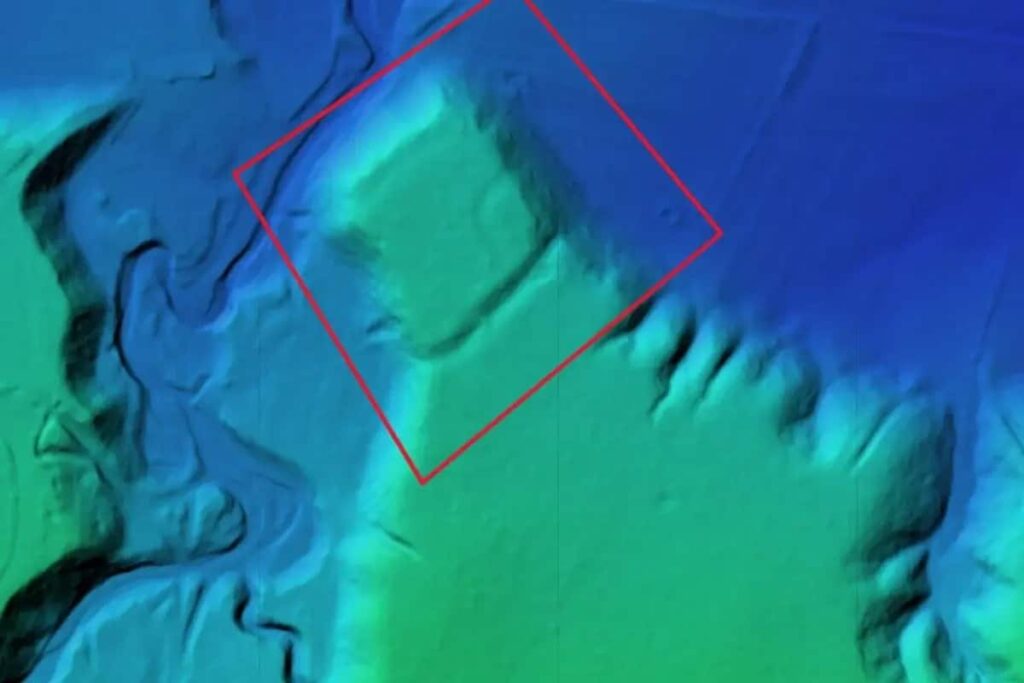
Image Credit: Geocad Services

Strategically located in a high area, the fortress offered excellent visibility of the surrounding landscape, allowing its inhabitants to detect potential threats. The extensive ditches, some stretching several hundred meters, indicate the considerable human effort involved in its construction. Diaconu noted that these findings highlight the sophisticated planning and execution of ancient fortifications.

This project was not only a technological triumph but also a personal collaboration between Diaconu and his former student, Vlad Dulgheriu, the owner of Geocad Services, which facilitated the use of LiDAR technology. Diaconu expressed pride in Dulgheriu’s achievements, stating, “I’m honestly glad my former student has built his own road beautifully.”


📣 Our WhatsApp channel is now LIVE! Stay up-to-date with the latest news and updates, just click here to follow us on WhatsApp and never miss a thing!!


The discovery underscores the transformative role of modern technology in archaeology, enabling researchers to explore and document ancient sites that would otherwise remain hidden. As LiDAR continues to evolve, it promises to unveil more secrets of our past, offering new insights into ancient civilizations.

GEOCAD

Related Articles

7,000-year-old Ritual Complex Found In Jordan Desert

23 February 2022

23 February 2022

The team of French and Jordanian archaeologists has discovered a 7,000-year-old ritualistic complex near what is thought to be the...

Remains of a Roman stylobate found in Montenegro

19 July 2023

19 July 2023

In ancient Rhizon (Risan) in Montenegro, remains of a Roman stylobate (a shared base for multiple columns) were uncovered. In...

300-Year-Old Sacred Mummified Mermaid From Japan’s Mystery Solved

20 February 2023

20 February 2023

A mummified mermaid has been worshiped in Japan for centuries because locals believe it has healing powers. However, upon closer...

Gladiators’ ancient hygiene tools on exhibit in Izmir

22 July 2021

22 July 2021

Turkey’s Izmir Archaeological Museum is hosting a different exhibition this month. A bronze strigil is the museum’s guest this month...

An Elite Nubian Woman’s Burial, Dating Back 4,000 Years, Reveals the Oldest Evidence of Tumpline Use

15 April 2025

15 April 2025

A recent study analyzing 30 ancient skeletons from the Abu Fatima cemetery in Nubia, Sudan, has revealed that women in...

A fossilized Neanderthal skeleton unearthed in France may have belonged to a previously undescribed lineage that split from other Neanderthals

12 September 2024

12 September 2024

The fossilized Neanderthal skeleton, discovered in a cave system in the Rhône Valley of France, represents a previously unidentified lineage...

Ice Age Cave Entrance that Nobody has Entered for 16,000 Years found in Germany

4 August 2023

4 August 2023

Researchers report they have discovered the official entrance to an Ice Age cave near Engen, Germany, that nobody has entered...

2700-year-old Assyrian carvings found near Mashki Gate destroyed by Isis

20 October 2022

20 October 2022

The U.S. and Iraqi archaeologists have unearthed ancient rock carvings believed to be more than 2,700 years old in Iraq’s...

Ming-era two shipwrecks found in South China Sea

23 May 2023

23 May 2023

In the South China Sea, two ancient shipwrecks that date back to the middle of the Ming Dynasty (1368–1644) were...

Archaeologists may have discovered the site where Otto the Great, founder of the Holy Roman Empire, died

5 October 2023

5 October 2023

Archaeologists believe they have found the site where Emperor Otto I (936-973), known as the Great, founder of the Holy...

Network analysis of prehistoric relationships using raw archaeological finds and AI

24 July 2023

24 July 2023

A project of the Cluster of Excellence ROOTS uses archaeological raw material finds for network analyses from the Middle Stone...

A rare treasure with ornaments nearly a thousand years old was discovered in Staraya Ryazan, Russia

18 August 2021

18 August 2021

During expeditions of the Institute of Archeology of the Russian Academy of Sciences, a rare treasure with ornaments of about...

Archaeologists Discovered One of the Earliest Christian Buildings in Bahrain

14 July 2024

14 July 2024

Archaeologists have uncovered one of the earliest known Christian buildings in the Arabian Gulf, located in Samahij, Bahrain, and providing...

Anchorage’s Indigenous History: A 1000-Year-Old Dene Cache Found Near Cook Inlet

24 January 2025

24 January 2025

In June 2024, archaeologists from Joint Base Elmendorf-Richardson (JBER) and Northern Land Use Research Alaska discovered a birch bark-lined cache...

This Roman City May Offer the Strongest Archaeological Support for the New Testament

10 January 2026

10 January 2026

Along the Mediterranean coast of modern Israel lies Caesarea Maritima—a Roman city that stands at the crossroads of imperial power...