
15 November 2025 The Future is the Product of the Past

Outrage in Türkiye: 3,000-Year-Old Unesco Tomb in Phrygian Valley Turned Into Café

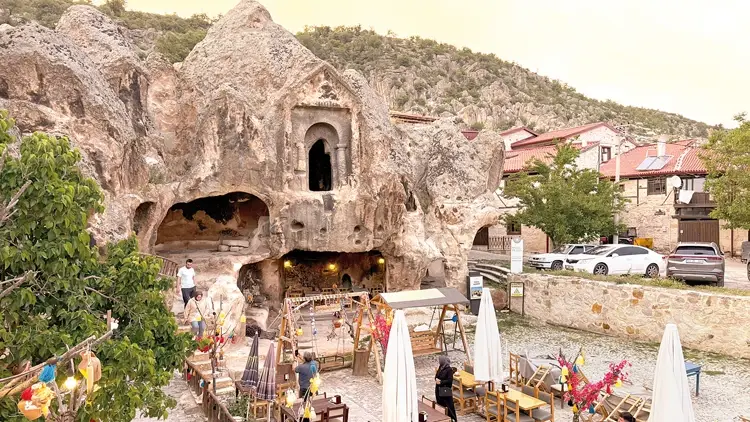
A 3,000-year-old rock-cut tomb located in the historical Phrygian Valley—hailed as Türkiye’s “second Cappadocia” and listed on the UNESCO World Heritage Tentative List—has become the center of a cultural scandal after being illegally converted into a café-restaurant.

The story was first reported by Salim Uzun of Hürriyet, and it has since sparked nationwide outrage among archaeologists, heritage officials, and the general public.

The tomb, situated in the Ayazini village of Afyonkarahisar province, was found to have been transformed by a private business operating under the name Taş Bahçe (“Stone Garden”). Despite being a protected archaeological site, the chamber was furnished with carpets, couches, ornamental decorations, electric wiring, lighting systems, and even a chimney-based heating unit. The modifications were made without any authorization from Türkiye’s Regional Conservation Council.

From Sacred Tomb to Commercial Venue

Photos and videos shared on the café’s social media accounts showcased the once-sacred tomb as a cozy seating area, captioned “The glory of the stone rooms.” Transparent doors were installed for winter use, while swings were placed outside to attract tourists. Officials later discovered that heating systems involving coal and wood stoves had been installed directly inside the burial chambers.

Experts and archaeologists have strongly condemned the move. Prof. Nevzat Çevik, an archaeology professor at Akdeniz University, stated:


📣 Our WhatsApp channel is now LIVE! Stay up-to-date with the latest news and updates, just click here to follow us on WhatsApp and never miss a thing!!


“This isn’t just ignorance—it’s deliberate misuse. You’re not even allowed to place a chair next to a registered historical site without a permit, let alone convert it into a restaurant.”
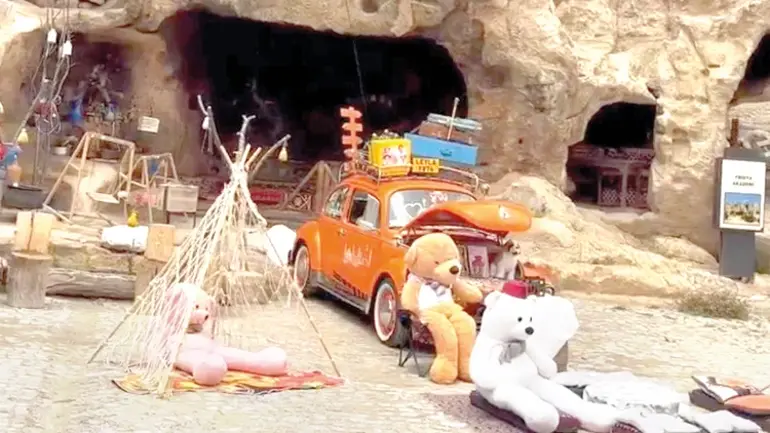
Unauthorized furnishings and electrical installations inside the 3,000-year-old Phrygian rock tomb, now controversially used as a café. Credit: Selim Uzun - Hürriyet
Unauthorized furnishings and electrical installations inside the 3,000-year-old Phrygian rock tomb, now controversially used as a café. Credit: Selim Uzun – Hürriyet

Prof. Havva İşkan, one of Türkiye’s leading archaeologists, also denounced the actions:

“These tombs have deep spiritual value. Drilling into sacred rock to install electricity is appalling. They’ve unfortunately turned a site of cultural heritage into a theme park.”

Ministry Takes Swift Legal Action

Türkiye’s Ministry of Culture and Tourism quickly launched an investigation into the unauthorized modifications. According to Birol İnceciköz, Director General of Cultural Assets and Museums, earlier warnings and inspections had been evaded as the café operators removed evidence before visits.

“Although the land is privately owned, the rock tomb itself is a registered archaeological asset. All infrastructure changes were illegal,” İnceciköz confirmed. “We’ve begun legal proceedings and are actively monitoring the site.”

Local museum officials treated the social media footage as an official complaint, and authorities have since restored the tomb to its original state. Furnishings and electrical installations were removed entirely.
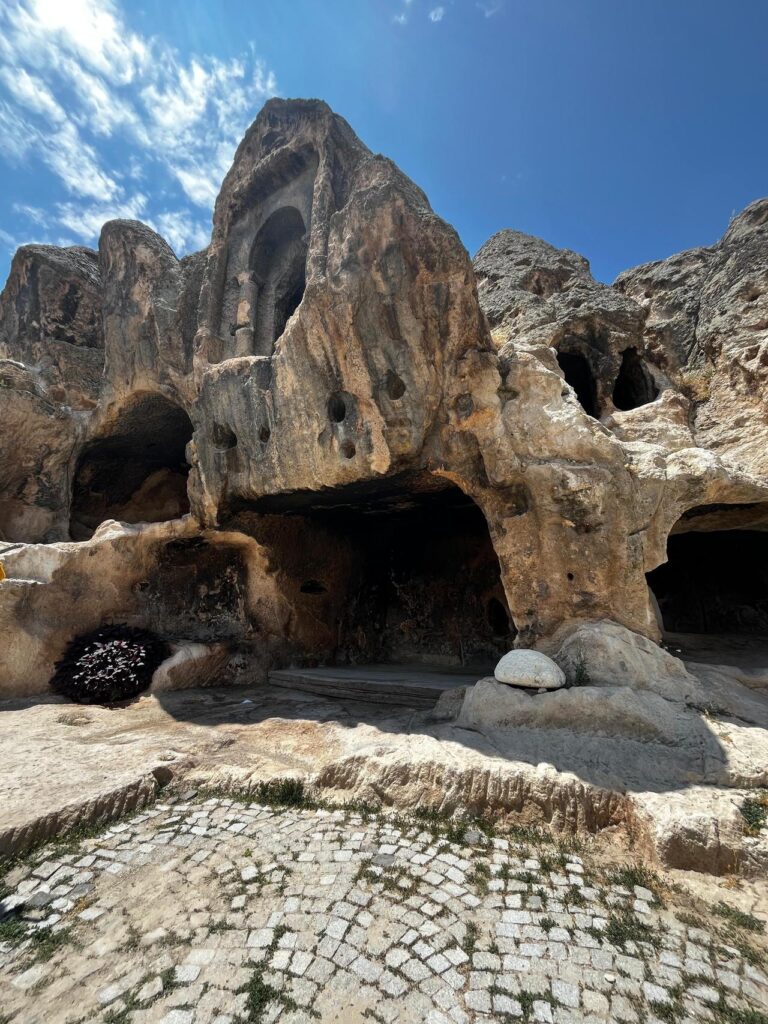
Following public backlash, all café furnishings were removed from the 3,000-year-old tomb in Türkiye’s Phrygian Valley, returning the sacred site to its original form. Credit: Salim Uzun – Hürriyet

Owner Claims Good Intentions

Despite the backlash, the café’s owner Halil Çakmak insisted that there was no ill intent.

“We just wanted to help the local economy and tourism,” he said. Çakmak claimed to have applied for usage permits and noted that a compensation fee (ecrimisil) was paid for some operations—though not specifically for the tomb area.

He added that while their business will continue in the general vicinity, all activities inside the tomb have ceased.

Cover Image Credit: Selim Uzun – Hürriyet

Related Articles

New fibula types discovered at prehistoric Kopilo graves in Bosnia

26 August 2022

26 August 2022

An archaeological dig at Kopilo, a hill settlement founded around 1300 BC about 70 miles west of Sarajevo, has discovered...

New discoveries announced at Sanxingdui Ruins

20 March 2021

20 March 2021

Chinese archaeologists announced on Saturday that some new major discoveries have been made at the legendary Sanxingdui site in southwestern...

Works on Brussels metro line uncovered remains of the second city wall

18 April 2023

18 April 2023

Construction work on the new metro line 3 in Brussels, the Belgian capital, has revealed part of the second rampart...

From Arnhem to Oldenburg: Nazi-Looted Artifacts Found in Oldenburg Museum Colection

30 August 2025

30 August 2025

A remarkable discovery at the Landesmuseum Natur und Mensch in Oldenburg has shed new light on the dark history of...

1,400-year-old coins found in a piggy bank in ancient city of Hadrianopolis

3 January 2024

3 January 2024

Archaeologists unearthed a collection of 10 coins believed to date back nearly 1,400 years, retrieved from what appears to be...

Archaeologists Discover 40,000-Year-Old Evidence of Neanderthal Habitation in Ghamari Cave, Iran

13 March 2025

13 March 2025

Iranian archaeologists have made a groundbreaking discovery in Ghamari Cave (also known as Qamari Cave), located near Khorramabad in Lorestan...

The Mysterious Prehistoric Underwater Structure Beneath Lake Michigan

6 February 2024

6 February 2024

A prehistoric structure reminiscent of England’s iconic Stonehenge has been uncovered in Grand Traverse Bay, an arm of Lake Michigan...

Ancient Egyptian silos and administrative buildings uncovered at Kom Ombo in Egypt’s Aswan

6 March 2022

6 March 2022

The Egyptian-Austrian archaeological mission working in the Temple of Kom Ombo in Egypt’s southern province of Aswan unearthed an administrative...

Ancient Roman Chalice Contained Pig Fat Discovered in a 6th-century Anglo-Saxon Tomb in England

11 December 2024

11 December 2024

During excavations in Scremby, Lincolnshire in 2018, archaeologists uncovered an enameled copper alloy chalice in a 6th-century AD female grave....

Archaeologists reveal 4,000-year-old rock-cut tomb, artifacts in Saqqara

8 January 2024

8 January 2024

A team of Egyptian and Japanese archaeologists has unveiled a rock-cut tomb believed to be more than 4,000 years old...

1500-Year-Old Petroglyphs Found in Central Iran

13 April 2021

13 April 2021

Researchers have discovered 70 petroglyphs carved into the rock that they think is from the Sassanid era. The petroglyphs were...

Dominican mission discovers 1,305-meter Greco-Roman ancient rock-cut tunnel in Alexandria

4 November 2022

4 November 2022

A Greco-Roman tunnel measuring 1,305 meters in length was discovered beneath Tapuziris Magna, an Ancient Egyptian city, by an Egyptian-Dominican...

Remains of a Submerged Roman Harbor Discovered in Slovenia

7 March 2024

7 March 2024

Archaeologists from the Institute of Underwater Archaeology (ZAPA) have uncovered the remains of a submerged Roman harbor, off the coast...

Oldest footprints of pre-humans identified in Crete

11 October 2021

11 October 2021

Six million-year-old fossilized footprints on the island show the human foot had begun to develop. The oldest known footprints of...

Maya Archaeological site for sale on Facebook has stirred controversy in Yucatán and across Mexico

31 March 2023

31 March 2023

Over 249 hectares of land for sale on Facebook Marketplace has sparked controversy in Yucatan and across Mexico. The property,...