
10 November 2025 The Future is the Product of the Past

Roman-era structures unearthed in northwestern Turkiye dam site rescue excavations

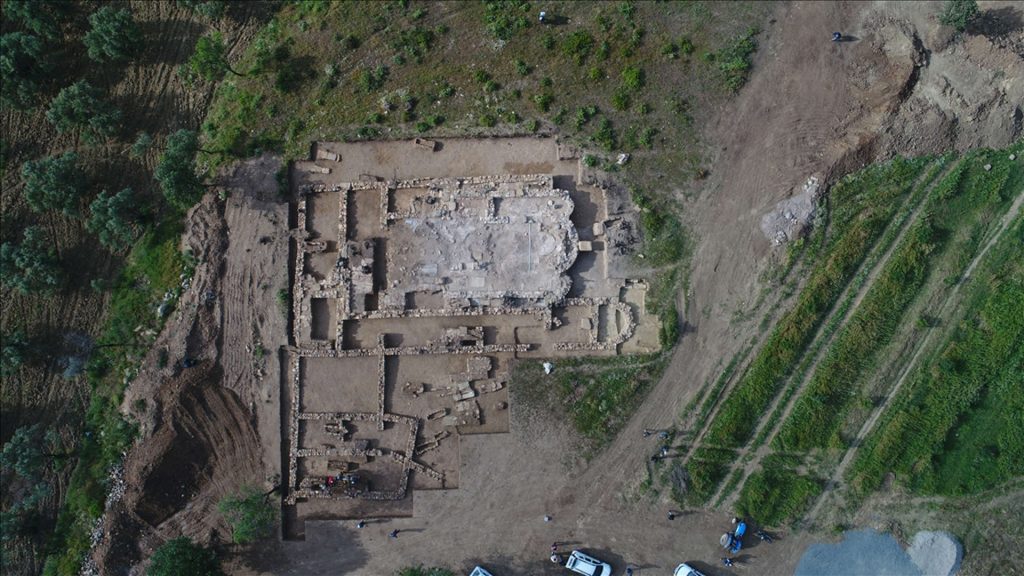
Rescue excavations at the Reşitköy Dam site in the northwestern Turkiye province of Balıkesir have unearthed Roman structures, including a church, and a baptistery.

The area to be flooded by the dam is located 10 kilometers south of the ancient city of Adramytteion, near the Tahtacı Neighborhood.

Adramytteion Ancient City is situated at the Gulf of Edremit in North Aegean, on the shoreline of Ören neighbourhood of the town of Burhaniye of Balıkesir Province.

Adramyttion (modern Edremit) was a flourishing city in Mysia, opposite Lesbos, overlooking the gulf to which it gave its name. Said to have been founded by Adramys, brother of Croesus, and reported to have been the seat of Croesus before his accession, the city was considered Lydian in origin. In the Roman rearrangement of the area, the city became the seat of administration of customs, portorium.
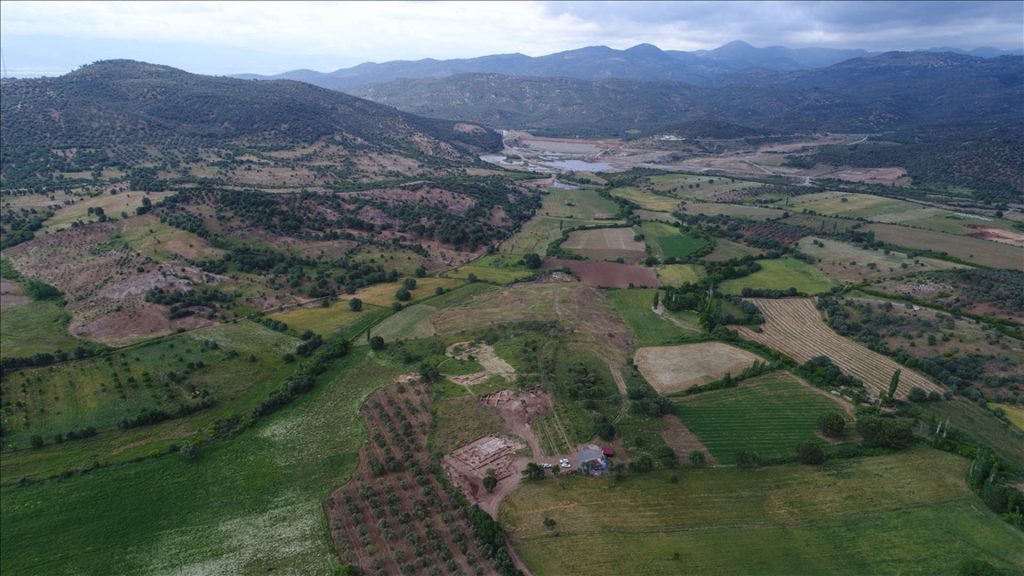
Photo: Adramytteion Research

The rescue excavation, which was started about 9 months ago by the Adramytteion Research committee after the surface research between 2015-2016, reached an ancient settlement dating from the late Roman and early Byzantine periods of the 4th to 7th centuries.


📣 Our WhatsApp channel is now LIVE! Stay up-to-date with the latest news and updates, just click here to follow us on WhatsApp and never miss a thing!!


A nine-month excavation yielded significant finds, including a church, a baptistery, tombs, agricultural storage facilities, a high-capacity wine workshop, and even ceramic kilns. These discoveries offer a fascinating glimpse into the daily life and industries of this historical city.
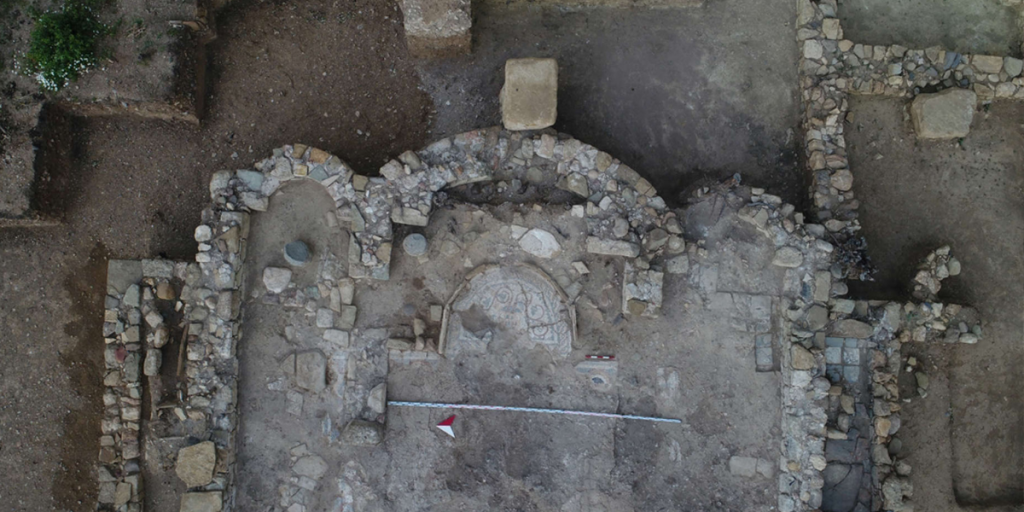
Photo: Adramytteion Research

Mimar Sinan Fine Arts University Archeology Department lecturer Assistant Professor Hüseyin Murat Özgen said that the largest and oldest church known to date in the Edremit Bay region, 15 meters wide and 25 meters high, is located in this region.

Özgen stated that the region where the finds were found is within the sphere of influence of the ancient city of Adramytteion, known as Edremittene, which also gave its name to the Gulf.
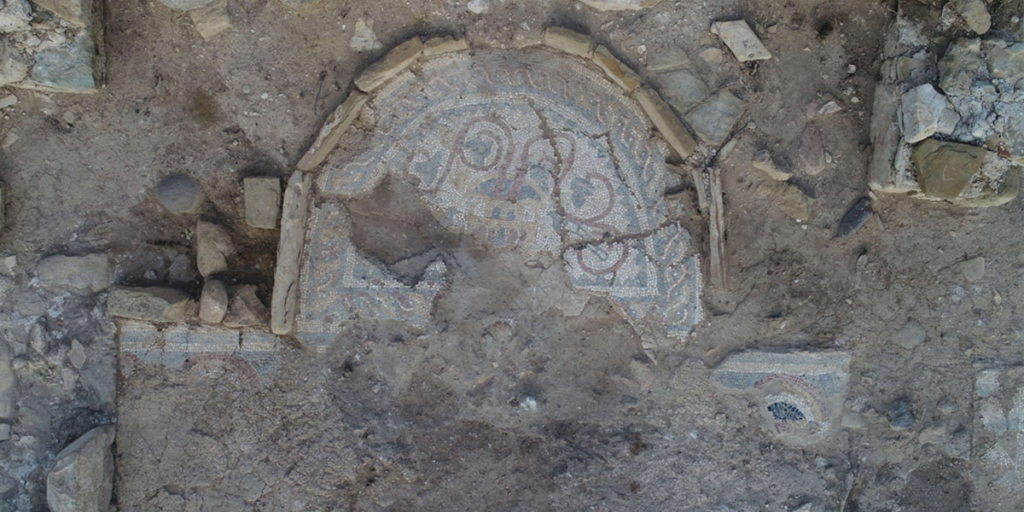
Photo: Adramytteion Research

About sixty burials, many of which were multiple burials, and commercial buildings related to agriculture were discovered surrounding the church with the baptistery.

Özgen said, “The two-phase church with a mosaic floor covers a very large area. The church complex yielded a large number of ritual-related material culture products such as ceremonial crosses and hangers, as well as finds from the surrounding graves that provide us with data about the period. 100 meters further on, commercial spaces begin.”
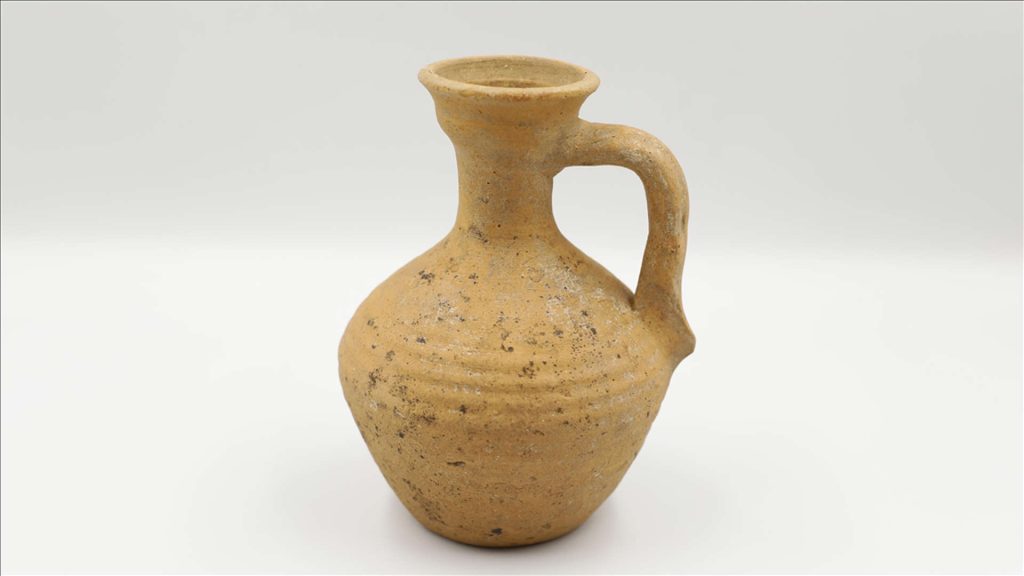
Photo: Adramytteion Research

Özgen said that among the new findings, a wine workshop with a very large capacity was preserved as a cistern with an accumulation basin and a profiled cistern for settling the sediment at the bottom.

During the rescue excavation, archaeologists also found traces of a late Byzantine and early Ottoman area.

Ozgen also noted the discovery of a ceramic workshop and rock-cut tombs on the settlement’s northern side, likely due to the natural deformation of the hill. Interestingly, the excavation team also unearthed an area within the vicinity exhibiting characteristics of both the Late Byzantine and Early Ottoman periods.
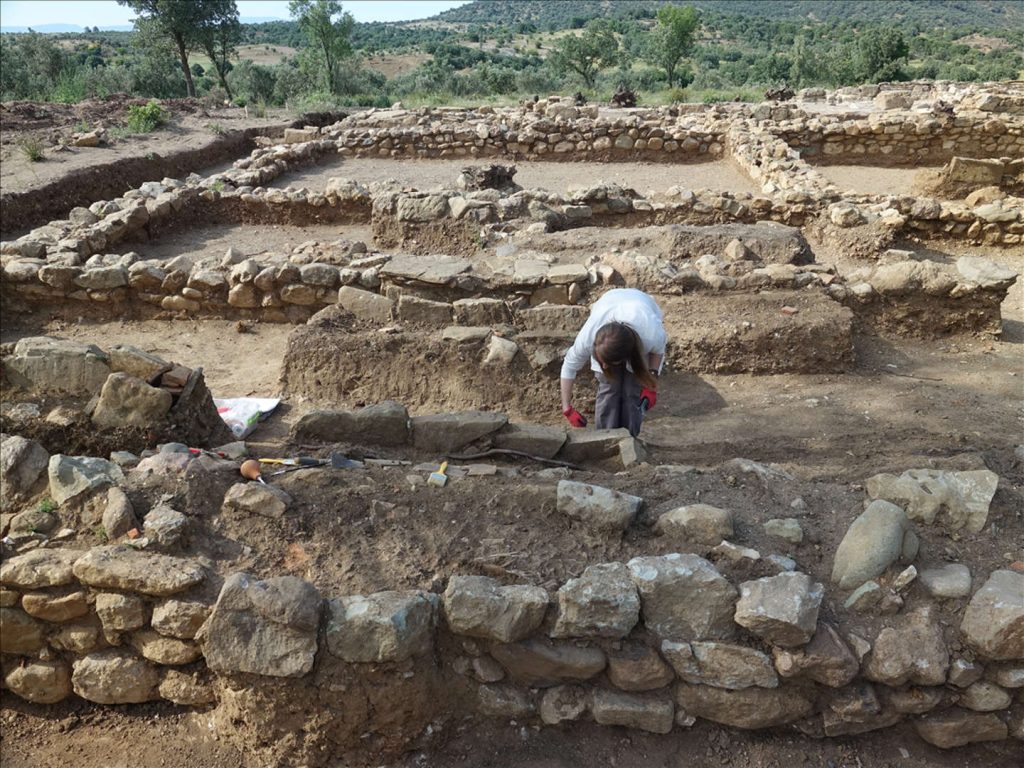
Photo: Adramytteion Research

Stating that Resitkoy was abandoned in the 1970s, but there are remains of an older village settlement and mills recorded in the Ottoman Salnames, Ozgen said, “Therefore, by documenting the concrete findings that convey the cultural process here in a multidimensional way, we are making our best efforts together with the Museum Directorate without losing data within the history of the region.”

The artifacts will be exhibited at the Balıkesir Kuva-yi Milliye Museum.

Cover Photo: Adramytteion Research/AA

Related Articles

Monumental Roman complex discovered in France

19 March 2023

19 March 2023

In the city of Reims in northeastern France, archaeologists have discovered an ancient Roman-era monumental complex dating from the 2nd...

A 3300-year-old seal and a dagger/sword reminiscent of Mycenaean swords were discovered in the Heart of western Anatolia

18 July 2022

18 July 2022

A unique 3300-year-old seal and a sword/dagger reminiscent of Mycenaean swords were unearthed during the excavations of Tavşanlı Höyük (Tavşanlı...

As Thin as Modern Tools: World’s Oldest Steel Acupuncture Needles Discovered in China

6 July 2025

6 July 2025

In a discovery that reshapes the history of traditional Chinese medicine, archaeologists have unearthed what experts now confirm to be...

Synchrotron Technique Reveals Mysterious Portrait Underneath Renaissance Painting

16 April 2023

16 April 2023

Conservators and curators from the Art Gallery of New South Wales used the Australian Synchrotron’s advanced imaging technique to learn...

Archaeologists discovered a mausoleum dating back to Golden Horde era in Kazakhstan

8 July 2023

8 July 2023

Remains of a mausoleum dating back to the Golden Horde in the 15th century were discovered on the territory of...

Archaeologists unearth the remains of three dozen headless people at a stone age settlement in Vráble, Slovakia

25 September 2022

25 September 2022

Archaeologists have unearthed a mass grave containing the remains of about three dozen headless bodies of people at a settlement...

In the Black Sea, there is a “Ship Graveyard” with 2,500 years of wrecked ships

15 February 2022

15 February 2022

The Black Sea is the inland sea lying between Europe and Asia. Blacksea is located in Eurasia, surrounded by Europe,...

2000-year-old ancient Roman Road, described as the most important in Scottish history, has been discovered

3 November 2023

3 November 2023

A 2000-year-old ancient Roman road was unearthed in Old Inn Cottage’s garden near Stirling, Scotland. The site is located a...

Unique Iron & Viking-Age Mortuary Houses Found in Norway

28 August 2024

28 August 2024

While building a road in the village of Vinjeøra in central Norway, three ancient mortuary houses dating back to the...

Archaeologists unearth 600,000-year-old evidence of Britain’s early inhabitants

22 June 2022

22 June 2022

New finds have indicated that some of Britain’s earliest people lived in the Canterbury suburbs. According to the research, led...

Excavations at the site in the coastal city of São Luís, Brazil uncovered thousands of artifacts left by ancient peoples up to 9,000 years ago

4 February 2024

4 February 2024

Archaeologists unearthed 43 human skeletons and more than 100,000 artifacts at an excavation site in the coastal city of São...

1700-Year-Old ‘Cursed’ Sarcophagus on Display in Amasya Museum

30 March 2021

30 March 2021

Expressions made of Greek letters were encountered in the Roman sarcophagus found in the rescue excavation carried out by the...

Archaeologists made a remarkable discovery in Kosovo: Evidence that the great Byzantine Emperor was of Dardanian origin

19 August 2023

19 August 2023

A mixed team of international and local experts led by Professor Christophe J. Goddard has unearthed a monumental inscription of...

Archaeologists discovered the earliest Iron Age house in Athens and Attica

26 May 2023

26 May 2023

A research team from the University of Göttingen discovered the earliest  Iron Age house in Athens and Attica. Archaeologists from...

Bone tools for bleeding cows discovered in a 7,000-year-old cemetery in Sudan

24 March 2023

24 March 2023

During excavations in the Letti basin in northern Sudan, archaeologists have unearthed 7,000-year-old bone tools used to bleed cows. Explorers...