
10 November 2025 The Future is the Product of the Past

Europe’s Oldest Megalithic Alignments Dated with Unprecedented Precision

New research reveals that the Carnac alignments in Brittany may be Europe’s oldest megalithic monuments, pushing back the timeline of Neolithic monument building by centuries.

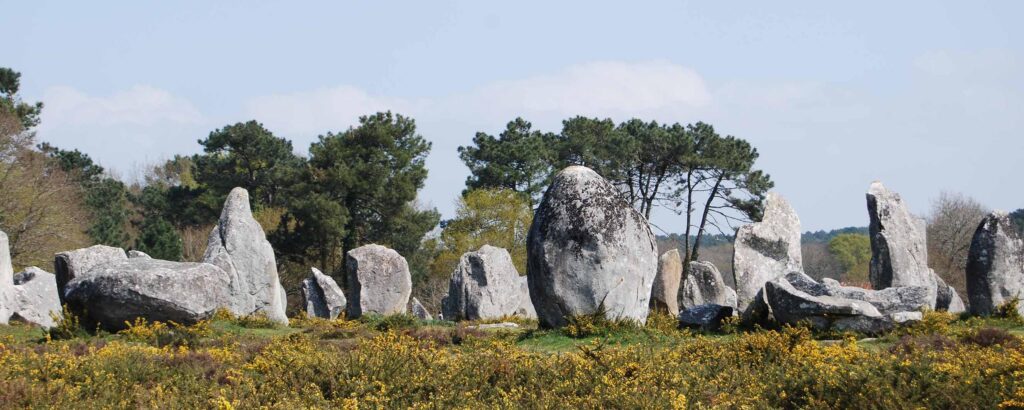
The mysterious stone alignments in Carnac, Brittany, long shrouded in speculation and myth, have now revealed their ancient origins. Thanks to a groundbreaking Franco–Swedish collaboration under the NEOSEA project, archaeologists have precisely dated parts of the Carnac complex, placing them among the earliest megalithic monuments in Europe, alongside icons like Stonehenge, Menga, and the Megalithic Temples of Malta.

The findings, published as open access in the prestigious journal Antiquity, mark a significant leap forward in our understanding of Neolithic Europe, reshaping the timeline of megalithic construction and shedding light on early societal practices.

Dating the Megaliths: 4600–4300 BCE

Led by Dr. Bettina Schulz Paulsson of the University of Gothenburg, the NEOSEA research team uncovered and analyzed a previously unstudied section of the Carnac complex—Le Plasker in Plouharnel. Excavated by Archeodunum, the site yielded nearly 50 radiocarbon dates, analyzed using Bayesian statistical modeling.

“This allows us to reconstruct the site’s history with unprecedented chronological precision,” says Dr. Schulz Paulsson.


📣 Our WhatsApp channel is now LIVE! Stay up-to-date with the latest news and updates, just click here to follow us on WhatsApp and never miss a thing!!


These results date key stone alignments to between 4600 and 4300 BCE, predating many other European megaliths and establishing the Bay of Morbihan as the cradle of megalithic culture in Europe.

Bettina Schulz Paulsson at the alignments in Erdeven, Bretagne.
Credit: Marcus Winterbauer
Bettina Schulz Paulsson at the alignments in Erdeven, Bretagne. Credit: Marcus Winterbauer

A Monumental Discovery Beneath Modern Ground

The Le Plasker excavation—carried out before the development of a 7,000 m² business park—unveiled more than just stones. Beneath layers of sediment, archaeologists discovered:

Foundation pits of removed megaliths, aligned in rows

Fire-related features, such as cooking or hearth pits, possibly used in rituals

A monumental tomb built around 4700 BCE, directly over the remains of a Mesolithic hunter-gatherer hut

The proximity of domestic and ceremonial features suggests a complex social fabric, where early Neolithic communities commemorated their dead and possibly celebrated rites with fire, food, and feasting.

Why This Matters: Beyond Dating

The acidic soils of the Morbihan region have long prevented the preservation of bones and other organic material, making precise dating a major challenge. But by combining systematic sampling, charcoal analysis, and advanced Bayesian modeling, researchers overcame this limitation.

“With a large enough dataset, even in poor preservation conditions, we can achieve extraordinary accuracy,” Dr. Schulz Paulsson explains.

The study redefines not just the age of Carnac’s monuments, but also our broader understanding of Neolithic engineering, ritual, and land use.
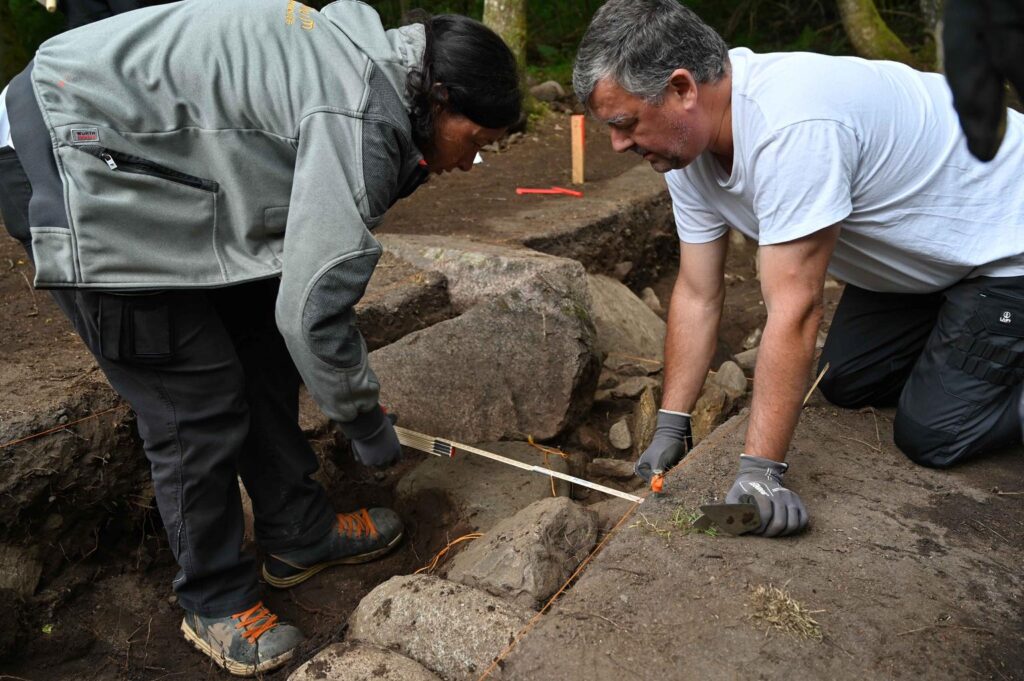
Audrey Blanchard (Archeodonum) and Jean Noel Guyodo, University of Nantes during the excavation of Le Plasker. Credit: Bettina Schulz Paulsson

Open Questions: The Purpose of the Alignments

Despite the chronological clarity, the function of the Carnac alignments remains an enigma. Theories range from territorial markers and ceremonial pathways to astronomical observatories or feasting grounds.

Ongoing analysis of sediment layers, stone fragments, and hearth residues may eventually reveal the rituals and beliefs of these early builders.

Europe’s Oldest Megalithic Landscape Comes Into Focus

With over 3,000 stones once stretching across 10 kilometers, Carnac remains one of Europe’s most astonishing prehistoric landscapes. Thanks to modern science and international collaboration, we now know that Carnac’s builders were among the first in Europe to reshape the landscape with monumental stone architecture.

As further excavations continue, the stones of Carnac may finally begin to speak.

Blanchard, A., Guyodo, J.-N., Paulsson, B. S., & Montassier, F. (2025). Le Plasker in Plouharnel (fifth millennium cal BC): a newly discovered section of the megalithic complex of Carnac. Antiquity, 1–20. doi:10.15184/aqy.2025.10123

University of Gothenburg

Cover Image Credit: The Carnac stones are an exceptionally dense collection of megalithic sites near the south coast of Brittany in northwestern France. Credit: Bettina Schulz Paulsson

Related Articles

3,500-Year-Old Human-Bodied, Eagle-Headed Seal Discovered in Central Türkiye

9 September 2025

9 September 2025

Archaeological excavations at Karahöyük in central Türkiye have led to a remarkable discovery: a 3,500-year-old human-headed, eagle-bodied seal. According to...

New discoveries at the Sanxingdui Ruins demonstrate ancient China’s creative ability

9 September 2021

9 September 2021

Chinese archaeologists revealed fresh important finds at the Sanxingdui Ruins site in southwest China’s Sichuan Province on Thursday, from pits...

Archaeologists Discovered 1,500-Year-Old Maya Palace in Mexico

25 September 2023

25 September 2023

Mexican National Institute of Anthropology and History (INAH) archaeologists have discovered a palace at an ancient Maya city in southeastern...

According to researchers, the bones discovered underneath St. Peter’s Basilica may not be his

5 June 2021

5 June 2021

Three Italian researchers have voiced doubts about whether St. Peter’s bones are buried underneath the Rome basilica that bears his...

Evidence of the oldest hunter-gatherer basketry in southern Europe discovered in Spanish Cave

29 September 2023

29 September 2023

A team of scientists has discovered and analyzed the first direct evidence of basketry among hunter-gatherer societies and early farmers...

Rare Bronze Celtic Warrior Figurine Discovered in Germany

15 August 2025

15 August 2025

Archaeologists in Manching, Bavaria, have made a groundbreaking discovery that offers unprecedented insight into the daily life, craftsmanship, and religious...

Archaeologists Unearth Rare 9,000-Year-Old Stone Age Hammer in Norway

4 October 2025

4 October 2025

Archaeologists in Norway have uncovered a rare and fascinating piece of history: a 9,000-year-old hammer dating back to the Stone...

A 4000-Year-Old Trading Port was Discovered in Istanbul

4 May 2021

4 May 2021

Archaeological excavations carried out on a peninsula in the middle of Istanbul Küçükçekmece Lake unearthed a very important 4,000-year-old trade...

Remains of a Submerged Roman Harbor Discovered in Slovenia

7 March 2024

7 March 2024

Archaeologists from the Institute of Underwater Archaeology (ZAPA) have uncovered the remains of a submerged Roman harbor, off the coast...

Ancient Tamil Nadu’s Metalworking Legacy Traced Back to 3300 BCE

7 February 2025

7 February 2025

Recent archaeological research has uncovered compelling evidence that Tamil Nadu’s metalworking traditions date back to at least 3300 BCE, highlighting...

A farmer picking up ‘trash’ in field in Norway discovered a rare Viking Sword

1 June 2024

1 June 2024

A farmer and his son found a rare Viking sword on his family farm in Suldal, Norway. Archaeologists say this...

Early Imperial cemetery in Nîmes, in the south of France

4 October 2022

4 October 2022

Inrap archaeologists excavating at Nîmes in southern France have uncovered a cemetery dating to the first to second centuries AD...

Evidence of a 1500-year-old Byzantine church found on the beach of Ashdod, Israel

22 February 2022

22 February 2022

Recent rain in Israel has unearthed the remains of a marble pillar dating to around 1,500 years ago on a...

Archaeologists Found an Egyptian Temple Slotted into a Cliff Face, Probably Dedicated to a Lion-Headed Goddess Repit

15 December 2024

15 December 2024

Archaeologists have uncovered a hidden gateway leading to a 2,100-year-old temple built into a cliff face at the ancient city...

Archaeologists find an Anglo-Saxon church at Stoke Mandeville excavation site

13 September 2021

13 September 2021

Archaeologists working on the HS2 project found the remains of an Anglo-Saxon church during their excavations at the former St...