
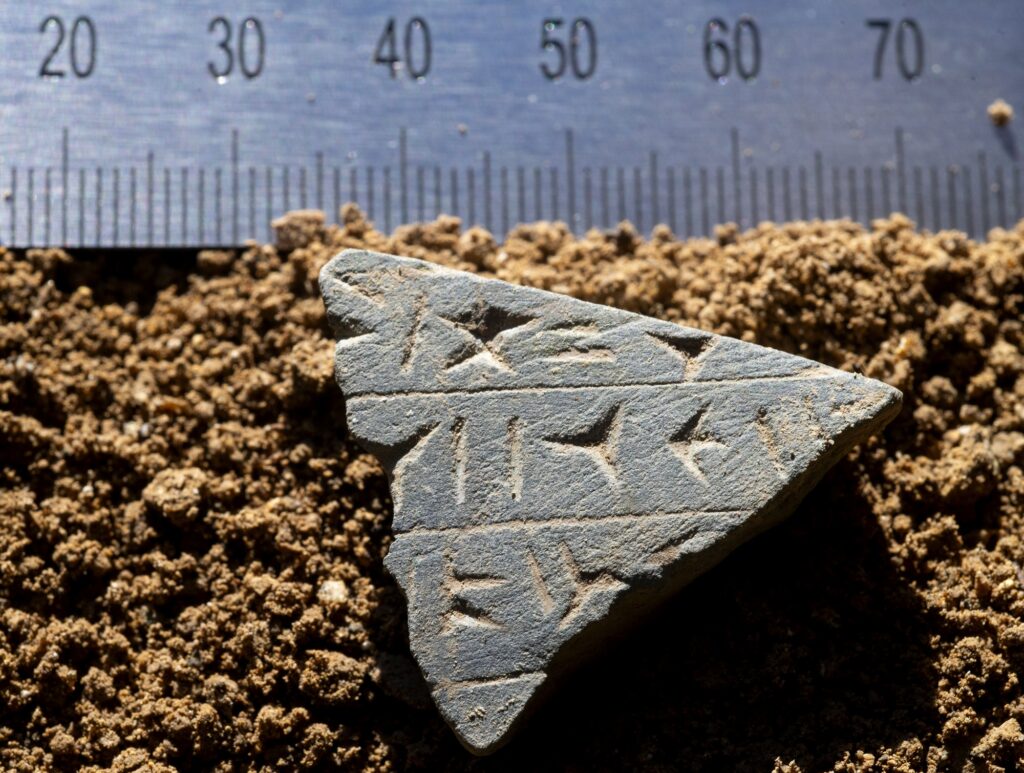
An officially documented discovery in Kateřinská Cave reveals a stone fragment with Hittite-style carvings and cuneiform script—an object seemingly out of place in Central Europe, and one that forces archaeologists to confront the possibility of an extraordinary ancient journey, or an ingenious historical hoax.
Deep within the Moravian Karst of the Czech Republic, Kateřinská Cave has long been known as a place of prehistoric ritual, artistic expression, and human presence stretching back tens of thousands of years. Recent archaeological and epigraphic discoveries, officially announced by the Czech Caves Administration (Správa jeskyní ČR), have once again placed the cave at the center of scientific attention—this time for a find that seems profoundly out of place.
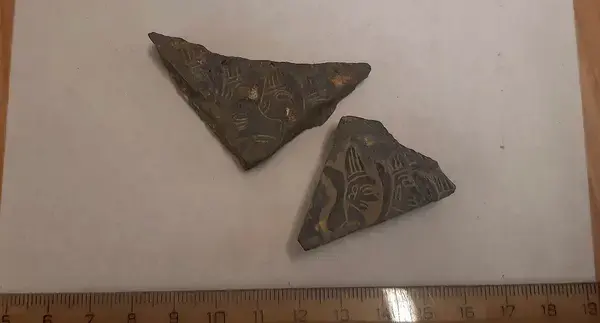
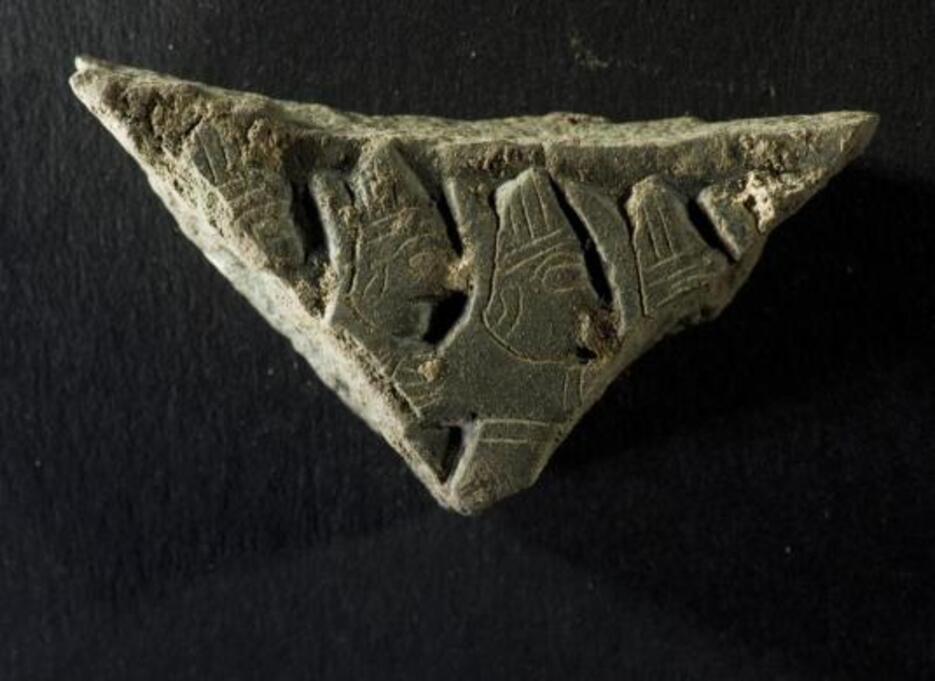
During renewed examinations of sediment excavated in previous years, researchers uncovered an additional fragment of a stone tablet bearing cuneiform script, one of the world’s oldest known writing systems. The discovery follows earlier finds of slate fragments carved with figures resembling a procession of Hittite deities, imagery strikingly similar to reliefs found at the Hittite sanctuary of Yazılıkaya in present-day Türkiye.
The implications are puzzling—and potentially unsettling.
A Cave of Deep Time
Systematic archaeological and epigraphic research in Kateřinská Cave has been ongoing since 2016. To date, scientists have documented 15 prehistoric charcoal drawings on the cave walls, among the oldest cave art known in the Czech Republic. Excavations have also revealed evidence of both prehistoric and medieval occupation, including the first documented medieval counterfeiters’ workshop in the Moravian Karst.
Among the most valuable confirmed finds are shell ornaments crafted from the Danube river snail. Radiocarbon dating conducted by the Nuclear Physics Institute of the Czech Academy of Sciences has established their age at more than 8,000 years, firmly anchoring them in the Neolithic period.
These discoveries align well with what archaeologists expect from a sacred cave used repeatedly across millennia.
The stone tablet fragments, however, do not.
An Object from the Wrong World
The newly discovered fragment, identified during an October re-evaluation of previously sifted material, bears clear signs of cuneiform writing. According to Petr Zajíček of the Czech Caves Administration, the fragment matches earlier slate pieces found two years ago in both material thickness and composition, strongly suggesting they were once part of a single object.
Laboratory analysis of the earlier fragments suggested a geological composition consistent with central Anatolia, the region associated with the Hittite Empire around 1500 BCE. This indicates a possible connection, though the exact origin remains uncertain.
This creates a serious chronological and cultural contradiction.
At the time when Hittite civilization flourished in the Near East, Central Europe remained largely prehistoric, with no known writing systems and vastly different religious traditions. Direct contact between these worlds is, based on current evidence, extremely unlikely.
Discovery or Deception?
Researchers openly acknowledge the troubling nature of the find. Two main explanations remain on the table.
The first—and most extraordinary—is that the tablet somehow reached the region in antiquity, perhaps carried through unknown long-distance networks or deposited as part of a ritual whose meaning is now lost. If proven, such a scenario would challenge established models of cultural interaction in prehistoric Europe.
The second explanation is more mundane, but no less intriguing: a historical hoax.
Kateřinská Cave has been explored for over 150 years. It is theoretically possible that an artifact brought from the Ottoman Empire or Anatolia during the 19th century was intentionally—or accidentally—introduced into the cave sediments. Whether as a scholarly prank, an experiment, or a deliberate forgery, such an act would still represent a fascinating episode in the history of archaeology itself.
“At this stage, we cannot say which explanation is correct,” Zajíček has stated. “The object is extremely difficult to interpret.”
Why the Mystery Still Matters
Importantly, scientists emphasize that the uncertainty surrounding the tablet does not diminish the significance of Kateřinská Cave. On the contrary, the site’s confirmed prehistoric art, ornaments, and long-term ritual use remain among the most important discoveries in Central Europe.
The cave, along with the Punkva Caves and the Macochá Abyss, has been proposed for inclusion on the UNESCO World Heritage List, a testament to its unquestionable archaeological value.
Whether the cuneiform tablet proves to be a sensational anomaly, a misunderstood intrusion, or a brilliant historical joke, it highlights an essential truth of archaeology: not every discovery provides answers. Some exist to remind us how much we still do not know.
In the depths of Kateřinská Cave, one small piece of carved stone continues to blur the line between history, mystery, and human imagination.
Správa jeskyní České republiky
Cover Image Credit: Petr Zajíček – Správa Jeskyní CR
