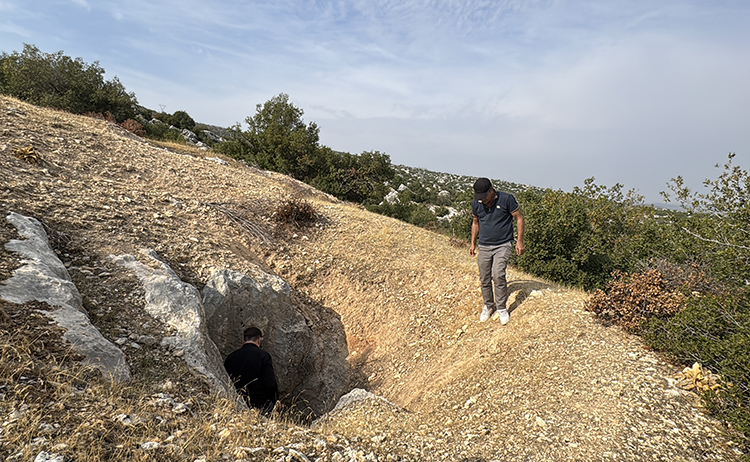
Archaeologists in Türkiye have uncovered a remarkable domed tomb room in the rural area of Besni, a historic district of Adıyaman. Initial evaluations suggest that the structure dates back to the 2nd century AD, making it approximately 1,800 years old. The discovery was made by teams from the Adıyaman Museum Directorate following a local report about architectural remains near the village of Yukarı Söğütlü.
During the on-site examination, researchers identified what appears to be part of a multi-chambered funerary complex carved into a rocky hillside. One of the most striking features of the site is a carefully constructed domed tomb room, an architectural element that highlights both technical skill and social status in the ancient period. A formal application will be submitted to the Şanlıurfa Regional Council for the Conservation of Cultural Heritage to register and protect the structure.
A Rare Architectural Example for Adıyaman
Speaking about the discovery, Adıyaman Museum Director Mehmet Alkan noted that the tomb complex appears to contain at least five separate rooms, with the newly documented chamber being the most architecturally impressive. The entrance to the chamber features arched burial niches on both sides, connected by slender columns, while the upper sections include finely crafted cornices that indicate a high level of workmanship.
According to Alkan, such details suggest that the tomb likely belonged to a prominent or high-status family from the Roman period. He emphasized that the design and construction style make it a rare example for the region, representing a type of monument not previously documented in Adıyaman.
Inside the chamber, researchers identified decorative reliefs, some of which have been damaged over time, while others have survived with clear details. One of the most notable elements is a series of wild goat head motifs positioned within one of the arched burial spaces, accompanied by garland-like decorative bands and shell-shaped ornaments that symbolized eternity and the afterlife in ancient belief systems.
📣 Our WhatsApp channel is now LIVE! Stay up-to-date with the latest news and updates, just click here to follow us on WhatsApp and never miss a thing!!

What Is a Domed Tomb?
A domed tomb—known in Turkish as kubbeli mezar—is a type of funerary structure characterized by a rounded or vaulted roof constructed over the burial chamber. These architectural forms were especially common in regions influenced by Roman, Byzantine, and later Islamic traditions. Domes symbolized the heavens, spiritual ascension, and the continuity of life after death.
In antiquity, domed tombs were often associated with elite families, civic leaders, or individuals of elevated social or religious status. The design required advanced engineering knowledge, which further underscores the cultural and architectural significance of the newly discovered structure in Besni.
Adıyaman and Besni: A Region Layered With History
Adıyaman is one of southeastern Türkiye’s most historically rich provinces, home to ancient cities, royal tombs, and monumental temples spanning Hellenistic, Roman, and early Christian eras. The region is best known for Mount Nemrut, a UNESCO World Heritage Site featuring colossal stone statues erected by the Kingdom of Commagene in the 1st century BC.
The Besni district, where the tomb was found, has long served as a cultural crossroads between Mesopotamia and Anatolia. Throughout history, it hosted various civilizations, including the Hittites, Persians, Romans, Byzantines, and Seljuks. Archaeological finds from the area reflect this layered past, revealing traces of trade networks, agricultural production, and sophisticated funerary traditions that continued across centuries.
Discoveries such as the domed tomb room not only expand scientific understanding of the region’s ancient communities but also strengthen Besni’s emerging identity as an important archaeological landscape.
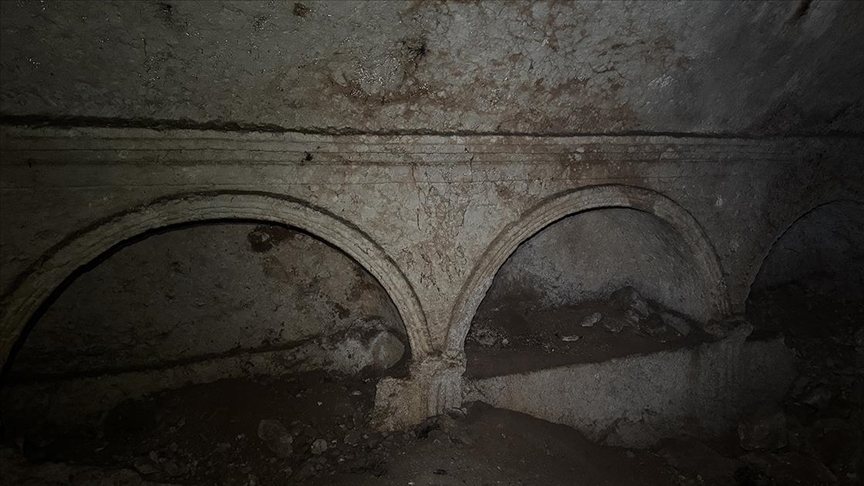
Initial evaluations suggest that the structure dates back to the 2nd century AD, making it approximately 1,800 years old. Credit: Ali Gazel/AA
The Symbolism of the Goat Motif
Among the most intriguing details inside the tomb is the presence of wild goat head reliefs. In ancient Anatolian and Mediterranean cultures, the goat carried powerful symbolic meanings. It was often associated with vitality, abundance, resilience, and nature’s regenerative cycle. In funerary contexts, goat motifs could signify protection of the deceased, rebirth in the spiritual realm, or a connection to sacred landscapes and mountain environments.
The reliefs in the Besni tomb appear to be connected by garland motifs, forming a decorative sequence that may have held ritual or symbolic meaning for the family interred there. Above the reliefs, shell-shaped ornaments—commonly interpreted as symbols of eternity—reinforce the idea that the tomb was designed with spiritual intention as well as aesthetic care.
A Significant Contribution to Regional Archaeology
The discovery of the 1,800-year-old domed tomb room represents a valuable addition to the cultural heritage of Adıyaman and to the broader archaeological record of southeastern Türkiye. Once the registration process is completed, conservation specialists are expected to conduct further research, documentation, and protective measures to preserve the monument for future generations.
As more studies are carried out, the Besni tomb may offer new insights into burial customs, artistic traditions, and daily life in the Roman-era communities that once flourished in this historically rich region.
Cover Image Credit: Ali Gazel/AA