
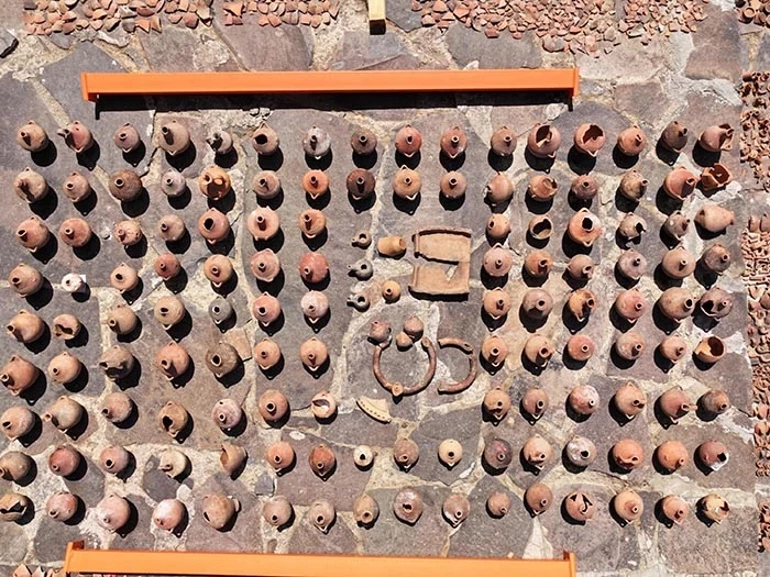
A remarkable archaeological discovery has emerged from western Türkiye as excavations at the Demeter-Kore Temple in Aigai Ancient City revealed approximately 3,000 small terracotta water vessels known as hydriskoi. The find, announced following the completion of the 2025 excavation season, is already being described by researchers as one of the most striking ritual assemblages uncovered in the region in recent years.
Located within the borders of Köseler Neighborhood in Yunusemre, Manisa, Aigai was one of the twelve Aeolian cities established in western Anatolia. Perched on the rugged slopes of Yuntdağı, the ancient city is known for its dramatic landscape, well-preserved agora, bouleuterion (council house), and extensive fortification walls. Despite its remote and rocky terrain, Aigai has steadily gained attention over the past decade as systematic excavations continue to reveal its religious, civic, and social life.
First Comprehensive Excavation of the Temple
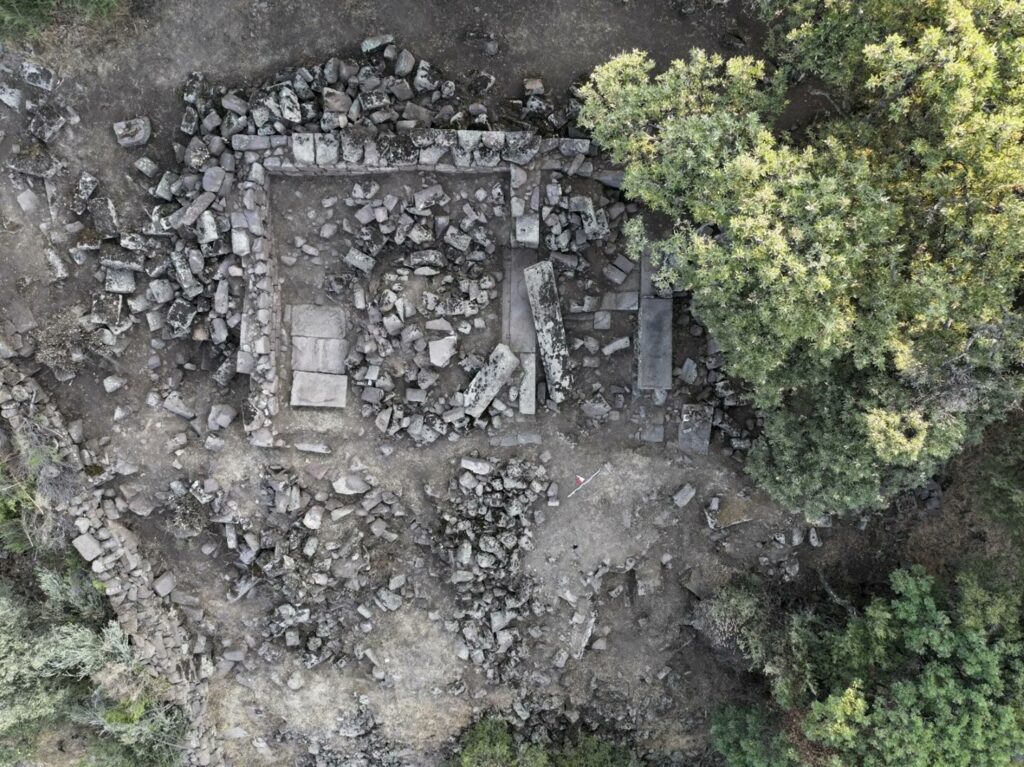
Although the Demeter-Kore Temple was first identified in the 1880s, it had never undergone detailed archaeological investigation until 2025. Excavations were conducted between April and late autumn under the direction of Prof. Dr. Yusuf Sezgin as part of the Turkish Ministry of Culture and Tourism’s “Heritage for the Future” initiative.
This year marked the first comprehensive excavation of the sanctuary dedicated to Demeter, the goddess of agriculture and fertility, and her daughter Persephone, also known as Kore (“the Maiden”). What archaeologists uncovered exceeded expectations: a concentrated deposit area containing thousands of small ceramic water vessels carefully accumulated over time.
What Are Hydriskoi?
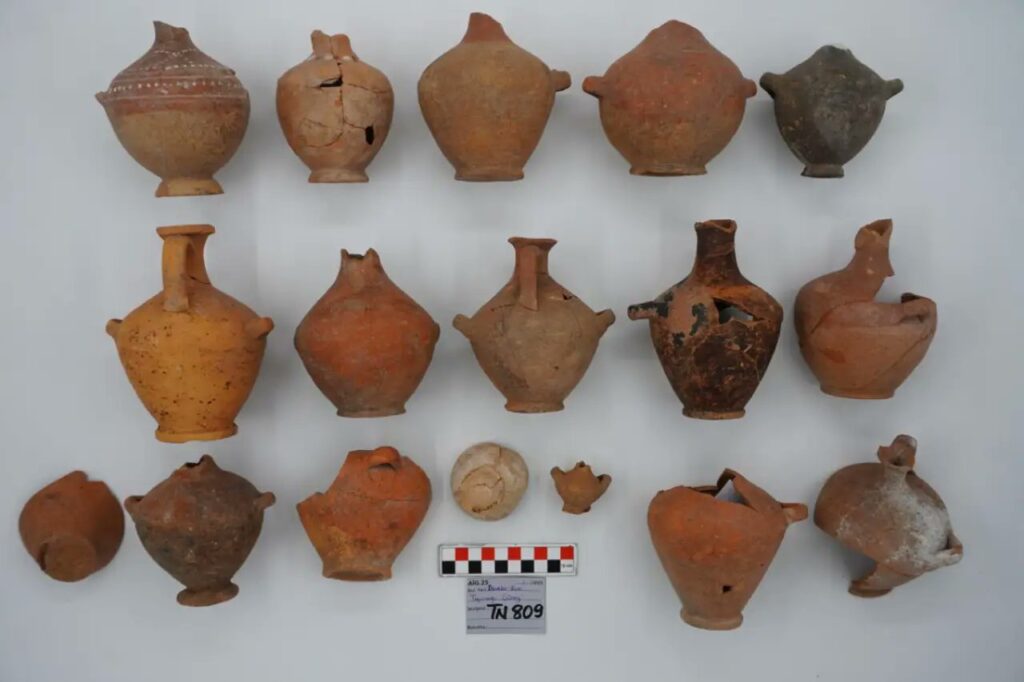
The term hydriskos refers to a small water container, typically made of fired clay. Unlike larger hydriae used for household water transport, hydriskoi were miniature vessels, often produced specifically for ritual purposes. The examples discovered at Aigai were likely used in sacred offerings and purification ceremonies.
Archaeologists believe worshippers presented clean water to Demeter and Kore during specific seasonal festivals. In agrarian societies like ancient Aigai, water symbolized renewal, fertility, and life—concepts closely tied to Demeter’s divine role. After ritual use, the vessels were considered sacred and deposited in a designated accumulation area within the sanctuary rather than discarded.
The 3,000 hydriskoi recovered so far represent only part of the deposit, according to excavation officials. Many of the vessels were found fragmented but have since been carefully reassembled and placed under protection in the excavation storage facilities. Their uniform size and fabric suggest organized production, possibly by local workshops responding to sustained cult demand.
The Cult of Demeter and Persephone in Anatolia
The worship of Demeter was central to agricultural communities across the Greek world, and Aigai’s geography makes the discovery particularly meaningful. Situated in a harsh and rocky landscape, agricultural sustainability would have been a critical concern for its inhabitants. Devotion to Demeter symbolized hope for fertile soil and successful harvests.
Her daughter Persephone occupies an equally important place in Greek mythology. According to myth, Persephone was abducted by Hades and taken to the underworld, an event that plunged Demeter into grief and caused the earth to become barren. Persephone’s eventual cyclical return to the surface each year explained the changing seasons—her ascent marking spring and agricultural renewal.
Sanctuaries dedicated to the mother-daughter pair often functioned as important ritual centers connected to seasonal transitions, fertility rites, and possibly women-centered religious practices. The concentration of hydriskoi at Aigai may point to recurring communal ceremonies tied to agricultural calendars.
A Growing Archaeological Destination
The discovery has also drawn increased public interest to Aigai. Although there is no formal ticketing system in place, excavation records indicate that between 25,000 and 30,000 people visited the site during 2025. This marks a dramatic increase compared to approximately 1,500 annual visitors recorded fifteen years ago.
Despite limited public transportation to the mountainous site, Aigai has become particularly popular as a winter hiking destination. Visitors from nearby cities such as Foça and İzmir frequently describe it as a favored seasonal route, noting that cooler months make exploration of the exposed terrain more comfortable.
Looking Ahead to 2026
Excavation authorities believe the hydriskoi uncovered in 2025 represent only a portion of the ritual deposit. Work is expected to continue in the same area during the 2026 season, with archaeologists hopeful that further findings will clarify the full scale and duration of cult activity at the sanctuary.
Beyond their numerical significance, the vessels provide rare insight into everyday religious practices rather than monumental architecture alone. They reflect repeated acts of devotion performed by ordinary inhabitants of Aigai—individual gestures that accumulated over time into a powerful archaeological testimony.
As research continues, the Demeter-Kore Temple at Aigai promises to reshape scholarly understanding of rural cult practices in Aeolian Anatolia. The discovery of 3,000 hydriskoi not only enriches the archaeological narrative of Manisa but also highlights the enduring connection between landscape, agriculture, and belief in the ancient Mediterranean world.
