
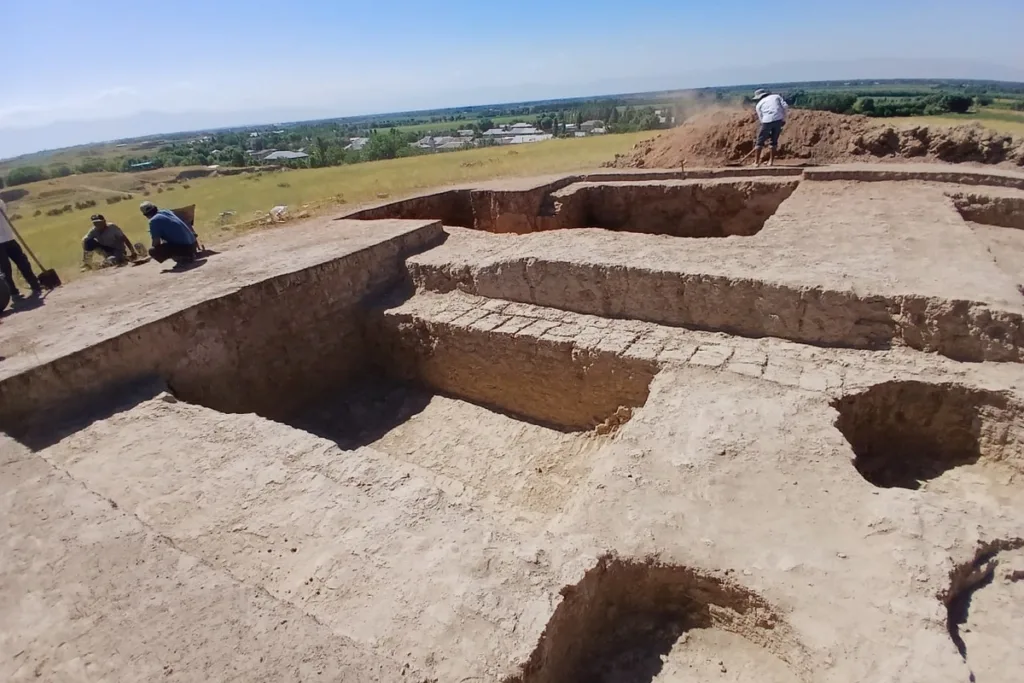
Archaeologists excavating the ancient settlement of Mingtepa in Uzbekistan’s Samarkand Region have uncovered the remains of a monumental complex that may have served as the palace of local rulers during the eighth century AD.
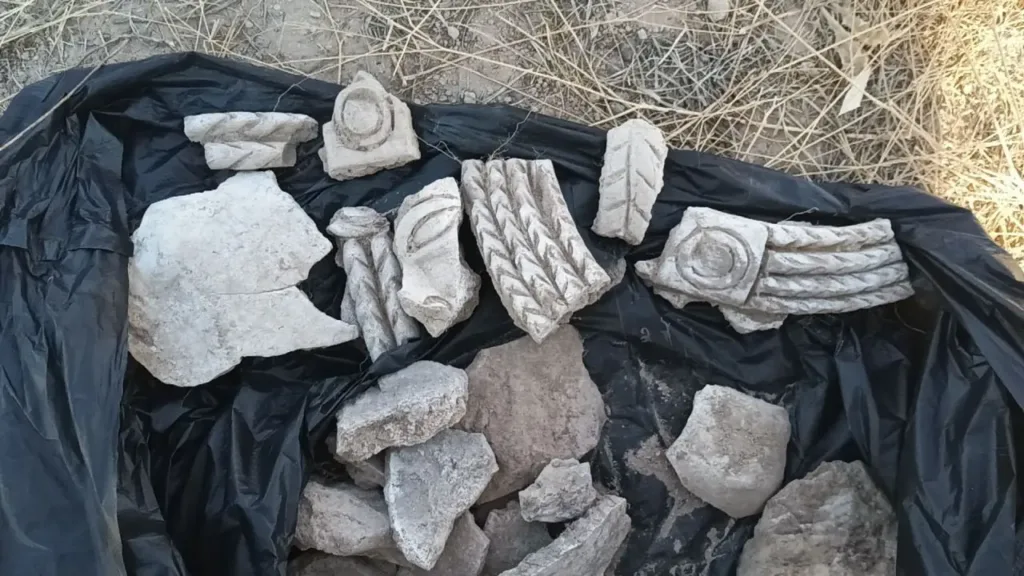
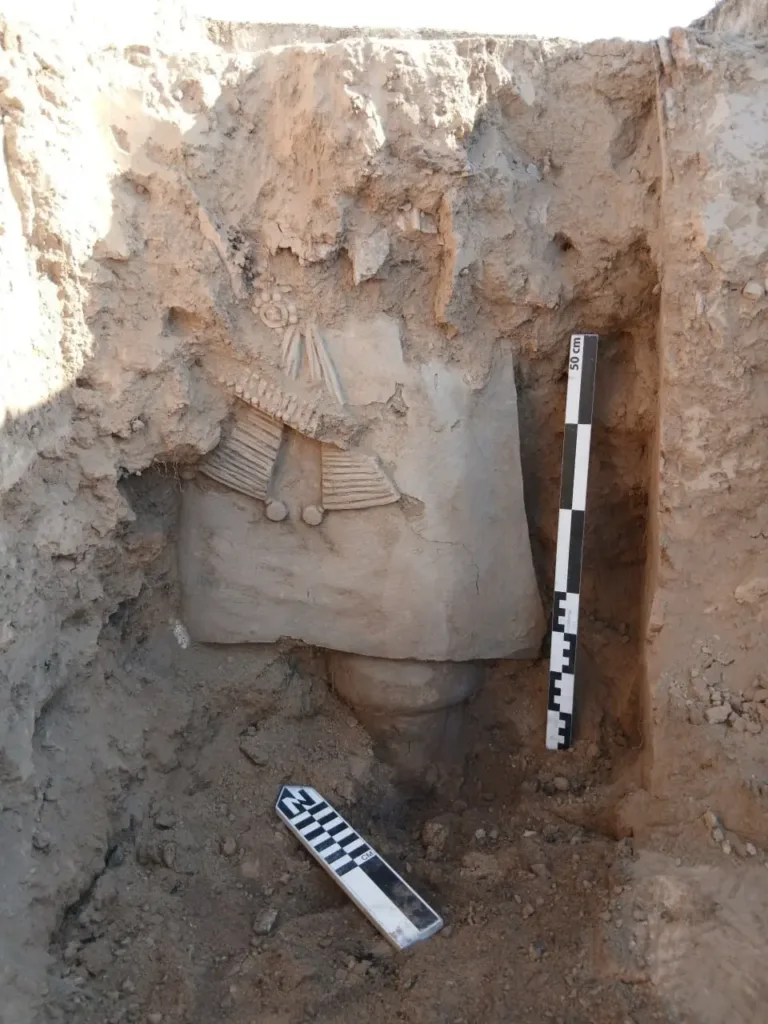
The building was found inside the settlement’s fortified citadel, known as the Ark, and has been dated to the first half of the eighth century. Sculptural remains from the same period were also discovered in what researchers describe as the hall section of the possible palace.
The excavations are being conducted in the Jomboy District by Amriddin Berdimurodov, Khusniddin Rakhmonov and Nigora Makhkamova of the Yahya Gulyamov Samarkand Institute of Archaeology.
Although researchers have not yet announced the dimensions or complete plan of the building, its location within the citadel and its architectural features have led them to interpret it provisionally as a rulers’ residence or administrative complex.
Palace discovered inside Mingtepa’s citadel
Excavations have exposed part of the building’s architectural layout, including construction techniques that specialists believe could provide important evidence about early medieval urban planning, elite architecture and systems of government in Central Sogdia.
The palace identification remains preliminary. Further excavation will be required to determine how the rooms were organized, how the complex developed over time and whether it combined residential, administrative and ceremonial functions.
The sculptural remains found in the hall are now undergoing scientific examination. Authorities have not yet disclosed their material, dimensions or subject matter, making it too early to determine whether they represented rulers, religious figures or decorative elements.
Their archaeological context may nevertheless prove important. Sculptures recovered from a large hall within a fortified elite complex could help researchers understand how authority and status were expressed at Mingtepa during the city’s final major phase of occupation.
Mingtepa may be the ancient city of Kabudan
Mingtepa was one of the largest early medieval settlements in the northern approaches to Samarkand. Its urban center covered approximately 40 hectares, while the wider settlement and surrounding rural territory may have extended across as much as 400 hectares.
The city included a citadel, a fortified urban district known as the shahristan, and an outer settlement or rabat. Its defenses incorporated walls and watchtowers, while the citadel rose approximately 12 meters above the surrounding ground. Water was reportedly supplied from the Bulungur River or one of its channels.
Researchers have proposed identifying Mingtepa with Kabudan, an early medieval Sogdian city mentioned in Chinese historical sources. According to this interpretation, Kabudan stood on the northern route into the Samarkand region from the direction of Chach—centered on the Tashkent oasis—and Ustrushana.
This position would have placed the city along an important corridor connecting the Samarkand oasis with northern and northeastern Central Asia. Archaeologists believe trade, craft production, and urban construction were well developed at the settlement.
Mingtepa appears to have been established during the fifth century and flourished between the sixth and early eighth centuries, when Sogdian city-states operated within the wider political environment of the Turkic khaganates.
The city declined around the middle of the eighth century, during the period when Arab armies were extending their control across Transoxiana. Archaeological evidence suggests that activity had ended in many parts of the settlement by the second quarter of the century, although later material indicates that occupation returned during the Karakhanid period in the eleventh century.
Earlier excavations revealed elite residences and Sogdian coins
Previous work at Mingtepa uncovered defensive structures, pottery and coins, as well as two-story buildings interpreted as residences belonging to members of the urban elite.
Excavations conducted in the western part of the city revealed rooms constructed with mudbrick and rammed-earth techniques. Upper stories were supported by wooden columns, while some walls and roofs incorporated arched architectural forms widely used in Central Asia during the early medieval period.
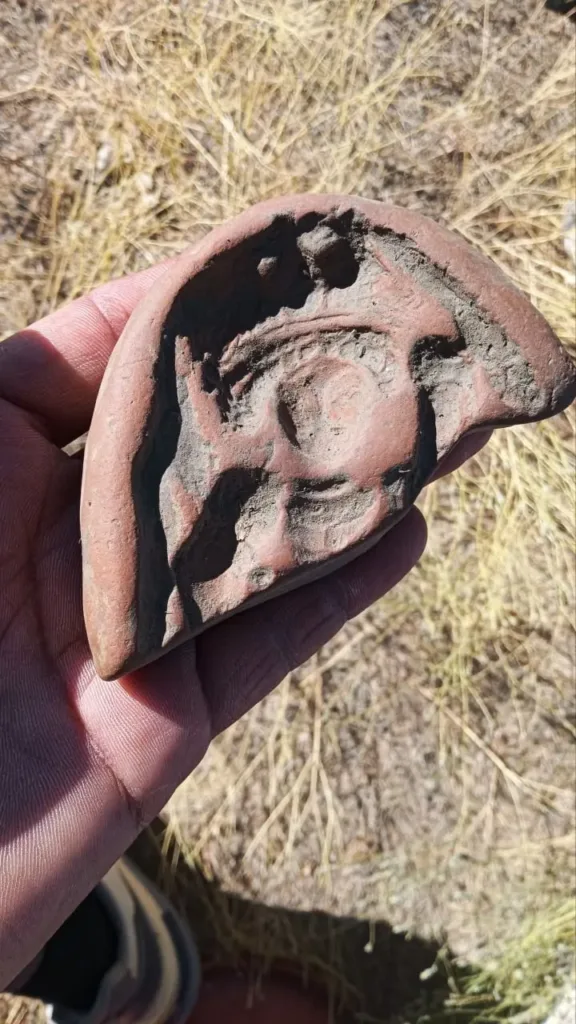
Ceramics recovered from these buildings were dated mainly to the seventh and early eighth centuries. Archaeologists also reported coins issued by the Sogdian ruler Turgar, together with cooking vessels, bowls, jugs and other objects associated with daily life and commerce.
The newly uncovered complex adds a possible political center to this growing picture of Mingtepa. Because it stands within the Ark and dates to the first half of the eighth century, the structure may preserve evidence from the final decades before the early medieval city’s decline.
Continued excavation and analysis of the sculptures will be essential before the building’s function can be confirmed. For now, the discovery provides the strongest archaeological indication yet that Mingtepa’s citadel contained a monumental complex associated with the city’s ruling elite.
Agency for Cultural Heritage of Uzbekistan
Cover Image Credit: Agency for Cultural Heritage of Uzbekistan.
