
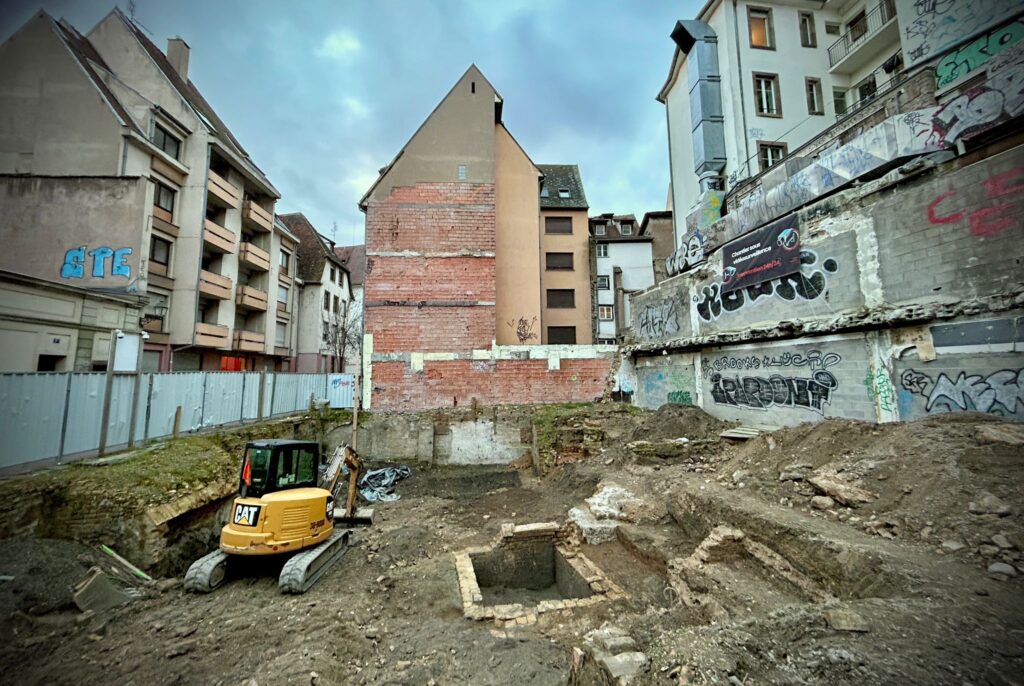
A major archaeological excavation in the historic center of Strasbourg has revealed an extraordinary sequence of occupation stretching from the Roman Empire to the 21st century. Conducted by Institut national de recherches archéologiques préventives (Inrap) at 3 rue Sainte-Hélène, the dig uncovered remains of the Roman canabae legionis, the medieval Drapers’ Guild complex, and multiple modern transformations—offering a rare, stratified narrative of urban evolution in eastern France.
Preventive Archaeology in the Heart of Strasbourg
The excavation was prescribed by the Regional Directorate of Cultural Affairs (Drac Grand Est) ahead of the construction of a new tourist residence. Covering 462 square meters within Strasbourg’s historic “island ellipse,” the site lies at the core of the ancient and medieval city.
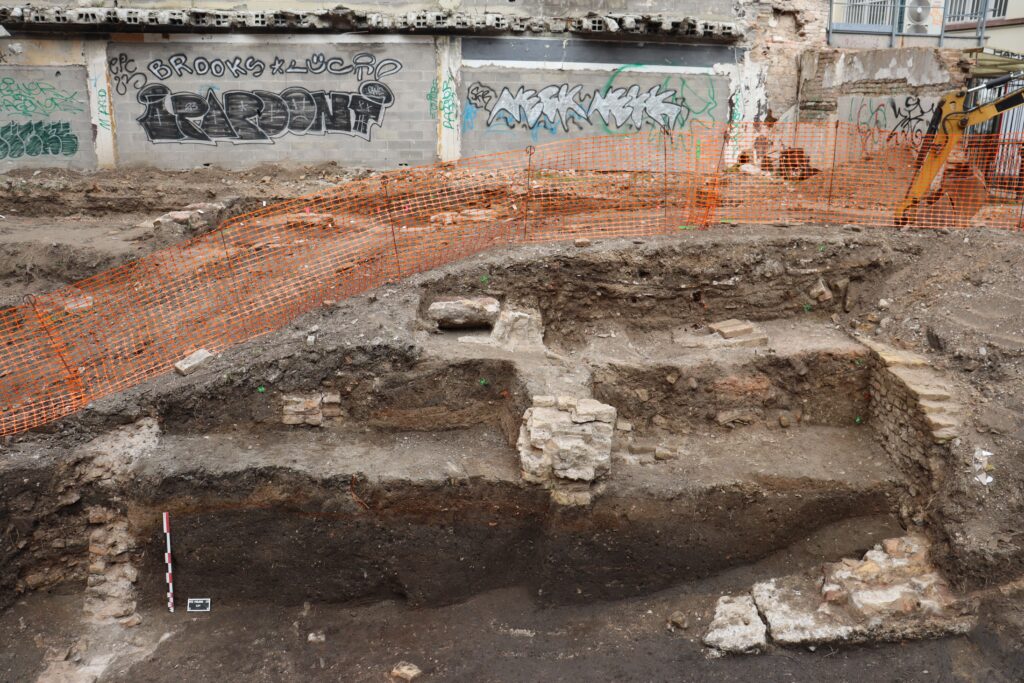
Archaeologists descended nearly four meters below current street level to reach the earliest occupation layers. There, embedded in alluvial silts deposited over centuries by the Rhine and rivers of the Ried, they encountered the remains of Roman-era civilian settlement associated with the military garrison of ancient Argentoratum.
The Roman Canabae of Argentoratum
During the 1st century AD, Strasbourg—then known as Argentoratum—hosted the camps of the Second Legion Augusta, followed later by the Eighth Legion Augusta. Around these military installations developed the canabae legionis, civilian districts that housed merchants, artisans, traders, and families connected to the Roman army.
The rue Sainte-Hélène excavation confirmed the presence of this civilian quarter. Archaeologists identified at least two semi-subterranean cellars dating from the 2nd to 3rd centuries AD. These structures provide valuable insight into daily life in Roman Strasbourg.
The fill layers contained fragments of painted wall plaster, Roman roof tiles (tegulae and imbrices), and pieces of torchis (wattle-and-daub construction). Together, these materials suggest mixed-use buildings combining timber framing with decorative interiors—evidence of a developed residential and commercial neighborhood rather than temporary huts.
This discovery strengthens understanding of how Roman military hubs stimulated urban growth beyond fortress walls. The canabae were not marginal spaces; they were dynamic economic zones integral to the Roman urban model.
Medieval Urban Expansion (12th–16th Centuries)
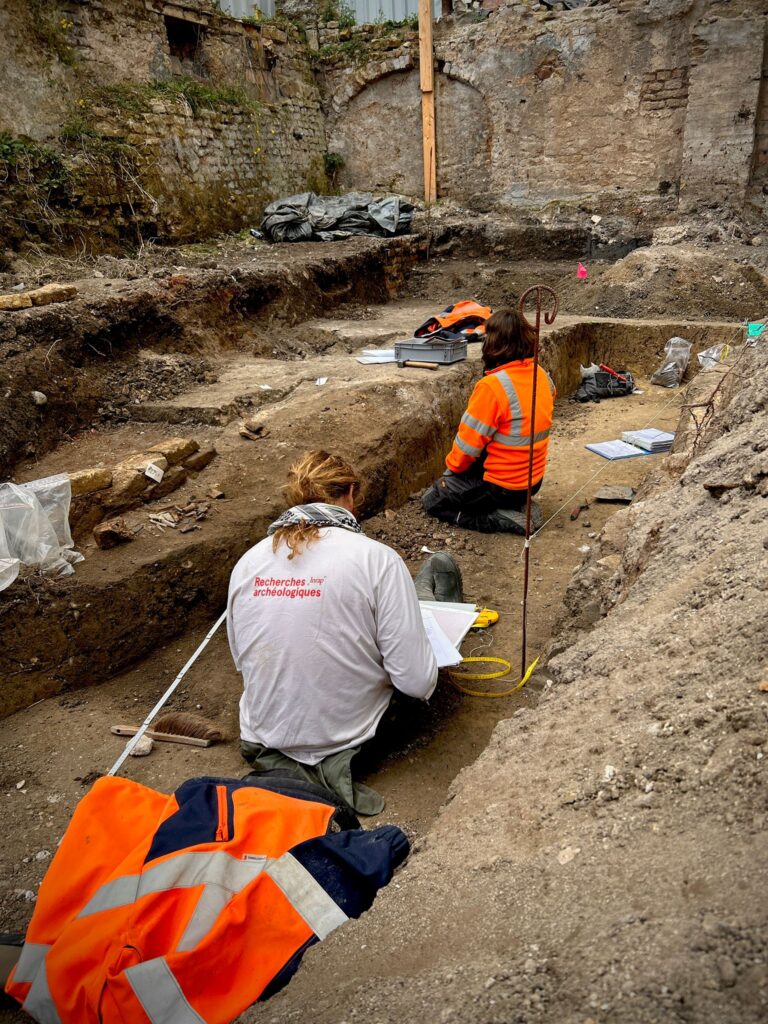
Above the Roman levels, archaeologists uncovered a dense network of masonry dating from the late 12th century onward, reflecting Strasbourg’s medieval expansion.
Constructed largely of orange-colored brick, the walls form a complex pattern of buildings erected, modified, and partially dismantled between the 13th and 16th centuries. Many structures show signs of material reuse—an indication of continuous rebuilding in a rapidly growing medieval city.
Excavators also identified pits, wells, and ground-cut features dated to the 12th and 13th centuries based on ceramic evidence. Remains of raw-brick walls—now faint and fragmentary—indicate more modest housing that once stood alongside more substantial masonry buildings.
The stratigraphic relationships and ceramic analysis will allow researchers to refine the chronology of occupation phases. Together, these findings illustrate the transformation of Strasbourg into a thriving commercial and artisanal hub during the High and Late Middle Ages.
The Drapers’ Guild and Monumental Medieval Latrines
One of the most remarkable phases of occupation began in the late 14th century with the installation of the Drapers’ Guild (Tucherzunft). In medieval European cities, guilds structured economic life, and each maintained a headquarters known in Strasbourg as a poêle—a social and ceremonial gathering hall.
The buildings at 3 rue Sainte-Hélène likely functioned as annexes to this guild complex, possibly including a Trinkstube (banquet hall or tavern). A 14th-century oven discovered on the site appears to be contemporary with this phase and may have served guild-related activities.
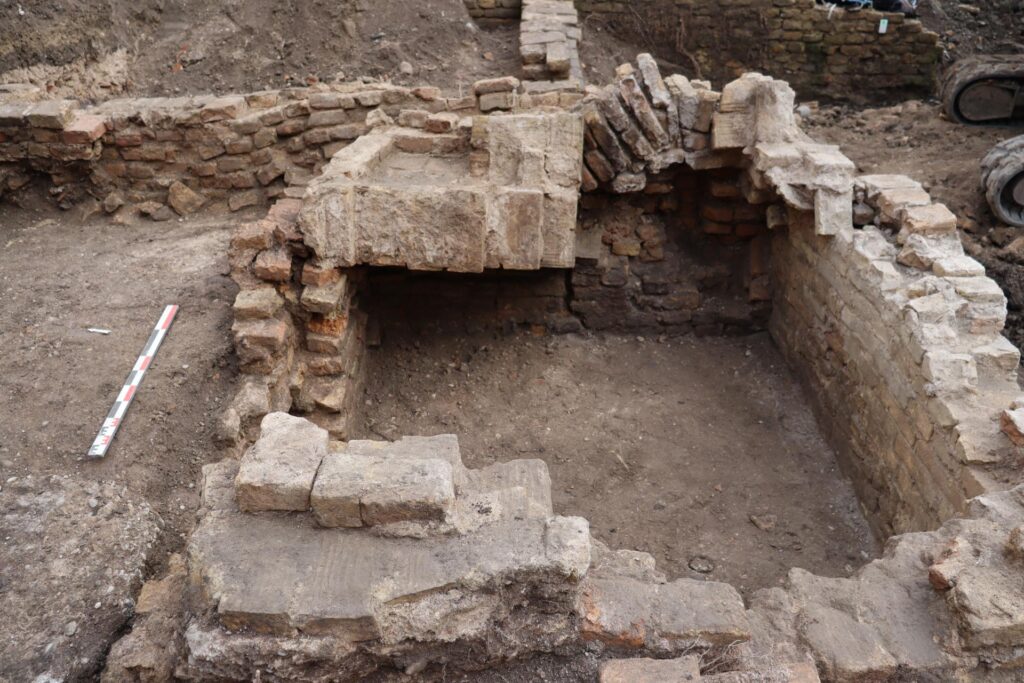
The most spectacular discovery from this period is a set of imposing vaulted latrines measuring 3.15 meters long, 2.50 meters wide, and 5.08 meters high. Built entirely of brick and covered by a vault, the structure required careful excavation in stages, combined with photogrammetric recording to produce a detailed 3D reconstruction.
Architectural analysis revealed at least two phases of vault repair, with the earliest dating to the first half of the 15th century. Beyond the architecture itself, the latrine fill proved a treasure trove of material culture.
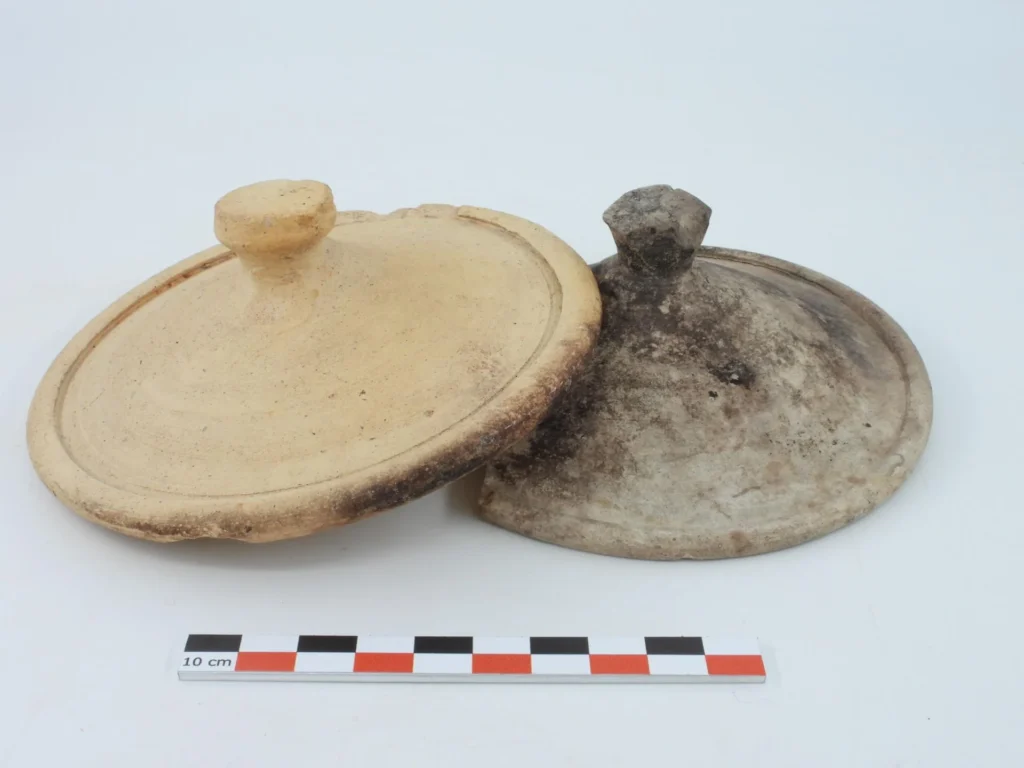
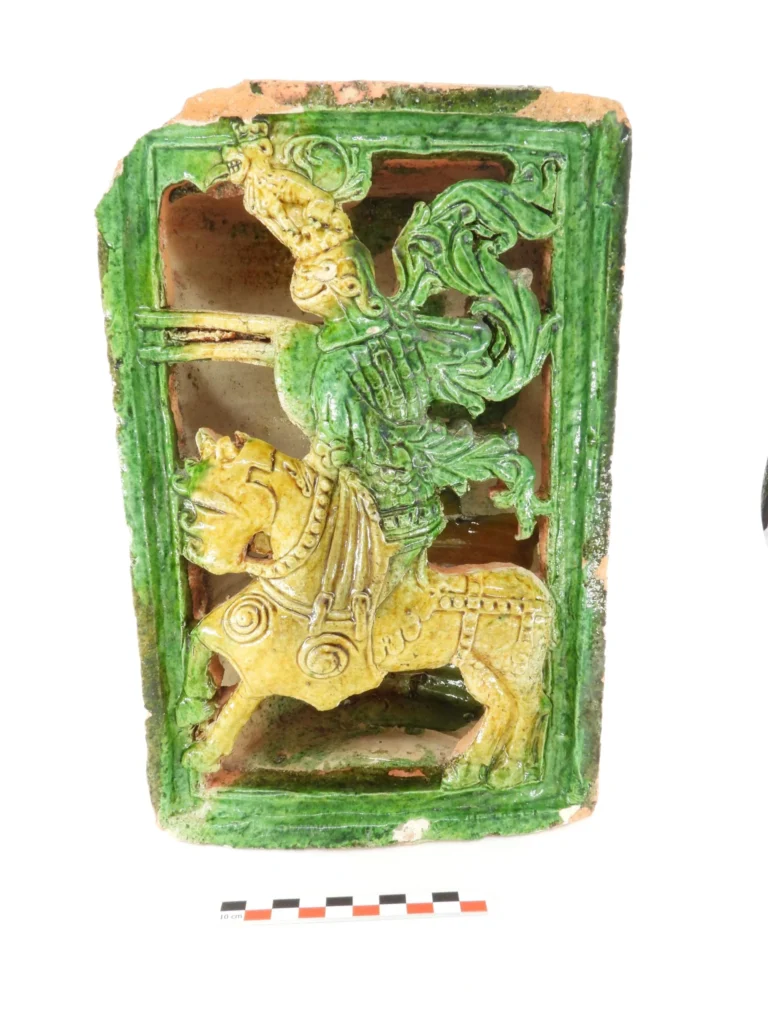
Archaeologists recovered large quantities of medieval ceramics, animal bones and fish remains, eggshell fragments, glass vessels including beakers decorated with applied glass pellets, metal utensils such as knives, and numerous stove tiles, some featuring high-quality figurative narrative scenes. These finds offer rare insight into the diet, trade networks, craftsmanship, and social customs of Strasbourg’s prosperous cloth merchants. Far from being a marginal feature, the latrine deposit serves as a concentrated archive of everyday medieval life.
From Revolution to Demolition: Modern Transformations
The guild system was abolished in 1791 during the French Revolution, marking a new chapter in the building’s history. Archaeological evidence reveals subsequent structural modifications, including masonry pillars built with reused bricks and sandstone blocks, fragments of wooden floors, and extensive demolition layers.
Archival research complements the physical evidence, tracing a remarkable sequence of adaptive reuse. Over the 19th and 20th centuries, the building served successively as a theater hall, a synagogue, a furniture store, a bistrot, a gymnastics club, a cinema, a brasserie, and finally as warehousing and residential space.
The final structures were demolished in 2023, clearing the way for redevelopment—while simultaneously enabling this comprehensive archaeological investigation.
Post-Excavation Research and Long-Term Urban Biography
Although fieldwork has concluded, the scientific analysis phase is just beginning. Specialists—including ceramologists, archaeozoologists, ichthyologists, glass experts, carpologists, architectural historians, and archivists—are now studying the artifacts and environmental remains.
Their goal is to correlate stratigraphic data, material culture, architectural evidence, and documentary sources to reconstruct the complete “biography” of this urban parcel.
The site at rue Sainte-Hélène demonstrates how a relatively small area—just 462 square meters—can encapsulate nearly two millennia of continuous transformation. From Roman military suburb to medieval guild complex, from revolutionary reorganization to modern entertainment venue, the plot mirrors the broader social, economic, and political shifts that shaped Strasbourg itself.
As research continues, the excavation stands as a powerful reminder that beneath the streets of modern European cities lie deeply layered archives of human activity—waiting to be read, interpreted, and integrated into the evolving narrative of urban history.
Cover Image Credit: Anicet Konopka, Inrap
