
23 January 2026 The Future is the Product of the Past

Computational Analysis Points to a Non-Traditional Garden of Eden Location – Beneath the Pyramids?

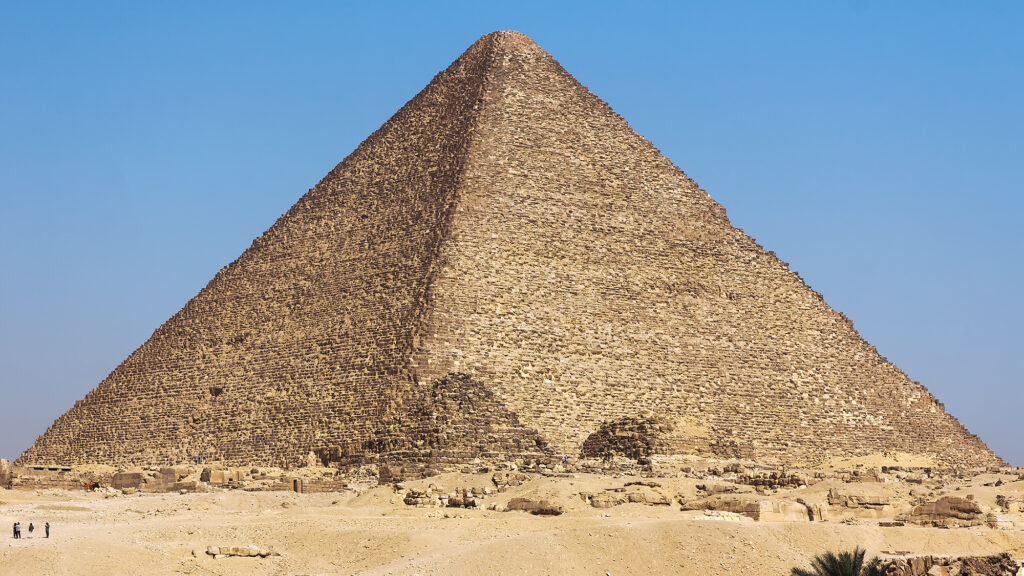
A radical new theory proposed by a computer engineer suggests that the biblical Garden of Eden may not be in the traditionally believed location of Mesopotamia (modern-day Iraq), but rather lies beneath the iconic Great Pyramid of Giza in Egypt. Dr. Konstantin Borisov outlined his intriguing hypothesis in a study recently published in the journal Archaeological Discovery.  

For centuries, the prevailing scholarly view has located the biblical Garden of Eden at the confluence of the Tigris and Euphrates rivers in modern-day Iraq. This interpretation has largely stemmed from the description in Genesis 2:8 14, which depicts Eden being nourished by a single river that subsequently branched into four distinct streams: the Pishon, Gihon, Tigris (Hiddekel), and Euphrates. However, this long-held belief is now being challenged by computer engineer Dr. Konstantin Borisov, who proposes a new location based on his reinterpretation of ancient maps and historical texts.”

Borisov’s argument hinges on a map dating back to around 500 BCE, which depicts four major rivers – the Nile, Tigris, Euphrates, and Indus – originating from what ancient civilizations perceived as a surrounding “Oceanus.” Borisov posits that the elusive biblical river Gihon corresponds to the Nile, a connection supported by the writings of the Romano-Jewish historian Flavius Josephus, who identified the Gihon as flowing through Egypt and known to the Greeks as the Nile.  

Further bolstering his claim, Borisov analyzes the Hereford Mappa Mundi, a prominent 13th-century map that places “Paradise” near this encircling river Oceanus. By combining geographical analysis with mythological symbolism, Borisov argues that the inclusion of the Nile as one of the four rivers emanating from Oceanus on ancient maps makes Egypt a more compelling candidate for Eden’s location than Mesopotamia.  
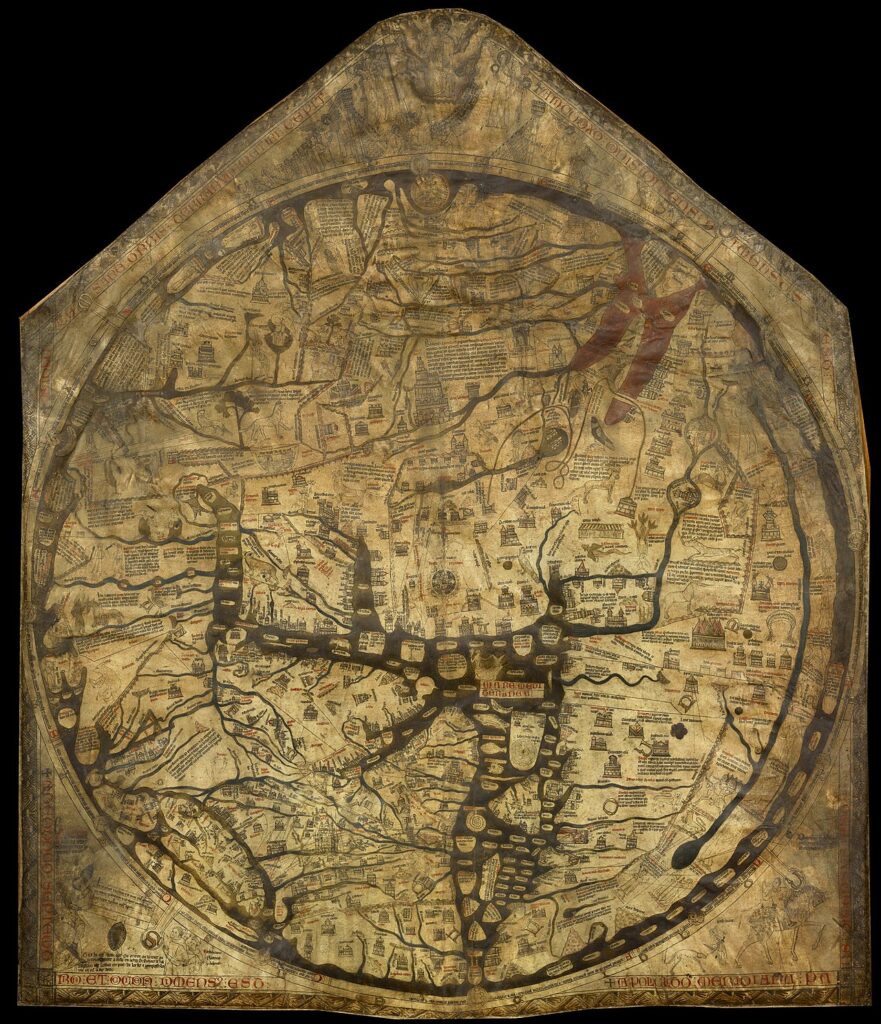
The Hereford mappa mundi, a map of the world with Jerusalem at its centre. Credit: Wikipedia

Intriguingly, Borisov also draws a connection between the Great Pyramid of Giza and the biblical Tree of Life. He suggests that light patterns observed within the pyramid’s King’s Chamber bear a striking resemblance to the glow of a tree. Citing computer simulations from 2012, Borisov notes that charged particles within the chamber form branch-like patterns extending from a central point, mirroring the description of the Tree of Life. He also points to earlier findings indicating an accumulation of energy at the pyramid’s apex.  


📣 Our WhatsApp channel is now LIVE! Stay up-to-date with the latest news and updates, just click here to follow us on WhatsApp and never miss a thing!!


“It cannot be overlooked, the charged particles in this simulation are arranged in a way that creates several parallel branches extending outward from the center line, creating a tree-like representation,” Borisov stated in an interview with The Mirror.

Borisov acknowledges that further research is needed to precisely map the ancient understanding of “Oceanus,” which he believes will be crucial in pinpointing Eden’s exact location. However, he asserts that his multidisciplinary approach, integrating ancient texts, cartography, mythology, and modern scientific findings, offers a compelling new perspective on this age-old mystery.

The Garden of Eden with the Fall of Man. Credit: Jan Brueghel the Elder / Pieter Paul Rubens / Public Domain

While Borisov’s theory presents a significant departure from traditional interpretations, the quest to locate the Garden of Eden has a long and varied history. Over the years, numerous alternative locations have been proposed, ranging from Iran (suggested by English archaeologist David Rohl) and Israel (linked to the Jordan River) to more unexpected places like Florida and Mongolia. The Mormon faith even places Eden in Jackson County, Missouri.  

Despite the diverse array of theories, the enduring fascination with the Garden of Eden persists. Whether a literal geographical location or a powerful myth, the search for humanity’s original paradise continues to spark debate and inspire new explorations into our ancient past.

Borisov, K. (2024) The Garden of Eden: A New Perspective on Its Location. Archaeological Discovery, 12, 198-223. doi: 10.4236/ad.2024.124012.

Cover Image Credit: Wikipedia

Related Articles

Researchers may have found 3,000-year-old evidence of Yue (Amputation), one of the five punishments practiced in ancient China

4 May 2022

4 May 2022

According to the South China Morning Post, researchers in China believe a skeleton discovered in a tomb in the country’s...

In Jerusalem, a 2700-year-old private toilet from the First Temple era was unearthed

5 October 2021

5 October 2021

The Israel Antiquities Authority discovered a private toilet from the First Temple Period on the Armon Hanatziv promenade in Jerusalem,...

Archaeologists Discover Kazakhstan’s Earliest Human Burial — A 7,000-Year-Old Neolithic Grave at Koken

24 October 2025

24 October 2025

Archaeologists in eastern Kazakhstan have uncovered the country’s oldest known human burial, dating back around 7,000 years. Found beneath Bronze...

Egypt unearths 2,300-year-old remains of Greco-Roman town in Alexandria

28 August 2021

28 August 2021

An Egyptian archeological team discovered the ruins of a Greco-Roman residential and commercial town in the north coast city of...

Archaeological excavations started again after 50 years in Tunceli Tozkoparan mound

28 June 2021

28 June 2021

Archaeological excavations at the Tozkoparan Mound in Turkey’s Tunceli province are anticipated to turn the city into one of eastern...

Stone Age Farmers Settled Near Dortmund Airport 7,000 Years Ago

24 August 2025

24 August 2025

Archaeological discoveries at Dortmund Airport reveal that early Neolithic farmers lived and built houses in the region nearly 7,000 years...

A cobbled ford uncovered near Evesham could be the finest Roman example of its type in Britain

19 October 2022

19 October 2022

A cobbled ford believed to be of Roman construction has been discovered near Evesham in Worcestershire, England. If the path...

Hidden Engineering Beneath the Minoan World: Archanes Palace Reveals a Landslide Defense System 3,700 Years Ahead of Its Time

4 December 2025

4 December 2025

When archaeologists resumed work this year at the Palace of Archanes—one of Crete’s most enigmatic Minoan centers—they did not expect...

In Poland’s “Death Valley,” new evidence of Nazi atrocities

18 August 2021

18 August 2021

In October 1939, between 30,000 and 35,000 Polish intellectuals, Polish civilians, Jews and Czechs, and German prisoners from psychiatric institutions...

Mine-clearance divers discovered an ancient shipwreck dating from the 3rd century BC

25 June 2023

25 June 2023

As a result of collaborative training exercises between Croatian and Italian naval mine-clearance divers, one of the earliest fully preserved...

A 2,500-Year-Old Mysterious Idol Discovered in the Ancient Urartian Fortress in Armenia

13 October 2025

13 October 2025

Archaeologists in Armenia have discovered a 2,500-year-old mysterious idol carved from volcanic tuff inside the ancient Urartian fortress of Argishtikhinili,...

Dozens of unique bronze ornaments discovered in a drained peat bog in Poland

28 January 2023

28 January 2023

Numerous bronze ornaments have been discovered in Poland’s Chełmno region (Kuyavian-Pomeranian Voivodeship). Archaeologists report that dozens of bronze ornaments, including...

Roman Bath Complex Found under Spain’s Caños de Meca beach

22 May 2021

22 May 2021

A well-preserved ancient Roman bath complex emerged from the sand of a beach in the Andalusian region of southwestern Spain....

5,500-year-old Menhir discovered in Portugal

28 August 2023

28 August 2023

A 5,500-year-old (that is around 3500 BC) menhir has been discovered in the town of São Brás de Alportel in...

A Rare Late Neolithic Period Seal found in Domuztepe Mound

25 August 2022

25 August 2022

A rare Late Neolithic Seal was discovered during the 2022 excavations of the Domuztepe Mound (Domuztepe Höyük), located on the...