
27 February 2026 The Future is the Product of the Past

Italian Versailles being returned to its former glory through

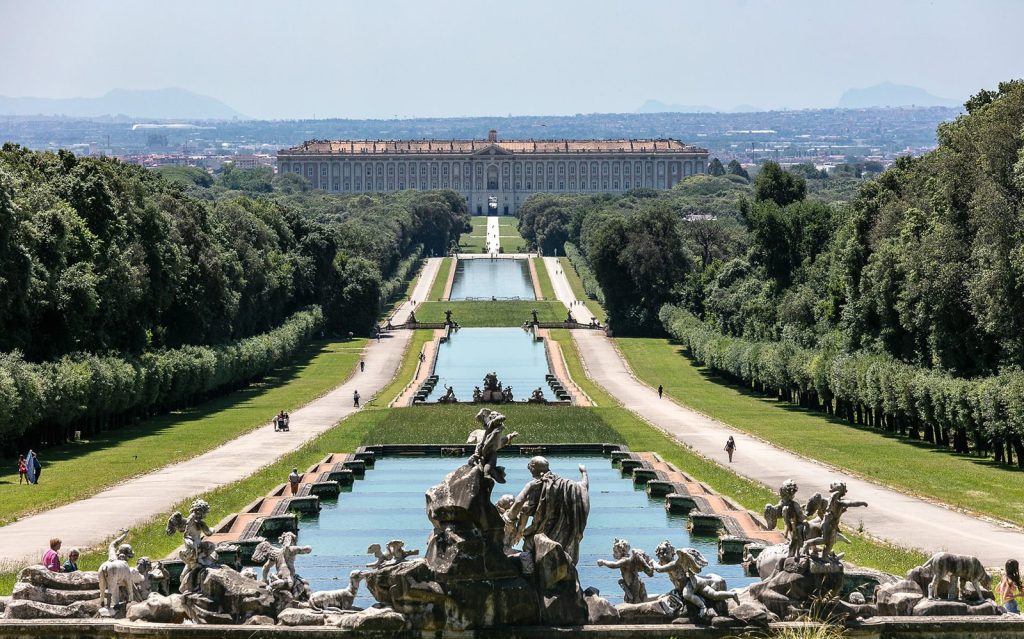
The Italian Royal Palace of Caserta, a long-neglected near Naples, is being restored to its former glory through a vast restoration project funded in part by the European Union’s recovery fund.

Nicknamed the “Italian Versailles”, after the royal palace near Paris, the Italian UNESCO site boasts 1,200 rooms, 1,742 windows, and 123 hectares (303 acres) of lush gardens.

The Royal Palace of Caserta was built on the orders of the King of Naples Charles of Bourbon, with work beginning in 1752 under the direction of architect Luigi Vanvitelli. Created by Luigi Vanvitelli, the Royal Palace of Caserta is the symbolic work of the Bourbons of Naples and the Kingdom of the two Scilies.

It includes a sumptuous palace with a park, gardens, and a wooded area, as well as the Aqueduct Carolino and the industrial complex of San Leucio, built for the production of silk. The Royal Palace is the centerpiece of the whole architectural composition and is located on a central axis that connects and unifies the entire complex.

However, it fell into disuse following Italy’s unification at the end of the nineteenth century, and was only used on rare occasions after that, such as when it served as the Allied headquarters during World War II.


📣 Our WhatsApp channel is now LIVE! Stay up-to-date with the latest news and updates, just click here to follow us on WhatsApp and never miss a thing!!


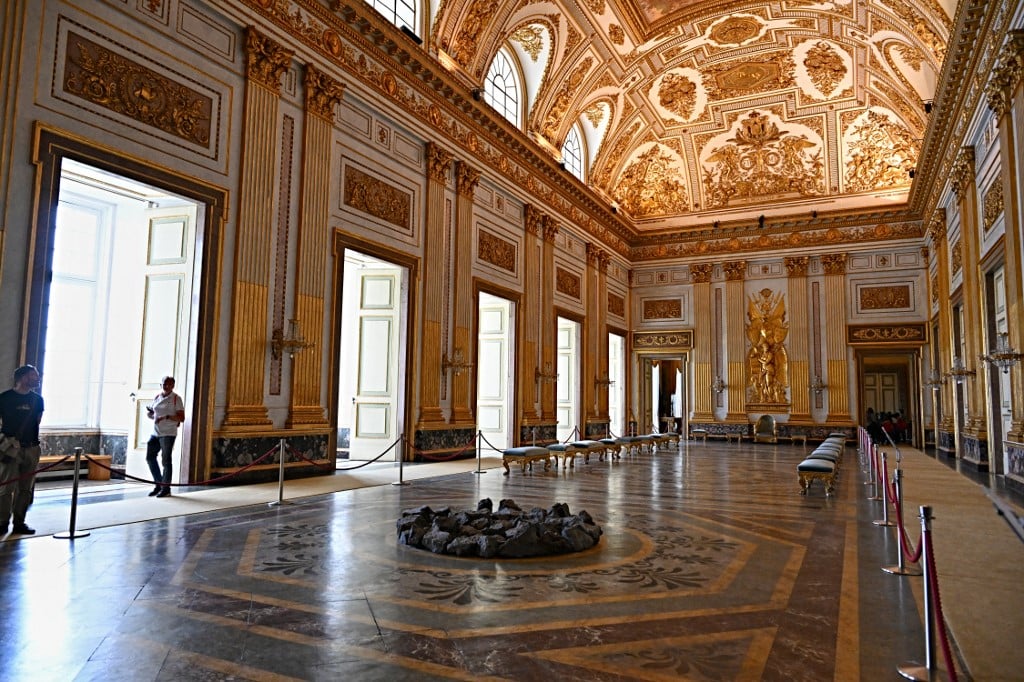
The ‘Throne Room’ at the Royal Palace of Caserta. Photo by Andreas SOLARO / AFP

From restoring the facades to reviving the gardens and repairing the gates, remedying the ravages of time is a titanic task.

Efforts made so far were rewarded last week when the palace won a third star — the highest accolade — in the prestigious Michelin Green Guide to Southern Italy.

Philippe Orain, the Michelin Green Guides’ director, told AFP the restoration so far was “remarkable”.

The third star lifts the palace and its gardens, complete with reflecting pools and gushing waterfall, to the level of the Pompeii archaeological site.
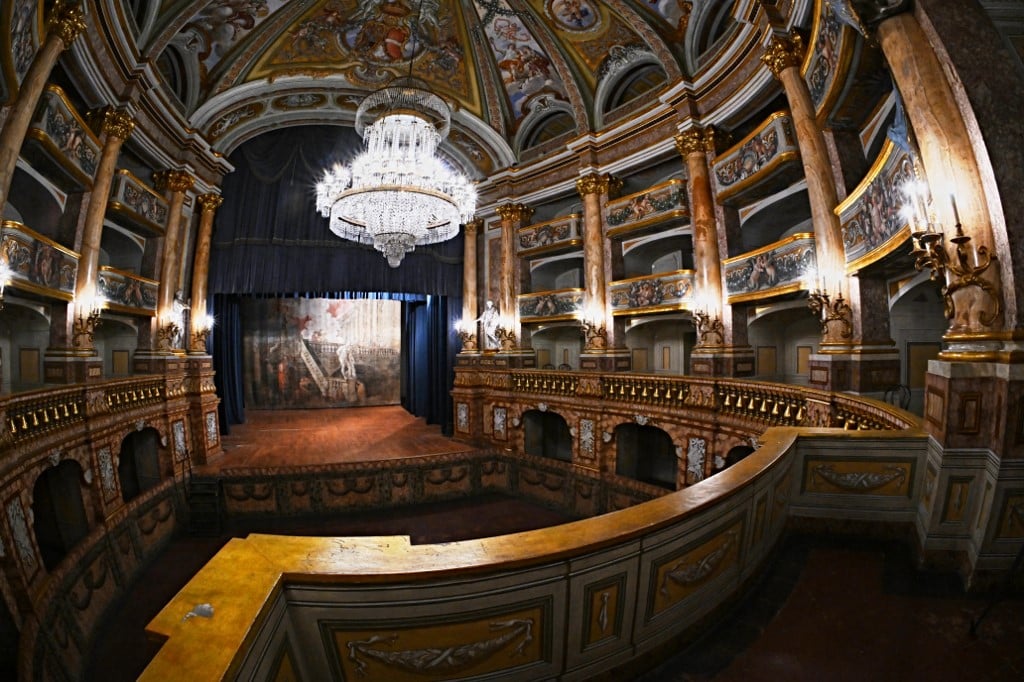
The Court Theatre of the Royal Palace of Caserta. Photo by Andreas SOLARO / AFP

“It is a recognition that we hope will make us known throughout Europe and the world,” said the palace’s director Tiziana Maffei.

The palace has also earned points for its collection of contemporary art, showcased in the royal apartments, as well as its decision to open to visitors in the evenings and at Christmas.

The restoration comes with a stiff price tag, but the project has received around $27 million from the European post-pandemic recovery fund.

But that figure was a little small compared to the total cost and will help restore the aqueduct that carries more than 40 kilometers (25 miles) of water to the palace’s fountains, canals, and basins.

Cover Photo: Regia di Caserta

Related Articles

New Discoveries at Ancient Greek City of Paestum’s ‘Little Doric Temple’ in Italy

16 April 2023

16 April 2023

Archaeologists have made a series of extraordinary discoveries that may fundamentally alter the understanding of the past of the ancient...

Wasabi Isn’t Just For Sushi: It is an Innovative Solution for Preserving Ancient Papyrus

28 February 2024

28 February 2024

A new natural technique for cleaning and preserving priceless ancient Egyptian papyrus that are in danger from bacteria and fungi...

Over 7,000-Year-Old Traces of Life Discovered in Ratina Cave on Šćedro Island, Croatia

28 February 2025

28 February 2025

Recent archaeological excavations on Šćedro Island, located south of Hvar, have unveiled significant findings that challenge previous understandings of the...

1,500-year-old feast mosaic found in Turkey

2 February 2022

2 February 2022

A 50-square-meter mosaic depicting an open-air feast dating back 1,500 years ago was unearthed during excavations in the ancient city...

Ancient tombs discovered at Paris’ Notre-Dame Cathedral

15 March 2022

15 March 2022

Archaeologists discovered several graves and a leaden sarcophagus possibly dating from the 14th century at Paris’ Notre Dame church, France’s...

Researchers excavating the burial site along Caleta Vítor Bay in northern Chile found an Inka Tunic or unku

15 February 2023

15 February 2023

A recently published study, co-authored by a research professor at George Washington University, looks at the Inka Empire’s (also known...

“One of the outstanding discoveries of recent decades”: Gold coin reveals unknown British King

20 October 2023

20 October 2023

New light has been shed on a little-known part of British history thanks to the extraordinary discovery of a coin...

Archaeologists Discovered Remarkably Preserved Shrines inside the Assyrian Temple of Ninurta, in Nimrud

29 December 2024

29 December 2024

Recent archaeological work in Nimrud, led by the Penn Museum in collaboration with Iraqi archaeologists, has uncovered two remarkably well-preserved...

Remains of a Roman stylobate found in Montenegro

19 July 2023

19 July 2023

In ancient Rhizon (Risan) in Montenegro, remains of a Roman stylobate (a shared base for multiple columns) were uncovered. In...

From Justinian’s Glory to Ruin: The Last Stand of Montenegro Triconch Church

10 August 2025

10 August 2025

In the heart of Bar, just off the bustling Ulica Maršala Tita, lie the weathered remains of the Triconch Church...

Archaeologists have found a previously unknown Roman city with buildings of monumental proportions in Spain’s Aragon Region

17 July 2022

17 July 2022

Archaeologists from the University of Zaragoza in Spain have discovered a previously unknown Roman city with buildings of monumental proportions....

A Dice Game board from 5th century BC found in western Turkey’s Daskyleion

6 September 2023

6 September 2023

Archaeologists found a terracotta dice game tabla dating back to the fifth century B.C. during the excavations of the ancient...

How Seabird Guano Built a Powerful Pre-Inca Kingdom in Peru 800 Years Ago

12 February 2026

12 February 2026

New isotopic research reveals that seabird droppings fueled the rise of the Chincha Kingdom on Peru’s arid Pacific coast When...

The 1800-year iron mask unearthed in Turkey is proof of the first military base of the Roman period in the Western Black Sea Region

23 November 2021

23 November 2021

An iron face mask used by a skilled member of the Roman cavalry 1,800 years ago has been discovered in...

A 42,000-year-old pendant found in northern Mongolia may be the earliest known phallic art

20 June 2023

20 June 2023

An international team of researchers has found a pendant in northern Mongolia that may be the earliest known example of...