
23 June 2026 The Future is the Product of the Past

A 2,000-year-old whistle was found in a child’s grave in the ruins of Assos, Turkey

A terracotta whistle believed to be 2,000 years old from the Roman era and placed as a gift in a child’s grave was discovered during excavations at the 7,000-year-old Assos Ruins in the village of Behramkale, in the Ayvacık district of Çanakkale, in northwest Turkey.

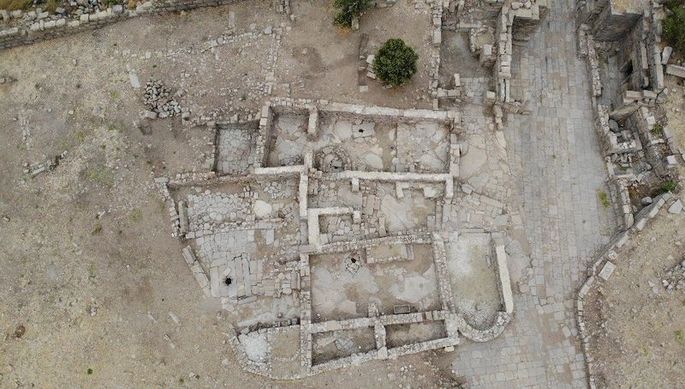
Assos Ancient City’s history dates back to the sixth century B.C. The city faced to the sea and people were climbing down via terraces to the sea. The city was built on an extinct volcanic hill, between andesite rocks and 236m high from the sea. The ruins are listed on UNESCO’s World Heritage Tentative List.

Çanakkale Onsekiz Mart University’s (ÇOMÜ) Archeology Department lecturer professor Nurettin Arslan with a team of 25 people continue excavations in the agora and gymnasium of Byzantine Period Ksenedochion (guesthouse) structures built in the Hellenistic period at the ruins.
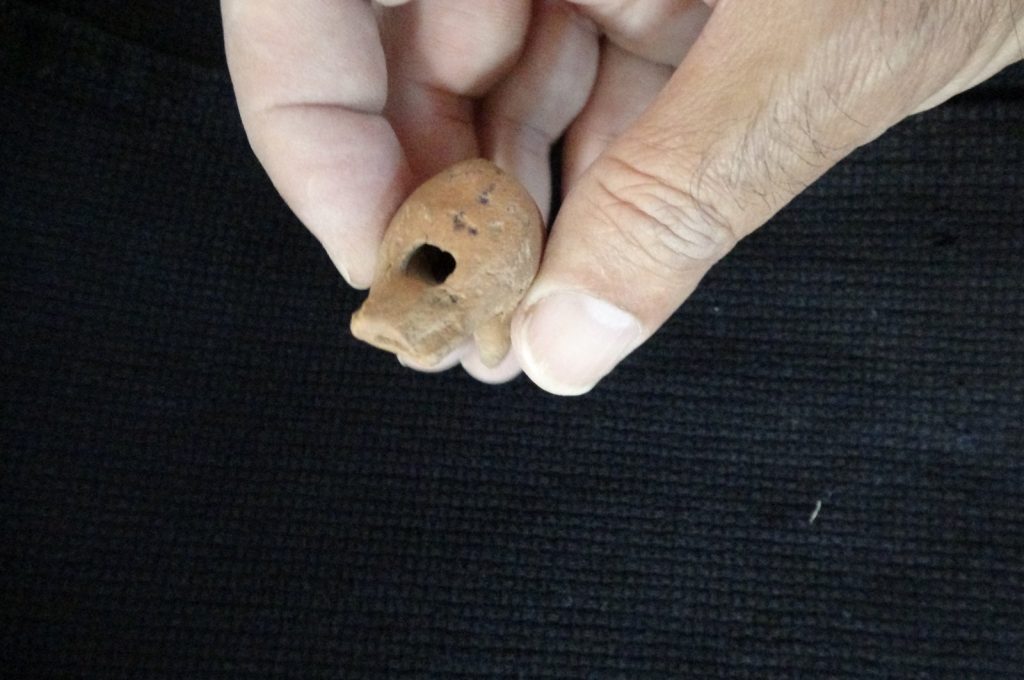
A 2,000-year-old whistle made of terracotta from the Roman period was found in a child's grave as a grave gift, in Çanakkale, Turkey. Photo: İHA
A 2,000-year-old whistle made of terracotta from the Roman period was found in a child’s grave as a grave gift, in Çanakkale, Turkey. Photo: İHA

Professor Nurettin Arslan said, “It was understood that the terracotta bird figure found on the surface around the Ayazma Church was a whistle. In ancient times, such objects were used as children’s toys and left as gifts, especially in kids graves. It is known that this object, which still functions as a whistle, was used from the Classical Age to the Roman Age. Since the find layers of this object are not known, it is not possible to give an exact date. “But we guess it’s the Roman period or before,” he said.

In addition, they seem to be causal children’s toys of the time and were placed in children’s graves as a cultural ritual. This particular Roman whistle is estimated to be 2,000 years old.


📣 Our WhatsApp channel is now LIVE! Stay up-to-date with the latest news and updates, just click here to follow us on WhatsApp and never miss a thing!!


Assos was one of the most important port cities in the ancient ages and home to many cultural riches such as an ancient theater, agora, necropolis, and ramparts.
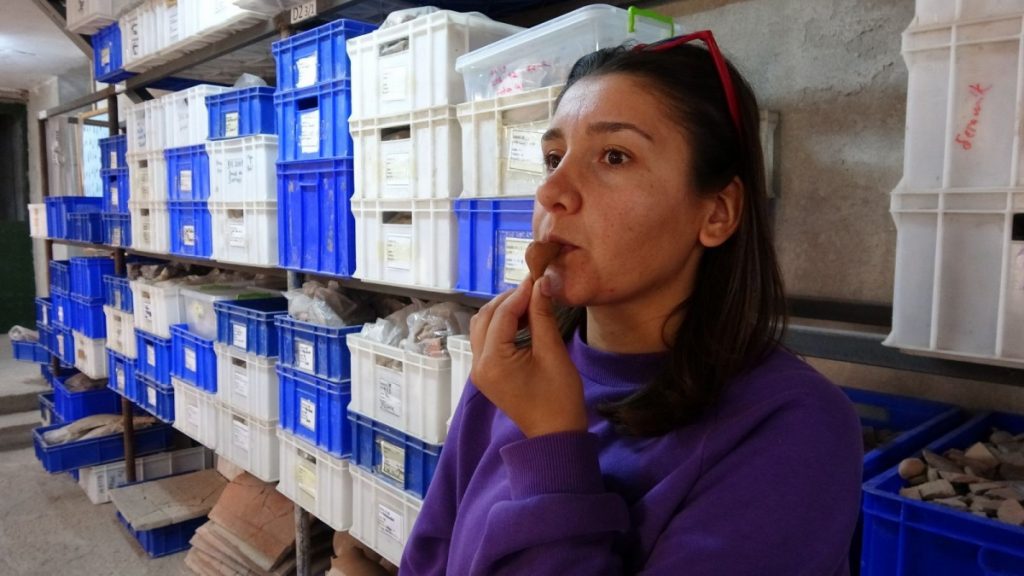
Photo: İHA

The city has been home to many societies for centuries, having been founded on the summit and slopes of a volcanic hill at the southern end of the region, called as “Troas” in ancient times, across the island of Lesbos in Greece.

One of its famous residents was Aristotle who together with the philosopher Xenocrates established a philosophical school at Assos.

It was the first ancient city that U.S. archaeologists excavated in the 1800s. It was excavated in 1981 after a long break.

Related Articles

Discovery Shedding Light on Ancient Maritime Trade: 1,500-Year-Old Trade Shipwreck Found off Türkiye’s Ayvalık

21 December 2024

21 December 2024

‘Turkish Sunken-Ships Project: Blue Heritage’, a 1500-year-old trade shipwreck was found off the coast of Ayvalık district of Balıkesir. Under...

Itbaraks in Turkic Mythology: The Human-Bodied, Dog-Headed Beings Who Defied Oghuz Khagan

5 July 2025

5 July 2025

In the mist-shrouded realms of ancient Turkic epics, there exists a race that haunts both myth and memory—the İtbaraks. These...

3D Technology Reveals 2,000-Year-Old Gladiator Graffiti and Love Messages in Pompeii

21 January 2026

21 January 2026

For more than two centuries, the walls of Pompeii have been studied, photographed, and catalogued. Yet new research shows that...

2,000-year-old unique luxury Roman villa with “underfloor heating” found in Germany

3 November 2022

3 November 2022

A luxury Roman villa with a thermal bath and underfloor heating has been unearthed in Kempten, Bavaria, one of the...

7,000-Year-Old Animal-Figured Seals Found in Arslantepe, Anatolia’s First City-State

27 August 2024

27 August 2024

Archaeologists working at the Arslantepe Mound (Turkish: Arslantepe Höyük), a UNESCO World Heritage Site in Türkiye’s eastern Malatya province and...

Ancient Roman Doctors in Pergamon Really Used Human Feces as Medicine—Now Science Has the Proof

23 January 2026

23 January 2026

A small Roman glass vessel excavated in the ancient city of Pergamon has delivered the first direct chemical evidence that...

7,000-year-old Ritual Complex Found In Jordan Desert

23 February 2022

23 February 2022

The team of French and Jordanian archaeologists has discovered a 7,000-year-old ritualistic complex near what is thought to be the...

Pictish ring believed to be more than 1,000-years-old found during Burghead fort dig in Scotland

5 September 2024

5 September 2024

A “remarkable” Pictish ring thought to be more than 1,000 years old has been unearthed by an amateur archaeologist on...

Gadebridge Park Roman Villa Marks England’s Largest Private Roman Swimming Pool

28 September 2025

28 September 2025

Beneath the grass and walkways of Gadebridge Park lies one of England’s most extraordinary Roman relics: a villa complex with...

Hungary’s Hill of Hoards: 3,000-Year-Old Metal Finds Illuminate the Bronze and Iron Age Transition

5 May 2025

5 May 2025

A treasure trove of ancient metal artifacts, dating back over 3,000 years, has been unearthed at Somló Hill in western...

Yes — Camels Really Lived in Basel During the Roman Era!

4 January 2026

4 January 2026

Archaeologists in Switzerland have uncovered compelling evidence that reshapes our understanding of everyday life in Roman-era Europe: camels — yes,...

Radiocarbon Dating of Chatham Islands Waka Points to a Bold Polynesian Voyage in the 1400s

22 November 2025

22 November 2025

Rēkohu — internationally known as the Chatham Islands, located 800 kilometres east of mainland New Zealand in the South Pacific...

440-Year-Old Silver Coin Pinpoints Exact Location of Spain’s Doomed “Port Famine” Colony

26 March 2026

26 March 2026

A 440-year-old silver coin has done what decades of archaeological uncertainty could not: it has pinpointed the exact founding location...

Anatolia’s First Phoenician Find: Human-Faced Glass Beads and Baby Jar Burials Unearthed

30 December 2025

30 December 2025

Archaeological excavations at Oluz Höyük in Amasya, north-central Türkiye, have revealed rare evidence of Phoenician presence deep inside Anatolia, including...

Precious Roman Gem Engraved with Mythological Figure Discovered in Italian Lagoon

8 August 2023

8 August 2023

During excavations at Lio Piccolo (Cavallino-Treporti), conducted by Ca’ Foscari University, a precious agate stone carved with a mythological figure...