23 December 2025 The Future is the Product of the Past

Ancient helmets, temple ruins found at a dig in Velia southern Italy

A discovery that “sheds new light on the history of the mighty Greek colony” by Velia.

Archaeologists in southern Italy have discovered ancient warrior helmets and the ruins of a painted brick wall at a site that might have been a forerunner of a temple dedicated to the goddess Athena, officials said Tuesday.

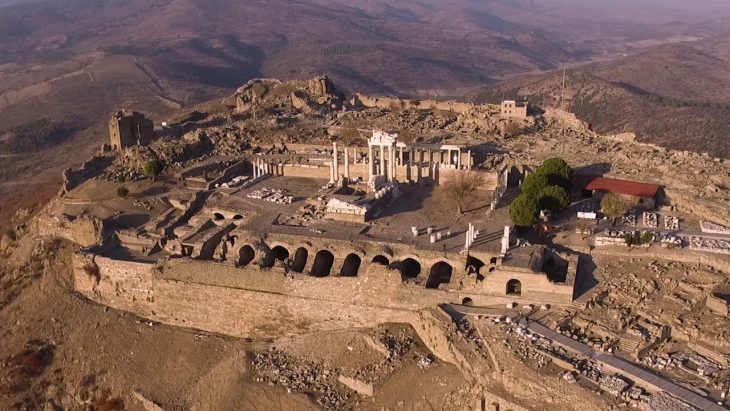
The ruins discovered at Velia, a major tourist destination in Italy, were discovered atop what had been an acropolis of one of Magna Graecia’s most prominent towns, according to Italian Culture Minister Dario Franceschini. Velia is located 40 kilometers (25 miles) southeast of Paestum, a well-known ancient Greek temple site.

Excavations by Francesco Scelza, which began last summer on top of what used to be the city’s acropolis, just below the still prominent remains of the temple dedicated to Athena, have unearthed the remains of a rectangular building of considerable size. (At 18 meters long and 7 wide, it dates back to the sixth century BC.)
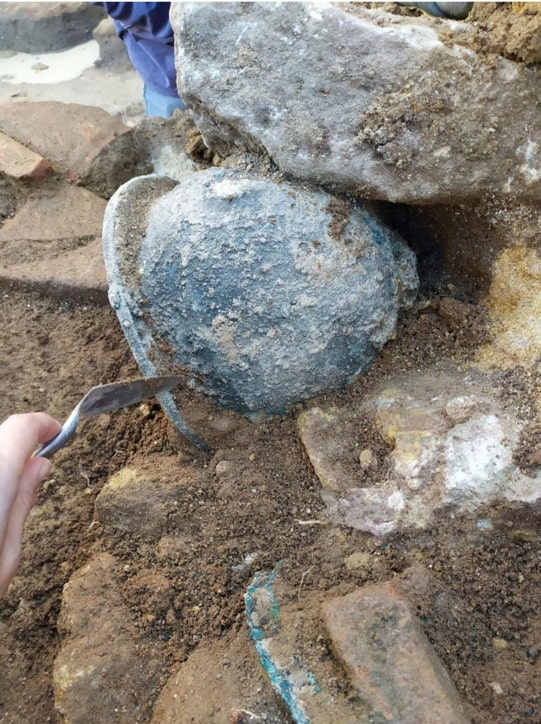
Archaeologists in southern Italy they have discovered the ruins of a painted brick wall and ancient warrior helmets at a site that might have been a forerunner of a temple dedicated to the goddess Athena
Archaeologists in southern Italy have discovered the ruins of a painted brick wall and ancient warrior helmets at a site that might have been a forerunner of a temple dedicated to the goddess Athena. Photo: ANSA

In 540 BC, a major naval battle took place off the coast of Corsica between the Phokaians, the Greek colonists who settled in the Corsican city of Alalia, and the Etruscans, who were allied with the Carthaginians. In the conflict, the Greeks understood the situation better but were forced to abandon Alalia and flee to the south of Italy, where they founded Hyele and later renamed Elea (Velia for the Romans).


📣 Our WhatsApp channel is now LIVE! Stay up-to-date with the latest news and updates, just click here to follow us on WhatsApp and never miss a thing!!


Velia is famed for being the home of an ancient Greek school of philosophy, including philosophers Parmenides and Zeno. It was part of Magna Graecia, the area of southern Italy colonized by Greek city-states. The settlement at Velia occupied an upper part, or acropolis, of the area as well as hillsides, and was surrounded by a wall.
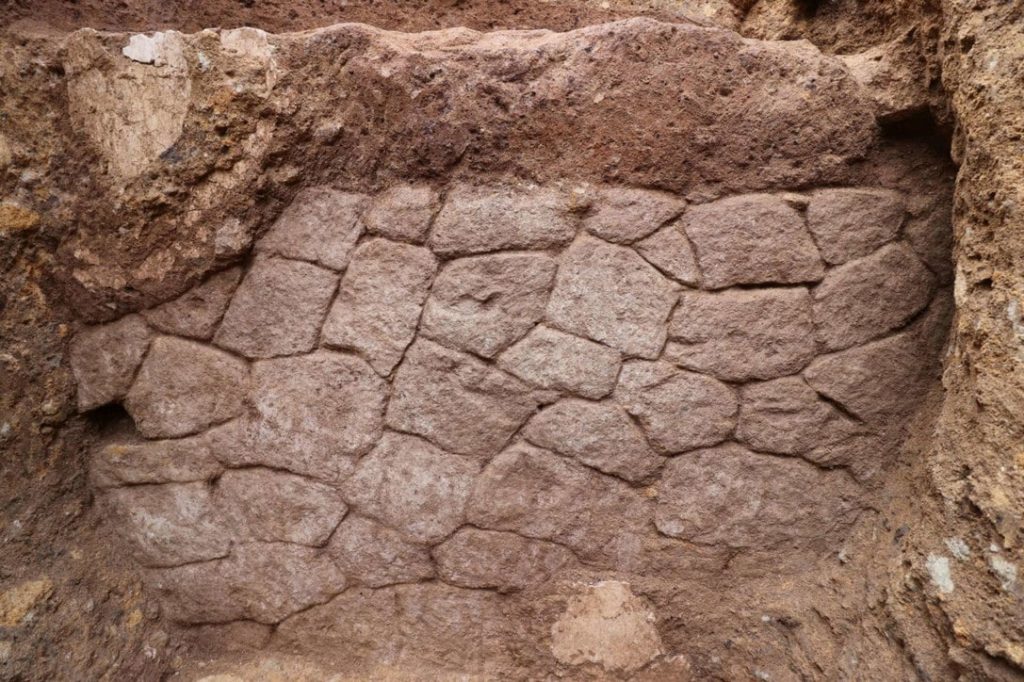
Archaeologists in southern Italy have discovered the ruins of a painted brick wall at a site that might have been a forerunner of a temple dedicated to the goddess Athena
Archaeologists in southern Italy have discovered the ruins of a painted brick wall at a site that might have been a forerunner of a temple dedicated to the goddess Athena. Photo: ANSA

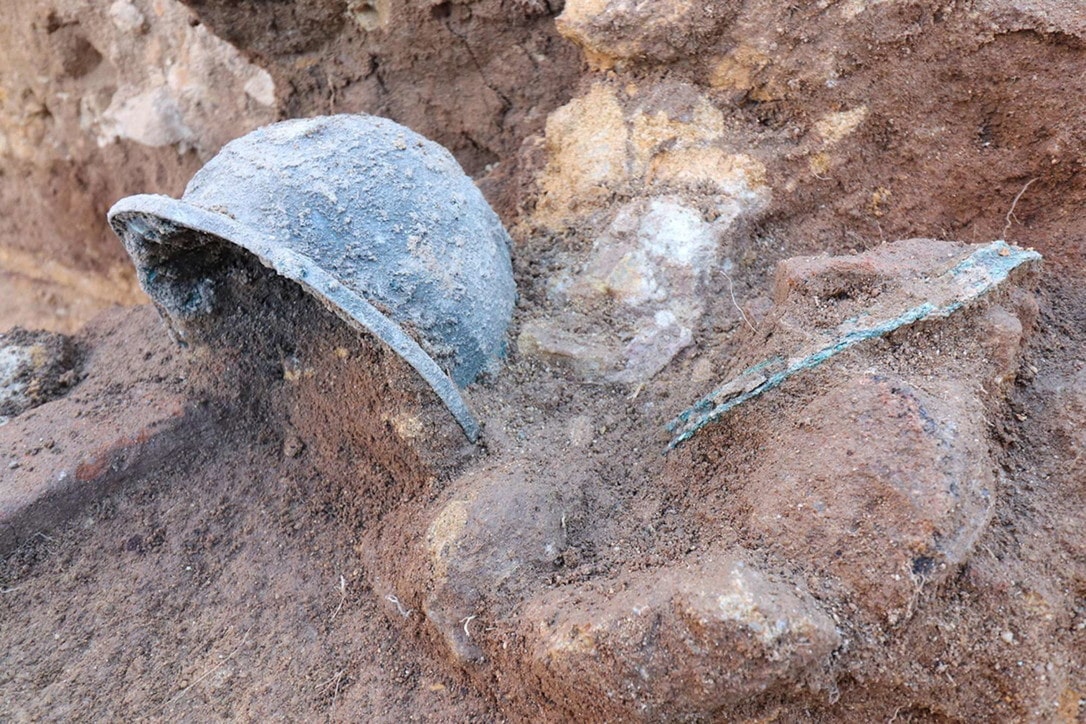
The recently completed excavation at Velia unearthed a pair of helmets in good condition, the remains of a building, vases with the Greek inscription for “sacred” and metal fragments of what possibly were weapons, the culture ministry said.

State Museums Director Massimo Osanna, who formerly had long directed excavations at Pompeii, Italy’s most celebrated excavated site, said the area explored at Velia probably contained relics of offerings made to Athena, the mythological Greek goddess of war and wisdom, after a key naval battle in the nearby Tyrrhenian Sea.
Related Articles

3700 years old Brain and skin remnants discovered at Bronze Age settlement in western Türkiye

5 September 2023

5 September 2023

Archaeologists discovered, well-preserved brain and skin remnants of two individuals dating to the Bronze Age during excavations at Tavşanlı Höyük...

Tanzania’s mysterious footprints were made by early humans, not bears

6 December 2021

6 December 2021

The prehistoric footprints discovered by archaeologists caused confusion because scientists looked at them again to determine whether they were left...

Builders of Massive 6000-year-old Menga Dolmen Likely Understood Geometry and other “Early Science” Concepts

25 August 2024

25 August 2024

Researchers say that a new analysis of the 6000-year-old stone Menga (also known as the Dolmen of Menga), supported by...

The ashes of 8,000 victims were found in two mass graves near the Soldau concentration camp in Poland

14 July 2022

14 July 2022

Polish authorities said they had unearthed two mass graves near the former Nazi concentration camp Soldau containing the ashes of...

Drought accelerated Hittite Empire’s collapse

9 February 2023

9 February 2023

Researchers have offered new insight into the abrupt collapse of the  Hittite Empire in the Late Bronze Age, with an...

5000-year-old jewelry factory found in Rakhi Garhi in India’s Indus Valley region

9 May 2022

9 May 2022

The Archaeological Survey of India (ASI) has made an important discovery by finding the remains of a 5000-year-old jewelry factory...

Was the mystery of Noceto Vasca Votiva the water ritual?

13 June 2021

13 June 2021

The Noceto Vasca Votiva is a one-of-a-kind wood building discovered in 2005 on a tiny hill in northern Italy. The...

Rare gladiator tombs were discovered in the Ancient City of Anavarza in southern Türkiye

10 August 2022

10 August 2022

Archaeologists have discovered rare gladiator tombs in the ancient city of Anavarza, known as the “Invincible city” in history, which...

A massive Rune stone found under a kitchen floor in Denmark declared treasure

8 June 2023

8 June 2023

A couple in Denmark discovered a massive rune stone weighing approximately 900 kilograms during a home renovation project that planned...

Archaeologists find new clues about North Carolina’s ‘Lost Colony’ from the 16th century

11 May 2024

11 May 2024

Archaeologists from The First Colony Foundation have yielded a tantalizing clue about the fate of the Lost Colony, the settlers...

The human remains of 29 people buried as offerings in a pre-Inca temple were found at the Huaca Santa Rosa de Pucalá excavation site

23 October 2021

23 October 2021

The human remains of 29 people buried as sacrificial offerings have been discovered in a pre-Inca temple in northern Peru....

An inscription containing the Turk name was discovered for the first time in Anatolia

3 September 2022

3 September 2022

For the first time in the pre-Islamic Early period Turkish history, an inscription bearing the inscription expression “Turk” and written...

Otto the Great’s Tomb Marble Did Not Come from Italy or Greece, New Research Reveals

19 December 2025

19 December 2025

A major archaeological discovery in Germany is reshaping long-held assumptions about one of Europe’s most iconic imperial monuments. The tomb...

3,500-Year-Old Human-Bodied, Eagle-Headed Seal Discovered in Central Türkiye

9 September 2025

9 September 2025

Archaeological excavations at Karahöyük in central Türkiye have led to a remarkable discovery: a 3,500-year-old human-headed, eagle-bodied seal. According to...

The Artificial Intelligence Revolution: The Dark Age of Ancient Scrolls Ends

2 May 2025

2 May 2025

Artificial intelligence, often envisioned for future applications, is now playing a pivotal role in unraveling the mysteries of the past....