
11 November 2025 The Future is the Product of the Past

Evidence of the oldest hunter-gatherer basketry in southern Europe discovered in Spanish Cave

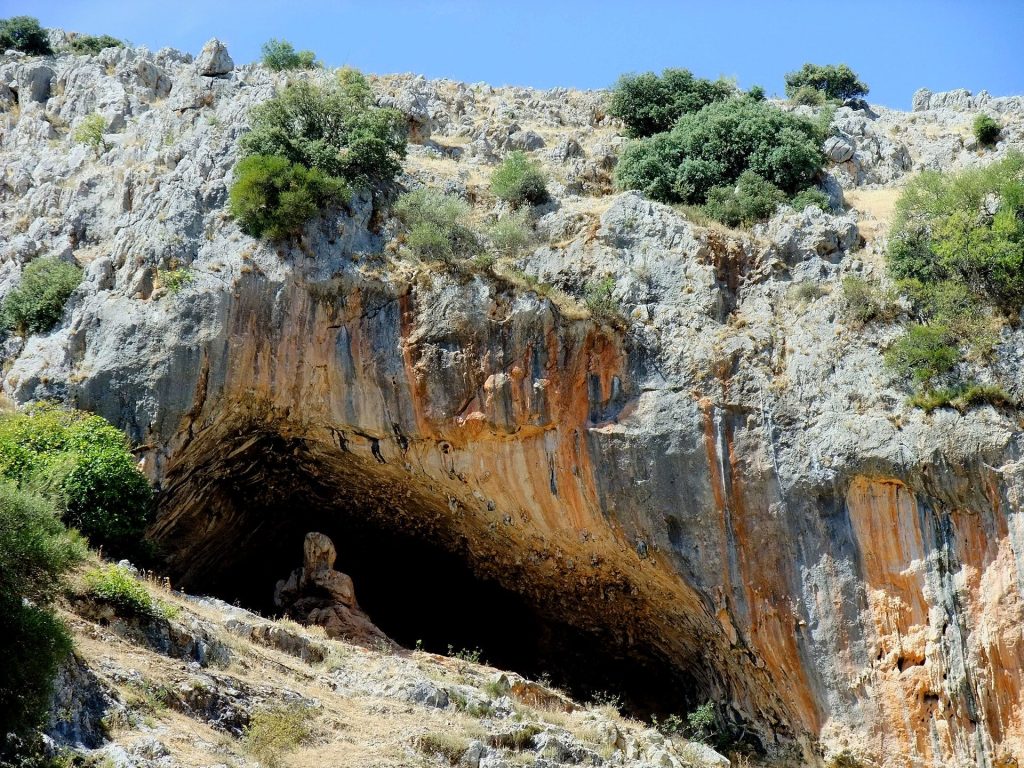
A team of scientists has discovered and analyzed the first direct evidence of basketry among hunter-gatherer societies and early farmers in southern Europe, (9,500 and 6,200 years ago), in the Cueva de los Murciélagos of Albuñol (Granada, Spain).

Intricate baskets and shoes found show that people living in Europe thousands of years ago were skilled at weaving objects from plant fibers.

Cueva de los Murciélagos, or the Cave of the Bats, is a cave system in southwest Spain discovered during mining activities in the 19th century. The cave’s excavations have revealed several mummified corpses alongside objects including baskets, sandals and a wooden hammer.

This site is one of the most emblematic archaeological sites of prehistoric times in the Iberian Peninsula due to the unique preservation of organic materials found there.

Francisco Martínez Sevilla at the University of Alcalá in Spain and his colleagues have now analysed 76 of these artefacts. The study has been published in Science Advances.


📣 Our WhatsApp channel is now LIVE! Stay up-to-date with the latest news and updates, just click here to follow us on WhatsApp and never miss a thing!!


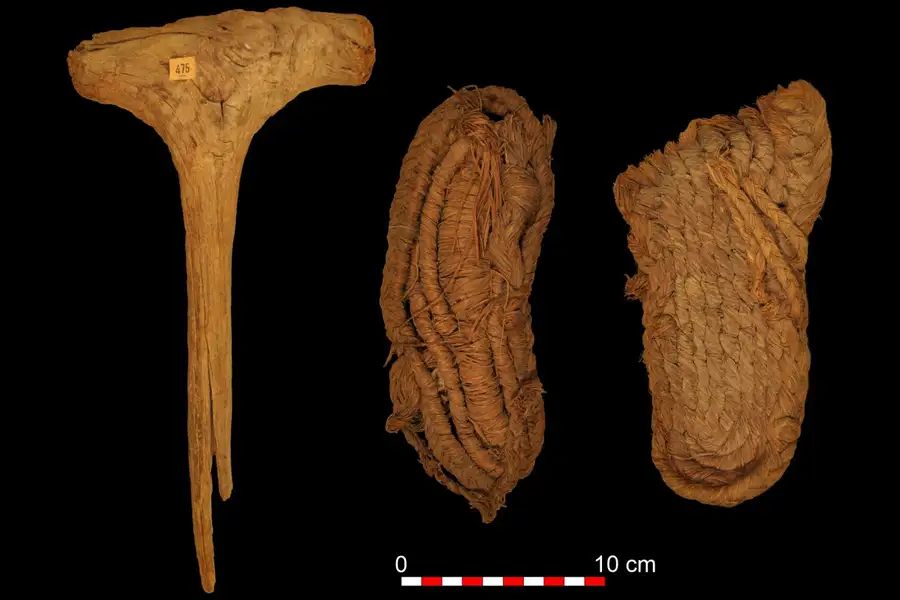
A wooden mallet and esparto sandals dated to around 6000 years ago
Photo: MUTERMUR project
A wooden mallet and esparto sandals dated to around 6000 years ago Photo: MUTERMUR project

Around 65 of the items were found to be made from a fiber called esparto grass. This includes a set of baskets, with either a flat or a more cylindrical shape, as well as sandals that were made by crushing and twisting the esparto. The other artifacts are made of wood and include tools such as a hammer and digging sticks.

The team carbon-dated 14 of these objects and found that they belonged to one of two time periods: 7950 to 7360 BC or 4370 to 3740 BC.

Francisco Martínez Sevilla, a researcher at the Department of Prehistory at the University of Alcalá, says older objects were created by hunter-gatherers in the Mesolithic age, while later objects were probably used by Neolithic farmers.

The oldest dated sandal was found to be around 6000 years old, which makes it the oldest shoe ever found in Europe, says Martínez Sevilla.
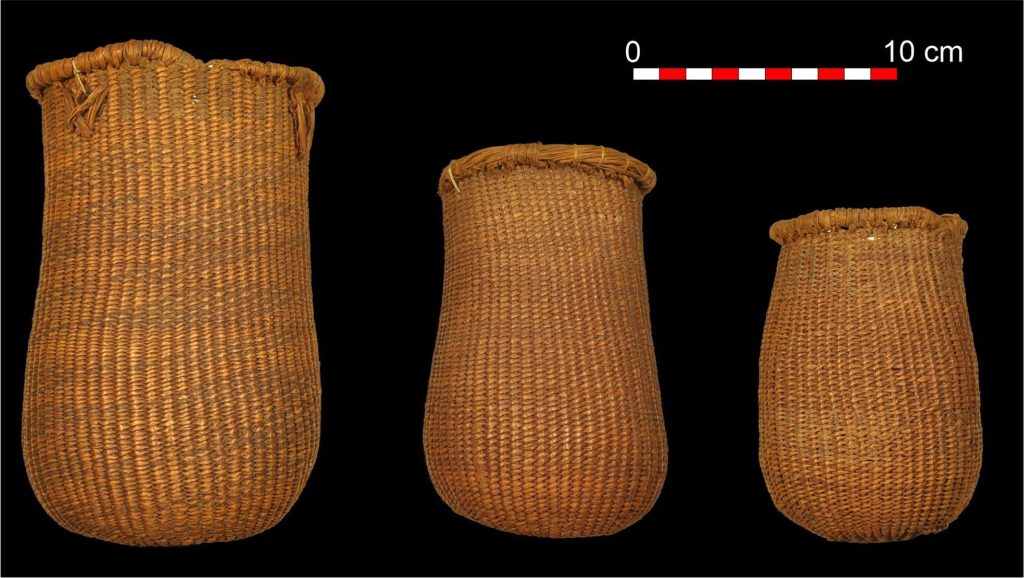

These esparto baskets are 9,500 years old. These days, artisans still use very similar techniques in southeastern Spain. Photo: MUTERMUR project

“The use of vegetal fibres in Europe is older than we expected,” says team member Maria Herrero-Otal at the Autonomous University of Barcelona in Spain. “We imagine the Mesolithic populations as simpler, but it seems that they were much more complex than we thought.”

Francisco Martínez Sevilla says, “the new dating of the esparto baskets from the Cueva de los Murciélagos of Albuñol opens a window of opportunity to understanding the last hunter-gatherer societies of the early Holocene.”

“The quality and technological complexity of the basketry makes us question the simplistic assumptions we have about human communities prior to the arrival of agriculture in southern Europe. This work and the project that is being developed places the Cueva de los Murciélagos as a unique site in Europe to study the organic materials of prehistoric populations.”

Cueva de los Murciélagos is located on the coast of Granada, to the south of the Sierra Nevada and 2 kilometers from the town of Albuñol.

DOI: 10.1126/sciadv.adi3055

Related Articles

Norwegian couple found a Viking Age Grave And Sword in their garden

3 July 2023

3 July 2023

While trying to expand their home, a Norwegian couple found a Viking Age grave and sword in their garden. It’s...

Iron Age Fortification Unearthed on the Trave: A Forgotten Stronghold of the Roman Imperial Period

26 September 2025

26 September 2025

Archaeologists investigating the Stülper Huk, a headland on the River Trave located in the German federal state of Schleswig-Holstein, have...

Silk Road archaeological discoveries draw attention despite the pandemic

20 June 2021

20 June 2021

A report prepared by more than 30 global experts believes that despite the COVID-19 pandemic, archaeological discoveries related to the...

2000-year-old tomb guarded by two bull heads found in Tharsa Ancient City, Türkiye

18 May 2024

18 May 2024

In Türkiye, archaeologists have discovered a new 2000-year-old tomb protected by two bull heads during excavation and cleaning efforts in...

Early Anatolian Genes: Genetic Links Between Girmeler Mound and 17,000-Year-Old Pınarbaşı Skeletons

16 April 2025

16 April 2025

Recent archaeological excavations at Girmeler Mound, located near the ancient Lycian city of Tlos in southwestern Türkiye, have not only...

Early humans appreciated geometry and symmetry and were intentionally crafting spherical shapes 1.4 million years ago, according to a new study

7 September 2023

7 September 2023

An examination of 150 round, baseball-sized stones discovered at a site where early humans lived 1.4 million years ago shows...

A New Hypothesis Tries to Explain What Triggers People’s Big Brains

14 March 2021

14 March 2021

The big brain is the decisive feature of our species. Not only are they the most complex organs in the...

Norse Runic Text found in Oslo could be Prayer!

30 December 2021

30 December 2021

Archaeologists from the Norwegian Institute for Cultural Heritage Studies (NIKU) have unearthed two objects inscribed in Norse runic text in...

Archaeologists may have uncovered a 13th-century castle in Shropshire

7 August 2021

7 August 2021

Archaeologists have been working on a mound of land in Wem, Shropshire, that belongs to Soulton Hall, Elizabethan mansion and...

A 42,000-year-old pendant found in northern Mongolia may be the earliest known phallic art

20 June 2023

20 June 2023

An international team of researchers has found a pendant in northern Mongolia that may be the earliest known example of...

In Bergama, the City of Greek Gods, the People Kept the Cult of Cybele Alive

25 August 2021

25 August 2021

The figurines of Cybele, the goddess of the fertility of Anatolia, and the presence of sanctuaries unearthed in the Ancient...

Danish museum says Vikings had stained glass Windows

15 October 2023

15 October 2023

New research shows that  Viking Age windows were created using stained glass in the 9th century, contrary to popular belief...

Unearthing Secrets of Ancient Cyprus: New Discoveries at Pyla-Vigla Reveal Hidden Stories of a Hellenistic World

8 November 2025

8 November 2025

In a remarkable new chapter for Cypriot archaeology, researchers from the Pyla-Koutsopetria Archaeological Project (PKAP) have unveiled groundbreaking findings from...

“Non-returning” Aboriginal boomerangs were discovered in Cooper Creek dried-up riverbed

22 November 2021

22 November 2021

The drying waters of the Cooper Creek river have revealed extremely rare 4 boomerangs that have been partially buried. The...

Dacian Treasure Discovered in Romania, Possibly Indicating a Hidden Settlement in Breaza

12 April 2025

12 April 2025

In the spring of 2025, an extraordinary archaeological discovery was made in the Breaza commune of Mureș County, Romania, when...