26 December 2025 The Future is the Product of the Past

A secret chamber has been found in the famous Gorham Cave Complex

A cave chamber sealed off by sand for some 40,000 years has been discovered in Vanguard Cave inside the Gorham’s Cave Complex.

The cave was originally explored in 1997, and a study was launched in 2012 to see whether there were any tunnels or chambers that had been obliterated by later silt. Archaeologists from the Gibraltar National Museum uncovered a huge room at the far back of Vanguard Cave a few weeks ago, nine years later.

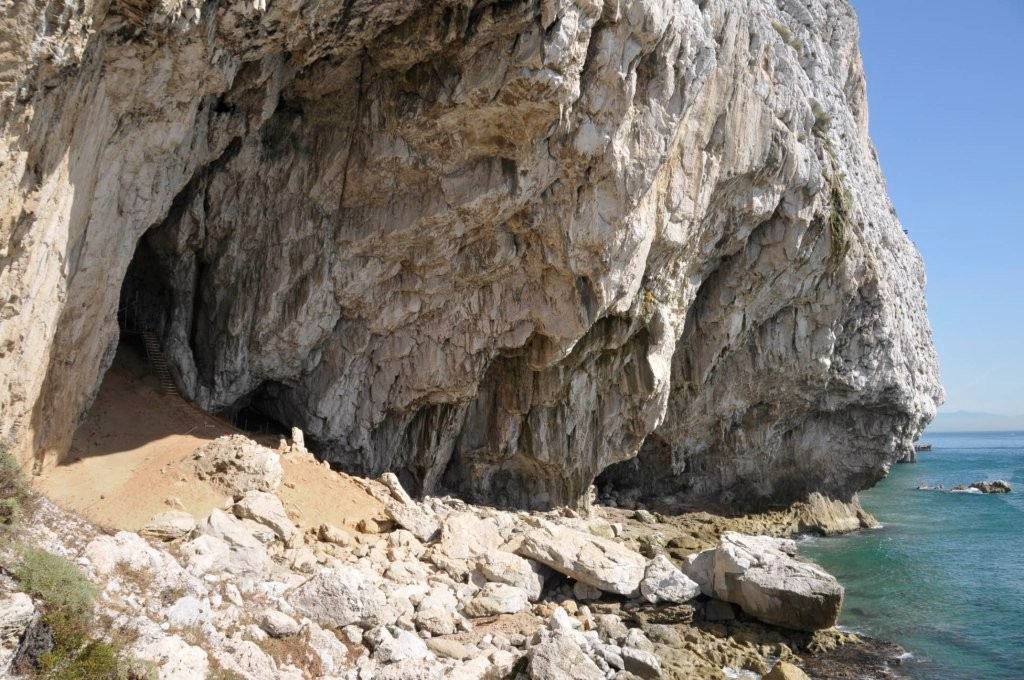
The complex, which is located on the eastern side of the Rock of Gibraltar, is made up of numerous caverns, including Vanguard Cave, Hyaena Cave, and Bennett’s Cave.

This cave chamber is a discovery that could reveal more about the Neanderthals living in the area at that time. Neanderthals and modern people have lived in the Gorham cave complex for thousands of years, leaving behind fossils, tools, evidence of bonfires, the remains of slaughtered animals, and even early artworks in the form of scratches.

According to the statement from the Gorhamcave website, a Preliminary investigation has revealed a 13-meter chamber on the very roof of the cave. This chamber had been sealed for at least 40 thousand years.


📣 Our WhatsApp channel is now LIVE! Stay up-to-date with the latest news and updates, just click here to follow us on WhatsApp and never miss a thing!!
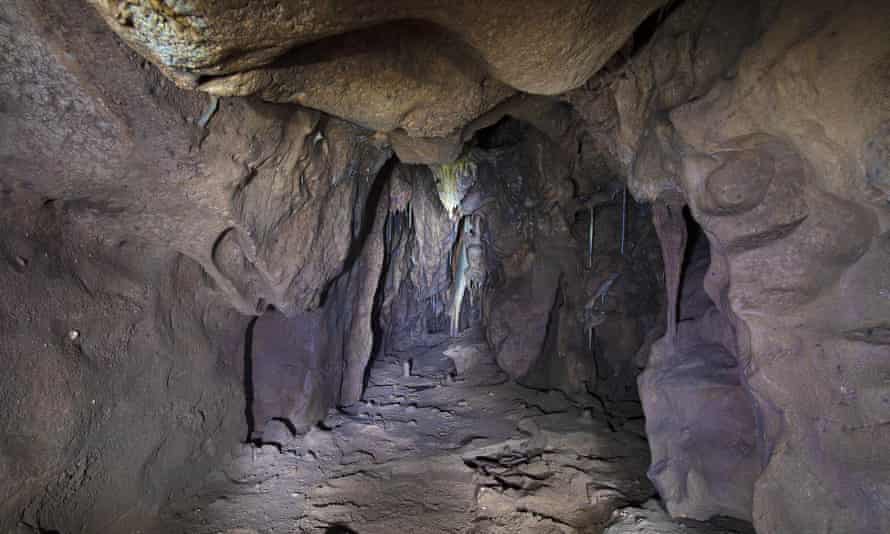


Archaeological investigations at Vanguard Cave will continue, as will the search for burial sites within the cave complex.
Archaeological investigations at Vanguard Cave will continue, as will the search for burial sites within the cave complex. Photo:Gibraltar National Museum

Initial surface finds have produced remains of lynx, hyaena, and Griffon Vulture as well as scratch marks on the walls, produced by a carnivore as yet to be identified. There is also a large whelk which must have been transported up to the chamber which, even today, is well away from the coast. There is also evidence of ancient earthquakes.

Speaking to the Guardian, Clive Finlayson, director of the Gibraltar National Museum said it was “almost like discovering the tomb of Tutankhamun” when he and his colleagues ventured into “a space that no one’s been into for 40,000 years.” To which he added: “It’s quite sobering, really.”

Finlayson stated that there was a sea shell, specifically a large dog whelk shell especially a large shark shell, and that the cave was 20 meters above the sea, “so clearly somebody took it up there some time before 40,000 years ago.” The shell is “already a hint that people have been up there,” he said.

Commenting on the discovery, Minister John Cortes said: “these are exciting finds that open a new chapter of our rich history. Knowing Vanguard cave well, I often wondered what might lie behind the sands. Now we are beginning to get the first glimpse”. The work in this chamber will now continue with the prospect of exciting finds that have remained sealed for over 40 thousand years.

Scientists have speculated that this cave system may have been one of the last places Neanderthals lived before they went extinct around 40,000 years ago. Future discoveries could shed new light on the Neanderthals, a group of humans that became extinct about 40,000 years ago, and possibly as much as 32,000 years ago.
Related Articles

Unique ‘Good Shepherd Jesus’ Fresco Unearthed in Iznik: A One-of-a-Kind Discovery in Anatolia

10 December 2025

10 December 2025

Archaeologists in Türkiye have uncovered a remarkable Early Christian fresco depicting the ‘Good Shepherd Jesus’, a motif rarely found in...

Scientists Create a 3D Model of Lost Temple Relief from a 134-Year-Old Photo Using AI

13 November 2024

13 November 2024

The researchers developed a neural network that can take a single 2D photo of a three-dimensional object and produce a...

Findings showing the connection between Troy and Tavşanlı Höyük have been reached

23 August 2022

23 August 2022

Archaeologists unearthed 4,200-year-old hazelnut remains and marble idols during excavations at Tavşanlı Höyük (Tavsanlı Mound), located in the central Turkish...

Roman mosaic found under the pavement in the narrow streets of Hvar

13 February 2022

13 February 2022

In the Old Town on the Adriatic island of Hvar, Croatia, a Roman mosaic was unearthed beneath a narrow street....

Slavic settlement and burial ground with two unusual graves discovered in Saxony-Anhalt

7 August 2024

7 August 2024

Archaeologists from the State Office for Monument Preservation and Archaeology (LDA) of Saxony-Anhalt have uncovered a wealth of medieval treasures,...

The Mountain of Shemharus, King of the Ginn: Toubkal

14 August 2022

14 August 2022

Towering over the Atlas Mountains, Mount Toubkal is the highest peak in Morocco. Toubkal, the highest mountain in all of...

10,000-year-old Sculptures and Figurines holding Phallus of the Taş Tepeler in the southeast Turkey

17 June 2022

17 June 2022

One of the common features of male depictions with similar features found in the region called Taş Tepeler (Stone Hills),...

Roman era total of 46 early settler burials discovered in Germany

17 September 2023

17 September 2023

Students from Goethe University Frankfurt, in collaboration with the Hesse archeology department at the Darmstadt branch of the State Monument...

42,000-year-old Shell Jewellery Workshop Discovered – The Oldest in Western Europe

27 September 2025

27 September 2025

Archaeologists have made a groundbreaking discovery in Saint-Césaire, Charente-Maritime, uncovering what is now considered the oldest shell jewellery workshop in...

Neanderthals caused ecosystems to change 125,000 years ago

16 December 2021

16 December 2021

Researchers say Neanderthals changed the ecosystem by turning forests into grasslands 125,000 years ago. Around 125,000 years ago, these close...

Neanderthal Fingerprint on 50,000-Year-Old Pebble Could Be Europe’s Oldest Portable Artwork

29 May 2025

29 May 2025

New analysis reveals that a pebble marked with ochre and a fingerprint could be the earliest known example of transportable...

Early Farmers in Central Asia? 9,000-Year-Old Barley Harvest in Uzbekistan Challenges Agricultural Origins

1 September 2025

1 September 2025

Archaeologists have uncovered groundbreaking evidence in southern Uzbekistan that reshapes our understanding of when and where farming began. A new...

A 1000-year-old Viking silver treasure found in Sweden

31 October 2022

31 October 2022

Archaeologists have discovered a 1,000-year-old silver Viking treasure at Täby, Viggbyholm, outside of Stockholm. The treasure was found during an...

Not From Denmark After All: Legendary Hjortspring Boat Linked to Baltic Raiders

11 December 2025

11 December 2025

One of Northern Europe’s most enigmatic archaeological finds—the 2,400-year-old Hjortspring Boat—may finally be giving up its secrets. New scientific analyses,...

A new study in Portugal suggests that mummification in Europe may be older than previously thought

3 March 2022

3 March 2022

New research on the hunter-gatherer burial sites in the Sado Valley in Portugal, dating to 8,000 years ago, suggests that...