6 December 2025 The Future is the Product of the Past

Mysterious Archaeological find in Flanders Revealed to be Hernia Truss

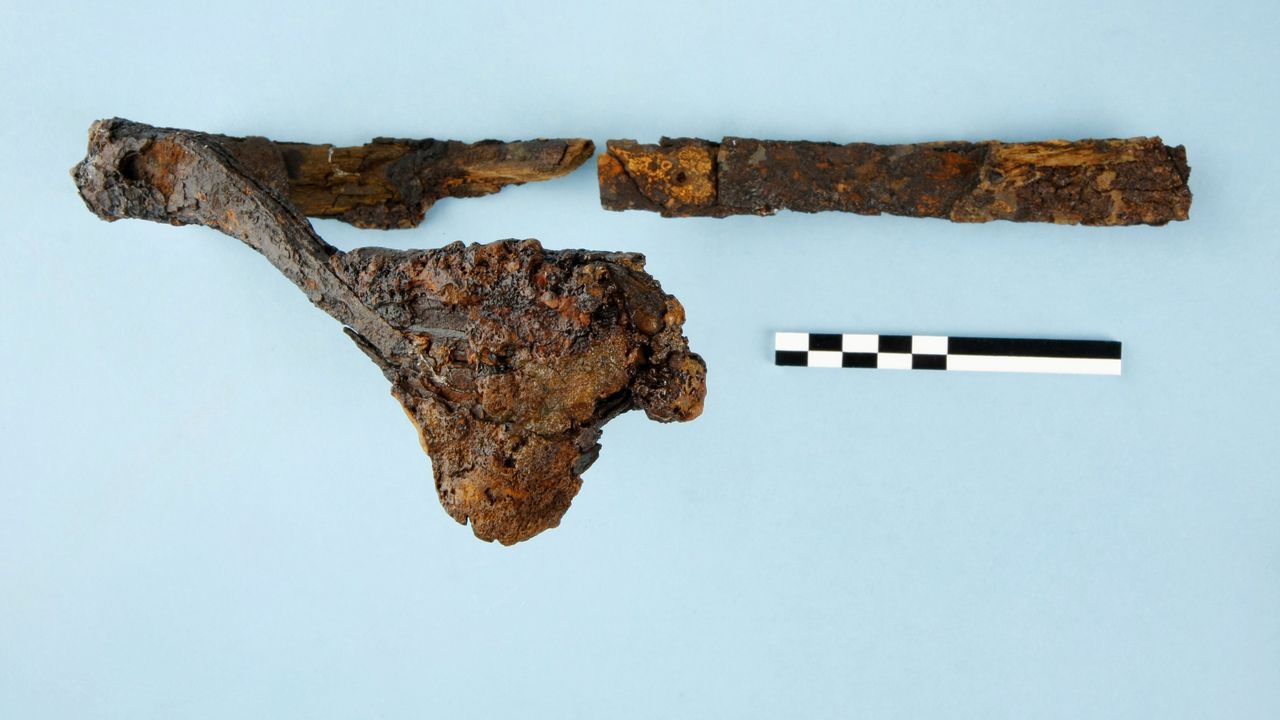
The hernia truss found during the Hopmarkt excavations in Aalst, in the Belgian state of East Flanders, was a surprise for the researchers.

An archaeological survey was conducted in the city of Aalst in Hopmarkt in 2004-2005. Among other things, archaeologists studied a significant part of the Carmelite monastery (1497 – 1797). In the convent of this monastery, they found a strange object in the form of an arc, in layers corresponding to the tomb levels. Its original function was not known.

After some of their studies, the researchers discovered the object was a kind of belt used in people with inguinal (groin) hernias.

“It is a kind of belt that was used for people with inguinal (groin) hernia. Patients with this condition have a cavity in the abdominal wall through which intestines bulge out,” Jan Moens of the Agency for Immovable Heritage said on Flemish radio.

“The belt consists of metal, leather and a pressure ball that keeps everything in place at the site of the wound.”


📣 Our WhatsApp channel is now LIVE! Stay up-to-date with the latest news and updates, just click here to follow us on WhatsApp and never miss a thing!!
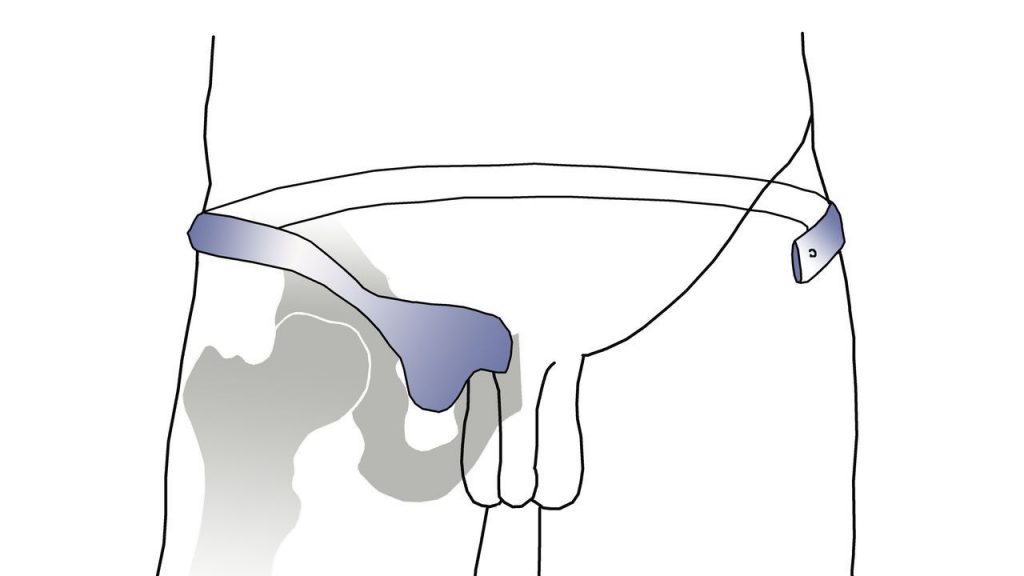


Photo: Flemish Agency for Immovable Heritage

The trusses have been used for centuries, with doctors and surgeons even bringing all kinds of different models on the market, according to him.

As an archaeological find, however, they are rather rare. “In the Netherlands, a few have turned up, but this is a first for Flanders.”

Additionally, the find is even more special, because the belt’s owner was found as well, as if by chance.

“At the moment, we are conducting another study in which we are analysing the Codex 156. That is a very old book that is in the library of the University of Leuven,” Moens said. “It also contains the accounts of the Carmelite monastery of Aalst from 1738 to 1796. And the name of brother Patrick, the patient who suffered from an inguinal hernia, also appears in it.”

In the Codex, there is a first mention under the year 1754, when the monastery paid five nickels for the belt

“Such a belt is not expensive when you compare it to the other costs in the list, it cost about as much as a chicken back then,” he said.

A new report was found in 1758, then explicitly mentioning the name of monk Patrick. “It is very special that so many years later and after further research, we can even put a face to an 18th century find about which we were in the dark for a long time.”

Source: The Brussels Times

Cover Photo: Flemish Agency for Immovable Heritage
Related Articles

Interesting from Each Other 7 Amazing Historical Discoveries

21 April 2021

21 April 2021

Archaeologists signed interesting from each other and magnificent discoveries with their work in the last 20 years. Let’s take a...

Michelangelo, the artistic giant, was actually rather short

3 September 2021

3 September 2021

The legendary Michelangelo Buonarroti left huge works behind as an artist. But Italian researchers found that the shoes of this...

New Details on Mummification Techniques

28 February 2021

28 February 2021

In ancient Egypt, embalming was considered a sacred art, and knowledge of the process was restricted to a few. Egyptologists...

Vampires Were Born Here: The Forgotten Serbian Village Behind the World’s Oldest Vampire Legend

18 July 2025

18 July 2025

Picture a quiet Balkan village at dusk: the sun dips behind dense forests, mist curls around forgotten gravestones, and the...

Dental Treatments That Surprised Neanderthals

10 April 2021

10 April 2021

Before the invention of modern dental instruments, people tried to treat teeth using primitive methods. Nobody wants to have a...

A Lynx Buried with Four Big Dogs in an Ancient Roman Well in Hungary

17 April 2024

17 April 2024

Archaeologists have discovered the skeleton of an adult male lynx accompanied by four big dogs in a Roman-era pit in...

Ancient ‘hangover cure’ found at Israel winery excavation

11 November 2021

11 November 2021

Israeli archaeologists have unearthed an ancient amethyst ring thought to have been worn to stop hangover at the world’s largest...

The mystery of Cathedral of Salamanca’s astronaut figure, isn’t what people think it is

10 March 2022

10 March 2022

There is a photograph of an “astronaut” carved in a 16th century Spanish cathedral in Salamanca. Known as the Catedral...

The World’s First Pet Cemetery May Have Been Found in Ancient Egypt

2 March 2021

2 March 2021

Hundreds of animal skeletons found in Berenice harbor in 2011 made researchers think that this place was used as a...

The Historical Building Next To The Million Stone Will Sell

6 February 2021

6 February 2021

Everyone has heard of the Million Stone, which was built during the Byzantine Empire and accepted as the zero points...

The world’s earliest drawing of a ghost discovered in the British Museum vault

17 October 2021

17 October 2021

The world’s earliest drawing of a ghost has been unearthed in the gloomy vaults of the British Museum. The British...

In China, 2700-Year-Old Face Cream Made from Moon Milk for Men was Found

14 February 2021

14 February 2021

At a Chinese excavation site with Chinese and German researchers, evidence of a 2,700-year-old male facial cream was found. In...

Al-Ula, The Living Museum of Ancient Arab Civilizations

12 February 2021

12 February 2021

Al-Ula oasis is located in the lush Wadi Al-Qura, or “valley of villages”, about 110 km southwest of the modern...

Rai Stones and Bitcoin Similarity

5 June 2021

5 June 2021

Human civilizations tend to assign monetary worth to goods based on scarcity, among other factors. This is unquestionably true in...

The Most Important Works of Achaemenid Persian Metalwork “Oxus Treasure”

21 May 2021

21 May 2021

The Oxus Treasure is a collection of 180 precious metal objects unearthed on the north bank of the Oxus River...