
23 June 2026 The Future is the Product of the Past

2nd-Century Statue Head Discovered at Fethiye Castle

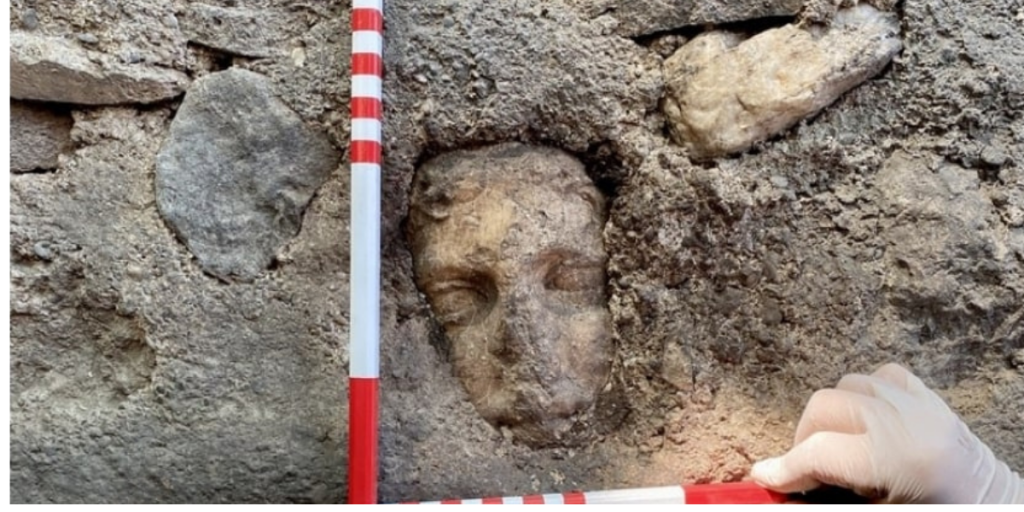
Türkiye’s coastal town of Fethiye, which is famous for its natural beauties and historical sites, found an 1800-year-old statue head thought to belong to the god Apollo during excavations in Fethiye castle.

The castle was originally built during the time of the ancient Lycian city of Telmessos. Fethiye Castle was vital in protecting the ancient Lycian city of Telmessos. The fortress was an essential part of the city’s defensive infrastructure, ensuring the safety and security of its inhabitants.

This ancient city was the largest and most important in the Lycian region, making the castle a significant structure for the area. The Castle of Fethiye has witnessed several transitions in its history. During the Byzantine period, it underwent significant reconstruction, and later, it was taken over by the Knights of St. John.

Under the direction of the General Directorate of Cultural Heritage and Museums of the Ministry of Culture and Tourism, in cooperation with the Muğla Governorship, the district governorship, Fethiye Municipality, and Fethiye Museum, the excavation work at the castle, which is situated in the Kesikkapı neighborhood of the Fethiye district, is still ongoing. Three years ago, the excavation got underway.
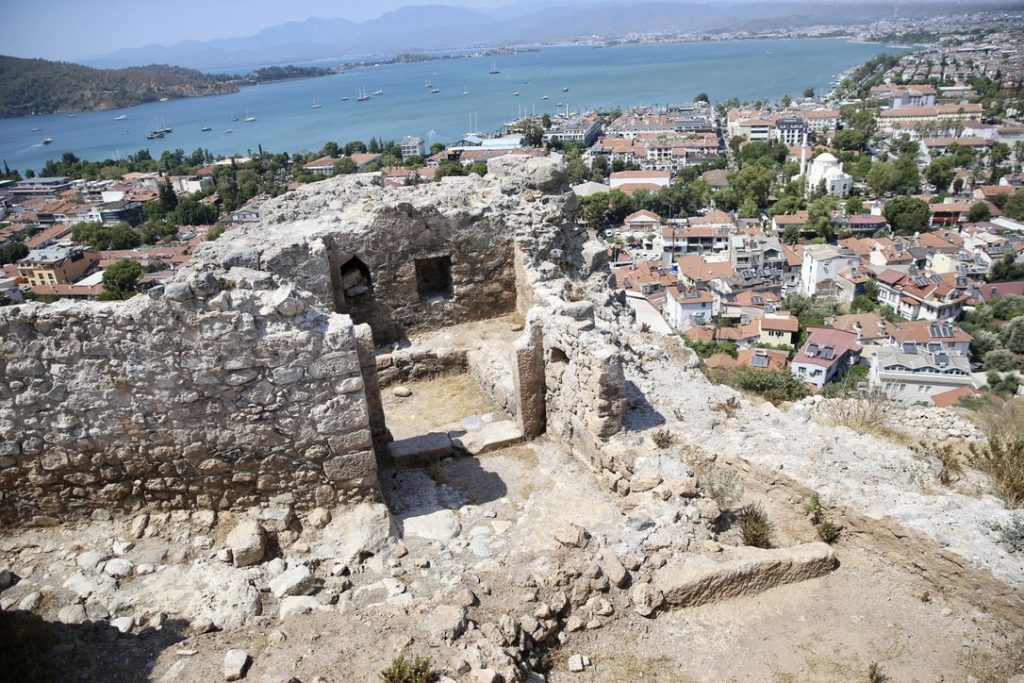
During the excavation, which was conducted under the scientific responsibility of Professor Kadir Pektaş, a statue head believed to belong to Apollo was discovered in the castle wall.


📣 Our WhatsApp channel is now LIVE! Stay up-to-date with the latest news and updates, just click here to follow us on WhatsApp and never miss a thing!!


Pektaş, who is also the scientific director of the Fethiye Castle excavation, informed Anadolu Agency (AA) that the excavation work is part of the Ministry of Culture and Tourism’s “Legacy to the Future” project.

“During our work in the inner castle, in the area where the flagpole is located, a statue head, which we estimate to date back to the period around the A.D. second century, was found inside the wall. This is a very important piece for us. In addition, coins from the Turkish-Islamic period, the Ottoman period, and the Menteşe Beylik were also discovered,” he said.
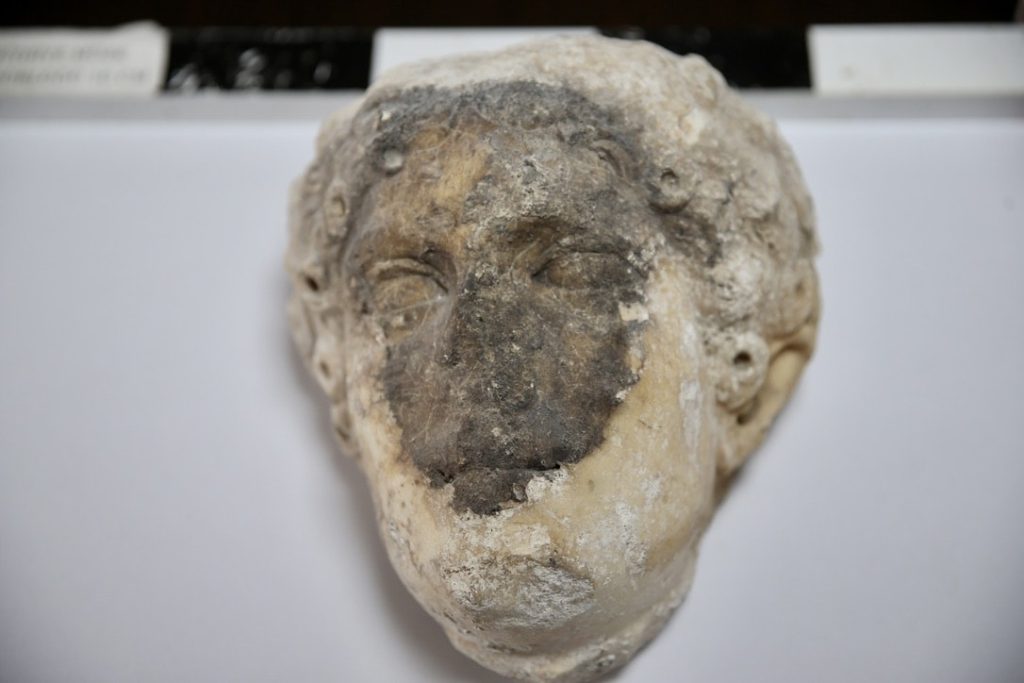
Photo: AA

He mentioned that research is ongoing to determine to whom the statue head belongs, saying: “The statue head may belong to Apollo or another historical figure.”

In the interior of the fortress, cannonballs, items used in daily life and ceramic fragments were also unearthed.

Cover Image: AA

Related Articles

The First Ancient Celtic Languages Dictionary Reconstructs Britain and Ireland’s Early Linguistic Past

15 December 2025

15 December 2025

Aberystwyth scholars unite fragments of language to reveal the forgotten linguistic landscape of the Celtic world For centuries, the ancient...

Archaeologists Unveil Sanctuary of Odysseus on Ithaca: A Monumental Discovery Rooted in Myth and History

15 June 2025

15 June 2025

A major archaeological breakthrough on the Greek island of Ithaca has brought new clarity to the island’s legendary past. Researchers...

The ruins believed to belong to Noah’s Ark date back to 5500-3000 years BC.

26 October 2023

26 October 2023

Rock and soil samples taken from the area where the ruins of ‘Noah’s Ark‘ are believed to be located in...

2,500-Year-Old Phoenician Shipwreck Being Rescued By Spanish Archaeologists

6 July 2023

6 July 2023

A 2,500-year-old Phoenician shipwreck has been found underwater in the southeastern Spanish region of Murcia. An extraordinary Phoenician shipwreck dating...

Archaeologists Unearthed a Rare Hoard of Hasmonean Coins in Jordan Valley

31 December 2024

31 December 2024

A team of archaeologists from the University of Haifa discovered a rare hoard of approximately 160 coins during an excavation...

2300-Year-Old Dancing Terracotta Figurine Reveals Early Presence of Jainism in Pakistan

19 January 2026

19 January 2026

Recent archaeological discoveries at Bhir Mound, the earliest urban settlement of ancient Taxila, located near modern-day Islamabad in Pakistan’s Punjab...

Research Helps İlluminate the History of the Scythians with 111 Ancient Genomes

27 March 2021

27 March 2021

Due to their interactions and conflicts with the major contemporaries of Eurasia, the Scythians enjoyed legendary status in history and...

One of the oldest known mosques in the world uncovered in Israel

23 June 2022

23 June 2022

A team of Israeli archaeologists has discovered what is one of the oldest known mosques in the world. Israeli archaeologists...

Researchers Finds Nearly 500 Ancient Ceremonial Sites in Southern Mexico with Lidar Technique

26 October 2021

26 October 2021

A team of international researchers led by the University of Arizona reported last year that they had uncovered the largest...

Archaeologists, First-ever Roman-era Tombs Dug Directly into the Rock Uncovered in Al Bahnasa, Egypt

8 January 2024

8 January 2024

Spanish archaeologists made a ground-breaking discovery of rock-hewn Ptolemaic and Roman tombs, mummies, coffins, golden masks, and terracotta statues in...

8,000-year-old Cave paintings found in Türkiye’s İnkaya Cave depict life and death

10 September 2023

10 September 2023

A number of cave paintings dating back some 8,000 years have been found in İnkaya cave in the Marmara province...

Yale Archaeologist discovered an “arcade” of rock-cut ancient mancala game boards in Kenya

2 February 2024

2 February 2024

Veronica Waweru, a Yale University archaeologist conducting fieldwork in Kenya, discovered an “arcade” of ancient Mancala game boards carved into...

Archaeologists find the largest bronze beast of Sanxingdui ruins

4 September 2022

4 September 2022

The largest and only one of its kind discovered in China to date, the bronze beast was discovered by archaeologists...

The inhabitants of Pınarbaşı Höyük in central Turkey may be the ancestors of the Boncuklu Höyük and Çatalhöyük neolithic human communities

27 July 2022

27 July 2022

The Department of Excavations and Researchs, which is affiliated with the Ministry of Culture of the Republic of Turkey, attracted...

The Taş Tepeler Horizon Expands: Göbeklitepe-Style T-Pillars Discovered in Adıyaman

27 January 2026

27 January 2026

Göbeklitepe-style T-shaped pillars discovered in Adıyaman reveal the wider Taş Tepeler culture and reshape the Neolithic map of Upper Mesopotamia....