
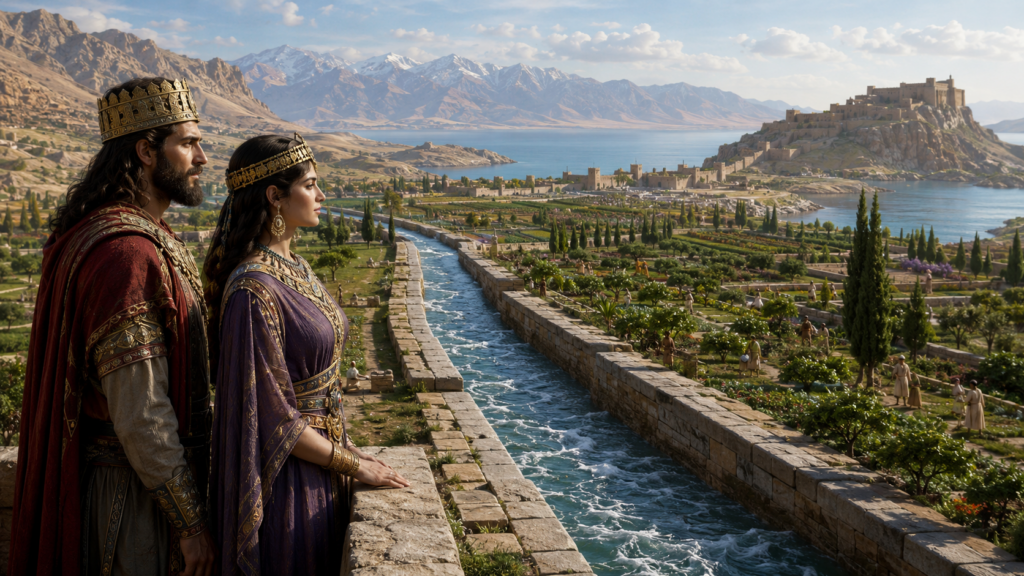
The 2,800-year-old Şamran Canal in Van, built by Urartian King Minua, still carries the story of Queen Tariria, a royal garden, and one of ancient Anatolia’s greatest waterworks.
In eastern Türkiye, the Şamran Canal is more than an ancient waterway. Nearly 2,800 years after it was built by the Urartian king Minua, the canal still runs through the landscape of Van, carrying with it a story in which engineering, royal power, and the memory of a woman named Tariria are closely tied together.
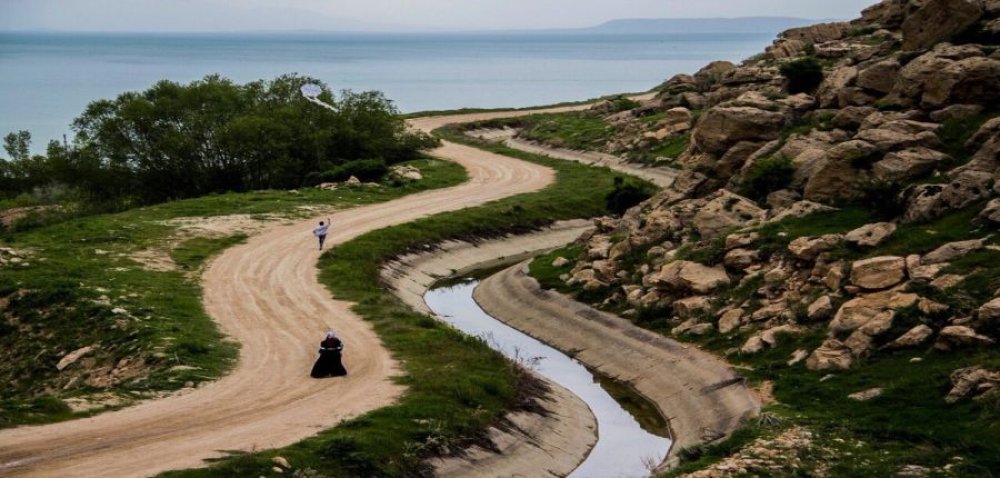
Known in antiquity as the Minua Canal, the structure brought water from the Gürpınar district toward the Van Plain, passing through Edremit before reaching the lands around the Urartian capital of Tushpa, today associated with Van Fortress. Local tradition remembers the canal and the nearby Tariria Garden as a royal gift — a garden planned by King Minua for Tariria, usually described as his wife, though some sources leave open the possibility that she may have been his daughter.
A royal garden beside an ancient canal
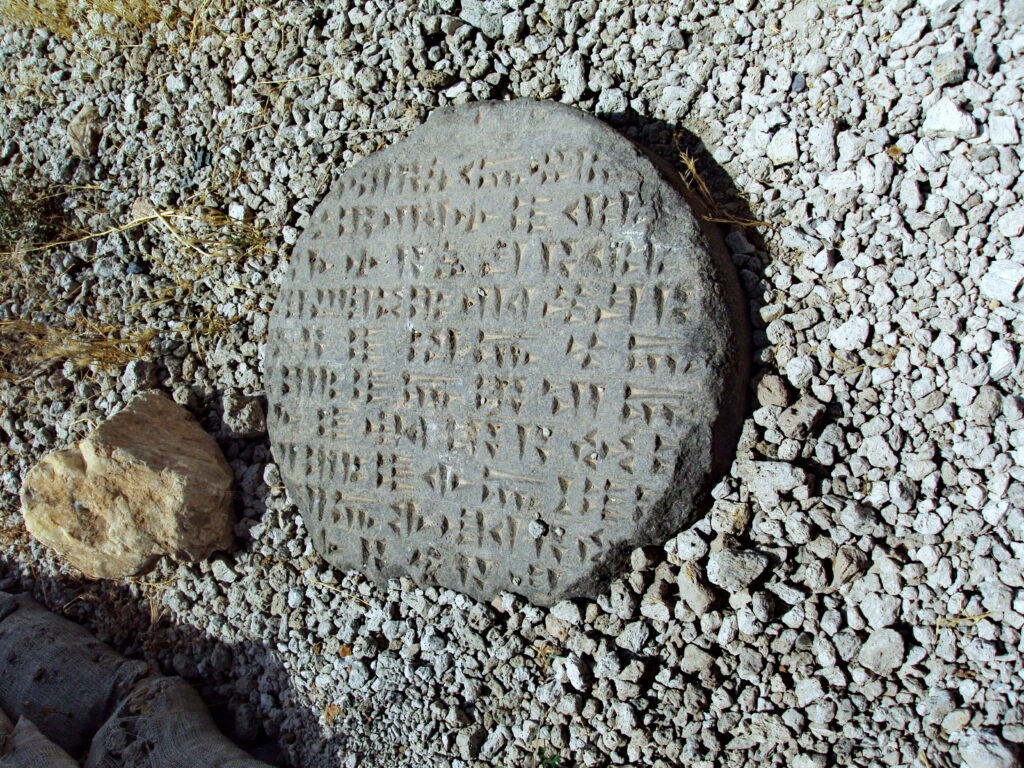
The strongest historical link between Tariria and the canal comes from a cuneiform inscription at Kadembas, also known locally as Yeşilvadi, in Edremit. The inscription connects a vineyard or garden named Taririahinili with Tariria, a royal woman associated with Minua. Archaeologist Sabahattin Erdoğan of Van Yüzüncü Yıl University argues that the garden and the canal were planned together and that their location away from the main capital was not accidental.
The romantic version is easy to understand: a king builds a garden for the woman he loves and brings water across difficult terrain to keep it alive. But the historical picture is more layered. In the ancient Near East, royal gardens were not only private spaces of pleasure. They were also statements of power, fertility, order, and control over nature. A canal that could turn dry land into orchards and vineyards was a political message as much as an act of affection.
That is why the Tariria story matters. It is not just a legend about love. It shows how Urartian kings used water, landscape, and inscriptions to shape public memory.
The engineering behind the legend
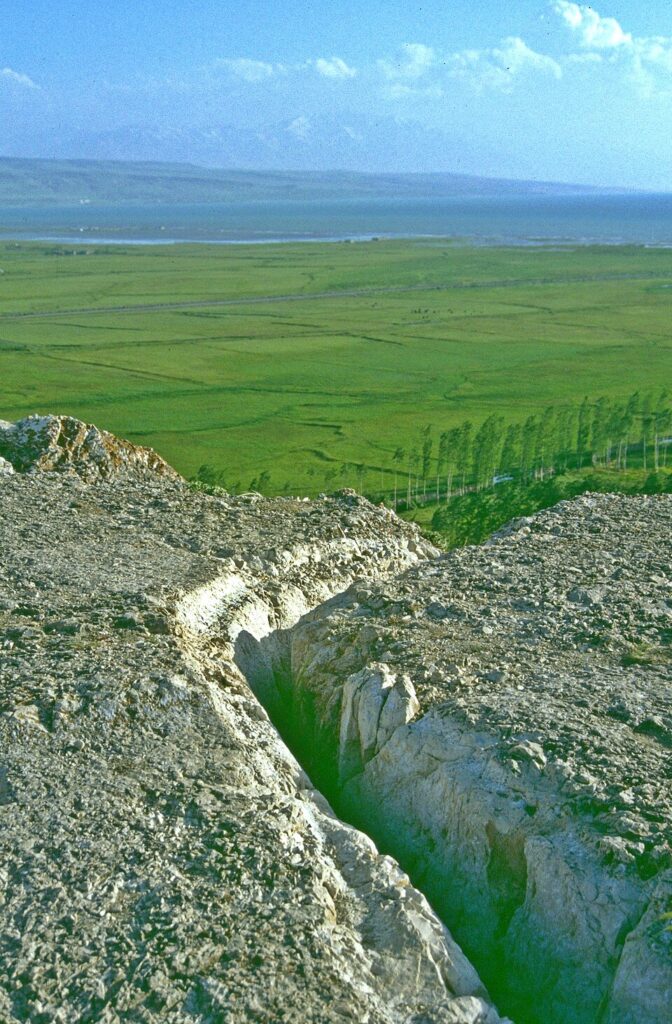
The Minua Canal was one of the major hydraulic works of the Urartian Kingdom, which dominated the Lake Van basin and surrounding highlands during the Iron Age. Studies describe the canal as running for roughly 51 kilometers, fed by water from the Yukarı Kaymaz area near Gürpınar and carried toward the Van Plain. In difficult sections, the builders cut through bedrock, built retaining walls, and used engineering solutions that allowed water to cross broken terrain.
Modern measurements vary because the canal’s route was altered and repaired over time. Erdoğan notes that the original canal reached the Kavurma area and emptied into Kurubaş Stream, while later state works extended and modified parts of the line. Even with these changes, the survival of the canal as a working water system remains one of the most striking facts about Urartian engineering.
Along the canal route, Urartian inscriptions repeatedly identify Minua as the builder. One inscription states that Minua, son of Išpuini, opened the canal “by the power of Haldi,” the chief god of Urartu. Some of these inscriptions also include curse formulas against anyone who might damage the text or claim the work as their own. The message was clear: this waterway was a royal achievement, and Minua wanted his name to remain attached to it.
Who was Tariria?
Tariria remains one of the most intriguing named women from Urartu, partly because so little is known about royal women in Urartian written sources. A 2014 study on women in Urartu notes that the surviving written evidence is limited and heavily shaped by royal, military, and male-centered language. Within that narrow record, named royal women are rare, making Tariria especially important.
The Kadembas inscription does not give us a biography. It does not describe her face, her voice, her status at court, or her relationship with Minua in emotional terms. What it does preserve is more concrete: a royal woman’s name attached to land, water, and cultivation. That alone is unusual enough to keep her memory alive for almost three millennia.
Some traditions call her Queen Tariria. Others are more cautious, describing her as Minua’s wife or daughter. For a news article aimed at a skeptical reader, the safest wording is this: Tariria was a high-status Urartian woman, probably a royal consort, whose name was attached to a garden or vineyard near the Minua Canal.
Why the garden was built in Edremit
The location is central to the story. If Minua had only wanted to provide water to the capital, the canal’s route and end point would be interpreted differently. Erdoğan’s study argues that the canal’s relationship with Kadembas and Edremit is important because the garden stood directly beside the water system. In other words, the canal did not merely pass through the area; it helped create the conditions for a royal garden there.
Veli Sevin’s study on Urartian gardens also places the Tariria orchard within a wider pattern. Urartian gardens were often located outside towns, near canals or reservoirs, and irrigated by smaller channels drawn from larger royal water systems. In this context, Tariria’s garden was not an isolated curiosity but part of a broader Urartian landscape of orchards, vineyards, and cultivated royal spaces.
From Semiramis to Şamran
The canal is still popularly known as the Şamran, Shamram, or Semiramis Canal. That name reflects later legends that associated the waterway with the famous Assyrian queen Semiramis, known in Armenian tradition as Shamiram. But the Urartian inscriptions point firmly to Minua as the builder.
This overlap between inscription and legend is part of the canal’s appeal. In historical terms, it is Minua’s canal. In local memory, it became linked to a woman, a garden, and songs in Turkish and Kurdish oral tradition. WanHaber, citing Erdoğan, notes that the Şamran Canal has long been associated with a woman in local narratives, reinforcing the connection between the canal and Tariria Garden.
A love story carved into landscape
The safest way to tell the story is not to reduce the Şamran Canal to romance alone. Minua was a king, and kings built for power. The canal fed agriculture, supported settlement, displayed technical skill, and announced royal authority through inscriptions.
Yet the Tariria inscription gives the story a different texture. It places a woman’s name inside one of the great engineering projects of Urartu. Whether the garden was a gift of love, a royal estate, a political symbol, or all of these at once, it created a memory strong enough to survive in Van’s landscape.
Nearly 2,800 years later, the water still flows, Edremit is still known for its green setting, and Tariria’s name remains attached to one of the most unusual intersections of love, power, and hydraulic engineering in ancient Anatolia.
Sevin, V. (2000). Urartu Bahçeleri. BELLETEN, 64(240), 395-406. https://doi.org/10.37879/belleten.2000.395
Cover Image Credit: AI-generated illustration created by the author for the article, showing Urartian King Menua, Queen Tariria, and the Şamran Canal in Van.
