7 March 2026 The Future is the Product of the Past

Two statuettes of Demeter discovered in Aigai, the ‘city of goats’ of the Aeolians in western Türkiye

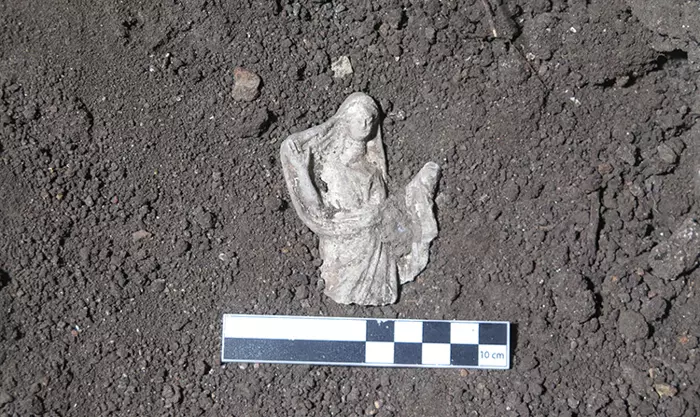
Two statuettes of Demeter, the Greek goddess of earth and fertility, were discovered in a cistern in the ancient city of Aigai in western Türkiye’s Manisa.

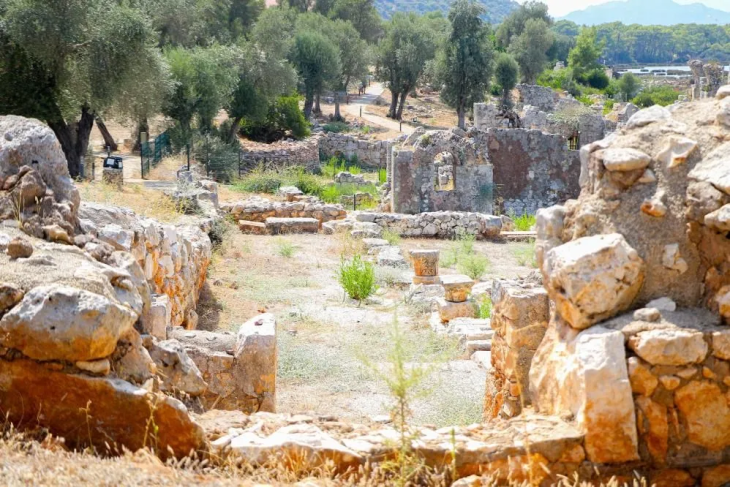
Aigai, also Aigaiai was an ancient Greek, later Roman, city, and bishopric in Aeolis. Aegae is mentioned by both Herodotus and Strabo as being a member of the Aeolian dodecapolis.

It was also an important sanctuary of Apollo. Aigai had its brightest period under the Attalid dynasty, which ruled from nearby Pergamon in the 3rd and 2nd centuries BC. The remains of the city are located near the modern village Yuntdağı Köseler of Manisa Province, Turkey.

The excavation team, led by Professor Yusuf Sezgin, head of the archaeology department at Manisa Celal Bayar University, is actively working in Aigai.

Sezgin, who found a cistern near the road to the “sanctuary of Athena” in the city, said that they made some unexpected discoveries during the excavation.


📣 Our WhatsApp channel is now LIVE! Stay up-to-date with the latest news and updates, just click here to follow us on WhatsApp and never miss a thing!!
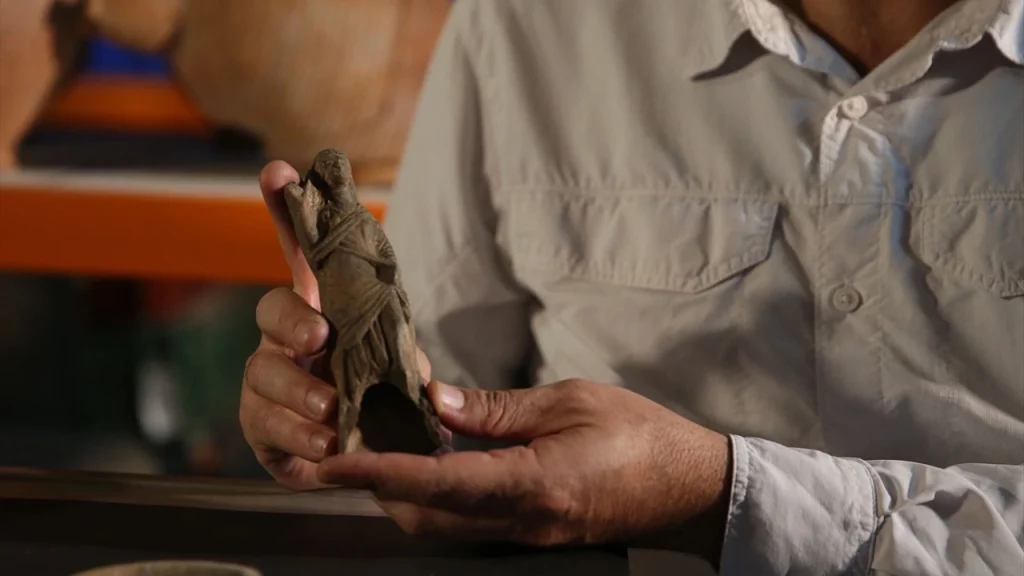


Photo: AA

“The cistern we excavated this year is quite different from others in both its form and the artifacts found within. For example, we discovered a figurine specially placed under what we call the “cistern bracelet,” a recess at the entrance of the cistern. Normally, we don’t find such figurines inside cisterns. This one, specifically placed or laid there, depicts the goddess, Demeter, as we know from Greek mythology.”

“Another interesting point is that this wasn’t the only Demeter figurine; we found another one inside the cistern, also shown in the same posture. The third discovery, which might not be very clear because it’s broken, is a piece of a decorated vase. On its fragments are sheaves of wheat, which we know are associated with the goddess Demeter,” he added.

Sezgin also shared: “Demeter was the goddess of agriculture. She was the one who provided the earth’s fertility and productivity. At the same time, she was the protector of plants. In rural ancient cities like Aigai, she was one of the most important goddesses. Considering how difficult it was to farm on rural land, Demeter was given significant importance. In this regard, there was a very strong cult of Demeter in Aigai.”
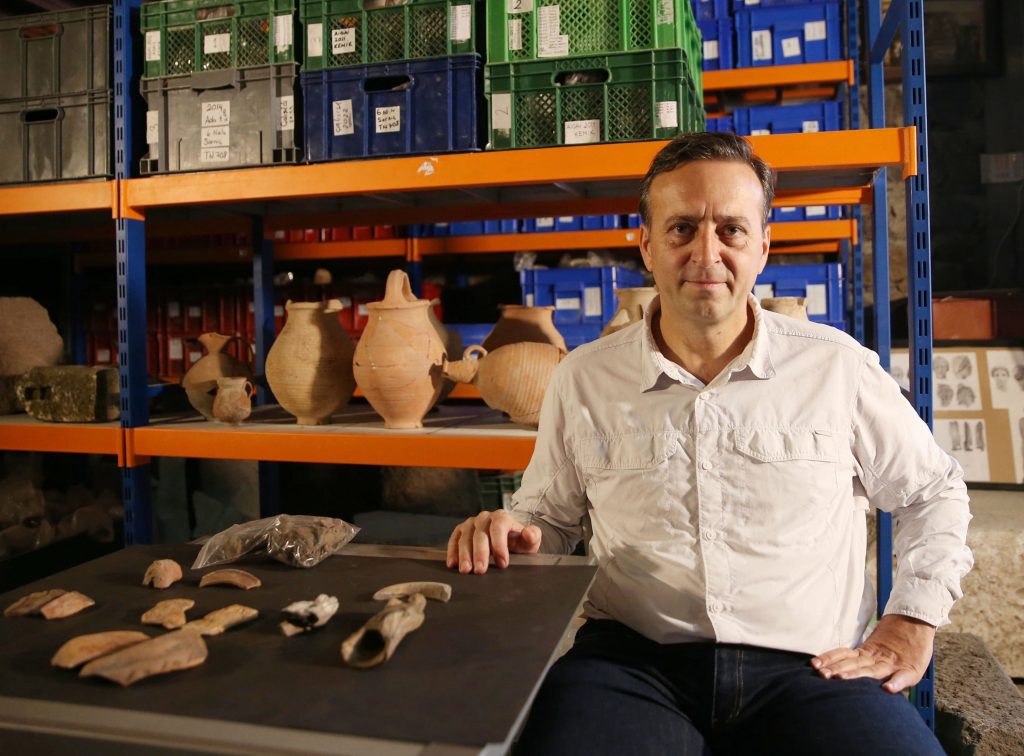
Yusuf Sezgin, head of the archaeology department at Manisa Celal Bayar University, states recent discoveries in the ancient city of Aigai. Photo: AA Photo

Special festivals and rituals for gods and goddesses were common in ancient times. Archaeologists recently discovered a cistern about 50-60 meters away from the Atena sanctuary in Aigai. This cistern might have been used for these rituals.

The cistern’s proximity to the sacred area suggests it may be associated with Demeter festivals. This cistern is unique in that more figurines were discovered inside than in any other cistern.

Cover Photo: AA
Related Articles

Three Strange Skull Modifications Discovered in Viking Women

31 March 2024

31 March 2024

In recent years, research has provided evidence for permanent body modification in the Viking Age. The latest of these investigations...

2,000-year-old stone faces and engravings emerge amid severe drought in Amazon

24 October 2023

24 October 2023

As a result of record-low water levels brought on by the region’s worst drought in over a century, faces carved...

Hagia Sophia May Collapse: Experts Sound Alarm Over 1,500-Year-Old World Heritage Monument

30 June 2025

30 June 2025

Beneath the grandeur of Hagia Sophia’s golden domes and sacred mosaics lies a ticking time bomb. With over 1,500 years...

With the withdrawal of Lake Van, the Urartian road to Çarpanak Island emerged

18 May 2022

18 May 2022

In Lake Van in eastern Turkey, the water level fell due to global warming, and a one-kilometer Urartian road connecting...

Poseidon’s Trident Discovered in Lake İznik

4 May 2025

4 May 2025

The depths of Lake İznik have yielded a discovery of profound significance, instantly captivating historians and archaeologists. The recent recovery...

Archaeologists Uncover 1,100-Year-Old Viking Boat Grave of Woman and Her Dog on Senja Island, Norway

6 June 2025

6 June 2025

In a remarkable archaeological discovery on Norway’s remote Senja Island, experts have unearthed a remarkably well-preserved 1,100-year-old Viking boat grave...

Earliest Direct Evidence of Psychoactive Plant Use in Iron Age Arabia Identified in Tomb at Qurayyah

25 May 2025

25 May 2025

In a remarkable archaeological breakthrough, scientists have uncovered the earliest known use of the psychoactive plant Peganum harmala—commonly known as...

Archaeologists Uncover Evidence of British Rule in Florida

29 March 2025

29 March 2025

A recent archaeological excavation in St. Augustine, Florida, has revealed a British redoubt dating back to 1781, offering valuable insight...

Exceptional Discovery in the Ionian Sea: Newly Revealed Roman Shipwreck Found off Gallipoli, Italy

4 February 2026

4 February 2026

Located in southern Italy’s Puglia region, on the Ionian coast of the Salento Peninsula (not to be confused with Gallipoli...

Mosaic Discovered in Illegal Dig in Zile Points to Ancient Roman Public Structure

12 July 2025

12 July 2025

Zile, a district in the Tokat province of northern Türkiye, has long been recognized as one of Anatolia’s most historically...

One of Europe’s Most Mysterious Languages May Share Ancient Roots with Iberian

19 January 2026

19 January 2026

By combining epigraphy, linguistics, and historical analysis, new research suggests that the mysterious ancient Iberian language may be more closely...

Remains of painkillers were found in 4500-year-old vessels during excavations at Küllüoba Höyük in Turkey

20 September 2022

20 September 2022

In the excavations of the Early Bronze Age Küllüoba Höyük (Kulluoba Mound) in Eskişehir, where the first urbanization structure of...

1,500-Year-Old Church-Like Structure Offers New Insight into Christian–Zoroastrian Relations in Northern Iraq

10 December 2025

10 December 2025

Goethe University archaeologists return with discoveries that reshape understanding of Christian–Zoroastrian life 1,500 years ago A research team from Goethe...

2,000-Year-Old Kushan Coin Hoard Discovered in Tajikistan

6 February 2026

6 February 2026

A chance discovery in southern Tajikistan has opened a new window onto the early history of the Kushan Empire. In...

Contemporaneous with ancient Egypt and Mesopotamia the Indus Valley Civilization city of ‘Mohenjo Daro’: Skilled urban planners with a reverence for the control of water

10 September 2022

10 September 2022

The Indus River Valley (or Harappan) civilization (3300-1300 BCE) lasted 2,000 years and spanned northeast Afghanistan to Pakistan and northwest...