Archaeologists in Veliky Novgorod have uncovered a rare and potentially unique artifact: a silver button inscribed with the name of a 14th-century posadnik, one of the highest-ranking officials of the medieval Novgorod Republic. The discovery was made during rescue excavations at the historic site of Yaroslav’s Court (Yaroslavovo Dvorishche)—a key political and commercial center of the city in the Middle Ages.
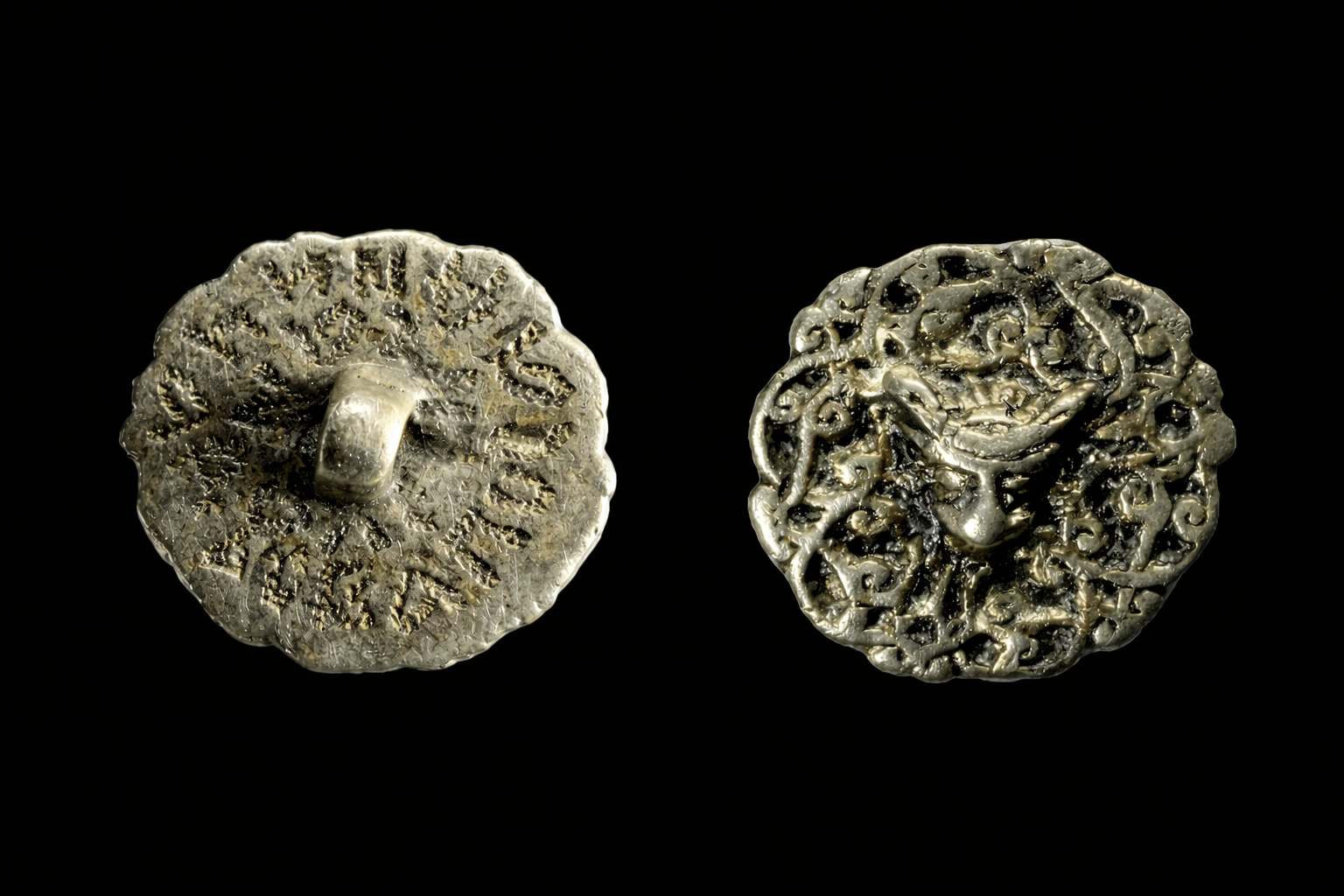
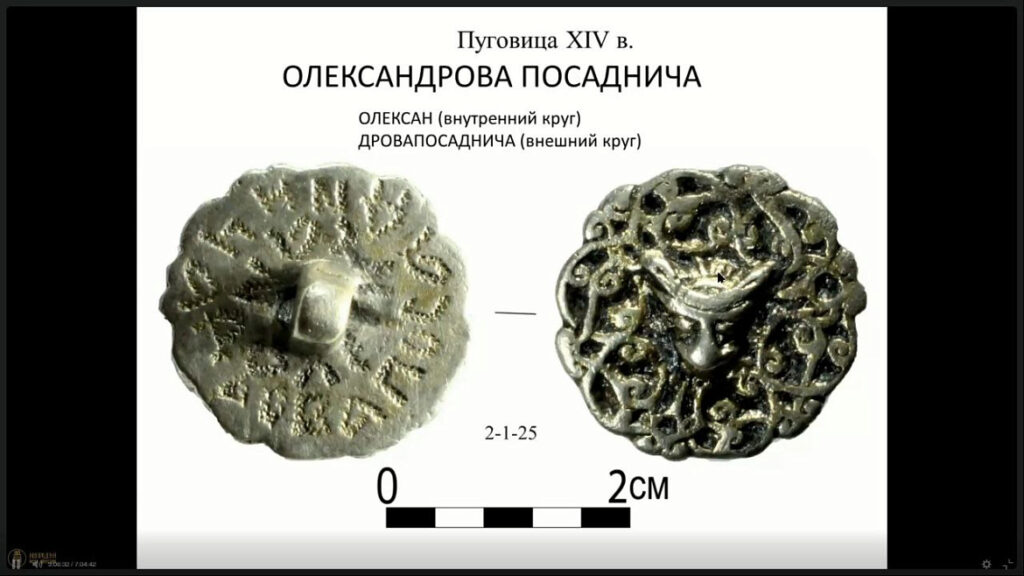
The object was found in cultural layers securely dated to the 14th century. According to researchers from the Institute of Archaeology of the Russian Academy of Sciences (RAS) and Novgorod State University (NovGU), the button bears a circular inscription reading “Olexandrova posadnicha,” which translates as “(Property) of Alexander the posadnik.”
A Western-Style Luxury Item
The silver button is described as being of Western European type, reflecting the international connections of medieval Novgorod. The city, a powerful mercantile republic, maintained extensive trade relations with the Hanseatic League and other European centers. Imported goods and Western stylistic influences were common among the urban elite.
The outer face of the button is decorated with vegetal ornamentation and features the head of an animal—possibly symbolic or heraldic in nature. The craftsmanship suggests that the piece was both decorative and functional, likely sewn onto an outer garment such as a kaftan.
On the reverse, the engraved inscription identifies ownership. In the 14th century, three Novgorodian posadniks bore the name Alexander. At present, scholars cannot definitively determine which of these officials owned the button. Further contextual discoveries from the excavation may help narrow the dating and clarify the attribution.
📣 Our WhatsApp channel is now LIVE! Stay up-to-date with the latest news and updates, just click here to follow us on WhatsApp and never miss a thing!!
Political Authority in Medieval Novgorod
The title posadnik referred to a senior elected magistrate in the Novgorod Republic, a medieval polity known for its relatively unique system of governance. Unlike many other Rus’ principalities ruled by hereditary princes, Novgorod operated under a semi-republican model in which key officials were elected by the veche, or popular assembly.
Posadniks exercised significant administrative and judicial authority. They presided over court proceedings, managed foreign diplomacy, and represented elite interests within the city’s complex political framework. Possession of an inscribed silver button would have signaled both status and personal identity within this highly stratified society.
Ownership and Identity
Researchers emphasize the economic and symbolic value of the find. Silver buttons were expensive items in the 14th century and not widely accessible. The engraved name likely functioned as a marker of ownership. If the garment had been lost or stolen, the inscription would have served as proof of property.
The artifact is currently considered unique in the archaeological record of Novgorod. While inscriptions are known from other categories of medieval objects—such as birch-bark letters, seals, and metalwork—personalized clothing accessories of this type are extremely rare.
Yaroslav’s Court: A Layered Historical Landscape
The excavation took place at Yaroslav’s Court, located on the Trade Side of the Volkhov River. In the Middle Ages, this district was the heart of Novgorod’s commercial life and a focal point for political gatherings. Archaeological investigations at the site have yielded wooden pavements, merchant quarters, imported goods, and written documents that illuminate the city’s economic and civic organization.
Rescue excavations in the area are ongoing, prompted by modern construction and infrastructure work. Such interventions often provide valuable opportunities to uncover well-preserved medieval strata, thanks to the waterlogged soils that characterize Novgorod’s archaeological deposits.
The discovery of the silver button adds a new dimension to our understanding of material culture and elite identity in the Novgorod Republic. Beyond its decorative appeal, the artifact offers a rare glimpse into the intersection of fashion, authority, and personal property in medieval northern Europe.
Novgorod State University (NovGU)
Cover Image Credit: Novgorod State University (NovGU)