
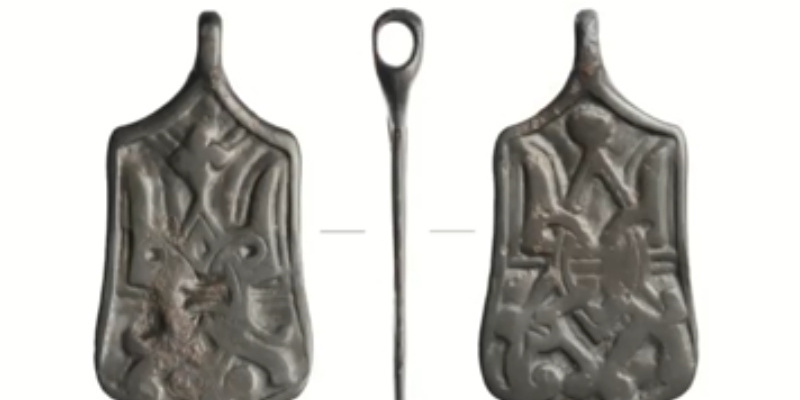
Archaeologists in Old Ladoga have discovered a rare medieval pendant bearing the Rurikid trident — an object believed to have served as an identification marker for a princely official during the early formation of the Rus’ state.
The artifact was uncovered during excavations in Old Ladoga, one of the earliest political and cultural centers of medieval Rus’. Dating to the 10th–11th centuries, the heraldic pendant is linked to the administrative system of the Rurikid dynasty, the ruling house traditionally associated with the emergence of early Rus’ governance and territorial control.
The find was announced at the 40th academic conference “Novgorod and the Novgorod Land: History and Archaeology,” held at the Novgorod State Museum-Reserve. The research was presented by Marianna Pavlova, junior researcher at the Department of Slavic-Finnic Archaeology of the Institute for the History of Material Culture (IIMK), Russian Academy of Sciences.
A Rare Symbol of Princely Authority
The pendant features a double-sided depiction of the Rurikid trident (tryzub) — a powerful dynastic symbol associated with the ruling princes of Kievan Rus’, including Vladimir the Great and Yaroslav the Wise. To date, archaeologists know of only eight pendants bearing an identical heraldic design, making the Old Ladoga find exceptionally rare.
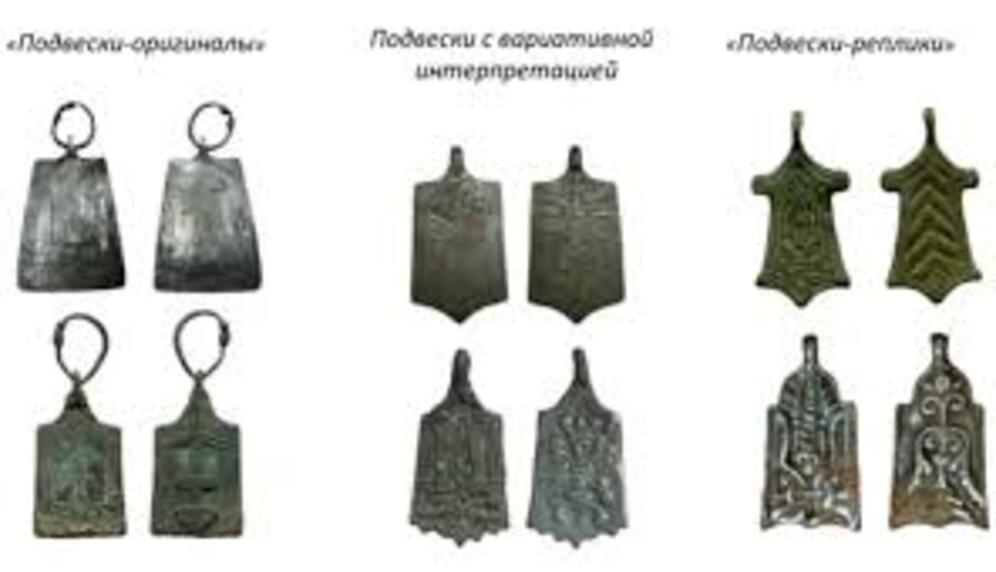
According to researchers, these objects fall into two distinct categories:
“Original pendants” (10th–11th centuries), which served as official credentials authorizing princely envoys or high-ranking administrators.
“Replica pendants” (12th–13th centuries), later decorative items inspired by earlier official symbols.
The newly discovered Ladoga pendant belongs to the first group and likely functioned as a verifiable insignia, confirming that its bearer acted on behalf of a ruling prince.
Detailed Craftsmanship and Iconography
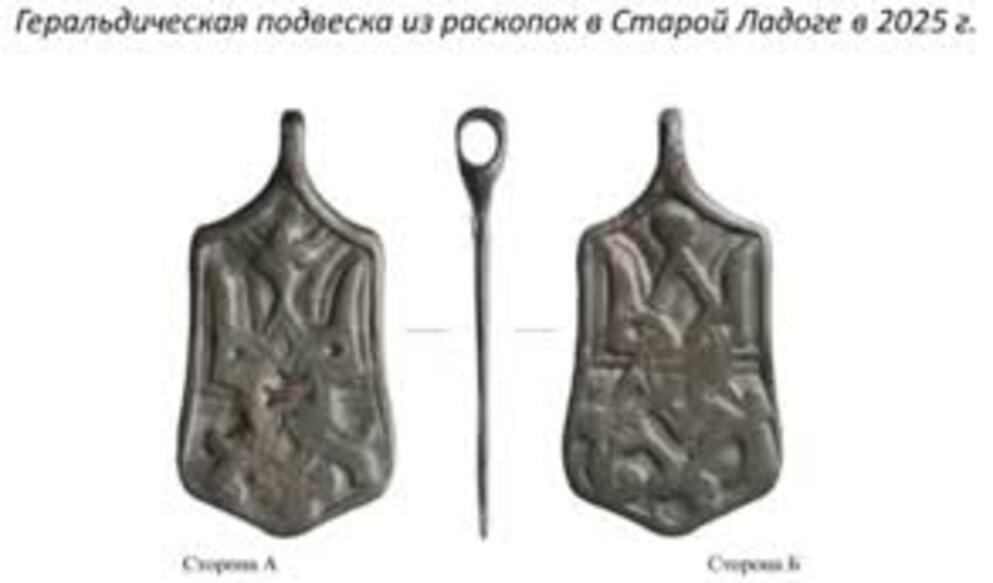
Despite corrosion, the pendant remains well preserved. On Side A, the central prong of the trident ends in a rhombus-shaped finial resting on an oval base supported by a triangular stem and surrounded by three small spheres. Side B displays a similar trident, though topped with a spherical finial instead.
Pavlova emphasized that the trident is shown in a “ceremonial” form, reinforcing the pendant’s administrative and symbolic function rather than a purely decorative role. Traces of smoothing and worn relief indicate long-term and active use, suggesting the pendant accompanied its owner during official duties.
Metallurgical Mystery Sparks Scholarly Debate
Scientific analysis of the pendant revealed an intriguing composition. The outer surface consists of approximately 49% lead, 24% tin, and 23% copper, with trace amounts of silver, arsenic, and zinc. However, deeper layers exposed by corrosion show a dramatically different ratio — 82% copper, with only small amounts of lead and tin.
Researchers propose that the pendant was originally cast from a copper alloy and later coated with a tin-lead layer to give it a silver-like appearance, enhancing its prestige. This interpretation, however, sparked debate at the conference. One scholar suggested that the unusual composition might instead result from tin migration to the surface during casting, rather than intentional plating.
Links Between Ladoga and Novgorod
One of the most striking findings is that the Ladoga pendant perfectly matches a similar object discovered in Veliky Novgorod in 1956. The identical shape strongly suggests both pendants were cast using the same mold.
Interestingly, while Side A is more sharply defined on the Novgorod example, Side B is better preserved on the Ladoga pendant, indicating variations in casting or finishing rather than design.
Old Ladoga and the Rise of the Rurikids
Old Ladoga occupies a crucial place in early Rus’ history and is widely regarded as one of the first political and administrative centers of the emerging Rus’ state. Closely associated with Rurik, the semi-legendary founder of the Rurikid dynasty, Ladoga is often described in early chronicles as a northern power base from which princely authority began to spread across Eastern Europe.
Situated at a strategic point along the famed trade route “from the Varangians to the Greeks,” Old Ladoga functioned as a major trade and political hub, linking Scandinavia, the Baltic region, the Volga basin, and Byzantium. Archaeological evidence — including fortifications, elite residences, imported goods, and workshops — indicates a permanent center of power rather than a transient trading post.
Scholars increasingly view Ladoga as a testing ground for early state administration, where mechanisms of governance, taxation, and military control were first developed before being transferred to later centers such as Novgorod and Kiev. The presence of standardized symbols of authority, such as pendants bearing the Rurikid trident, supports the idea of a structured administrative system operating under princely oversight.
Finds like the newly discovered pendant reinforce the interpretation of Old Ladoga not merely as a settlement or trading colony, but as a core administrative nucleus during the formative period of the Rus’ polity. The object’s probable function as an identification marker for a princely official suggests that Ladoga played an active role in enforcing princely authority and managing territories at a surprisingly early stage of state formation.
Why This Discovery Matters
This pendant is more than an archaeological artifact — it is tangible evidence of early medieval governance, symbol-based authority, and the spread of princely administration across Northern Rus’. Each new find adds depth to our understanding of how the Rurikid dynasty maintained control, communicated legitimacy, and visually represented power in a formative period of Eastern European history.
As researchers continue to study the pendant, Old Ladoga once again proves its enduring importance in uncovering the origins of the Rus’ state and the dynasty that ruled it for centuries.
Cover Image Credit: 53News.ru
