
14 June 2026 The Future is the Product of the Past

3,500-Year-Old Human-Bodied, Eagle-Headed Seal Discovered in Central Türkiye

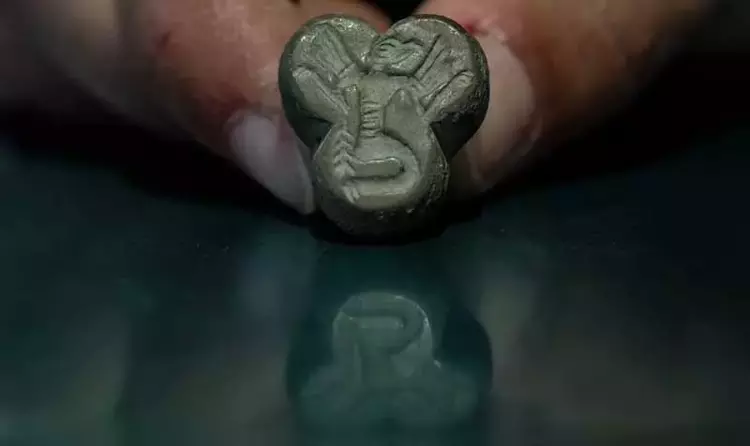
Archaeological excavations at Karahöyük in central Türkiye have led to a remarkable discovery: a 3,500-year-old human-headed, eagle-bodied seal. According to Assoc. Prof. Gonca Dardeniz Arıkan of Istanbul University, who leads the excavation, this rare artifact provides valuable insights into the religious beliefs and symbolic practices of ancient Anatolian societies, highlighting the interplay between daily life and spiritual traditions during the Bronze Age.

In a statement to Demirören News Agency (DHA), Arıkan said, “This season, we uncovered a seal showing a human-bodied, single-headed eagle. It is one of the most significant finds of this year and provides us with deeper insights into the spiritual and cultural life of the period.”
Credit: DHA

Ancient Burial Practices: Babies at Home, Adults Cremated

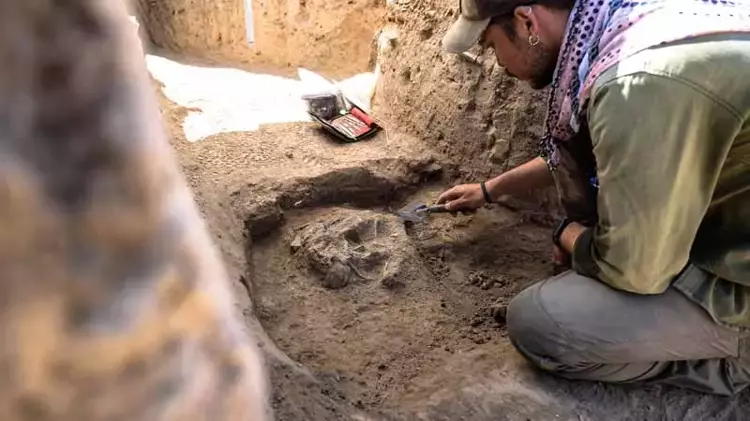
The excavations revealed fascinating details about burial rituals practiced in Karahöyük around 1500 BCE. While adult burials were carried out through cremation, archaeologists discovered that infants were often buried inside domestic living spaces.

“People buried their babies within the rooms they used daily. We believe this was closely tied to their religious beliefs,” said Arıkan. “Perhaps they wanted to keep the memory of their children alive within their households, unlike adults, who were cremated and taken away.”

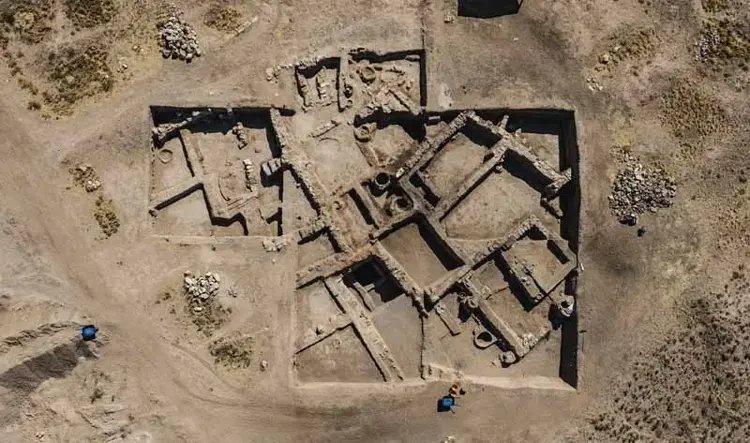
Excavators also identified altars, ritual areas, symbolic objects, and grave goods connected to these practices, highlighting the close relationship between everyday life and spiritual traditions in ancient Konya.


📣 Our WhatsApp channel is now LIVE! Stay up-to-date with the latest news and updates, just click here to follow us on WhatsApp and never miss a thing!!


Archaeologists found that while adults were cremated, infants were often buried within the home’s living spaces.
Archaeologists found that while adults were cremated, infants were often buried within the home’s living spaces. Credit: DHA

Unexpected Discovery: Ancient Konya Residents Ate Squid

One of the most surprising findings was evidence of seafood consumption—including squid—in landlocked Konya 3,500 years ago.

“We found large storage vessels containing not only agricultural products but also freshwater and marine species. Freshwater fish likely came from Beyşehir Lake and nearby rivers, while marine products such as squid were probably brought from Alanya on the Mediterranean coast,” Arıkan noted.

Alongside seafood, remains of red deer, fallow deer, rabbits, hyenas, and even cave bears were discovered, painting a picture of a far richer and more diverse ecosystem than today.
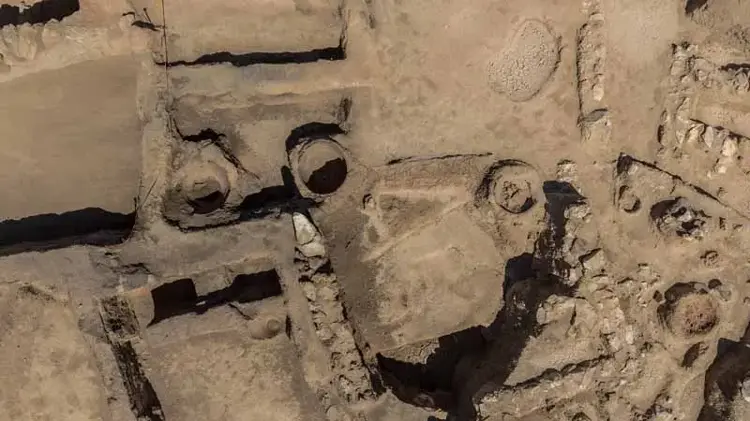
One of the most surprising findings was evidence of seafood consumption—including squid—in landlocked Konya 3,500 years ago.
One of the most surprising findings was evidence of seafood consumption—including squid—in landlocked Konya 3,500 years ago. Credit: DHA

A Window Into Ancient Belief Systems

The eagle-headed human seal is now considered a symbolic artifact that reflects the spiritual worldview of Karahöyük’s inhabitants.

“Seals were personal signatures, representing both identity and belief. Through these images, we can understand how people of the era expressed themselves and their connection to their gods and rituals,” Arıkan emphasized.

This discovery positions Karahöyük as one of Anatolia’s most significant Bronze Age settlements, offering rare glimpses into the intersection of daily life, religious practice, and cultural identity.
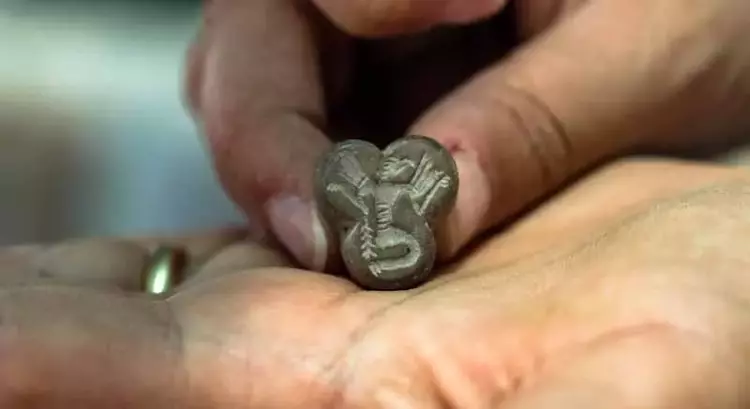
The eagle-headed human seal is now considered a symbolic artifact that reflects the spiritual worldview of Karahöyük’s inhabitants.
The eagle-headed human seal is now considered a symbolic artifact that reflects the spiritual worldview of Karahöyük’s inhabitants. Credit: DHA

About Karahöyük

Karahöyük, located in the Meram district of Konya, Türkiye, is a significant Bronze Age settlement with a history dating back over 4,000 years. Excavations at the site have revealed complex urban planning, domestic architecture, storage facilities, and ritual areas, providing valuable insights into the social, economic, and religious life of ancient Anatolian communities. Artifacts such as seals, pottery, and burial goods indicate that Karahöyük was a hub for both local production and long-distance trade, connecting inland populations with the Mediterranean coast.

📌 Related Reading: Just last week, archaeologists also uncovered a 3,500-Year-Old Dining Set at Konya Karahöyük in Türkiye, offering further insights into the daily life of its ancient inhabitants.

Cover Image Credit: DHA

Related Articles

Treasure of 1,290 Ancient Roman Coins Discovered by Amateur Archaeologist in Switzerland

16 April 2022

16 April 2022

An amateur archeologist has found a big treasure trove of over 1,290 priceless, ancient Roman coins dating back to the...

Using Algorithms, Researchers Reassemble Jewish Text Lost Centuries Ago

27 January 2022

27 January 2022

Using new technology, researchers were able to comb a 19th-century text for the original study of a Bible interpretation attributed...

Neolithic Age Adults and Children Buried Under Family Homes were not Relative

3 May 2021

3 May 2021

An international team of scientists found that Children and adults buried next to each other in one of the oldest...

Archaeologists discovered the monastery of Queen Cynethryth, a strong Anglo-Saxon queen

19 August 2021

19 August 2021

Archaeologists from the University of Reading and local volunteers excavating on the grounds of Holy Trinity Church have made an...

Unprecedented 3,200-Year-Old Fortress Discovered at 611 Meters Above Sea Level in Croatia

16 November 2025

16 November 2025

A monumental Bronze Age fortress has been uncovered at the summit of Papuk Mountain in northeastern Croatia, reshaping our understanding...

1,500-year-old mosaic found near the Caliph’s palace at Khirbat al-Minya on the Sea of Galilee

30 September 2022

30 September 2022

Archaeologists from Johannes Gutenberg University Mainz uncovered an ancient mosaic that once lay in the shadow of a caliph palace...

New study investigates the development of the Scandinavian gene pool over the latest 2000 years

5 January 2023

5 January 2023

A new study resolves the complex relations between geography, ancestry, and gene flow in Scandinavia – encompassing the Roman Age,...

Who will solve the puzzle of Bronze Age tin? Origin of tin ingots from Uluburun shipwreck disputed – the metal may have come from Cornwall

3 October 2023

3 October 2023

The exact origin of tin in the Bronze Age is the Holy Grail of archaeometallurgists: For 150 years, experts have...

Japan’s possibly oldest stone molds for bronze casting discovered at Yoshinogari ruins

4 December 2023

4 December 2023

At the Yoshinogari Ruins in the western prefecture of Saga, relics including stone casting molds for bronze artifacts have been...

Ruins of China’s earliest state academy found in east China

21 February 2022

21 February 2022

The ruins of ancient China‘s first government-run institution of higher learning, built in 374 BC, have been discovered in the...

2300-Year-Old Dancing Terracotta Figurine Reveals Early Presence of Jainism in Pakistan

19 January 2026

19 January 2026

Recent archaeological discoveries at Bhir Mound, the earliest urban settlement of ancient Taxila, located near modern-day Islamabad in Pakistan’s Punjab...

Archaeologists Find Bronze Inscription and Possible Archive in 6th-Century BCE Temple at Kleidi Samikon

10 March 2026

10 March 2026

Archaeologists conducting excavations at the ancient site of Kleidi Samikon in western Greece have uncovered a remarkable bronze inscription and...

3,000-Year-Old Cave Paintings Discovered in Itatiaia National Park in Rio de Janeiro, Brazil

13 April 2025

13 April 2025

In a stunning revelation, a dedicated team of researchers from the National Museum, in collaboration with the Federal University of...

The 3,200-year-old perfume of Tapputi, the first female chemist in history, came to life again

24 July 2022

24 July 2022

One of the scent formulas written in Akkadian on clay tablets by Tapputi, known as the world’s first female perfumer...

Ancient Mosaic Room Featuring “Solomon’s Knot” Unearthed in Smyrna to Ward Off the Evil Eye

5 January 2026

5 January 2026

Archaeologists working in the heart of İzmir have uncovered a remarkable mosaic-floored room in the ancient city of Smyrna, revealing...