
13 January 2026 The Future is the Product of the Past

3,500-Year-Old Dining Set Found at Konya Karahöyük, in Türkiye

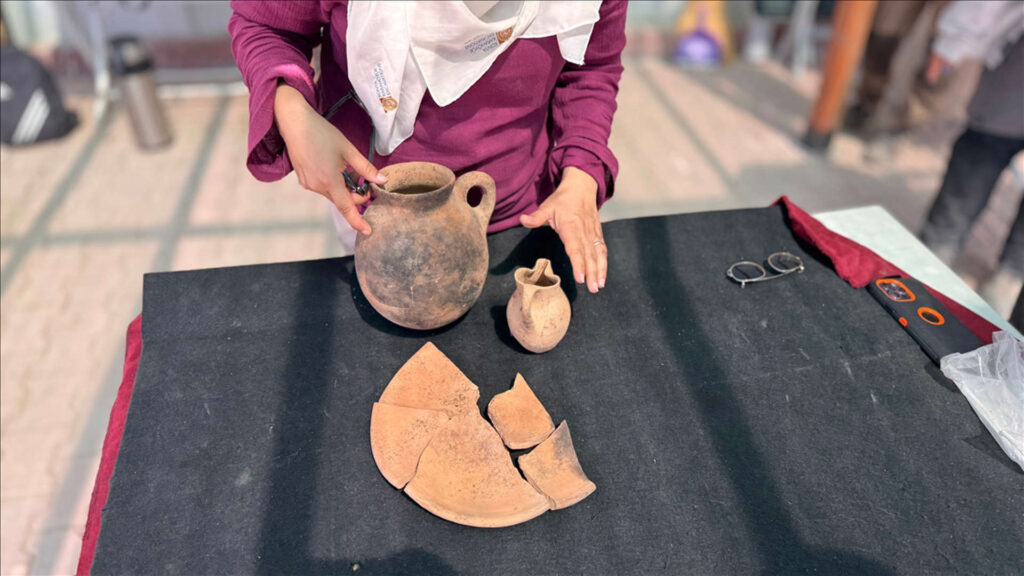
Archaeologists in Türkiye have uncovered an extraordinary 3,500-year-old dining set, including a jug, plate, and cup, during excavations at Konya’s Karahöyük.

Located in the Meram district, Karahöyük is one of Anatolia’s most significant archaeological mounds. Dating back to around 2000 BCE, Karahöyük provides uninterrupted layers of historical information from pre-Hittite Anatolia. The discovery provides new insights into daily life, trade, and religious practices of ancient Anatolian civilizations.

Karahöyük: A Key Archaeological Hub

Karahöyük, covering approximately 30 hectares and located just 7 kilometers southeast of Konya city center, has been a focus of archaeological research since the mid-20th century.

Initial excavations were conducted in 1953 by Prof. Dr. Sedat Alp, revealing 27 cultural layers spanning from the Chalcolithic period (c. 4500–3200 BCE) through the Late Bronze Age.

Today, under the leadership of Associate Professor Dr. Gonca Dardeniz Arıkan from Istanbul University, excavations continue with modern techniques, uncovering structures, artifacts, and public buildings that illustrate the region’s rich social and economic history.


📣 Our WhatsApp channel is now LIVE! Stay up-to-date with the latest news and updates, just click here to follow us on WhatsApp and never miss a thing!!


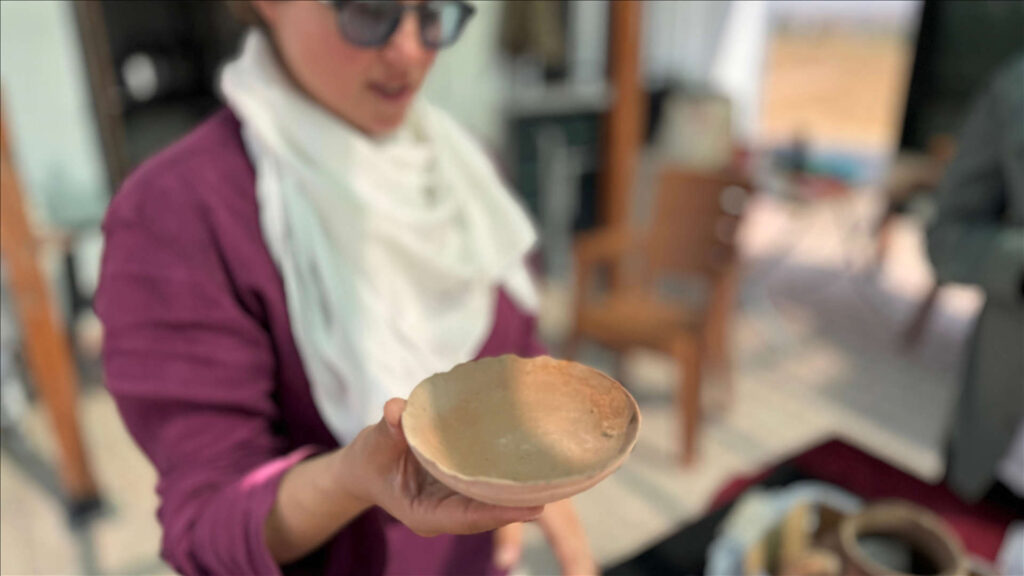
A jug, plate, and cup estimated to be around 3,500 years old were uncovered during excavations at Karahöyük in Meram district, Konya. Credit: Abdullah Doğan – Anadolu Agency

The Dining Set and Daily Life

The recently uncovered dining set, found within a public building dating to around 2000 BCE, consists of a jug, clover-mouthed pot, and plate. This ensemble is one of the rare instances where such items were found as a complete set, highlighting the inhabitants’ culinary practices.

According to Dr. Arıkan, the set provides a unique window into both adult and child life in Karahöyük, as miniature animal figurines and toys were also discovered nearby, reflecting leisure activities of the period.

In a statement to Anadolu Agency, Dr. Arıkan said: “Within the public building, there are cremation graves and an altar that shed light on the spiritual beliefs of the community. We continue to gather information about agricultural activities, daily life, and production practices. We have uncovered a 3,500-year-old clay bull figurine. Children are always children—they need something to play with or keep themselves entertained, which is why we also found wheeled or animal miniature toys. Additionally, there is a lead figurine of a goddess, likely used as an amulet. From the area associated with eating and drinking activities, we discovered a kitchen set comprising a jug, a clover-mouthed pot, and a plate—found together as a complete set. The restoration of the cup has been completed, and the plate is still undergoing restoration. These artifacts are being prepared for exhibition in the museum.”

Dr. Arıkan also noted that 60 infant burials have been uncovered at the mound.
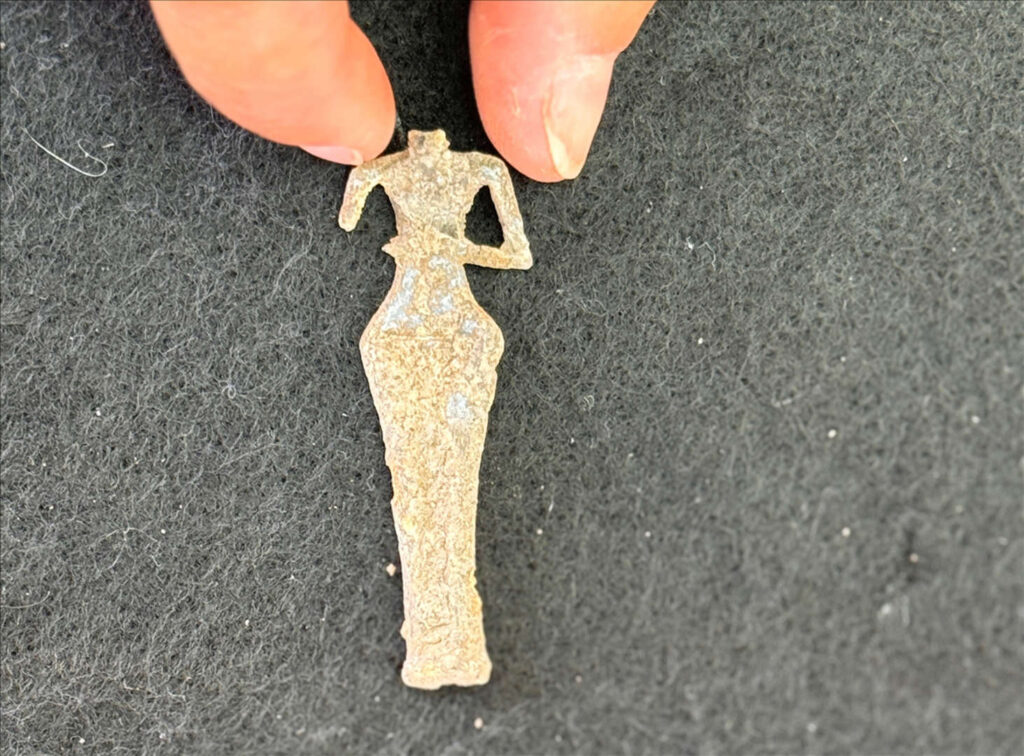
In the fourth year of the excavation, a figurine of a goddess (pictured) was discovered.. Credit: Abdullah Doğan – Anadolu Agency

Religious and Funerary Contexts

Excavations revealed cremation graves and small shrines within the same area, offering valuable insight into the religious beliefs of the time. Among the findings were clay bull figurines, goddess-shaped amulets made from lead, and ritual objects, all of which shed light on the spiritual practices of the community.

These discoveries demonstrate a society where religious life was intertwined with daily routines and communal gatherings.
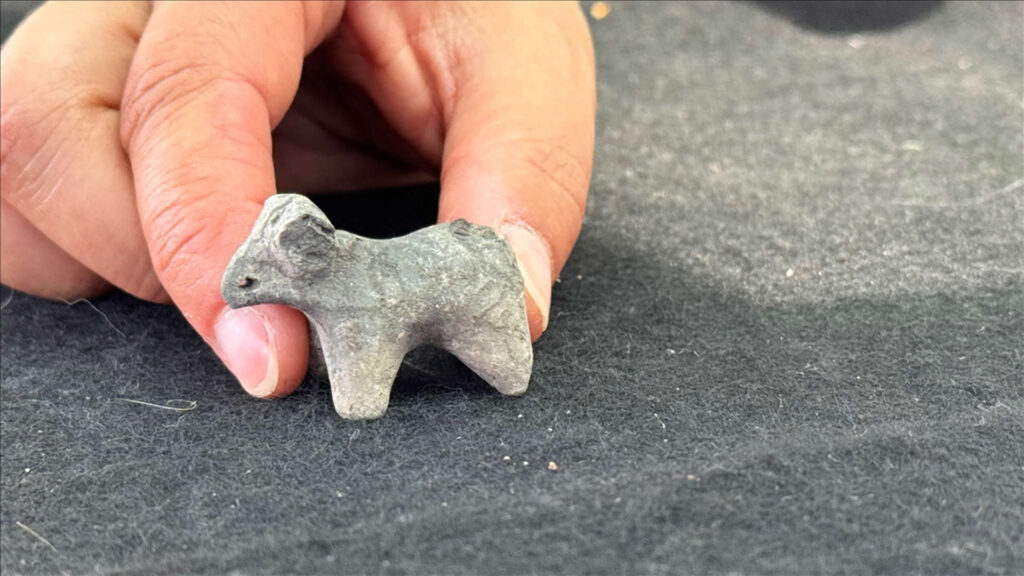
A miniature bull, believed to be a toy, was discovered during the excavation. Credit: Abdullah Doğan – Anadolu Agency

Trade and Economic Evidence

One of the most striking findings was a collection of silver plaques wrapped in cloth, believed to belong to a local merchant. These artifacts indicate that Karahöyük was a prominent trade center in ancient Anatolia.

“We are witnessing the economic systems of 3,500 years ago,” Dr. Arıkan explained. “Merchants used seals and marked tokens for accounting, similar to modern business practices. These discoveries represent the earliest traces of organized trade and commerce in the region.”
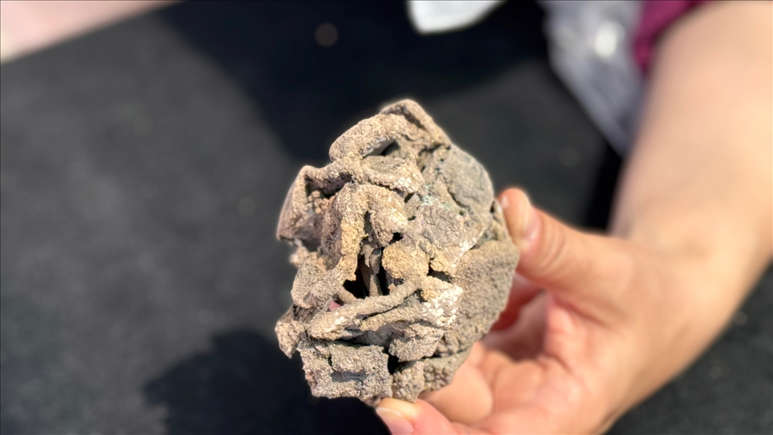
 During the excavation, silver plaques belonging to a merchant (pictured) were discovered. Credit: Abdullah Doğan – Anadolu Agency
During the excavation, silver plaques belonging to a merchant (pictured) were discovered. Credit: Abdullah Doğan – Anadolu Agency

Social Structure and Settlement Patterns

The site has also yielded 60 infant burials and various production tools, emphasizing that Karahöyük was not merely a trading hub but a fully inhabited settlement with complex social structures. Findings from household areas, workshops, and communal buildings provide a comprehensive picture of social organization, economic activity, and cultural life.

The discoveries at Karahöyük, including the 3,500-year-old dining set, silver trade plaques, and ritual objects, provide an unprecedented glimpse into the lives of ancient Anatolians. As excavations continue, researchers anticipate uncovering further evidence that will enrich the broader narrative of Near Eastern archaeology.

Anadolu Agency (AA)

Cover Image Credit: Abdullah Doğan – Anadolu Agency

Related Articles

Maya Farmers May Have Planned Population Growth Contrary to Thought

19 November 2021

19 November 2021

Contrary to what was thought, Maya farmers may have planned for population growth, says a new study. According to a...

City swallowed by sea now center of boat tours

10 September 2023

10 September 2023

The Kekova region, or Sunken City, which has remained under the sea after two major earthquakes in the sixth century...

The 6th-Century “Türk-Kagan” Coin Discovery in Uzbekistan Could Rewrite History as the Oldest Known Record of the Name “Türk”

15 May 2025

15 May 2025

A remarkable archaeological find in Uzbekistan has unearthed a 6th-century coin bearing the inscription “Turk-Kagan,” a discovery that could significantly...

The 1000-year Curse of the Croatian King Zvonimir

26 September 2023

26 September 2023

Croatia is a fascinating country that continually rises up people’s must-visit lists thanks to its sparkling Adriatic coastline, 1,244 islands,...

Hundreds of 8,400-Year-Old Finger Flutings Discovered in Australia’s Glittering Cave

15 August 2025

15 August 2025

Deep within a remote limestone cave in southeastern Australia, archaeologists have uncovered a breathtaking link to the past — hundreds...

A Treasure-Laden Burial Chamber Found Hidden Among Terracotta Army

7 June 2024

7 June 2024

Qin Shi Huang was the first emperor of China, and his tomb is renowned for being guarded by an army...

Flying reptile discovered in Scotland dubbed ‘Jurassic fighter jet’

24 February 2022

24 February 2022

The jawbone of a 170 million-year-old pterosaur, described as the world’s best-preserved skeleton of the prehistoric winged reptile, was discovered...

4,000-year-old settlement found during Balasore town India

9 July 2021

9 July 2021

A 4,000-year-old settlement and ancient artifacts have been discovered in the Balasore district, India. The Odisha Institute for Maritime and...

Tombs of elite Wari craftsmen found in the royal necropolis in Castillo de Huarmey, Peru

12 September 2022

12 September 2022

A group of tombs of elite craftsmen of the Wari culture has been discovered at the archaeological site of Castillo...

Great Wall Castle Remains Found in China’s Shaanxi

8 June 2021

8 June 2021

The remains of a Great Wall castle dating back to the Ming Dynasty (1368-1644) were discovered in northwest China’s Shaanxi...

The First Native Americans were Among the First Metal Miners in the World

20 March 2021

20 March 2021

An arrowhead made of pure copper 8,500 years ago dates the history of the copper age to an earlier period,...

A Hoard of Gold and Silver Roman Coins Dating Back to the Reign of Emperor Nero was Found in Worcestershire

7 December 2024

7 December 2024

A hoard of Roman and Iron Age silver coins dating back to Emperor Nero’s reign has been found during building...

Kurt Tepesi: The Silent Sentinel in the Shadows of Göbeklitepe and Karahan Tepe – Unearthing the Forgotten Sister

31 May 2025

31 May 2025

In the arid plains of southeastern Anatolia, a quiet giant slumbers. While Göbekli Tepe has dazzled archaeologists and the global...

A Rock-Cut Temple and Inscriptions from the Neolithic period discovered in Saudi Arabia

6 August 2022

6 August 2022

In a project led by the Saudi Heritage Commission, a multinational team of archaeologists has discovered an 8,000-year-old archaeological site...

Archaeologists find the earliest evidence Maya sacred calendar in the Guatemalan pyramid

14 April 2022

14 April 2022

Archaeologists identified two plaster fragments depicting a date that the Maya civilization called ‘7 deer’ and was part of the...