
12 December 2025 The Future is the Product of the Past

Well-Preserved Hittite “Bird Omen Text” Discovered at Kayalıpınar–Samuha, a Key Religious Hub of the Ancient Empire

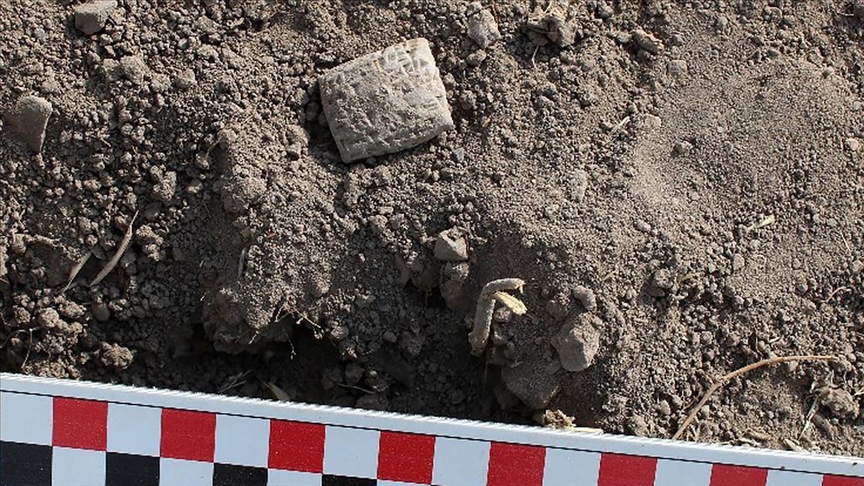
Archaeologists working at the ancient Hittite settlement of Kayalıpınar, located in Türkiye’s Sivas province, have uncovered a remarkably well-preserved clay tablet containing a bird omen text, shedding new light on the role of divination in Hittite religious and political life.

The discovery was made as part of an ongoing excavation led by Assoc. Prof. Dr. Çiğdem Maner of Koç University’s Department of Archaeology and Art History. The site, historically known as Samuha, holds immense historical importance as a major administrative and religious center of the Hittite Empire.

“This year, one of our most exciting finds is a bird omen text from the Hittite period,” said Dr. Maner. “It’s a small cuneiform tablet, fully intact, inscribed on all sides. What sets it apart is the small hole in its center, with visible string marks around the edges — indicating it may have been hung or worn around the neck.”

Divination and Religion in Hittite Culture

The tablet offers insights into Hittite divination practices, particularly the interpretation of bird movements as omens. Known as “bird oracles”, these texts were central to Hittite spiritual and state affairs. Omens derived from the flight paths, calls, or behavior of birds were believed to convey divine messages from the gods — often used to guide military decisions, treaties, or ceremonial actions.

“The Hittites believed that humans could communicate with the gods through signs in nature, especially birds,” said Dr. Maner. “This tablet belongs to that class of religious literature and was likely used in ritual contexts.”


📣 Our WhatsApp channel is now LIVE! Stay up-to-date with the latest news and updates, just click here to follow us on WhatsApp and never miss a thing!!


The finding underscores how prophecy texts played a dual role in both religious observance and political legitimacy. Priests and diviners would interpret these signs in royal court settings, helping kings make critical decisions under divine guidance.
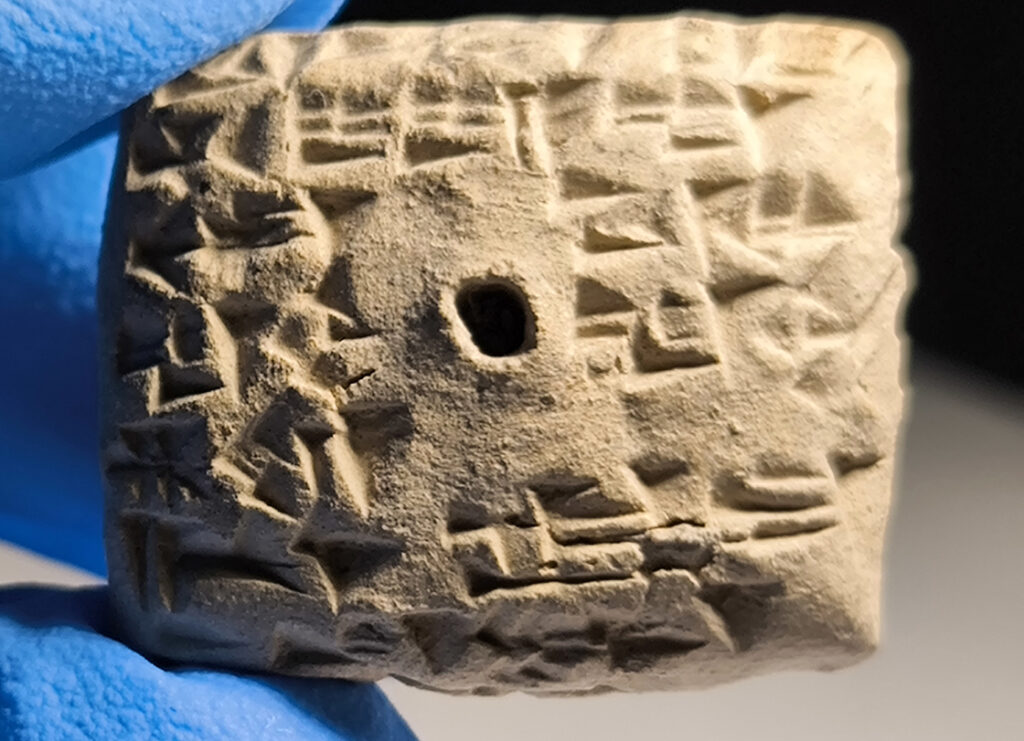
Well-Preserved Hittite "Bird Omen Text" Discovered at Kayalıpınar–Samuha. Credit: Serhat Zafer - AA
Well-Preserved Hittite “Bird Omen Text” Discovered at Kayalıpınar–Samuha. Credit: Serhat Zafer – AA

Kayalıpınar / Samuha: A Strategic and Sacred Center

Once known as Samuha, Kayalıpınar was one of the Hittite Empire’s key cities — both as a military base during times of conflict and as a cultural and religious hub. Ancient Assyrian and Hittite records describe Samuha as a major cult center of the goddess Ishtar, linking it directly with Mesopotamian and Anatolian spiritual traditions.

Over the years, excavations at the site have unearthed architectural remains from the Assyrian trading colonies, Hittite royal structures, and even Roman and Byzantine periods — making Kayalıpınar a multi-layered window into Anatolia’s deep history.

“Most of the cuneiform texts found at Kayalıpınar are related to cultic practices,” added Dr. Maner. “This suggests the bird omen tablet also had a sacred purpose, possibly used in rituals connected to the Ishtar cult.”

Over 50 Seal Impressions Discovered

In addition to the bird omen text, the excavation team — composed of archaeologists, Hittitologists, anthropologists, and historians from both Türkiye and abroad — has uncovered over 50 seal impressions attributed to Hittite royalty, priests, and administrators.

The team suspects that they are close to discovering a “sealing building”, where official correspondence and rituals involving document authentication took place. So far, this layer remains buried beneath Early Christian burial remains, which are carefully being removed.
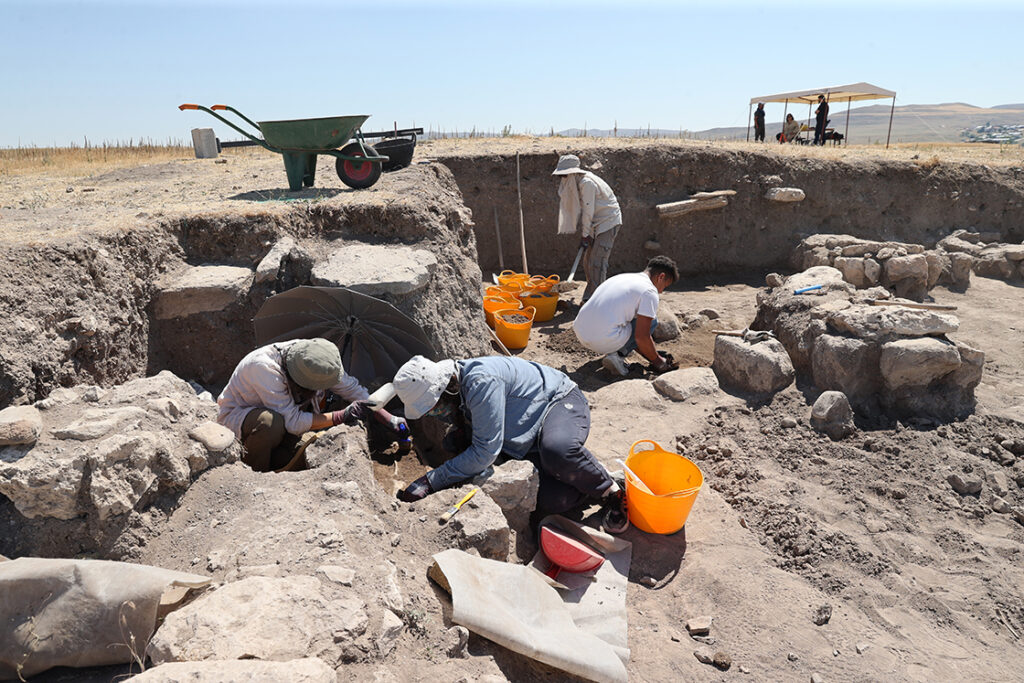
The discovery was made as part of an ongoing excavation led by Assoc. Prof. Dr. Çiğdem Maner of Koç University's Department of Archaeology and Art History. Credit: Serhat Zafer - AA
The discovery was made as part of an ongoing excavation led by Assoc. Prof. Dr. Çiğdem Maner of Koç University’s Department of Archaeology and Art History. Credit: Serhat Zafer – AA

A Glimpse into Inter-Settlement Hittite Communication

One of the excavation’s goals is to analyze clay samples from the seal impressions and compare them with findings from other Hittite settlements. This could offer unprecedented insight into administrative communication networks and trade relationships across the Hittite Empire.

“By comparing seal samples across sites, we hope to reconstruct how the Hittites interacted — both politically and economically,” Dr. Maner explained. “Each find brings us closer to understanding the complexity of their world.”

Looking Ahead

Excavations at Kayalıpınar will continue through mid-September, with plans to eventually open parts of the site to public visitation. Restoration and landscaping efforts are already underway, aiming to transform the area into a destination for both researchers and cultural tourism.

The discovery of the bird omen tablet reinforces Kayalıpınar’s status as a treasure trove of Hittite religious life and statecraft, bridging the past with new insights into how ancient civilizations sought divine guidance through the natural world.

AA

Cover Image Credit: AA

Related Articles

Standing Swords, Beads, and Magnificent Horse Gear: Viking Treasures Unearthed Along Sweden’s E18

5 November 2025

5 November 2025

Two upright swords thrust into Viking graves, strings of glittering beads, and richly decorated horse equipment have emerged from the...

An Etruscan Home Discovered in Corsica “First-Of-Its-Kind Find for the Island”

11 July 2024

11 July 2024

Archaeologists have discovered the first Etruscan domestic structure, dating to the 6th to 4th centuries BC, off the east coast...

A Byzantine Princess, a Mongol Khan, and a Church: The Bloody Church and Its Unknown History

13 May 2025

13 May 2025

Nestled at the base of the imposing Phanar Greek Orthodox College, a landmark intrinsically linked to the panoramic vistas of...

45,000 years ago, Neanderthals in the Swabian Jura used complex tool-making techniques

13 September 2021

13 September 2021

Findings that will change our perception of Neanderthals’ sophistication A team from the University of Tübingen have proved that Middle...

Rare ivory plaques from First Temple Period were discovered in Jerusalem

8 September 2022

8 September 2022

An extraordinary find was made in Jerusalem: an assemblage of ivory plaques from the First Temple period, one of only...

Are There Stone Age Megastructures on the Baltic Sea Floor?

11 June 2025

11 June 2025

The western Baltic Sea may conceal far more prehistoric cultural heritage than previously believed — including monumental underwater structures created...

Ancient Sister Miners Discovered: Ritual Burial Reveals Hard Lives of Prehistoric Women

4 August 2025

4 August 2025

A groundbreaking archaeological discovery in the Krumlov Forest is shedding new light on prehistoric life, revealing a startling glimpse into...

International Sand Sculpture Festival Opens with the Theme “The Lost City of Atlantis”

6 May 2021

6 May 2021

The 16th edition of the International Sand Sculpture Festival (SANDLAND) has begun in Turkey’s Mediterranean resort city of Antalya. Every...

Tombs of Queens of Commagene Detected

23 September 2021

23 September 2021

The graves built by Commagene King Mithritades II (36-21 BC) for his mother Isias, his sister Antiokhis, and Antiochis’s daughter...

New Study Reveals That the First English Settlers in North America Ate Dogs to Survive

28 May 2024

28 May 2024

The first English settlers to arrive in North America ate indigenous dogs to survive an extreme period of starvation, according...

Al-Aqiser Church, Disappears in the Depths of The Iraqi Desert

10 May 2021

10 May 2021

In a country that has been devastated by successive conflicts and economic crises, Al-Aqiser, like the numerous Christian, Islamic and...

Urartian-Era Fortress with 50 Rooms Discovered at 3,000 Meters in Eastern Türkiye

5 August 2025

5 August 2025

Archaeologists uncover a massive high-altitude fortress believed to date back to the Iron Age, with ties to the ancient Urartian...

New studies confirm that there was indeed a shipyard at Lothal, the commercial center of the Harappan civilization and world’s oldest port

6 September 2024

6 September 2024

Since the discovery of Harappan sites at Lothal, located about 30 kilometers inland from the coast of the Gulf of...

Human remains found at prison sewer site are 4,500 years old in East Yorkshire

26 March 2024

26 March 2024

Archaeologists investigating the site of a new sewer to serve a jail being built at Full Sutton in East Yorkshire,...

A 2,500-year-old celestial map carved on the surface of a circular stone found in Italy

25 December 2023

25 December 2023

Two circular stones measuring 50 centimeters in diameter have been discovered in Castelliere di Rupinpiccolo, an ancient hilltop fortress in...