
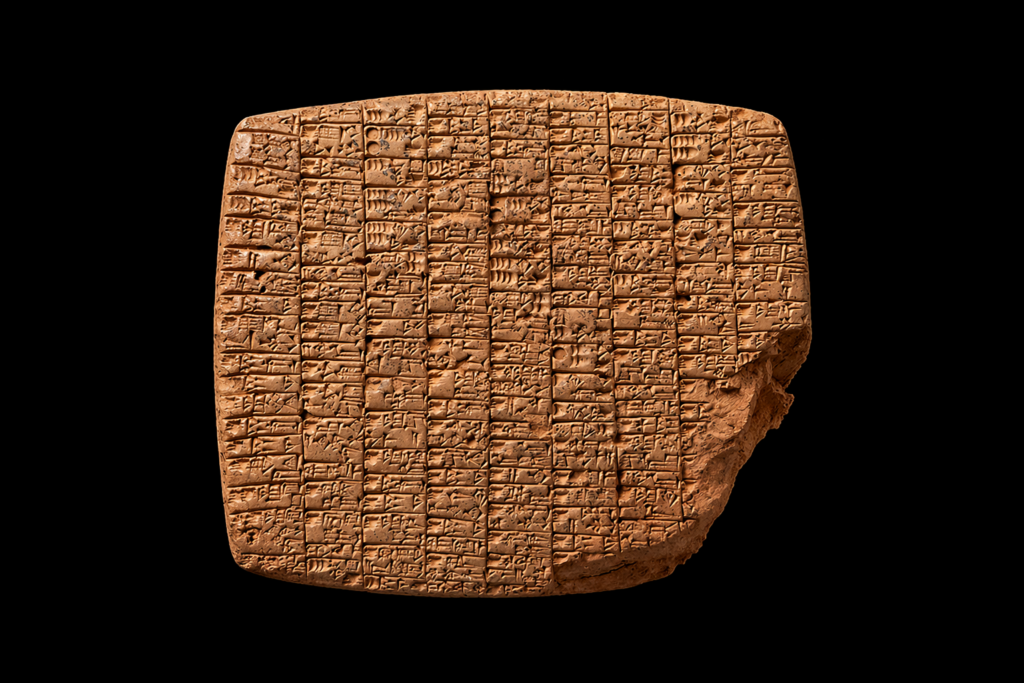
A newly analyzed collection of over 4,000-year-old cuneiform tablets is shedding fresh light on how ancient Mesopotamian societies blended magic, medicine, and political power—while also offering rare clues about the historical roots of the legendary Gilgamesh.
Researchers from the University of Copenhagen and the National Museum of Denmark have completed the first comprehensive study and digitization of a long-overlooked archive of inscribed clay tablets. The results, part of the “Hidden Treasures” project, reveal a remarkably diverse textual world: from anti-witchcraft rituals and healing incantations to royal lists and even what appears to be one of the oldest recorded beer receipts.
But among these findings, it is the magical texts—carefully preserved on clay for millennia—that stand out for their cultural and political significance.
Ancient Magic as Statecraft
The newly studied tablets confirm that magic in ancient Mesopotamia was not marginal or folkloric. It was institutionalized knowledge, deeply embedded in governance and royal ideology.
One of the most striking discoveries is an anti-witchcraft ritual tablet originating from the ancient Syrian city of Hama. Dating to around the early first millennium BC, the text describes a complex, night-long ceremony designed to protect rulers from unseen threats.
According to Assyriologist Troels Pank Arbøll, the ritual involved the symbolic destruction of enemies through carefully orchestrated acts:
Small figurines made of wax and clay were burned while an exorcist recited fixed incantations. These incantations were not improvised but followed a precise formula, indicating a standardized ritual tradition.
The purpose extended beyond personal protection. These rites aimed to stabilize political authority, ward off misfortune, and neutralize perceived supernatural dangers that could undermine a king’s rule.
This reflects a broader Mesopotamian worldview in which cosmic order and political stability were inseparable. A threat from witches or malevolent forces was not merely spiritual—it was a potential crisis of governance.
A Peripheral City with Unexpected Knowledge
What makes the Hama tablets particularly significant is their geographical context.
Hama was not a major intellectual center like Babylon or Assur, yet it preserved texts that were typically associated with the cultural heartlands of Mesopotamia. The city itself was destroyed in 720 BC by Assyrian forces, and most of its archives were likely transported away as spoils.
The surviving tablets appear to have been left behind in what researchers interpret as a temple library, offering a rare snapshot of local intellectual life on the empire’s margins.
The presence of advanced magical texts in such a location challenges earlier assumptions. It suggests that specialized knowledge circulated more widely than previously believed, reaching even peripheral regions.
The Gilgamesh Connection
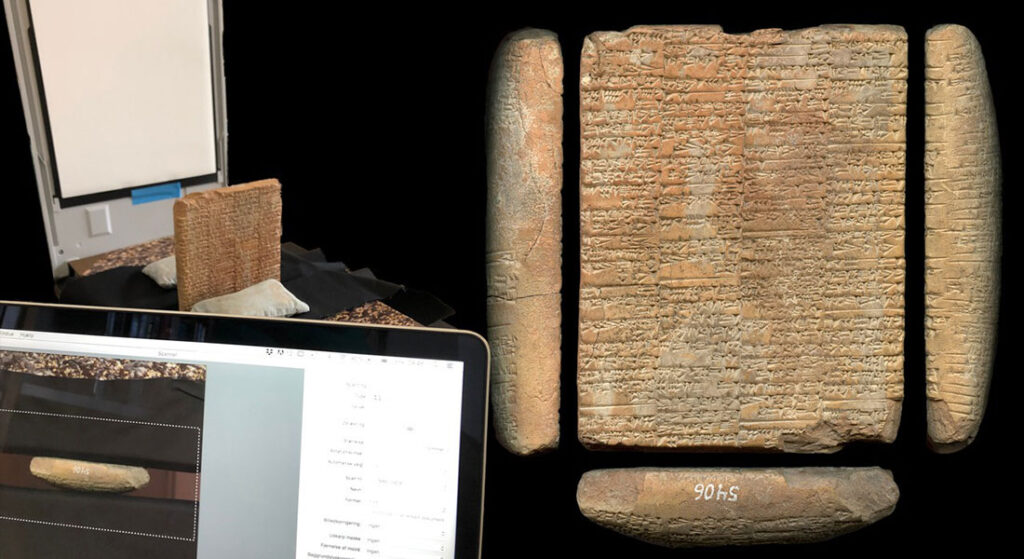
Beyond magic, the collection also includes a copy of a regnal list—a document that blends myth and history by recording kings from both legendary and historical periods.
These lists are among the most important textual traditions in ancient Mesopotamia. They trace royal lineages back to a time before a great flood, echoing narratives known from later literary sources.
Crucially, similar lists are known to include the name of Gilgamesh, the semi-legendary king of Uruk and central figure of the Epic of Gilgamesh.
The newly identified tablet appears to be a school copy, likely used in scribal training. Yet its importance lies in its confirmation that such king lists were actively transmitted and studied.
For historians, this matters. While Gilgamesh is best known as a literary figure, documents like these provide indirect evidence that he may have had a historical basis.
They show that ancient scholars themselves treated these figures not purely as myth, but as part of a continuous historical narrative.
Writing, Power, and Everyday Life
The broader collection underscores how cuneiform writing functioned as the backbone of early complex societies.
First developed over 5,000 years ago in Mesopotamia, cuneiform enabled the management of increasingly sophisticated economies and administrations. The tablets analyzed in this project reflect that dual role: cosmic and mundane.
Alongside magical and royal texts, researchers identified:
Administrative records tracking goods and personnel
Letters between regional leaders and Assyrian kings
Medical prescriptions combining empirical remedies with ritual elements
One particularly striking example is a tablet that appears to record a beer transaction—essentially an ancient receipt.
While seemingly trivial, such documents highlight the bureaucratic precision of early states. They also reveal how writing evolved not only as a tool of power but as a practical necessity in daily life.
Rediscovering a Silent Archive
For more than a century, these tablets remained largely unstudied within museum collections. Their recent digitization marks a turning point.
The “Hidden Treasures” project, led by scholars including Nicole Brisch and Anne Haslund Hansen, has transformed a dormant archive into an accessible research resource.
By cataloguing and analyzing the entire collection, researchers have opened new pathways for understanding the intellectual landscape of the ancient Near East.
Reconstructing an Ancient Intellectual World
The significance of this discovery goes beyond individual artifacts.
These tablets reveal a world in which magic, governance, and knowledge were deeply intertwined. They show how ancient societies confronted uncertainty—not only through administration and law, but through ritual and belief.
At the same time, the presence of figures like Gilgamesh within historical records reminds us that the boundary between myth and history was never rigid.
Instead, it was negotiated—written, erased, and rewritten—on clay tablets that have now survived for thousands of years.
In bringing these texts back into the light, researchers are not just decoding ancient languages. They are reconstructing how early civilizations understood power, fate, and the fragile balance between the visible and the unseen.
Cover Image Credit: The Project Hidden Treasures
