
8 June 2026 The Future is the Product of the Past

Unique and Mysterious 9th-Century Coin Pendant Featuring John the Baptist Discovered in England

A rare gold coin pendant dating to the 9th century has been discovered in Norfolk, offering an unusual glimpse into the religious and cultural landscape of early medieval Europe. A rare gold coin pendant depicting John the Baptist has been described as “unique and mysterious,” raising significant questions about its origins and cultural context.

According to an interview given to the BBC, numismatics expert Simon Coupland emphasized the unusual nature of the artifact, calling it “bizarre” and unlike anything previously documented from the period.

A Rare and Puzzling Discovery

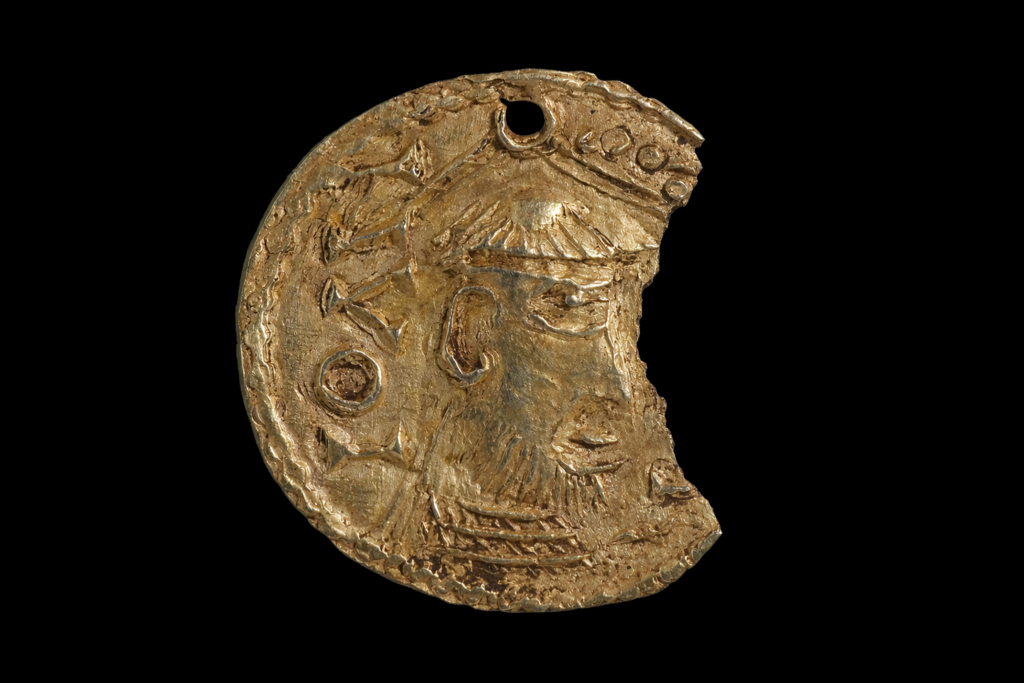
The artifact was uncovered by a metal detectorist near Dunton, west of Fakenham. It consists of a pierced gold pendant modeled after a solidus coin, a type of currency originally used in the late Roman and Byzantine periods. Although incomplete, the piece retains enough detail to reveal its extraordinary features.

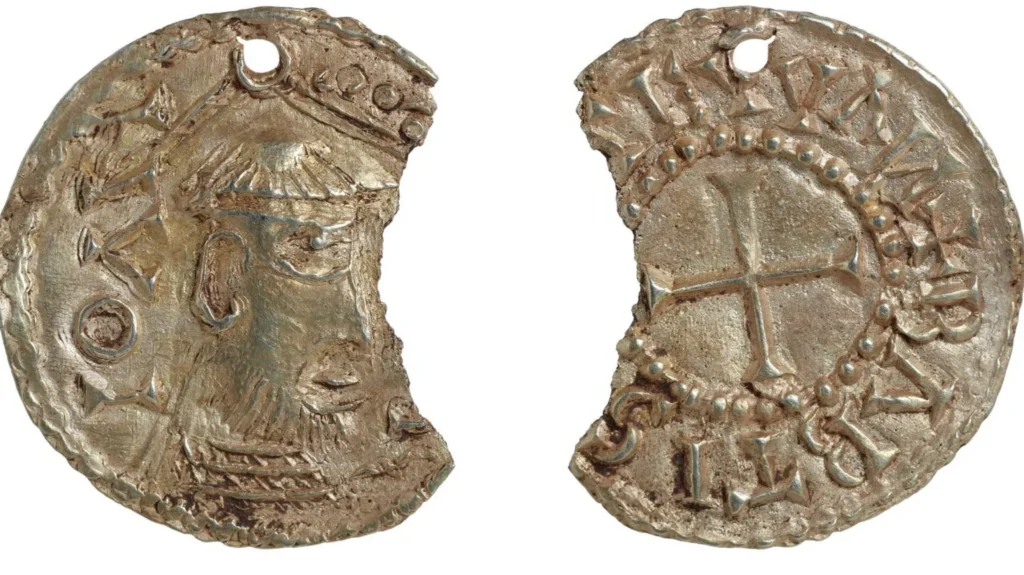
One side of the coin shows a bearded figure in profile, identified through a Latin inscription as John the Baptist. The reverse includes partially preserved text interpreted as “Baptist and Evangelist.” This alone makes the coin exceptionally rare.

During the 9th century, coins minted in Western Europe—especially under the Carolingian dynasty—typically featured kings or emperors, not religious figures. Depictions of saints or Christ were more commonly associated with the Byzantine Empire.


📣 Our WhatsApp channel is now LIVE! Stay up-to-date with the latest news and updates, just click here to follow us on WhatsApp and never miss a thing!!


One side of the coin shows the profile of a bearded man with the Latin for John and the other has part of a Latin inscription translating as baptist and evangelist. Credit: Andrew Williams/Norfolk County Council

One side of the coin shows the profile of a bearded man with the Latin for John and the other has part of a Latin inscription translating as baptist and evangelist. Credit: Andrew Williams/Norfolk County Council

Why This Coin Defies Expectations

What makes this discovery particularly intriguing is how it challenges established historical patterns. Coupland noted that he is unaware of any other Carolingian-era coin featuring John the Baptist, making this piece potentially one of a kind.

The lettering style suggests the coin dates back to the late 9th century, aligning with coins minted in the 860s or 870s. However, its iconography does not fit the norms of the time.

Adding to the mystery is the historical context. By around AD 870, the kingdom of East Anglia had been conquered by Vikings. These Scandinavian settlers were not yet Christian, which raises an important question: why would they produce or wear an object depicting a prominent Christian figure?

This contradiction has led experts to speculate about possible cultural exchanges or unknown influences between Viking and Christian communities.

A Symbol That Doesn’t Fit Its Time

Coupland described the artifact as something that simply doesn’t align with existing historical frameworks. In his BBC interview, he compared it to “a child trying to fit a hexagonal object into a square hole”—a vivid analogy illustrating how the pendant resists easy classification.

The presence of John the Baptist is particularly significant. In Christian tradition, he is known as the forerunner of Jesus, responsible for baptizing him in the River Jordan and introducing his ministry to the public. Despite his importance, his depiction on coins from this era is virtually unheard of in Western Europe.
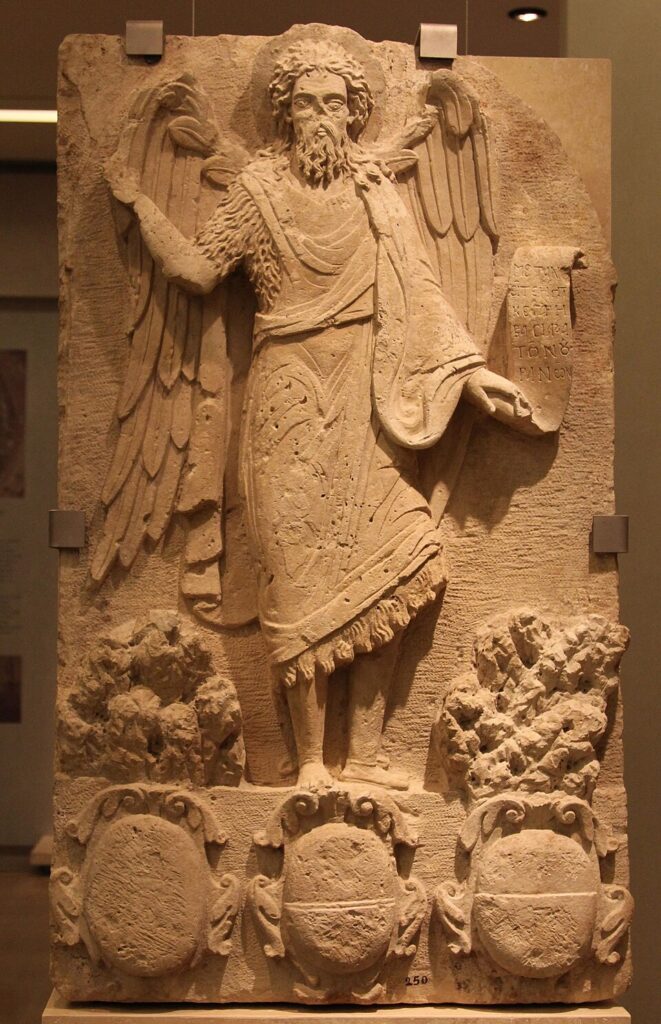
Limestone relief of John the Baptist from Zakynthos, Byzantine and Christian Museum, Greece. Credit: Public Domain

What Happens Next?

The coin pendant is currently undergoing the UK’s official treasure evaluation process. A coroner will determine whether it qualifies as legal treasure under British law. If declared treasure, it may be acquired by the Norwich Castle Museum, which has already expressed strong interest in adding the piece to its collection.

Despite its incomplete condition, the artifact is considered a highly valuable and significant find. It offers a rare glimpse into a period of cultural transition and raises new questions about religious symbolism, trade, and artistic expression in early medieval Europe.

A Discovery That Rewrites History?

This mysterious coin pendant may ultimately reshape how historians understand the interaction between Viking and Christian societies. Its unusual design and unexpected iconography suggest that the cultural landscape of 9th-century Europe was more complex than previously believed.

As researchers continue to study the piece, one thing is certain: this small gold pendant has opened the door to a much larger historical mystery.

Cover Image Credit: Andrew Williams/Norfolk County Council

Related Articles

The 8,000-year-old Aslantepe in Turkey has been added to the UNESCO World Heritage List

26 July 2021

26 July 2021

The Turkish Foreign Ministry said Monday that a rich, 30-meter-high archaeological mound going back 8,000 years in southern Turkey has...

Copious Copper Supplies Made Cyprus a Trading Center in the Bronze Age

23 March 2023

23 March 2023

Cyprus was a surprisingly busy trading hub during the early period of international trade in the Mediterranean region. Its awe-inspiring...

In Germany, a well-preserved octagonal tower unearthed, which may have been inspired by towers on the city walls of Constantinople

5 September 2023

5 September 2023

During excavations at Neuenburg Castle near the town of Freyburg (Burgenlandkreis) in the German state of Saxony-Anhalt, the extraordinarily well-preserved,...

Iron Age port discovered on Swedish island of Gotska Sandön

21 September 2023

21 September 2023

Archaeologists have discovered an Iron Age port on Gotska Sandön, an island and national park in Sweden’s Gotland district. In...

2,400-Year-Old Puppets with Dramatic Expressions Uncovered: May Have Played Key Roles in Rituals atop El Salvador’s Pyramid

5 March 2025

5 March 2025

A recent archaeological find in El Salvador has unveiled a captivating glimpse into the rituals of the region’s Indigenous people,...

Two unique mid-14th-century shipwrecks discovered in Sweden

22 April 2023

22 April 2023

During an archaeological dig in western Sweden this summer, the remains of two medieval merchant vessels known as cogs were...

The free online course from the Colchester Museums and University of Reading Department of Archeology

12 July 2021

12 July 2021

The opportunity to be among the first to examine 2,000-year-old cremated remains from Roman Britain and learn about the origins...

La Marmotta’s 7,500-Year-Old Bows in Italy Show Early Farmers Engineered Weapons from Mediterranean Mixed Forests

18 February 2026

18 February 2026

Beneath the calm surface of Lake Bracciano, a submerged Neolithic village has preserved one of the most extraordinary collections of...

Archaeologists have unearthed a flawless Roman blue glass bowl in the Dutch city of Nijmegen

23 January 2022

23 January 2022

Archaeologists excavating the site of a comprehensive housing and green space development in Nijmegen’s Winkelsteeg, one of the oldest cities...

The first Dutch Neanderthal’s ‘Krijn’ face was reconstructed

7 September 2021

7 September 2021

World-renowned “paleo-artists” Kennis brothers have reconstructed the face of the first Neanderthal in the Netherlands. After more than 50,000 years,...

Tang-e Chogan bas-relief carvings, Majestic treasures of Sassanid art, are under threat of destruction 

9 March 2022

9 March 2022

Treasures of Sassanid art, some of Tang-e Chogan’s bas-reliefs are under threat of complete destruction due to lack of maintenance...

Scientists Create a 3D Model of Lost Temple Relief from a 134-Year-Old Photo Using AI

13 November 2024

13 November 2024

The researchers developed a neural network that can take a single 2D photo of a three-dimensional object and produce a...

Rare Medieval Flail Weapon Discovered Near Battle of Grunwald Site in Poland

1 January 2026

1 January 2026

A rare medieval flail weapon has been unearthed near the historic Battle of Grunwald site in northeastern Poland, offering valuable...

Archaeologists may have found the lost 2,000-year-old ancient city of Bassania in Albania

19 June 2022

19 June 2022

Polish archaeologists may have discovered the 2,000-year-old lost city of Bassania in Albania. The remains of two large ancient stone...

Secrets of the Galloway Hoard Revealed

27 May 2021

27 May 2021

Experts have uncovered fascinating secrets of a Viking Age hoard discovered by a metal detector to be presented to the...