
23 January 2026 The Future is the Product of the Past

A Hidden Canoe Cache Beneath Lake Mendota Redefines Early Engineering and Mobility in the Great Lakes Region

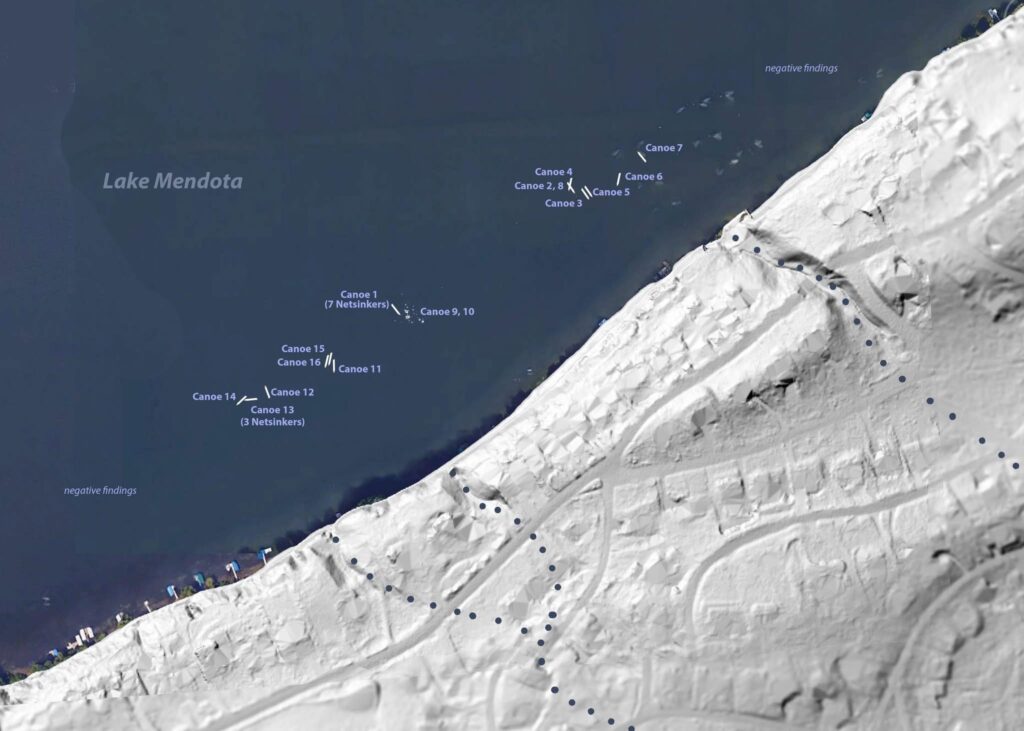
The quiet waters of Lake Mendota have concealed something far more sophisticated than a scattering of lost boats: archaeologists have now mapped 16 ancient dugout canoes, revealing a structured canoe-sharing system used by Indigenous communities thousands of years before the rise of cities in the Old World. New radiocarbon dates push the earliest of these vessels back 5,200 years, older than the Great Pyramid of Giza, making it the most significant prehistoric canoe cluster ever documented in the Great Lakes region.

A Prehistoric Transportation Hub Hidden Under Modern Madison

The concentration of canoes sits just offshore from a network of ancient Indigenous trailways that once crisscrossed the Madison isthmus. According to Wisconsin Historical Society maritime archaeologist Tamara Thomsen, the pattern is deliberate: this was not a random accumulation but a designated canoe cache, a place where travelers could leave a canoe and continue on foot or pick up another on their return.

“It’s a parking spot that’s been used for millennia,” Thomsen noted—an efficient, community-managed transport node that would put today’s bike-sharing systems to shame.

The cache sits within Lake Mendota’s western shallows, a section of the lake that would have been only about a meter deep between 7,500 years ago and 1000 BCE, when a long drought reshaped regional landscapes. For travelers, it was the ideal depth to bury canoes so they would remain waterlogged, preserved, and ready for reuse.
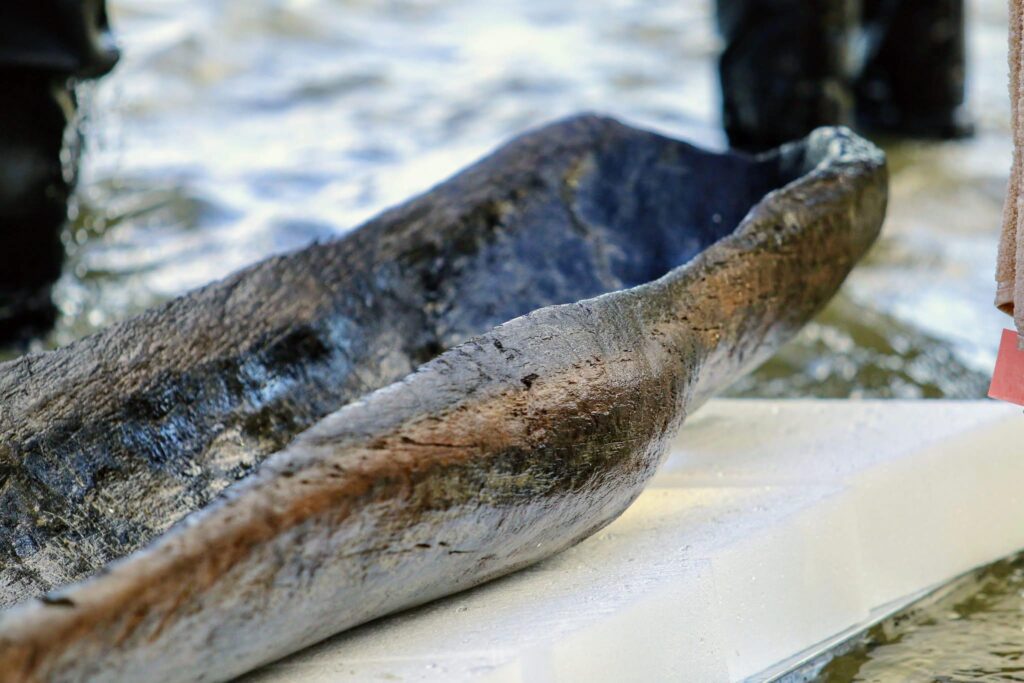
New radiocarbon dates push the earliest of these vessels back 5,200 years, older than the Great Pyramid of Giza, making it the most significant prehistoric canoe cluster ever documented in the Great Lakes region. Credit: Wisconsin Historical Society via Facebook

From One Discovery to Sixteen

The investigation began modestly in 2021, when Thomsen documented a remarkably intact 1,200-year-old oak canoe resting 24 feet below the surface. That alone would have been a landmark find—but a year later, a second canoe dated to 3,000 years ago was identified, lying directly above a 4,500-year-old craft. A 2,000-year-old vessel was found nearby.


📣 Our WhatsApp channel is now LIVE! Stay up-to-date with the latest news and updates, just click here to follow us on WhatsApp and never miss a thing!!


At that point, the time-stacked layering made it obvious that Mendota held something more elaborate than sporadic accidents.

Working with UW-Madison professor Sissel Schroeder, along with preservation officers from the Ho-Chunk Nation and the Bad River Band of Lake Superior Chippewa, Thomsen expanded the survey. The result: twelve additional canoes, each trapped in its own sediment pocket, forming a multi-period record of repeated, structured use.

Engineering Choices that Precede Written Science

Half the canoes were built from red or white oak, according to a wood analysis by the U.S. Forest Products Laboratory. Oak is not a random choice. Researchers now think Indigenous canoe builders deliberately exploited a botanical advantage: tyloses, the wax-like cellular growths that make wood more resistant to water and rot.

In white oak, tyloses occur naturally. In red oak, however, they appear when a tree is stressed or wounded—raising a bold hypothesis: ancient builders may have intentionally wounded red oak trees generations before harvest, effectively bioengineering superior boat timber long before modern forestry science existed. The canoe cache at Mendota may therefore preserve not only travel infrastructure but also a record of early applied botanical engineering.
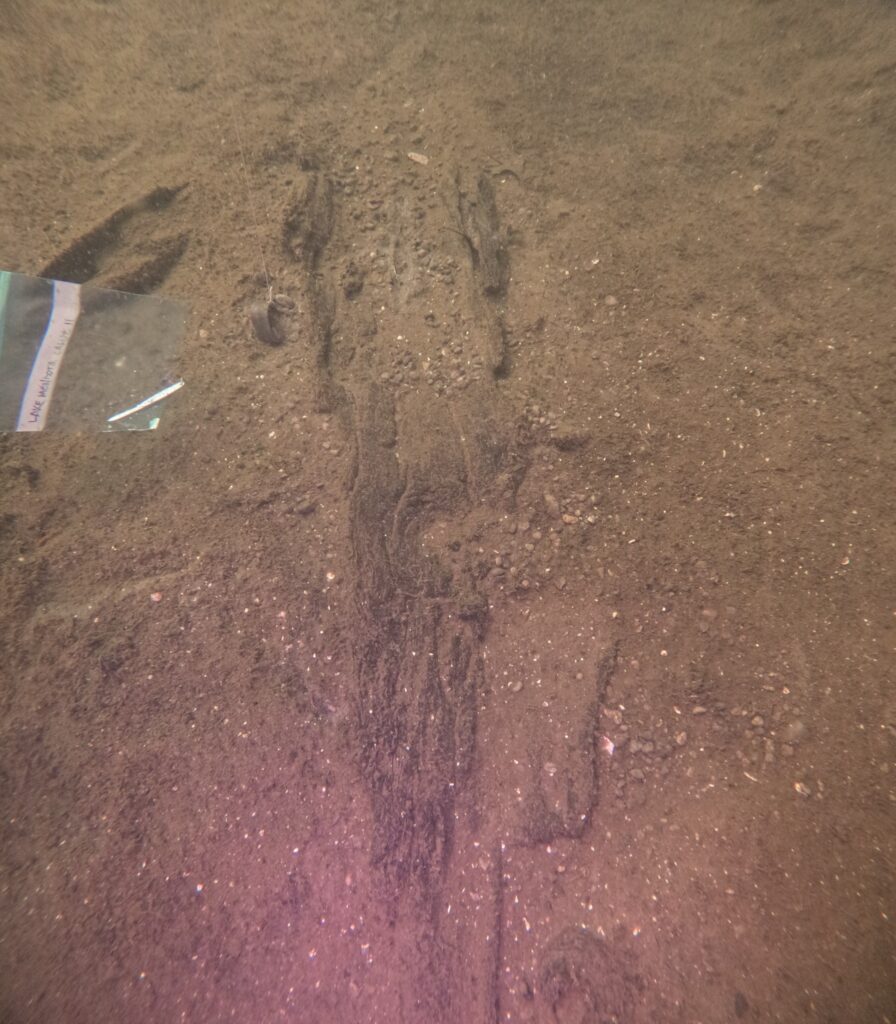
Archaeologists have now mapped 16 ancient dugout canoes, revealing a structured canoe-sharing system used by Indigenous communities thousands of years before the rise of cities in the Old World. Credit: Wisconsin Historical Society via Facebook

Routes Toward Sacred and Economically Vital Landscapes

Archaeologists believe travelers using these canoes often moved toward Lake Wingra, home to springs considered sacred by the Ho-Chunk Nation. One spring is traditionally viewed as a portal to the spirit world. The transportation network connecting Mendota, the isthmus, and Wingra would have supported both spiritual travel and regional commerce.

“The canoes remind us how long our people have lived in this region and how deeply connected we remain to these waters and lands,” said Bill Quackenbush, Tribal Historic Preservation Officer for the Ho-Chunk Nation.

The find also raises the possibility that older vessels remain buried deeper in the lakebed. If drought-era water levels encouraged canoe caching, and if younger boats lie atop older ones, Thomsen argues a 7,000-year-old canoe may still be waiting beneath the silt—evidence of human presence that predates historically documented tribal groups.

Preservation Efforts and Federal Investment

Two of the recovered canoes are currently undergoing conservation. The Wisconsin Historical Society recently secured a $113,912 Save America’s Treasures grant from the National Park Service to fund transport and freeze-drying at a Texas conservation facility. The 1,200-year-old canoe will eventually be displayed in the Wisconsin History Center, where it is expected to become a signature piece of the state’s early cultural history.

For Thomsen—whose career normally revolves around mapping Great Lakes shipwrecks—the canoe project carries a deeper emotional weight. Working directly with Wisconsin’s First Nations has reframed the excavation not as an isolated archaeological task, but as a collaborative uncovering of living heritage.

“Each one of these canoes gives us another clue to the story,” she said. “This work feels like it’s making a difference.”

Wisconsin Historical Society

Cover Image Credit: Wisconsin Historical Society via Facebook

Related Articles

Deadly 7.7 quakes hit Turkey destroys historical Gaziantep Castle

6 February 2023

6 February 2023

A deadly 7.7 magnitude earthquake that rocked the southern province of Kahramanmaraş, with tremors felt in the neighboring provinces, has...

A new study provides evidence that modern humans, coexisted in the same region with Neanderthals for thousands of years

11 February 2024

11 February 2024

A genetic analysis of bone fragments excavated from an archaeological site in Ranis, Germany provides conclusive evidence that modern humans...

In Switzerland, a Roman amphitheater was discovered during the construction of boathouse

21 January 2022

21 January 2022

Archaeologists from Aargau Cantonal Archaeology have announced the discovery of a Roman amphitheater in Kaiseraugst, located in the canton of...

Glacier archaeologists find a 1300-year-old arrow in melting ice

20 August 2022

20 August 2022

The Glacier archaeologists found a 1300-year-old arrow from the Norwegian Iron Age during a research project on the Langfonne ice...

Archaeologists discovered medieval Bury St Edmunds Abbey ‘Bishop Boy’ token in Norfolk

19 December 2023

19 December 2023

Archaeologists have discovered token in Norfolk in the East of England, dating from between 1470 and 1560, given to the...

Rare Roman Soldier’s Sun Hat Rediscovered After More Than a Century

12 August 2025

12 August 2025

Bolton Museum has unveiled a rare and fascinating artifact—a Roman sun hat worn by a soldier in Ancient Egypt nearly...

New insight into the history of human presence in Paveh county, Kermanshah province, which is located in western Iran

22 August 2021

22 August 2021

Stone tools and animal bones unearthed recently have thrown new insight into the history of human presence in Paveh county,...

Refurbishment at the Uffizi Gallery Revealed a Pair of Priceless Lost Renaissance Frescoes

24 April 2021

24 April 2021

A couple of construction workers discovered two Renaissance-era treasures while working on an extensive renovation project at Florence’s world-famous Uffizi...

A 1,700-year-old trident discovered in Assos ancient city in Türkiye

10 October 2023

10 October 2023

An iron trident, believed to be used for fishing, dating to the 3rd or 4th century A.D. has been discovered...

Archaeologists Find Ornate Roman Domūs in Nimes

25 February 2021

25 February 2021

Archaeologists conducting archaeological excavations in the French city of Nimes have discovered the remains of two high-status Roman domus (houses)....

Archaeologists Uncovered a Terracotta Commander and Warriors at the Mausoleum of China’s First Emperor

12 January 2025

12 January 2025

Archaeologists have unearthed a rare 2,000-year-old statue depicting a high-ranking military commander at the famous Terracotta Army site in China:...

The inner wall was reached during the excavations of the tomb of the poet Aratos in the Soli Pompeiopolis Ancient City

13 August 2021

13 August 2021

The inner wall was reached during the excavations of the tomb of Aratos, the famous poet and astronomer of the...

Archeologists discovered a treasure trove at the bottom of an ancient Roman bathhouse drain near Hadrian’s Wall

1 February 2023

1 February 2023

Archeologists in Carlisle, England, discovered a treasure trove at the bottom of the drain system of an ancient Roman bathhouse...

Thousands of Ancient Tombs Discovered in Xian

23 February 2021

23 February 2021

According to the Shaanxi Provincial Archaeological Institute, more than 4,600 ancient cultural remains were discovered during the expansion project of...

2800-year-old two Swords found in Germany from the start of the Iron Age

8 June 2022

8 June 2022

During archaeological excavations in preparation for the construction of the fire station in the Frieding district of Andechs in southern...