3 April 2026 The Future is the Product of the Past

Megalithic structure found in Kazakhstan was probably a place of worship for miners in the Bronze Age

Archaeologists investigating a megalithic monument in the Burabay district of the Akmola region of Kazakhstan have revealed that the monument may have been closely linked to gold mining activities in the region in the 2nd millennium BC and may possibly have been a place of worship for miners.

The results of the research were published by Dr. Sergey Yarygin and Dr. Sergazy Sakenov, researchers of the Margulan Archaeological Institute, and Zerrin Aydın Tavukçu, Associate Professor at Ataturk University in Türkiye.

The monument received the name “Taskamal” (from the Kazakh language “Stone fortress”) from residents and tourists due to its monumentality and characteristic masonry of granite blocks.

The research focuses on recording the monument’s architecture and understanding its cultural and chronological context, but it also provides important insights into the understanding of gold mining activities in the Late Bronze Age.

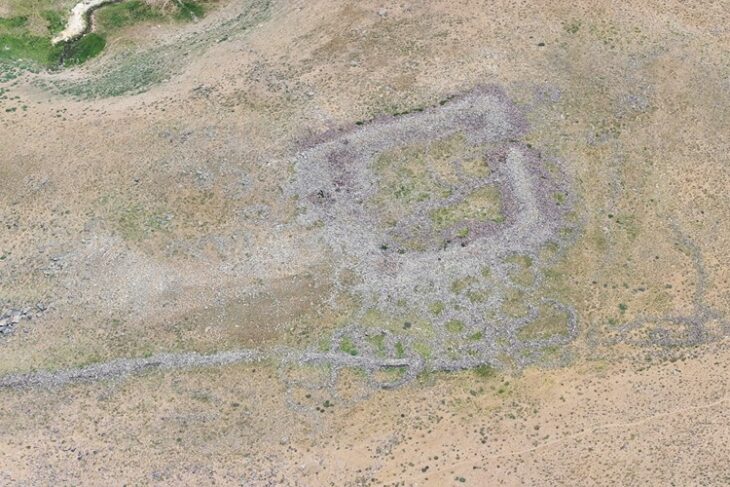
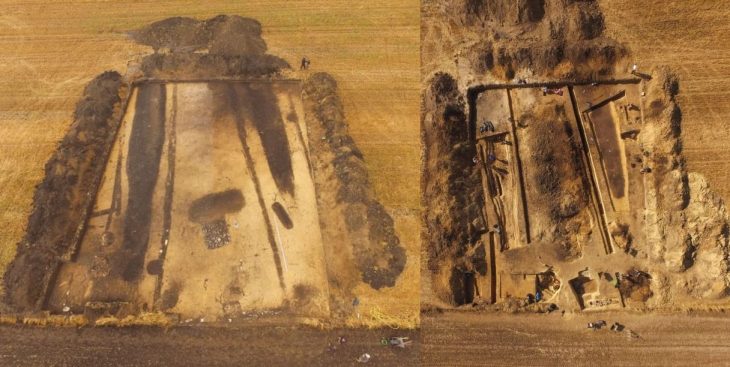
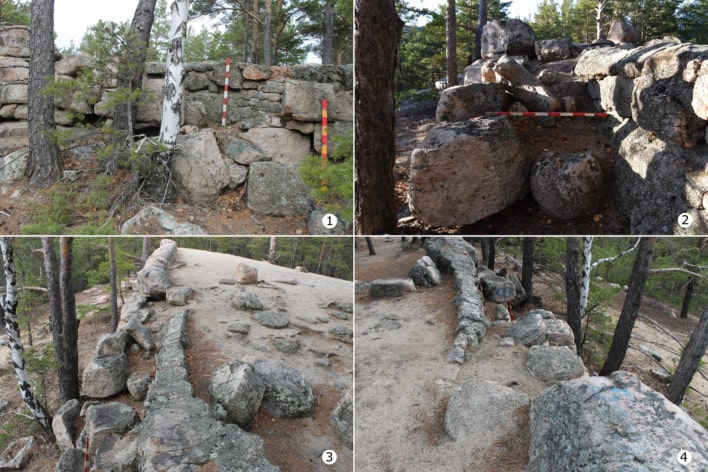
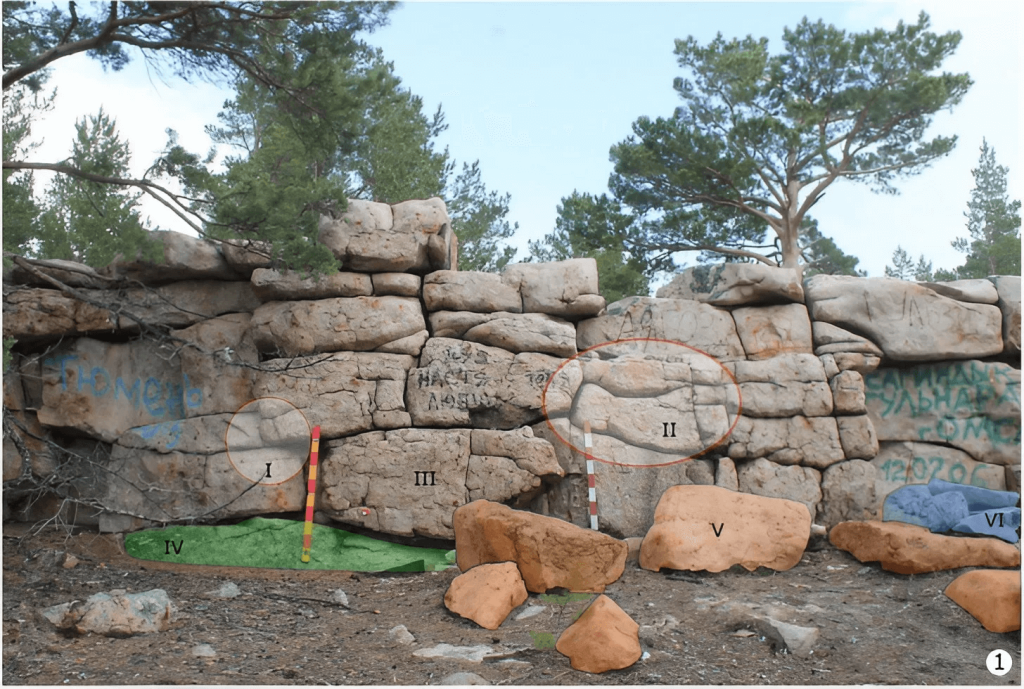
The Taskamal complex is home to some of the most remarkable architectural features, including a massive megalithic wall made of enormous granite blocks, an elevated platform in the center, two thoughtfully constructed access ramps, an external platform, several lithic stelae whose significance is yet to be unknown, and petroglyphs and reliefs that may hold important secrets about its purpose and cultural significance.


📣 Our WhatsApp channel is now LIVE! Stay up-to-date with the latest news and updates, just click here to follow us on WhatsApp and never miss a thing!!


Taskamal structure in Kazakhstan was a place of worship for Bronze Age miners. Image Credit: Sergey Yarygin et al.Taskamal structure in Kazakhstan was a place of worship for Bronze Age miners. Image Credit: Sergey Yarygin et al.
Taskamal structure in Kazakhstan was a place of worship for Bronze Age miners. Image Credit: Sergey Yarygin et al.

Based on comparisons of the complex’s individual components, building methods, and archaeological features—most notably, the image of a reclining bull—the monument’s preliminary dating to the second millennium BCE places Taskamal in the context of Central Asia’s Late Bronze Age, a time of significant social, technological, and economic transformation.

This proposed chronology assumes even more significance in light of the rich archaeological landscape that surrounds the Burabay region and environs. These areas include several cemeteries connected to the Fedorovo, Alakul, and Sargara-Alexeyev archaeological cultures, which flourished between 1800 and 900 BCE, as well as approximately 46 Late Bronze Age sites and 90 ancient gold mines that have been documented.

Archaeologists believe that the Megalithic object was constructed during the time of gold mining activities in Burabay and was likely associated with gold extraction.

Like other communities in Northern Kazakhstan, the populations that lived in the Burabay during the Late Bronze Age took part in the extraction, processing, and international trade of polymetals. The high number of gold mines around Burabay provided evidence of exploitation in ancient times, indicating that the local communities were primarily focused on gold mining.
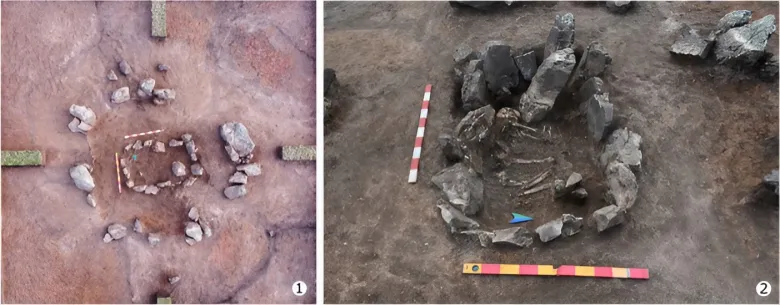
Structures in the Bronze Age megalithic site in Kazakhstan. Image Credit: Sergey Yarygin et al.

In addition to the numerous gold deposits in the area and the evidence of ancient mining nearby, the monumentality of the Taskamal complex suggests that it served a purpose of great importance to the prehistoric communities who built it. These factors support the hypothesis that the Taskamal complex may have been connected to gold mining activities in the Mid-Bronze Age.

If confirmed, this hypothesis will shed light on the complex relationships between economic, ritual, and social practices in Bronze Age societies in Central Asia.

However, the researchers emphasize the need to obtain precise dates to improve the site’s chronology, to conduct geochemical analyses that can definitively confirm the complex’s link to gold mining, and to conduct broader regional studies to contextualize Taskamal within the vast and complex archaeological landscape of Central Asia.

The research was published in the journal Archaeological Research in Asia.

https://doi.org/10.1016/j.ara.2024.100536

Cover Image: Sergey Yarygin et al.
Related Articles

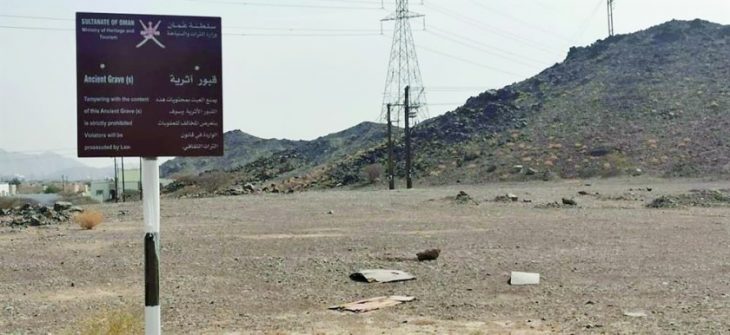
A new Archaeological Site has been Discovered in Oman

7 July 2021

7 July 2021

Oman‘s Ministry of Heritage and Tourism recently discovered an ancient site in the town of Al Khobar, Sumail Province, Al...

Possible Location of Medieval Knight Zbylut’s Manor Identified Alongside Discovery of Unknown Burial Crypts

26 April 2025

26 April 2025

In a remarkable archaeological find, researchers have uncovered previously unknown burial crypts within the Gothic Church of St. James the...

A Rare Mosaic from the Villa of the Amazons Shows Nile Imagery in Late Roman Anatolia

2 February 2026

2 February 2026

Archaeologists studying the ancient city of Edessa have uncovered striking new insights into Late Antique art through a richly decorated...

The discovery of a 380-million-year-old heart sheds new light on our bodies’ evolution

16 September 2022

16 September 2022

Researchers from Curtin University have discovered the world’s oldest heart in a ‘beautifully preserved’ ancient jawed fish fossil 380 million...

Archeologists unearth largest rare wooden “Haniwa” Statue in Japan

10 December 2022

10 December 2022

The remains of a 3.5-meter-tall wooden “haniwa” statue have been discovered at one of the “kofun” ancient burial mounds that...

A 7,500-year-old settlement has been discovered in Turkey’s Domuztepe Mound

11 September 2021

11 September 2021

During the most recent excavations at Domuztepe Mound in the Türkoğlu district of southern Turkey’s Kahramanmaraş province, a settlement and...

Excavations Near Stonehenge Uncover Bronze Age Barrow Cemetery

4 June 2023

4 June 2023

The Cotswold Archeology team excavating at the site of a planned housing development near Salisbury, England, has unearthed a giant...

A fragment with the oldest Syriac translation of the New Testament discovered

7 April 2023

7 April 2023

A researcher from the Austrian Academy of Sciences, with the help of ultraviolet photography, was able to discover a small...

During the demolition work, a 2,500-year-old bull heads alto relievo was discovered in Sinop

20 April 2022

20 April 2022

During the demolition work of the buildings in front of the historical city walls for the City Square National Garden...

Urartian-Era Fortress with 50 Rooms Discovered at 3,000 Meters in Eastern Türkiye

5 August 2025

5 August 2025

Archaeologists uncover a massive high-altitude fortress believed to date back to the Iron Age, with ties to the ancient Urartian...

“Important discovery” showing that the Hittite city of Büklükale close ties with the Hurrian society

21 October 2022

21 October 2022

According to Japanese archaeologists, an ancient clay tablet discovered at the Büklükale ruins in central Turkey suggests that a little-known...

A 4000-Year-Old Trading Port was Discovered in Istanbul

4 May 2021

4 May 2021

Archaeological excavations carried out on a peninsula in the middle of Istanbul Küçükçekmece Lake unearthed a very important 4,000-year-old trade...

Czech experimental archaeologists successfully completed their 1-month voyage in the Aegean Sea using a replica of a prehistoric vessel

17 July 2023

17 July 2023

Radomír Tichý, an archeology professor at the University of Hradec Králové who is also the director of the Všestary Archeopark,...

Poland’s largest megalithic cemetery discovered

3 March 2021

3 March 2021

Archaeologists excavated in Poland discovered a large megalithic complex, including dozens of tombs dating back 5,500 years. The site was...

Lost medieval road thought to have been used by famous Scottish king Robert the Bruce found

27 June 2021

27 June 2021

Excavating a hill considered to have played a critical part in the Battle of Bannockburn, archaeologists discovered a forgotten medieval...