
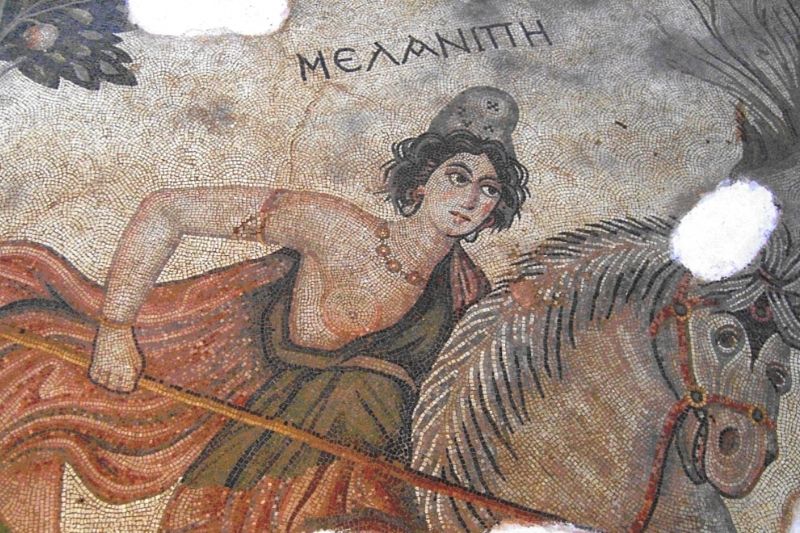
Archaeologists studying the ancient city of Edessa have uncovered striking new insights into Late Antique art through a richly decorated mosaic discovered in the so-called Villa of the Amazons at Haleplibahçe. Dating to the 5th–6th centuries AD, the mosaic—known as the Bird Hall Mosaic—offers a rare and symbolic depiction of Nilotic imagery, blending local traditions with influences from Egypt and the Eastern Roman world.
Unearthed during excavations led by the Şanlıurfa Museum between 2006 and 2009, the Villa of the Amazons is one of the most remarkable archaeological discoveries in southeastern Türkiye. Today, its mosaics are preserved and displayed in the Haleplibahçe Mosaic Museum, attracting scholars and visitors alike.
A Central Hall with Extraordinary Symbolism
At the heart of the villa lies Room 5, the largest and most prominent space in the complex. Measuring approximately 10.8 by 16.5 meters, this hall is believed to have served as the main reception area. Although much of its floor mosaic has been damaged over time, the surviving fragments reveal an exceptionally rich iconographic program.
Because of the numerous bird depictions preserved in its decorative border, researchers have named the space the “Bird Hall.” Despite its fragmentary condition, the mosaic provides valuable clues about artistic production, symbolism, and cultural exchange in Edessa during Late Antiquity.
Lotus Flowers and Wetland Birds: A Nilotic Landscape
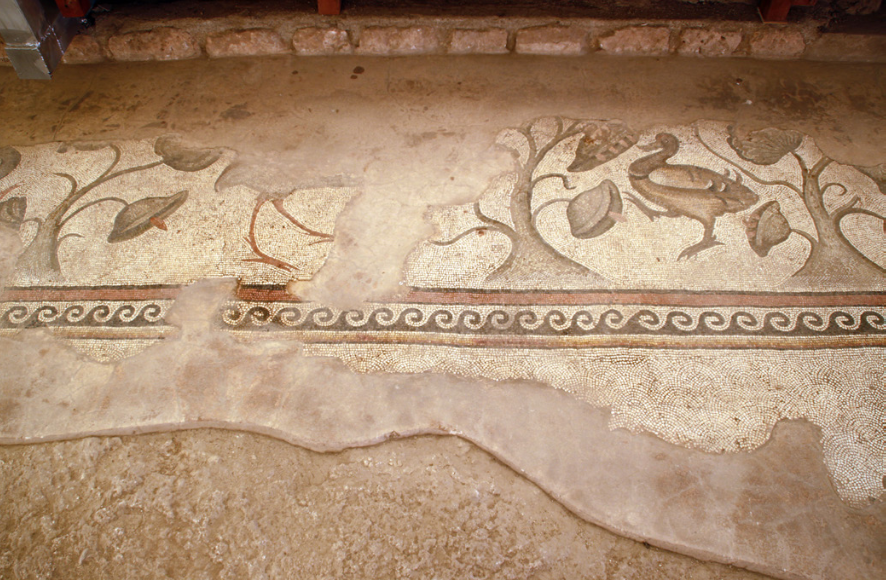
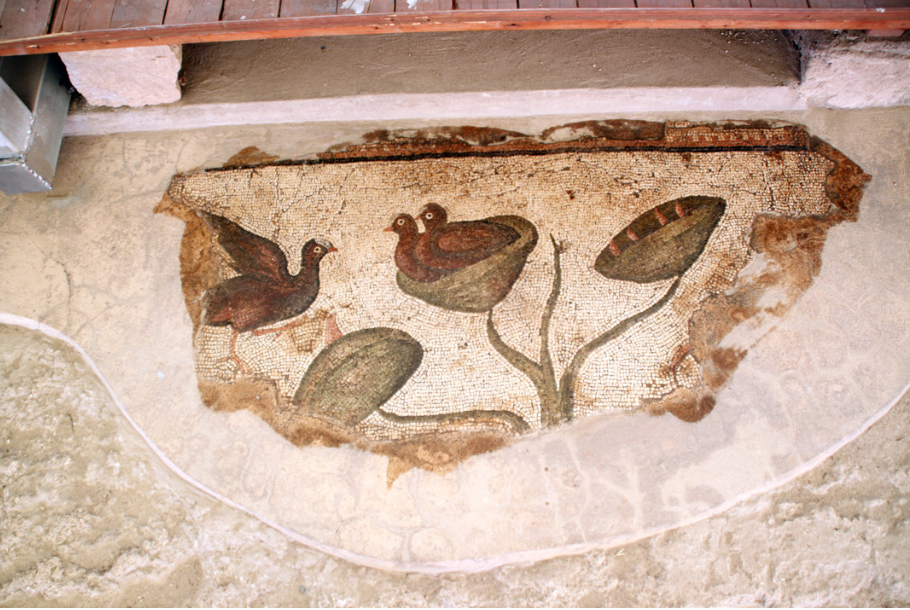
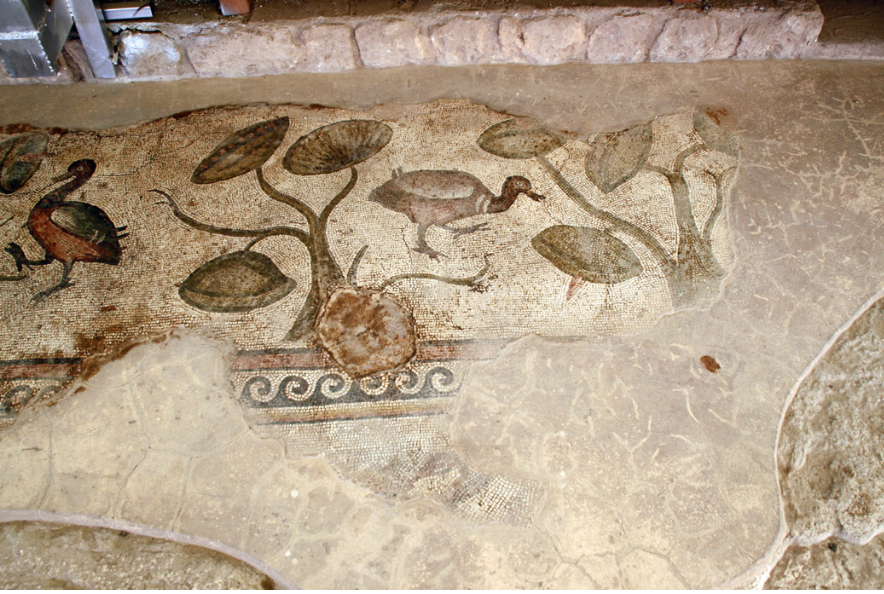
The mosaic’s border features a continuous decorative band filled with stylized lotus plants and water birds, including ducks, cranes, storks, ibises, and coots. These species are all associated with wetland ecosystems, strongly suggesting a symbolic reference to the Nile River and its fertile delta.
The lotus motifs are particularly significant. Depicted in various stages of growth—from buds to seed pods—the flowers are believed to represent the Indian lotus (Nelumbo nucifera), a plant deeply associated with fertility, rebirth, and abundance in ancient Egyptian belief systems. While lotus imagery is common in Nilotic art, its appearance in a villa in Edessa highlights the far-reaching influence of Egyptian iconography in the Eastern Mediterranean.
Unlike naturalistic river scenes seen in earlier Hellenistic mosaics, the Bird Hall border lacks a visible water depiction. Instead, symbolic elements—plants and animals—are arranged freely across a white background, reflecting a more abstract and emblematic approach typical of Late Antique art.
A Mysterious Chariot Scene
One of the most intriguing elements appears in the western section of the border: a small wheeled chariot carrying two reclining human figures, a man and a woman. The male figure is partially nude, while the female holds what appears to be fruit, a traditional symbol of abundance.
Although the figures’ heads are missing, scholars believe the scene may reference Neilos, the personification of the Nile River, accompanied by Euthenia, a lesser-known female figure symbolizing prosperity and plenty. Similar imagery appears in Nilotic mosaics from Syria and the Levant, most notably at Sarrin and Sepphoris, where river gods are shown reclining on chariots or animals as part of ceremonial processions.
If this interpretation is correct, the Bird Hall Mosaic represents a rare example of Nilotic symbolism integrated into a private residential context in Anatolia.
Hunting Scene in the Main Panel
The central panel of the mosaic is heavily damaged, but surviving fragments indicate that it once depicted a large-scale hunting scene. A standing male figure dressed in a short tunic and trousers—typical attire for hunters in Late Roman art—appears to be advancing with a spear. Nearby are stylized trees, shrubs, and rocky outcrops, suggesting a pastoral landscape.
Comparable hunting mosaics from Antioch, Apamea, and Constantinople date to the same period and often symbolized strength, status, and elite leisure. In the context of the Villa of the Amazons, the hunting imagery may have complemented the Nilotic border by emphasizing themes of control over nature and abundance.
Why This Mosaic Matters
What makes the Bird Hall Mosaic especially significant is its combination of rare Nilotic iconography with a hunting scene, a pairing seldom seen in Late Antique mosaics. Moreover, Nilotic themes are usually found in bathhouses or public buildings—not in villa borders—making this example particularly unusual.
The mosaic also demonstrates the artistic sophistication of Edessa during the Eastern Roman period. Its fine workmanship, complex symbolism, and stylistic parallels with major centers such as Antioch and Alexandria suggest the presence of highly skilled mosaic workshops and strong cultural connections across the region.
A Window into Late Antique Edessa
Although damaged, the Bird Hall Mosaic offers a vivid glimpse into the beliefs, aesthetics, and global influences of Late Antique society in southeastern Türkiye. By blending local traditions with Egyptian and Greco-Roman symbolism, the mosaic reflects Edessa’s role as a cultural crossroads between East and West.
As ongoing research continues to re-evaluate its imagery, the Bird Hall Mosaic stands as a powerful reminder that even fragmentary artworks can reshape our understanding of the ancient world.
Çokoğullu, S. (2025). A mosaic from the “Villa of the Amazons” in Haleplibahçe: The Bird Hall mosaic. ADerg – Ege Üniversitesi Edebiyat Fakültesi Yayınları, 35(2), 147–164. https://doi.org/10.51493/egearkeoloji.1747138
Cover Image Credit: Magnificent floor mosaics discovered during the Şanlıurfa excavations between 2006 and 2008 cover twelve rooms of a villa that likely belonged to a high-ranking official of the Eastern Roman Empire in the 5th–6th centuries AD. The building is known as the Villa of the Amazons due to its striking Amazon depictions. Turkish Museum
