
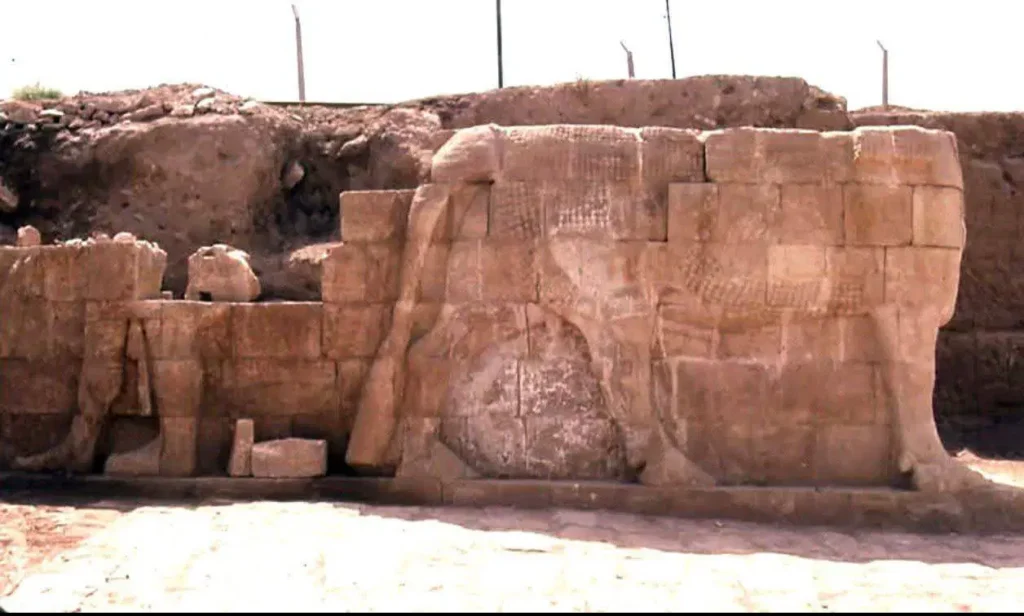
Just weeks after the September 21 announcement of the “Colossal Assyrian Winged Bull Unearthed in Iraq: Largest Ever at Six Meters”, archaeologists in Nineveh have revealed yet another series of remarkable discoveries. The same ancient site of Tell Nabi Yunus, in the heart of the former Assyrian capital, has now yielded fifteen additional lamassu—massive winged bulls with human faces—and a set of newly uncovered bas-reliefs from an Assyrian military palace.
The latest findings, announced by the German archaeological mission from the University of Heidelberg, further confirm Nineveh’s status as one of the most important and symbolically charged centers of the Neo-Assyrian Empire. Together, these discoveries offer an unprecedented glimpse into the architectural splendor and spiritual beliefs of Mesopotamia’s most powerful civilization.
A Palace of Power: From Sennacherib to Ashurbanipal
The newly uncovered structures date to the reigns of three of Assyria’s greatest kings—Sennacherib (704–681 BCE), Esarhaddon (680–669 BCE), and Ashurbanipal (669–626 BCE)—who ruled at the height of the empire’s dominance. These monarchs transformed Nineveh into a sprawling metropolis adorned with palaces, temples, and gardens that dazzled ancient visitors.
Historical sources, including cuneiform tablets and classical accounts, describe Sennacherib’s palace as “without rival.” It was here that the Assyrian kings received foreign envoys, commanded vast armies, and displayed their divine right to rule through monumental art and architecture. The reliefs uncovered at Tell Nabi Yunus appear to belong to a military complex linked to these royal residences—possibly an extension of the main palace used for administrative and ceremonial purposes.
Fifteen Lamassu: Guardians of the Gateways
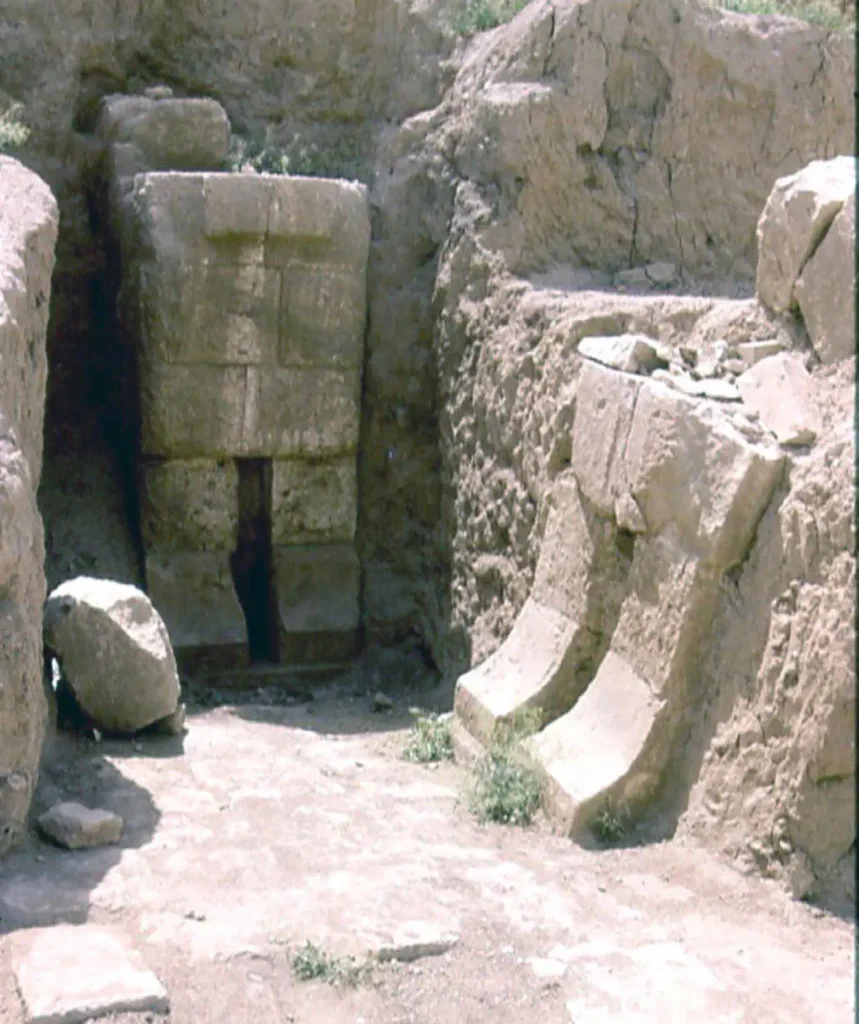
Among the most spectacular finds are fifteen lamassu statues, twelve of which remain in their original positions (in situ). Carved from massive stone blocks, these mythological creatures combined the body of a bull, the wings of an eagle, and the face of a man, symbolizing strength, swiftness, and intelligence—the divine attributes of kingship.
What makes this discovery exceptional is not only the number of lamassu but also the technical diversity of their construction. Some were sculpted from a single monolithic stone, while others were assembled from multiple sections—an unusual practice in late Assyrian architecture. This innovation suggests evolving artistic techniques and possibly a shift in palace-building traditions during the late 7th century BCE.
In Assyrian belief, the lamassu were protective spirits that guarded the thresholds between the human and divine realms. Positioned at palace gates, they served both a symbolic and apotropaic (evil-averting) function, warding off chaos and ensuring the stability of the empire. Their imposing presence also communicated the might of the Assyrian kings to subjects and visitors alike.
Rediscovering the Art of Assyrian Reliefs
The excavation also revealed fragments of bas-reliefs that once decorated the throne room façade. These finely carved stone panels depict royal processions, military campaigns, and ritual scenes, executed with remarkable precision. The artistry reflects the technical mastery of Assyrian craftsmen who used shallow carving, dynamic composition, and intricate details to bring stone surfaces to life.
Such reliefs not only adorned the palace walls but also served as visual propaganda, narrating the victories and divine legitimacy of the Assyrian rulers. The scenes provided a visual script of empire—emphasizing order, conquest, and cosmic protection under the king’s rule. According to Dr. Markus Feldmann, lead archaeologist of the Heidelberg mission, these newly found fragments could “fill crucial gaps in our understanding of late Assyrian artistic development, especially under Esarhaddon and Ashurbanipal.”
An International Effort to Preserve Iraq’s Heritage
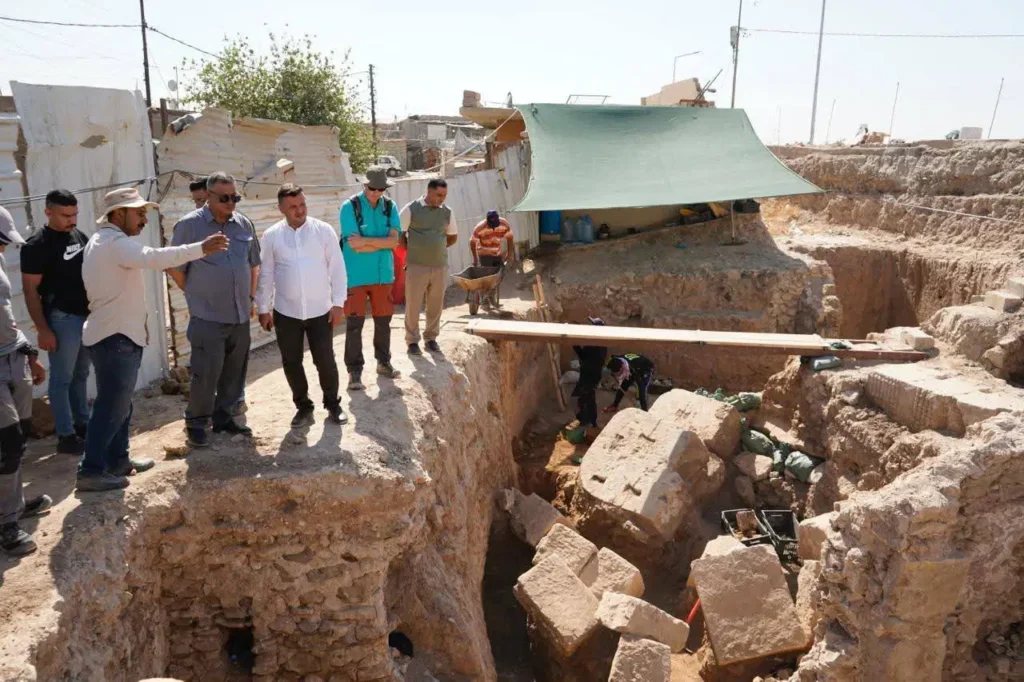
During his visit, Chairman Shalgham praised the collaboration between Iraqi and German experts, noting that such partnerships are essential for the preservation of Iraq’s rich cultural heritage. The team’s meticulous documentation, digital scanning, and conservation work ensure that every fragment is recorded before being moved or restored.
“The discoveries at Tell Nabi Yunus remind the world that Iraq remains the heartland of ancient civilization,” Shalgham stated. “Every stone unearthed here tells the story of humanity’s earliest cities, kings, and gods.”
Nineveh: The Jewel of Assyria
Situated on the banks of the Tigris River near modern-day Mosul, Nineveh was once the largest city in the world, a beacon of urban and artistic sophistication in the 7th century BCE. Its network of canals, grand palaces, and monumental gates symbolized the organizational genius of the Assyrian state.
The Tell Nabi Yunus mound, long revered as the traditional burial site of the prophet Jonah, was largely inaccessible to archaeologists for decades due to modern religious structures. Recent collaboration and careful planning have finally allowed systematic excavations—revealing layers of occupation stretching back to the Bronze Age.
A Legacy Reborn
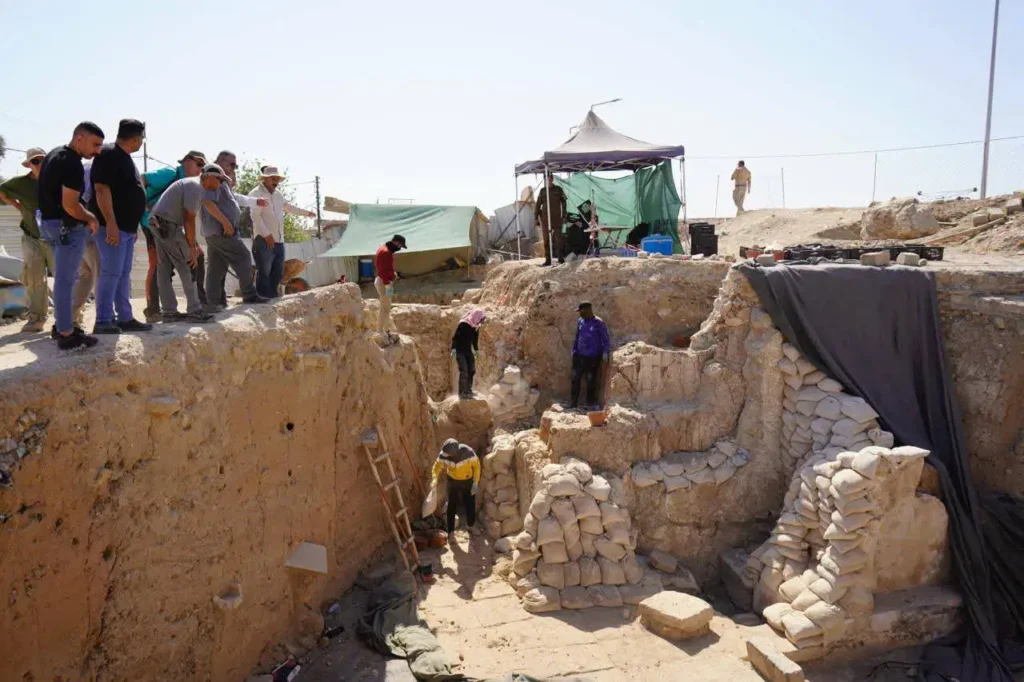
The discoveries at Nineveh are not just archaeological milestones; they are acts of cultural recovery in a region that has suffered immense heritage loss in recent decades. Each lamassu and relief recovered strengthens Iraq’s connection to its ancient past and reinforces global appreciation for Mesopotamia—the cradle of civilization.
As excavation continues, scholars hope to uncover more of the palace complex, potentially revealing inscriptions or archives that could offer new insights into the administration, religion, and art of the Assyrian Empire. For now, the newly discovered guardians of stone stand once again beneath the Mesopotamian sun, reminding us that even after millennia, the voices of Nineveh still speak through their enduring forms.
Ministry of Culture, Tourism and Archaeology of Iraq
Cover Image Credit: Ministry of Culture, Tourism and Archaeology of Iraq
