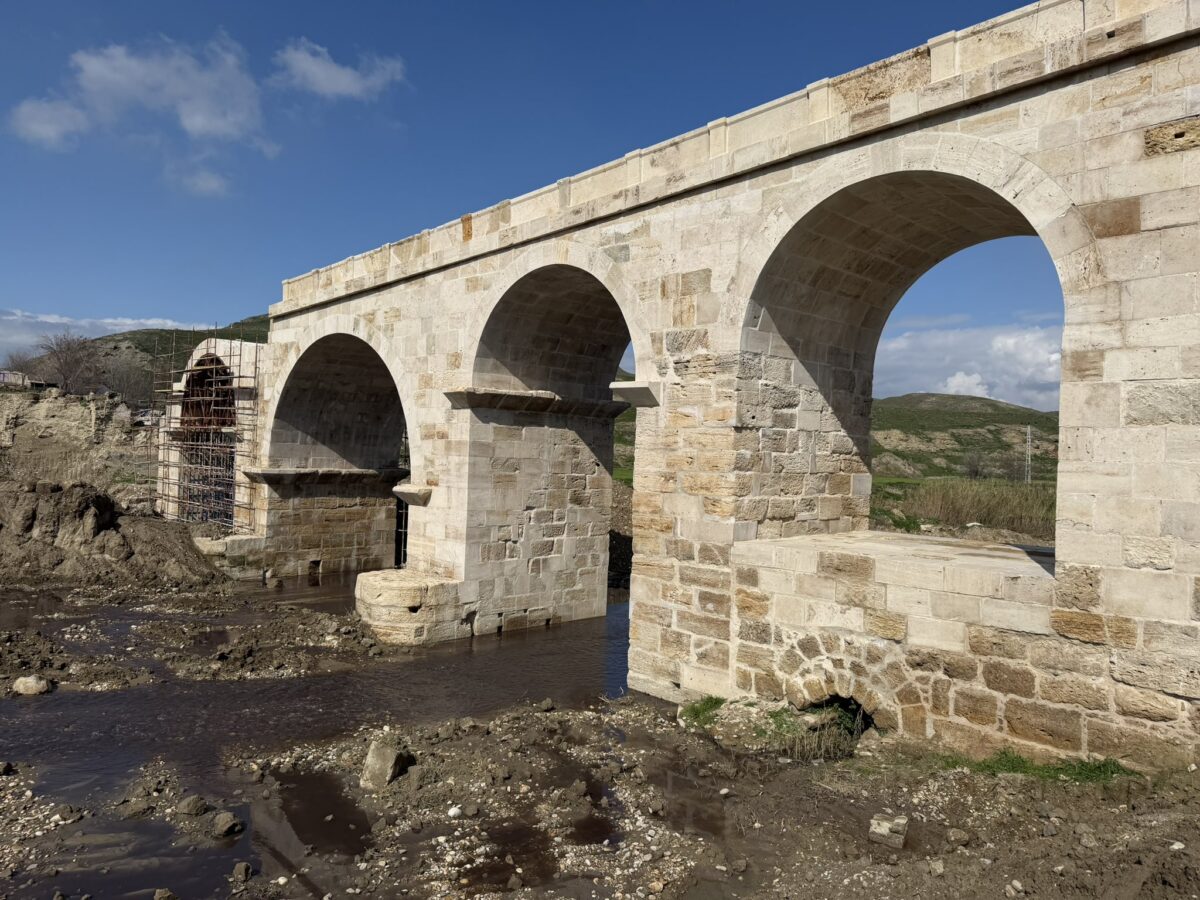
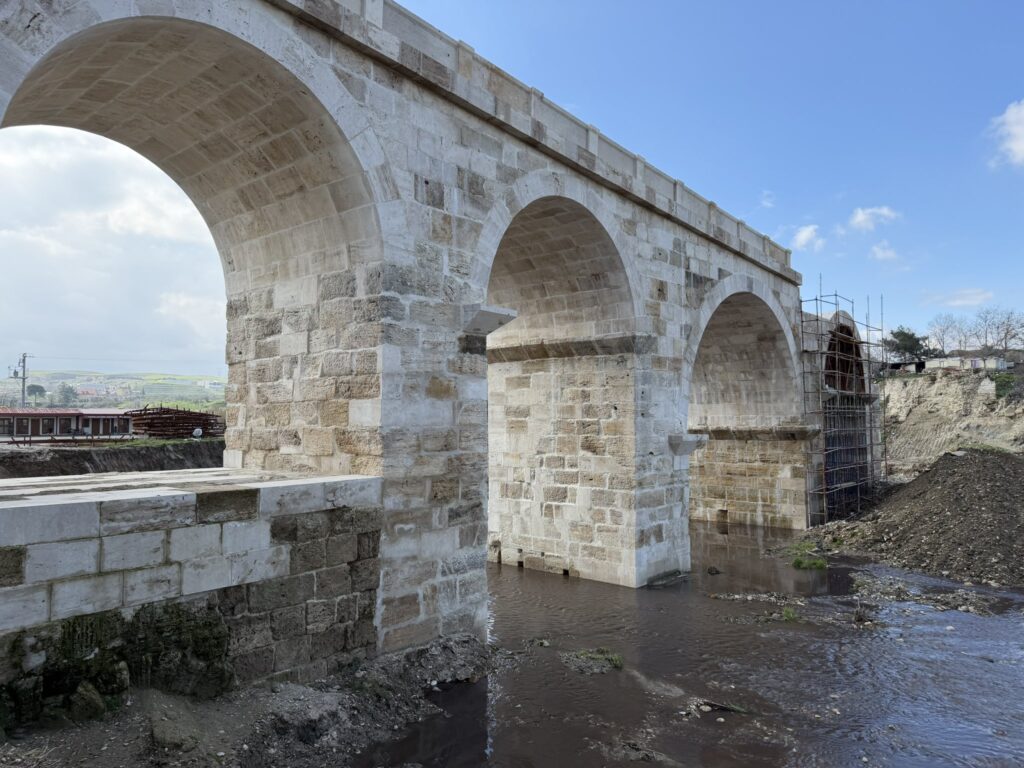
After more than a millennium of silence, water is once again flowing beneath the monumental arches of the Laodikeia Asopos Bridge. The announcement, made by excavation director Prof. Dr. Celal Şimşek, marks a symbolic and technical milestone in the ongoing restoration of one of Anatolia’s most significant Roman bridges.
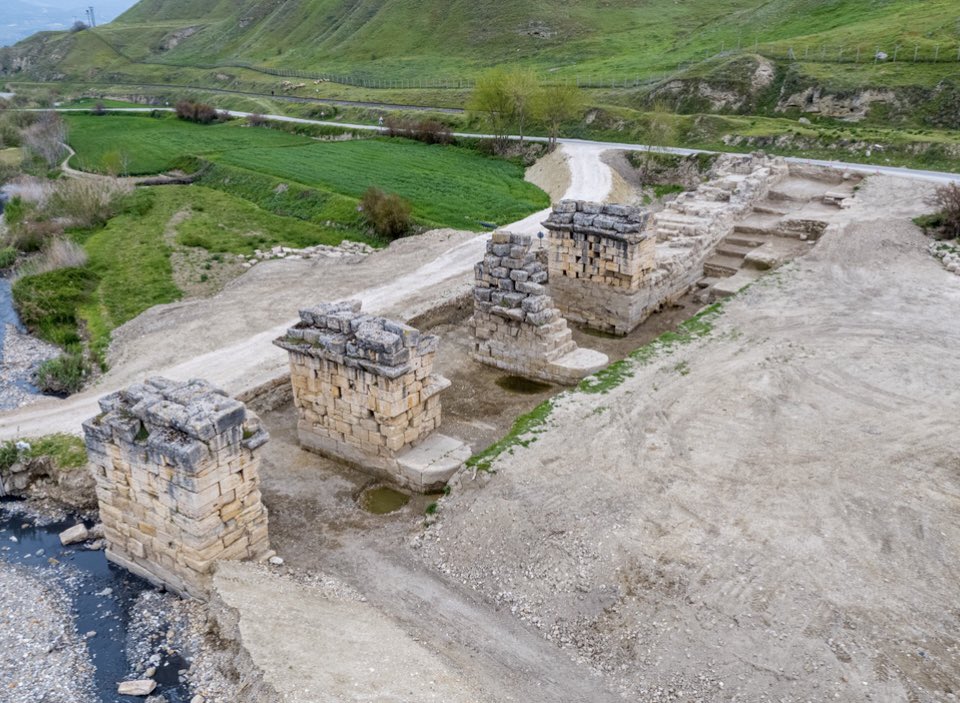
Constructed in the 1st century AD, the bridge stretches 171 meters in length and measures approximately 7 meters in width. Designed with five arches, it once formed a crucial crossing over the Asopos River, linking the thriving ancient city of Laodikeia to its agricultural hinterland and regional trade routes. Today, restoration efforts have reached roughly two-thirds completion — and, in a historic moment, water has been released beneath the main arch for the first time in 1,300 years.
A Roman Engineering Landmark in Western Anatolia
Laodikeia, located near modern Denizli in southwestern Türkiye, was one of the most prominent cities of Roman Asia Minor. Founded in the 3rd century BC and later flourishing under Roman rule, the city became renowned for its textile production, medical school, and strategic position along major trade corridors.
The Asopos Bridge, built during the early Roman Imperial period, reflects the advanced hydraulic and architectural knowledge of its time. Its elongated form and robust arches demonstrate not only technical precision but also an understanding of seasonal river dynamics. Roman engineers often constructed bridges slightly elevated above regular water levels to withstand flooding — a feature clearly visible in the Asopos structure.
Bridges such as this were more than transportation infrastructure. They represented imperial authority, economic vitality, and urban connectivity. The Laodikeia Asopos Bridge likely facilitated the movement of goods, livestock, and military units while reinforcing the city’s integration into the broader Roman road network of Anatolia.
📣 Our WhatsApp channel is now LIVE! Stay up-to-date with the latest news and updates, just click here to follow us on WhatsApp and never miss a thing!!
Restoration at a Critical Stage
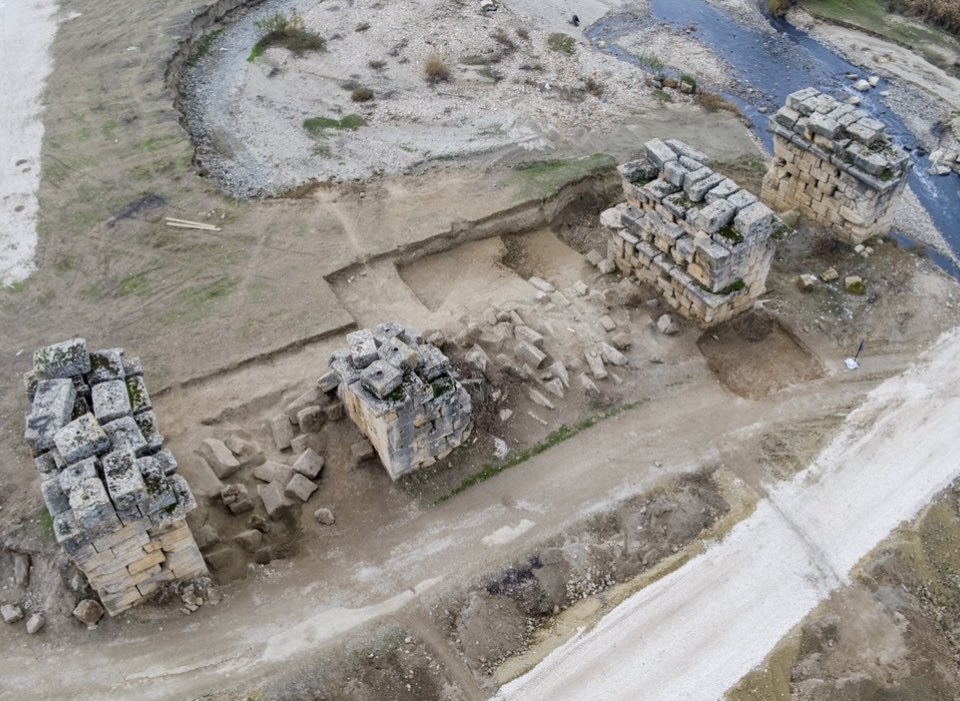
According to Prof. Dr. Şimşek, restoration works have now reached approximately 66 percent completion. The project involves structural reinforcement, stone consolidation, and careful reconstruction using original materials wherever possible. Conservation teams have prioritized maintaining the bridge’s authentic Roman fabric, ensuring that modern interventions remain reversible and clearly distinguishable from ancient masonry.
The most striking development is the reintroduction of flowing water beneath the main arch. For 13 centuries, sediment accumulation and natural landscape changes had prevented the river from running through its original course under the bridge. Redirecting the water not only restores the monument’s historical setting but also enhances its visual and cultural impact.
This step is symbolically powerful. Seeing water pass under the arches reconnects the structure with its original function — transforming it from a static ruin into a living monument once again interacting with its environment.
Laodikeia: A City of Monuments
The bridge is only one component of Laodikeia’s extensive urban fabric. The city is known for its massive stadium, two theaters, colonnaded streets, bath complexes, and early Christian churches. It is also mentioned in the New Testament’s Book of Revelation as one of the Seven Churches of Asia, underscoring its religious and historical importance.
In recent decades, excavations directed by Prof. Dr. Şimşek have revealed significant new insights into the city’s urban planning and architectural sophistication. Restoration projects have aimed not only to preserve structures but also to reanimate them — allowing visitors to better understand how Laodikeia functioned in antiquity.
The revival of the Asopos Bridge fits squarely within this broader vision: conserving heritage while restoring experiential authenticity.
A Major Roman Bridge of Western Anatolia
Roman bridges across Anatolia represent a remarkable continuity of engineering tradition. Some remained in use for centuries, adapted by Byzantine, Seljuk, and Ottoman builders. The Laodikeia Asopos Bridge, however, stands out for its scale and historical context.
At 171 meters long, it ranks among the substantial Roman bridge constructions in the region. Its five-arch design distributes structural load efficiently, illustrating Roman mastery of stone vault construction. The recent reintroduction of water demonstrates that the ancient hydraulic calculations remain functional even after nearly two millennia.
As restoration progresses toward completion, the bridge is expected to become one of the focal points of Laodikeia’s archaeological landscape — reinforcing the site’s growing prominence within cultural tourism and heritage scholarship.
The sight of water flowing once again beneath its arches is more than a technical achievement. It is a reminder that Roman infrastructure was built with durability in mind — and that, with careful conservation, these monuments can continue to tell their stories in motion.
Cover Image Credit: Prof. Dr. Celal Şimşek