
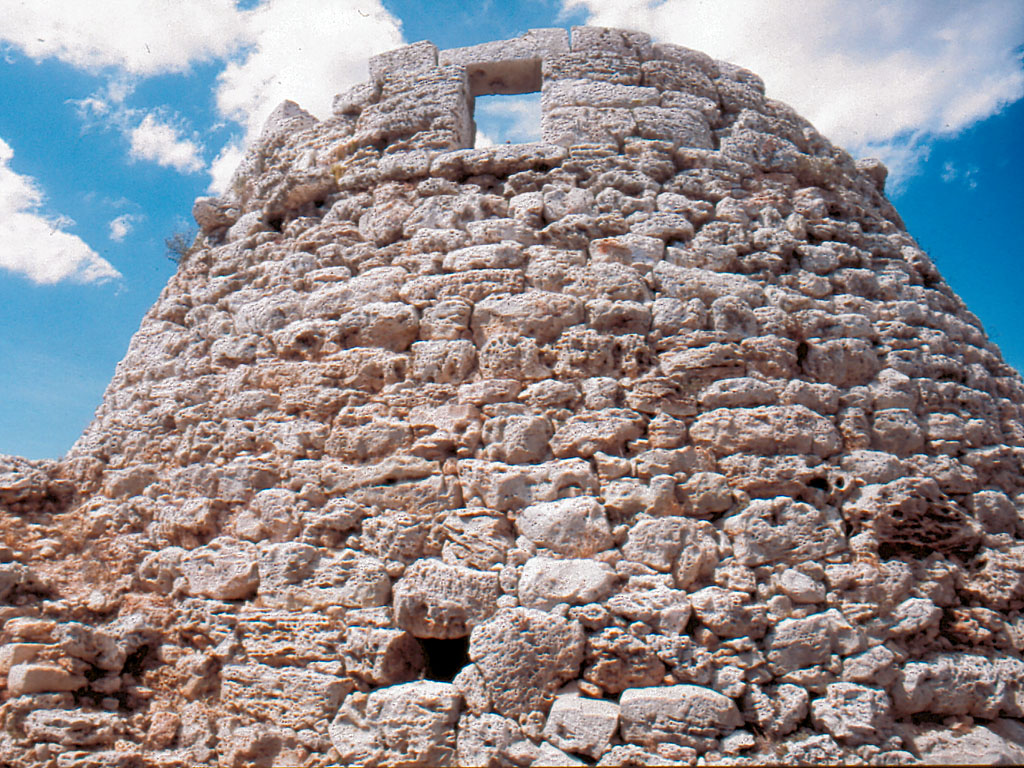
On the windswept Mediterranean island of Menorca, time seems to stand still among colossal stone towers rising silently from the landscape. These prehistoric monuments—known as talayots—are the enduring legacy of a little-understood society that thrived long before the Romans arrived. Today, they remain one of Europe’s most intriguing archaeological enigmas.
Recognized as a UNESCO World Heritage Site in 2023, Talayotic Menorca is now celebrated as one of the most remarkable prehistoric landscapes in the world, dotted with hundreds of megalithic structures that continue to puzzle scientists and captivate travelers alike.
A Civilization Built in Stone
The Talayotic culture flourished in the Balearic Islands—especially Menorca and Mallorca—between roughly 1500 BCE and 123 BCE, spanning the late Bronze Age into the Iron Age.
What sets this civilization apart is its extraordinary architecture: massive constructions made from enormous stone blocks, carefully stacked without mortar in what experts call “cyclopean” building techniques.
Across Menorca alone, more than 1,500 prehistoric sites have been identified, making it one of the densest concentrations of ancient monuments in the Mediterranean.
Among these structures, three types dominate the landscape:
Talayots: tower-like stone monuments
Taulas: T-shaped ceremonial sanctuaries
Navetas: boat-shaped collective tombs
Each offers clues—but no definitive answers—about the beliefs and organization of this ancient society.
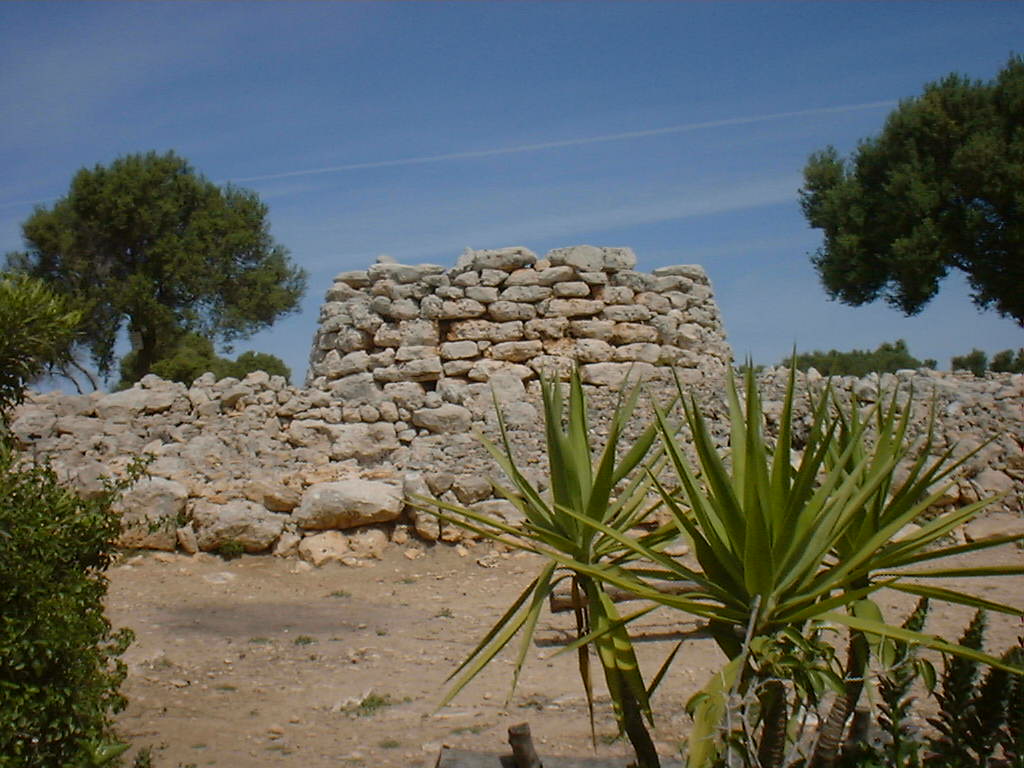
Talayot in Capocorb Vell, Mallorca. Credit: Lothar Velling –Public Domain
The Talayots: Towers of Power or Symbols of Unity?
The talayots themselves are perhaps the most iconic—and mysterious—structures. Rising up to 10 meters high and built from massive stones, these towers dominate prehistoric settlements.
Archaeologists have long debated their purpose.
Some theories suggest they functioned as defensive watchtowers, strategically positioned to monitor territory and communicate across the island. Others propose they served as community gathering points, symbols of social cohesion, or even markers of elite power.
Yet no single explanation fully accounts for their diversity.
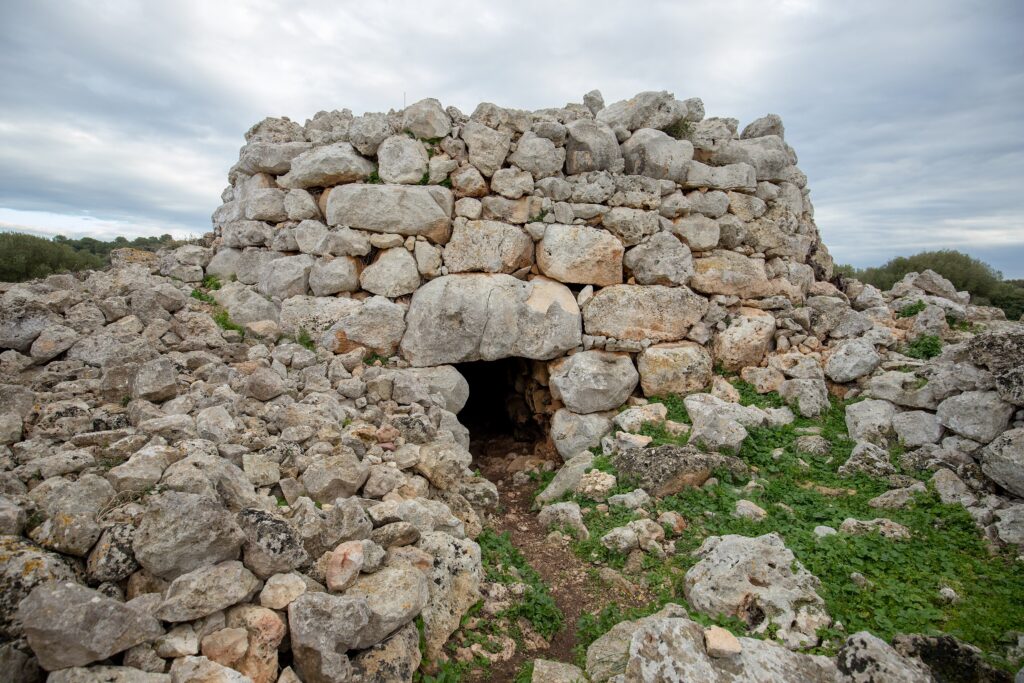
“Each talayot seems to tell a slightly different story,” researchers note. Some contain internal chambers; others are solid. Some are circular, others square. This variation suggests that talayots may have had multiple functions evolving over time—from defense to ritual to political symbolism.
And still, the central question remains unanswered:
Why were they built at such monumental scale?
Ritual, Astronomy, and the Unknown
Nearby structures deepen the mystery.
The taulas, unique to Menorca, are T-shaped stone monuments found within horseshoe-shaped enclosures. Archaeological evidence indicates they were used for rituals involving fire, animal sacrifice, and possibly fertility rites.
Meanwhile, the navetas—some of the oldest buildings on the island—served as communal burial chambers, containing human remains and grave goods that hint at complex funerary traditions.
Recent research has also explored possible astronomical alignments. Some sites appear oriented toward celestial bodies or seasonal events, suggesting that Talayotic builders may have encoded cosmological knowledge into their architecture—though this remains a subject of ongoing debate.
These discoveries point to a society that was not only technically skilled but also deeply symbolic in its use of space and stone.
A Society in Transition
The rise of talayots coincided with major social transformations. Communities reorganized into more complex settlements, possibly governed by emerging elites who controlled resources and labor.
Evidence from excavations suggests centralized food production and redistribution, indicating a shift toward hierarchical organization.
By around 500 BCE, however, many talayots fell out of use. This decline aligns with increasing contact with Mediterranean powers such as the Phoenicians and Carthaginians, eventually culminating in Roman conquest in 123 BCE.
What followed was not disappearance, but transformation—the absorption of a unique island culture into the broader currents of ancient history.
Why the Mystery Endures
Despite decades of archaeological work, talayots remain among the least understood monuments of prehistoric Europe. Excavations have yielded surprisingly few artifacts, leaving researchers with more questions than answers.
This scarcity of material evidence only deepens their allure.
Were they fortresses? Temples? Symbols of power?
Or something else entirely—something we have yet to fully imagine?
What is clear is that the Talayotic people possessed remarkable engineering skills and a sophisticated social structure capable of organizing large-scale construction projects without modern tools.
A Living Archaeological Landscape
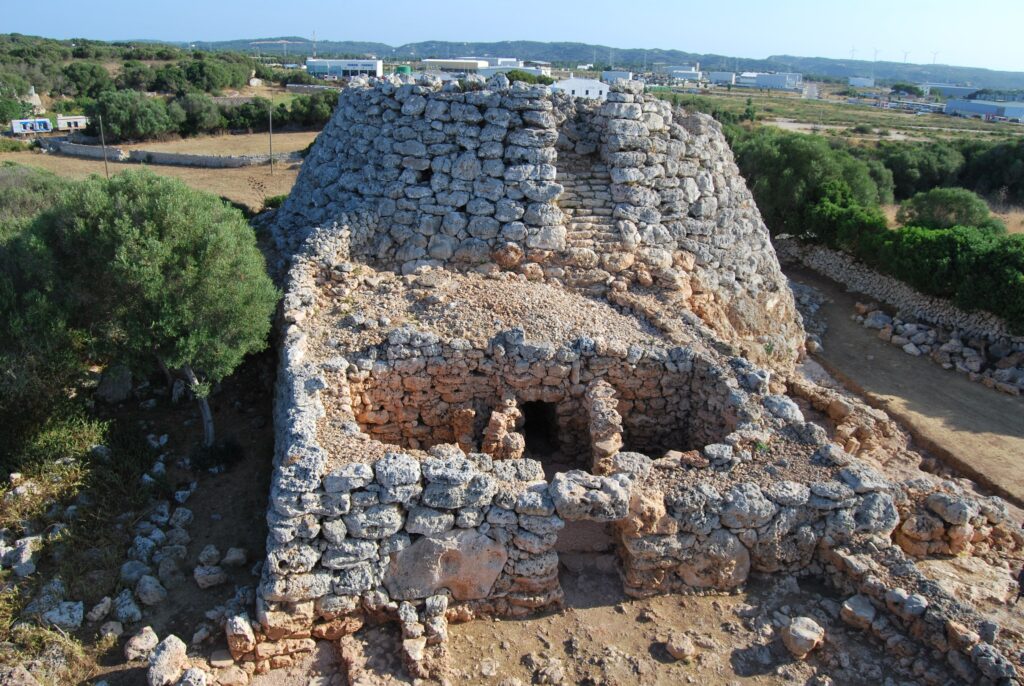
Today, walking among Menorca’s talayots is like stepping into a forgotten world. These ancient towers still rise above fields and hills, silent witnesses to a civilization that shaped the island thousands of years ago.
Far from being relics of the past, they continue to inspire new research—and new wonder.
In the words of UNESCO, Talayotic Menorca represents an “exceptional archaeological landscape,” where stone, society, and symbolism converge into one of humanity’s most compelling prehistoric stories.
And perhaps that is the true power of the talayots: not just what they reveal—but what they refuse to explain.
Sources: Hoskin, M. (1985) – The Talayotic Culture of Menorca (SAGE Journal)
Galmés Alba, A. (2024) – Visibility and Landscape of Talayots (GIS Study)
Pons, G. (2018) – The Talaiotic Culture of the Balearic Islands (Catalan Historical Review)
UNESCO World Heritage Centre – Talayotic Menorca
Spain.info – Talayots of Menorca
Cover Image Credit: Talayot of Torellonet Vell (Menorca). Public Domain
