
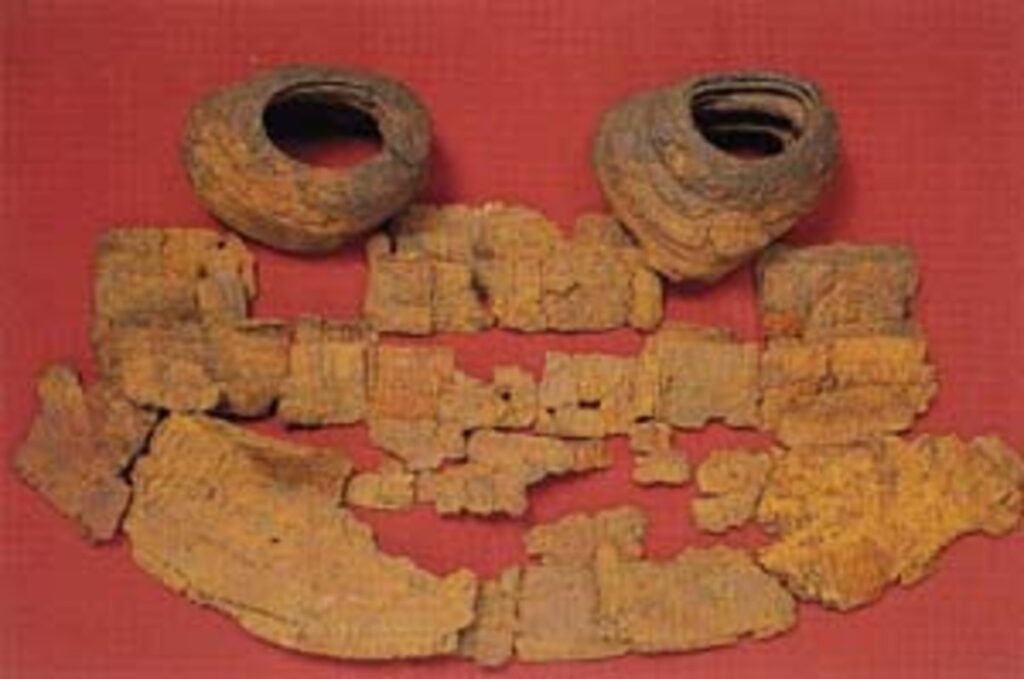
Recent archaeological findings in Japan are shedding new light on the deep cultural and technological exchanges between ancient Japan and the Korean Peninsula. Armor unearthed at the historic Asukadera temple site in Nara Prefecture has revealed striking similarities to protective gear from the Baekje Kingdom, offering compelling evidence of cross-cultural influence during the 7th century.
Asukadera Temple, widely recognized as Japan’s first full-scale Buddhist temple, stands at the heart of this discovery. Built in the late 6th century, the temple symbolizes the early transmission of Buddhism into Japan. Historical records, including Nihon Shoki, document that skilled artisans and monks from the Baekje Kingdom were dispatched to Japan to assist in its construction.
According to a joint research team, the excavated armor—discovered beneath the central pillar foundation of a pagoda—shares structural characteristics with armor found at royal sites in Baekje. These similarities reinforce long-held historical accounts of diplomatic and cultural exchange between the two regions.
Professor emeritus Kanekatsu Inokuma of Kyoto Tachibana University emphasized that the findings align closely with descriptions in the Nihon Shoki. He noted that earlier interpretations linked the armor to influences from Goguryeo, another Korean kingdom, but new physical evidence now strongly points toward Baekje craftsmanship.
The armor fragments, originally excavated in 1957 by the Nara National Research Institute for Cultural Properties, underwent renewed analysis beginning in 2015. Researchers, including Shigeto Ishibashi and Takehiro Hatsumura, employed advanced techniques such as X-ray imaging and 3D measurements to better understand the construction and design.
Their investigation revealed that both Japanese and Baekje armor utilized a lamellar structure—small iron plates laced together with cords. This design formed a flexible yet durable defense, integrating torso protection with shoulder and upper arm guards into a unified system. Such construction techniques demonstrate not only technological sophistication but also the transfer of military knowledge across regions.
Further comparison came from discoveries at Gongsanseong Fortress, where Baekje-era armor fragments were uncovered in 2011 and 2014. Some leather pieces bore inscriptions dating to 645, providing a clear chronological link between the two sets of artifacts.
In early 2024, Hatsumura examined these Korean artifacts firsthand at Kongju National University, confirming the structural parallels. His observations added weight to the growing consensus that Baekje played a pivotal role in shaping early Japanese armor design.
Characteristics of 7th-Century Japanese Armor and Weapons
Despite the significance of these findings, examples of 7th-century Japanese weapons and armor remain relatively scarce. Much of what is known today comes from burial mounds and preserved treasures such as those housed in the Shosoin repository.
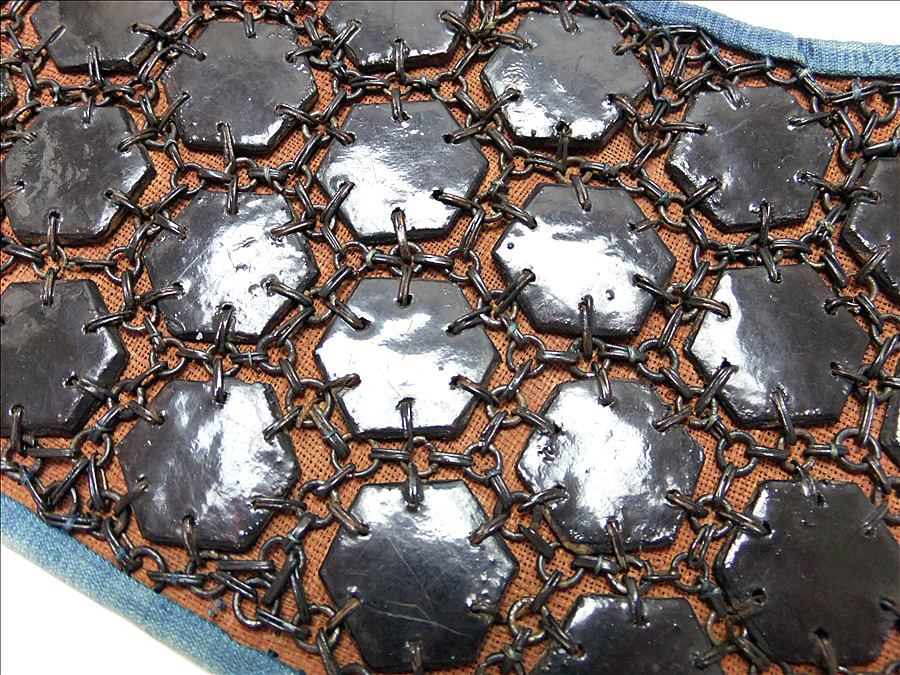
The dominant armor style of the period was keiko, a lamellar armor constructed by binding small iron plates in a scale-like formation. This flexible design allowed greater mobility compared to earlier rigid armor types. There were also shorter cuirasses resembling later domaru armor, though these were less common.
However, iron armor was a luxury accessible only to elite warriors. Ordinary soldiers likely wore simpler protective gear made of padded cloth reinforced with small iron plates—offering limited defense but greater affordability.
Weaponry of the time was equally distinctive. Straight swords measuring 60 to 70 centimeters were standard, often finished with black lacquer for durability and simplicity. Longbows, typically around two meters in length, were crafted from hardwoods such as catalpa or zelkova. Arrows, approximately 85 centimeters long and made from bamboo, were carried in quivers holding up to 50 shafts.
In addition to swords and bows, warriors utilized spears and shields in combat. Later legal codes, such as military regulations from subsequent periods, outlined standard equipment for soldiers, including small utility knives, leg coverings, footwear, whetstones, food bags, and water containers—indicating an increasingly organized military system.
Historical Significance
As noted in coverage by Asahi Shimbun, these findings not only deepen our understanding of ancient warfare but also highlight the interconnected nature of East Asian civilizations. The transmission of armor technology from Baekje to Japan reflects broader patterns of cultural exchange, including religion, governance, and craftsmanship.
Ultimately, the discovery at Asukadera serves as a powerful reminder that early Japanese society was shaped through dynamic interactions with neighboring cultures. As research continues, historians hope to uncover even more evidence illuminating this shared heritage.
Cover Image Credit: Lamellar armor and arm guards unearthed from the central foundation stone of a pagoda at the ruins of Asukadera Temple. Nara National Research Institute for Cultural Properties
