
10 December 2025 The Future is the Product of the Past

Ancient Baekje Tombs in Korea Unearth Gold Ornaments and Pottery Treasures

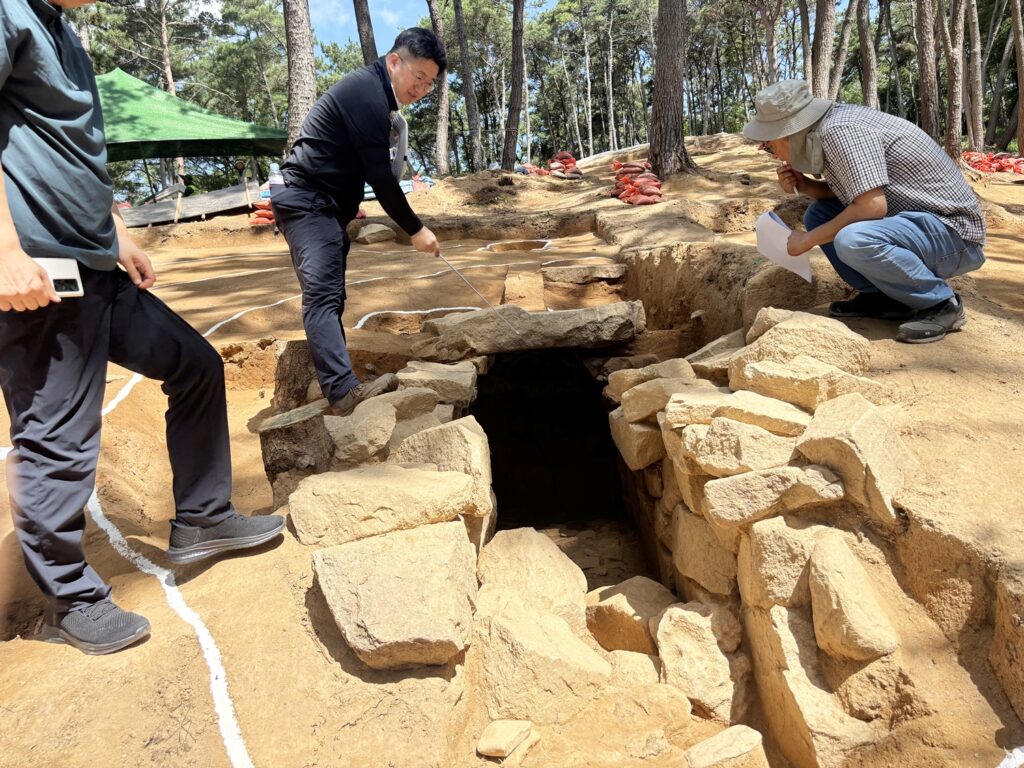
A major archaeological discovery has been made in Jeongeup, South Korea, where the Eunsun-ri and Dogye-ri tomb clusters have yielded a remarkable collection of Baekje-period artifacts. Excavated under the National Heritage Administration’s conservation and maintenance project, the find includes gold ornaments, Baekje-style pottery, ironware, and decorative items that shed new light on the cultural and political significance of the Baekje Middle Region Culture (18 BCE–660 CE).

Treasures Unearthed: Gold and Ornamentation

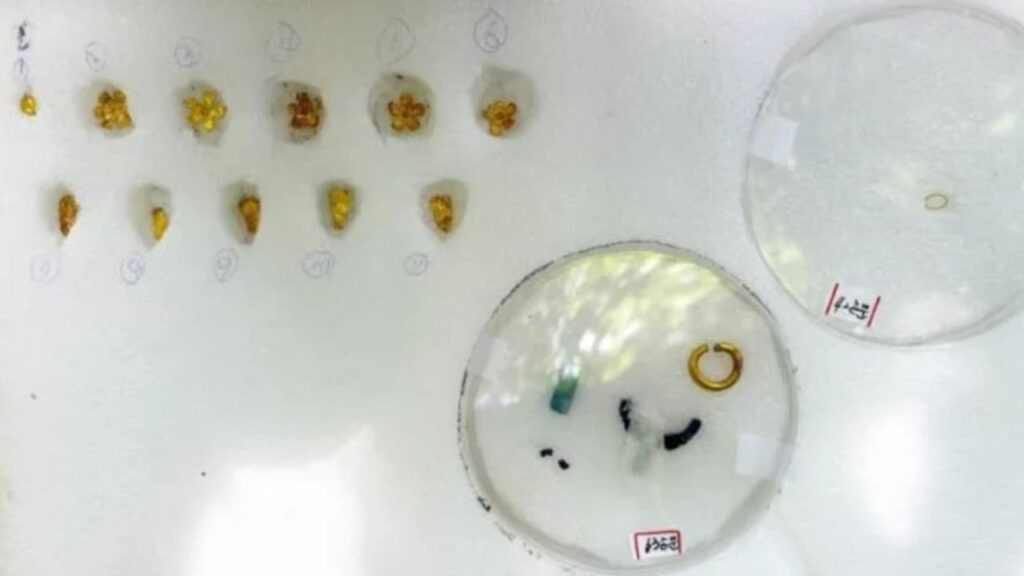
The artifacts include gold beads, flower- and leaf-shaped decorations, gilt-bronze inlays, bronze bracelets, glass beads, and intricately crafted hairpins. These items not only demonstrate the craftsmanship of Baekje artisans but also suggest the high social status of those buried in the tombs.

According to Jeongeup city officials, the gold ornaments are comparable to relics unearthed from tombs of the Baekje Hanseong Period (Seongnam and Hanam areas) and the Ungjin Period (Gongju and Gunsan). Such comparisons highlight the strong academic value of the discovery, as the ornaments provide critical insights into trade, cultural exchange, and regional identity during Baekje’s rule.

Scale of the Tomb Groups

The Eunsun-ri and Dogye-ri tomb clusters cover an expansive 2-square-kilometer area in Yeongwon-myeon, Jeongeup. More than 270 tombs have been identified, among which 56 horizontal stone chamber tombs were officially designated as national cultural heritage in 2018.

Excavations have been ongoing since 2022, revealing layer by layer the history and significance of the Baekje ruling elites who once dominated the region. While some tombs suffered damage from ancient grave robbers, surviving artifacts still offer invaluable insights into burial practices, political authority, and social networks of the time.


📣 Our WhatsApp channel is now LIVE! Stay up-to-date with the latest news and updates, just click here to follow us on WhatsApp and never miss a thing!!


A major archaeological discovery has been made in Jeongeup, South Korea, where the Eunsun-ri and Dogye-ri tomb clusters have yielded a remarkable collection of Baekje-period artifacts. Credit: Jeongeup City.

The Role of Baekje Pottery

Alongside the precious ornaments, archaeologists unearthed a wide range of Baekje-style pottery, including three-legged vessels (samjok togi), bottle-shaped jars, and large round bowls. These ceramic pieces are crucial for understanding Baekje’s daily life and ritual practices.

Baekje pottery is renowned for its elegance, thin walls, and high-fired gray or black surfaces. It reflects a sophisticated aesthetic that influenced not only other Korean kingdoms but also Japan during the Asuka period. Pottery fragments from Jeongeup serve as both functional artifacts and cultural symbols, bridging everyday use with ceremonial importance.

Historical and Cultural Significance

The discovery strongly reaffirms Jeongeup’s position as a central hub of the Baekje Middle Region Culture. Baekje, one of Korea’s Three Kingdoms, was celebrated for its advanced artistry, international diplomacy, and architectural innovation. Finds from the tombs suggest that local rulers of Jeongeup maintained close ties with Baekje’s central power and actively participated in cultural and political exchanges.

“This excavation reconfirmed that Jeongeup was the center of the Baekje Middle Region Culture,” said Jeongeup Mayor Lee Hak-soo. “We will continue to promote the academic value of these relics while also transforming them into valuable tourism assets for the city.”
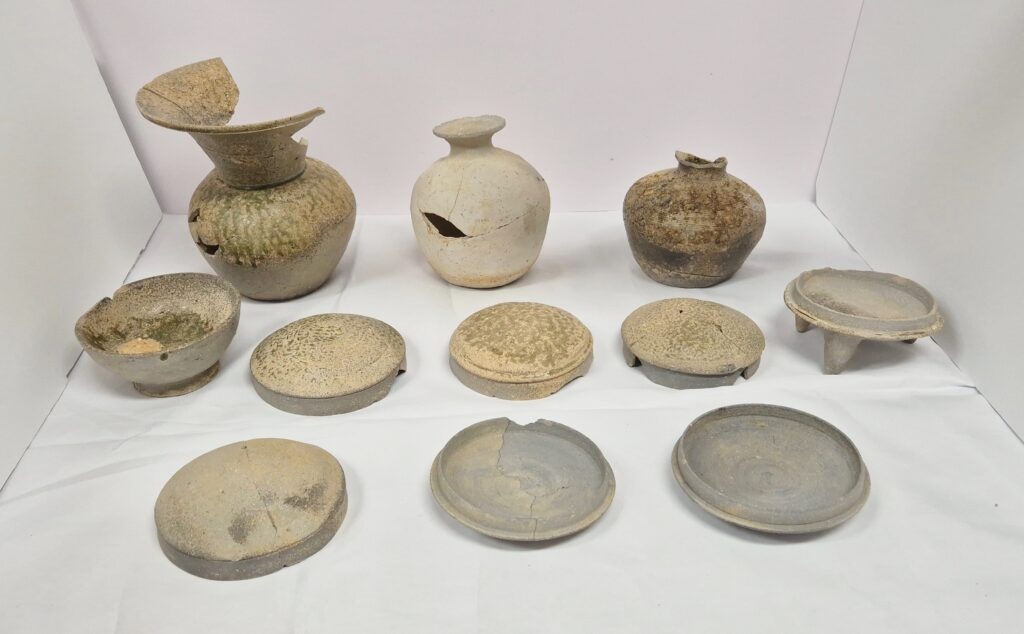
Baekje-style pottery excavated from the Eunsun-ri and Dogye-ri tomb clusters in Jeongeup. Credit: Jeongeup City.

From Heritage to Tourism

For Jeongeup, the excavation is not only an archaeological breakthrough but also a cultural opportunity. As the city invests in preserving and showcasing the finds, experts believe the tombs could become a focal point for heritage tourism in South Korea.

The combination of gold ornaments, ironware, and iconic Baekje pottery tells a story of prosperity and artistic excellence that continues to resonate in Korea’s cultural identity today.

A Legacy Unearthed

The Eunsun-ri and Dogye-ri discoveries underline the enduring importance of archaeology in illuminating the past. Each gold bead, pottery shard, and bronze bracelet adds to the narrative of Baekje’s influence in the Korean peninsula. As excavations continue, scholars and visitors alike can expect new insights into how this ancient kingdom blended artistry, ritual, and power to leave a legacy that transcends centuries.

Jeongeup City – [정읍시

Cover Image Credit: Gold jewelry excavated from the ancient tombs of Eunseon-ri and Dogye-ri. Jeongeup City

Related Articles

An opulent 2,000-year-old ‘city hall’ has been discovered near the Western Wall in Israel

8 July 2021

8 July 2021

An important 2,000-year-old public building has been unearthed near the wailing wall in Israel. Archaeologists from the Israel Antiquities Authority...

Experts to uncover the secret of the monumental and three-dimensional Urartian statue found on Garibin Tepe

2 November 2024

2 November 2024

In an area where rescue excavations were conducted last year, archaeologists discovered a basalt stone statue from the Urartian period...

New Study Exposes Origins of Welsh Dragons

7 June 2024

7 June 2024

In a new study conducted by a team from the University of Bristol and published in the Proceedings of the...

“Human evolution” Migration out of Africa was affected by climate constraints.

25 August 2021

25 August 2021

The story of modern man’s migration from Africa still remains unclear in many aspects. Why did people migrate? Is it...

First in Anatolian Archaeology, a 2,600-year-old Sacred Room and Stone Symbolizing the Goddess Kubaba Discovered at Oluz Höyük

29 November 2024

29 November 2024

Archaeologists have discovered a sacred room and stone from the Phrygian period, dating back 2,600 years, during excavations at the...

No Ancient Super-Highway: The Reality of Europe’s Erdstall and the Scotland-Türkiye Tunnel

28 April 2025

28 April 2025

The internet continues to buzz with the captivating notion of an immense, prehistoric tunnel network stretching from the Scottish Highlands,...

Unique Heart-Shaped Jesuit Ring from 1700s at Fort St Joseph, Michigan

18 September 2022

18 September 2022

An archeology student from the Fort St. Joseph Archeology project at Western Michigan University has uncovered a unique heart-shaped Jesuit...

A 11,000-Year-Old Neolithic “Amphitheater” Discovered at Karahantepe

28 November 2025

28 November 2025

Archaeologists working in the arid hills of southeastern Türkiye have uncovered one of the most intriguing architectural discoveries of the...

2900-Year-Old Erzin Stele: A Key to Understanding the Hittite to Greek Mythological Transition

5 April 2025

5 April 2025

In a significant archaeological discovery, a basalt stele was unearthed in 1987 by O. Günay while plowing his field at...

The marble head of God Apollo unearthed in an excavation at Philippi, Greece

29 March 2024

29 March 2024

The excavation, carried out by a group of students of the Aristotle University of Thessaloniki in the archaeological site of...

An Urartian female executive grave was found at the Çavuştepe Mound

9 September 2021

9 September 2021

The grave of an Urartian, who was buried with his horse, cattle, and dog, had been found recently. Today, another...

A hungry Badger uncovers the largest collection of such coins ever discovered in northern Spain

11 January 2022

11 January 2022

Archaeologists have uncovered a rich trove of 209 Roman-era coins in northwestern Spain, due to the apparent efforts of a...

Long Before Zeus and Leda, Natufian People Crafted a 12,000-Year-Old Figurine of a Goose Mating with a Woman

18 November 2025

18 November 2025

Long before Greek poets imagined Zeus seducing Leda in the guise of a swan, prehistoric communities in Southwest Asia were...

4,500-Year-Old ‘Gifted Graves’ Unearthed at Ikiztepe Mound in Northern Türkiye

25 October 2025

25 October 2025

Archaeologists working at the prehistoric site of Ikiztepe Mound in northern Türkiye have uncovered two extraordinary burials — one belonging...

New Type of Amphora Found in 5th-Century Roman Shipwreck

28 April 2024

28 April 2024

The first in-depth analysis of the cargo of a 4th-century Roman shipwreck found off the coast of Mallorca in 2019...