
Archaeologists in South Korea have unearthed the first-ever Baekje-era ice storage facility at Busosanseong Fortress, a UNESCO World Heritage site in Buyeo, South Chungcheong Province. The discovery sheds rare light on the royal infrastructure and technological sophistication of one of Korea’s most influential ancient kingdoms — and how its elites preserved ice over 1,400 years ago.
The find was announced by the National Research Institute of Cultural Heritage (NRICH) following the 17th round of archaeological excavations at Busosanseong, once the royal fortress of the Baekje Kingdom during its Sabi period (538–660 CE).
A 7×8-Meter Ice Storage from the Age of Kings
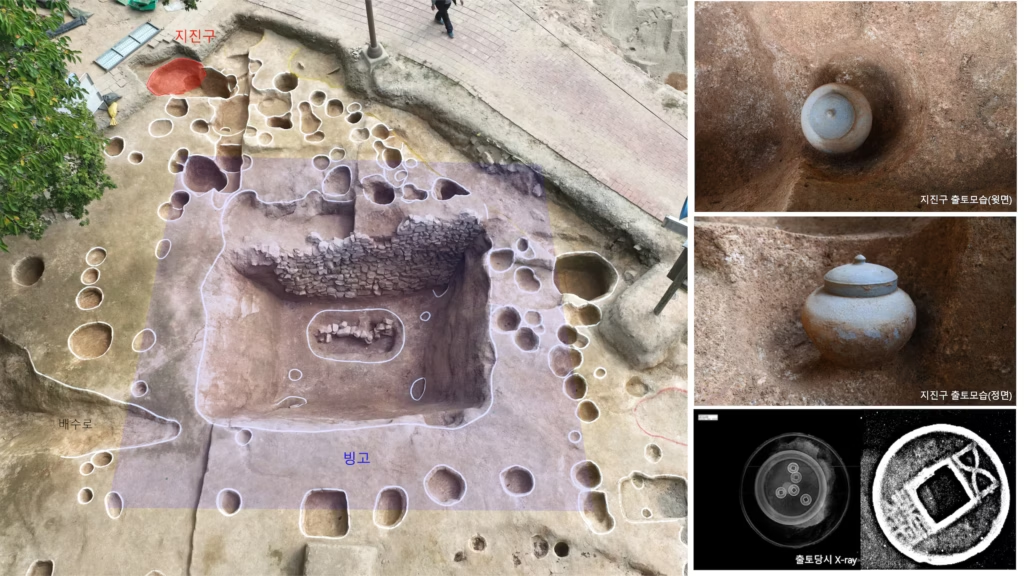
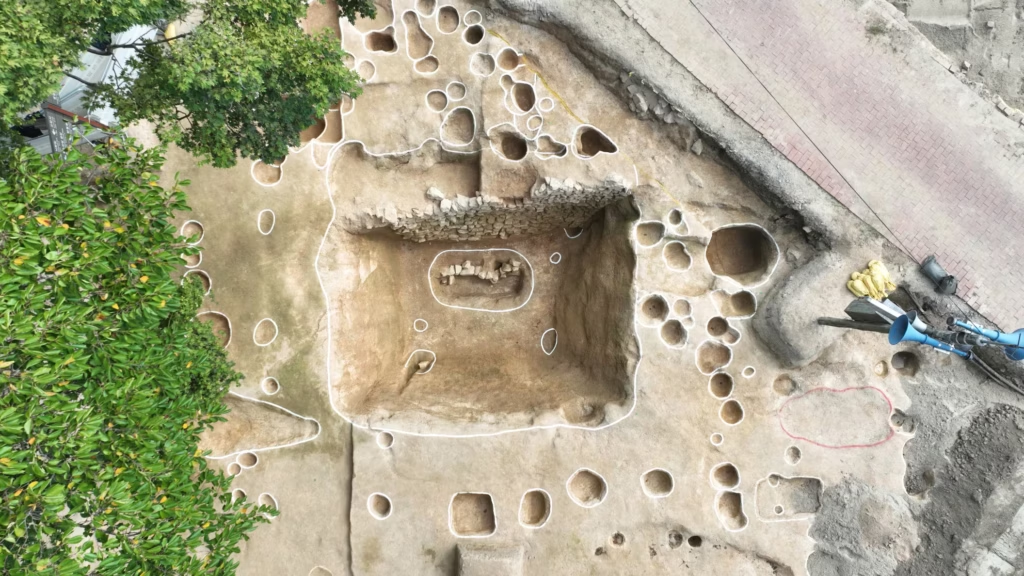
The newly discovered structure, known in Korean as bingo (氷庫), meaning “ice warehouse,” measures roughly 7 meters east-west and 8 meters north-south with a depth of 2.5 meters. The chamber has a U-shaped interior, meticulously carved into bedrock. Archaeologists determined that its southern wall was later reinforced with stone blocks to reduce the chamber’s interior space — a structural adaptation likely meant to enhance insulation and control melting.
At the center of the chamber’s floor lies a circular drainage pit, suggesting that engineers designed it to manage water runoff as the ice slowly melted. According to the NRICH, this architectural precision underscores that “the ice storage was a specialized facility for long-term preservation — a hierarchical space that could only have been constructed and operated by royal authority.”
Such ice storage facilities (binggo) were once integral to palace life in East Asia. They supplied chilled water and preserved food during the hot summer months, serving as both symbols of royal privilege and evidence of advanced environmental engineering. Until now, no such structure had ever been confirmed from the Baekje period — making this discovery a landmark for Korean archaeology.
Ritual Offerings and the Spirits of the Earth
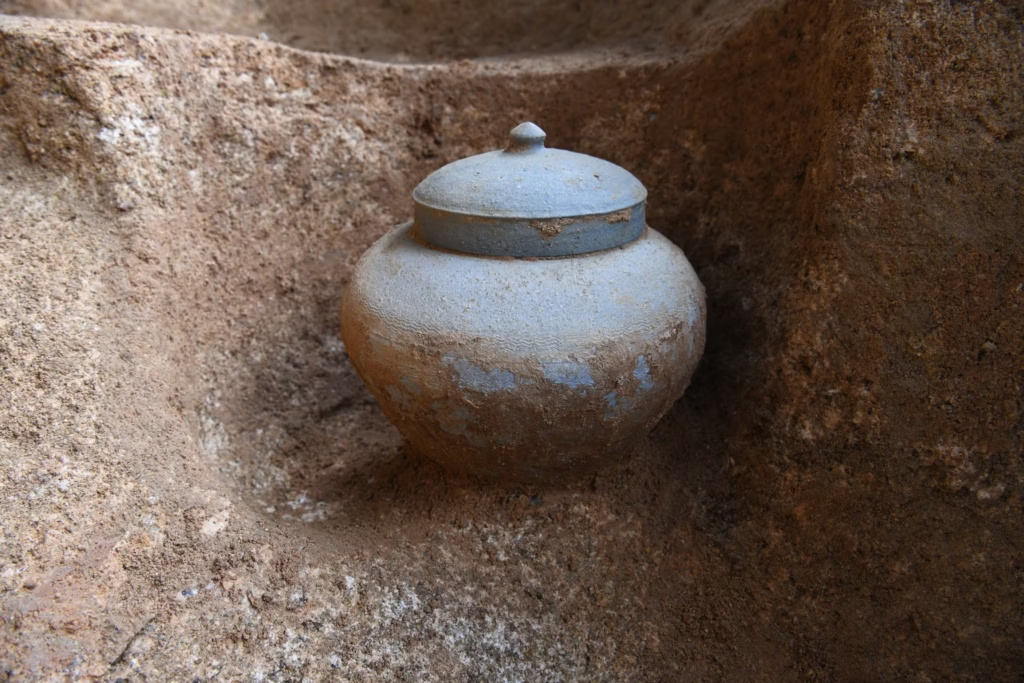
Inside the storage site, archaeologists uncovered a ritual jar buried as a “jijingu” (地鎭具) — an earth-spiking artifact used in ancient Korean construction to appease land spirits before building commenced. These ritual deposits were believed to ensure stability, protection, and success for major projects.
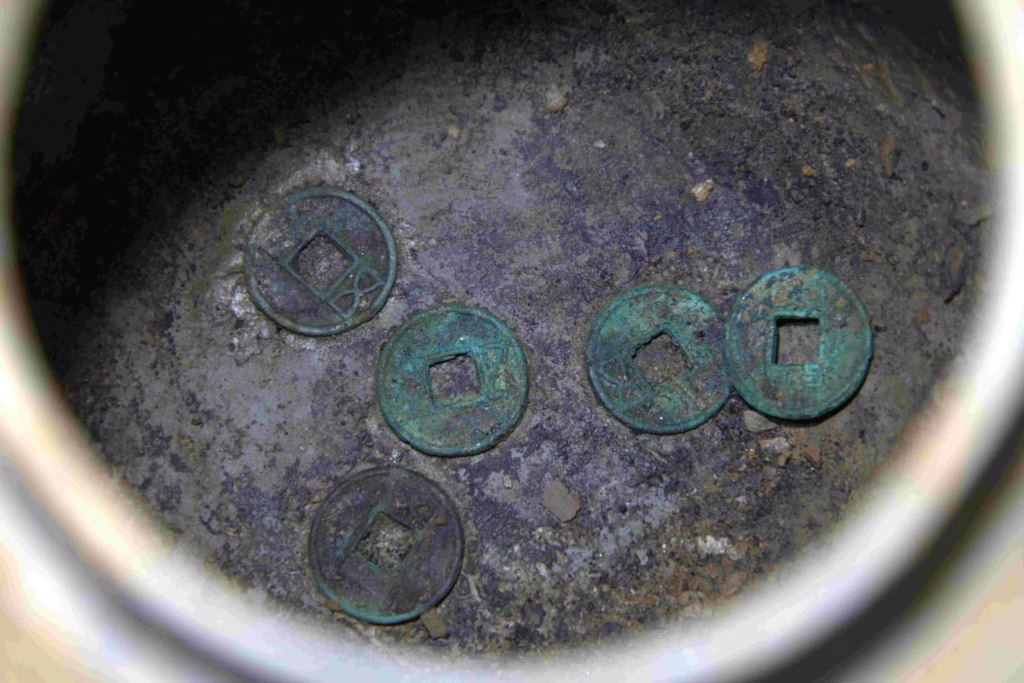
The jar, featuring a short neck and a bead-shaped handle on its lid, contained five ancient Chinese wushu (五銖) coins, symbolizing prosperity and protection. The NRICH explained that this offering likely marked a ceremonial act invoking divine favor for the construction of the royal ice storage.
Such rituals were common throughout Baekje’s capital region, reflecting the kingdom’s syncretic religious culture, which blended indigenous Korean animism with imported Chinese and Buddhist practices.
Busosanseong: The Fortress of a Fallen Kingdom
Situated on Busosan Mountain, rising 106 meters above the modern city of Buyeo, Busosanseong Fortress was both a royal residence and a final bastion of defense during the twilight years of the Baekje Kingdom. From this strategic hilltop, Baekje’s rulers watched over the Geum River basin — a vital artery connecting the kingdom’s inland capital to maritime trade routes across the Yellow Sea.
The fortress played a pivotal role during the Sabi period, when Baekje flourished as a center of art, architecture, and diplomacy. Its elegant palaces, terraced courtyards, and Buddhist temples reflected the cultural sophistication of a kingdom that once rivaled its neighbors Goguryeo and Silla.
Excavations have revealed terraced platforms and pillar foundations suggesting the presence of high-status royal buildings. These align with historical accounts in the Samguk Sagi (Chronicles of the Three Kingdoms), which describe Busosanseong as a fortified refuge for Baekje’s royal family and military elites during crises.
Tragically, Busosanseong also witnessed the fall of Baekje in 660 CE, when allied Silla and Tang forces invaded and captured the fortress, marking the end of the kingdom’s 700-year reign.
The Ice House and Royal Technology
The discovery of an ice storage facility adds a new dimension to the understanding of Baekje’s royal infrastructure. It reveals that the kingdom not only mastered monumental architecture and artistic production but also invested in technological systems of comfort, preservation, and resource management.
Ice storage was more than a luxury. It represented royal control over nature — the ability to harness and sustain cold in a warm climate — and it required a bureaucratic network for collecting, storing, and distributing ice to the royal court. Similar systems were documented in China’s Tang dynasty, where large-scale ice pits (bingchi) served imperial households. The Baekje example suggests that such technologies had already spread or developed independently within Korea.
Looking Ahead: Further Excavations Planned
The NRICH announced plans to continue excavations in the western sector of the fortress, focusing on the gunchangji (軍倉址), a Joseon-era military warehouse zone. Researchers believe that these areas are structurally connected to the newly discovered ice storage and may contain additional remains from the Baekje royal palace complex.
A spokesperson for the institute noted: “This discovery demonstrates Baekje’s technical capacity and hierarchical organization. The continuation of our research in adjacent areas will help us better reconstruct the concrete form and function of the Sabi-period royal palace.”
The Legacy of Baekje
Founded in 18 BCE, Baekje was one of Korea’s Three Kingdoms, alongside Goguryeo and Silla. It flourished as a maritime and cultural power, acting as a bridge between the Korean Peninsula, Japan, and China. Its artisans, architects, and scholars played key roles in transmitting Buddhism, art, and technology to the Japanese archipelago — influences still visible in early Asuka-period temples such as Hōryū-ji.
The discovery at Busosanseong Fortress is a reminder of Baekje’s sophisticated statecraft and cosmopolitan character, now tangible in the carved stones of an ancient ice house — a silent witness to a civilization that balanced ritual, nature, and royal authority.
Cover Image Credit: Location and excavation status of the ice storage and jijingu identified during the excavation survey around Busosanseong Fortress. National Research Institute of Cultural Heritage, Buyeo
