
How centuries-old talismans bridge archaeology, shamanism, and digital life in one of the world’s most advanced nations.
South Korea, a country often defined by gleaming skyscrapers, robotics, and lightning-fast internet, is also home to one of Asia’s oldest surviving spiritual traditions. Beneath its ultra-modern skyline lies a deep reverence for ancient forces—an invisible layer of belief that has survived dynasties, wars, and waves of modernization. At the heart of this mystical continuum is the bujeok, Korea’s enigmatic paper talisman said to guard against evil, invite prosperity, and channel cosmic energy into human life.
From Cave Walls to Yellow Paper: The Archaeological Roots of Bujeok
The origins of the bujeok trace back over four millennia, with some of the earliest evidence appearing in the Samguk Yusa—a 13th-century chronicle documenting Korea’s mythic and early historic periods. Archaeological interpretations suggest that prehistoric Koreans etched symbols and drawings on cave walls and stones to invoke blessings from natural spirits. These primal inscriptions gradually evolved into the recognizable yellow papers inscribed with red ink used today.
The bujeok’s roots also intertwine with Taoist talisman papers of ancient China. During the early dynastic exchanges between Korea and its continental neighbors, spiritual technologies like divination, alchemy, and talismanic writing traveled eastward. Korean shamans—known as mudang—adopted and adapted these symbols, merging them with indigenous animistic practices. Over centuries, this fusion created a uniquely Korean system of protective magic, at once foreign and familiar, local yet universal.
Symbolism: When Color, Calligraphy, and Spirit Collide
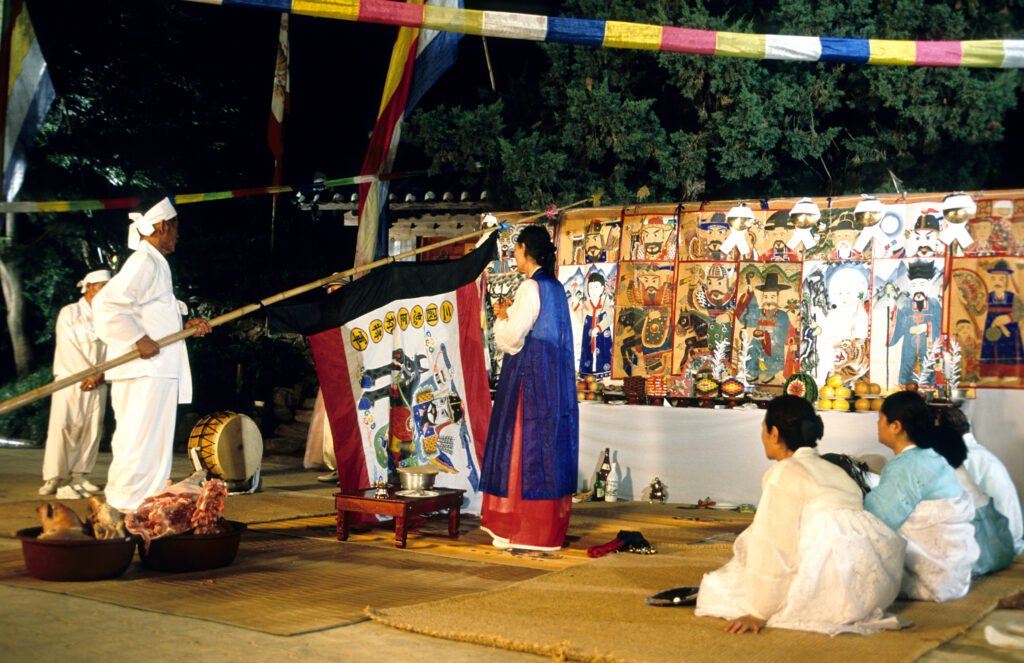
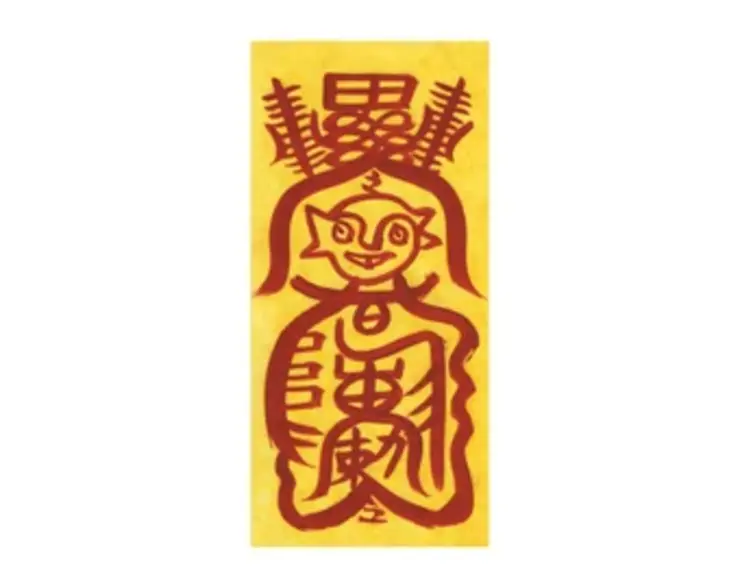
Every stroke of a bujeok carries intention. The yellow paper represents the earth element and is believed to repel malevolent forces. The red ink, often mixed with cinnabar or blessed pigment, symbolizes vitality, blood, and divine protection. The designs themselves—intricate yet charged with meaning—combine Classical Chinese characters, esoteric diagrams, and animal imagery.
A tiger, for instance, prowls across many bujeok sheets as a guardian against evil. Other motifs include the three-legged bird, a mythic creature said to shield its bearer from the “three calamities”: fire, water, and war. Each line and curve is said to be a conduit of gi, or vital energy, transferred from the shaman’s hand to the paper through ritual breath and chanting.
In traditional shamanic belief, these symbols are not mere art—they are living entities. The act of writing them constitutes a dialogue with the unseen world, a spiritual transaction between human and spirit, ink and intention.
Women, Woodblocks, and the Hidden Hands of History
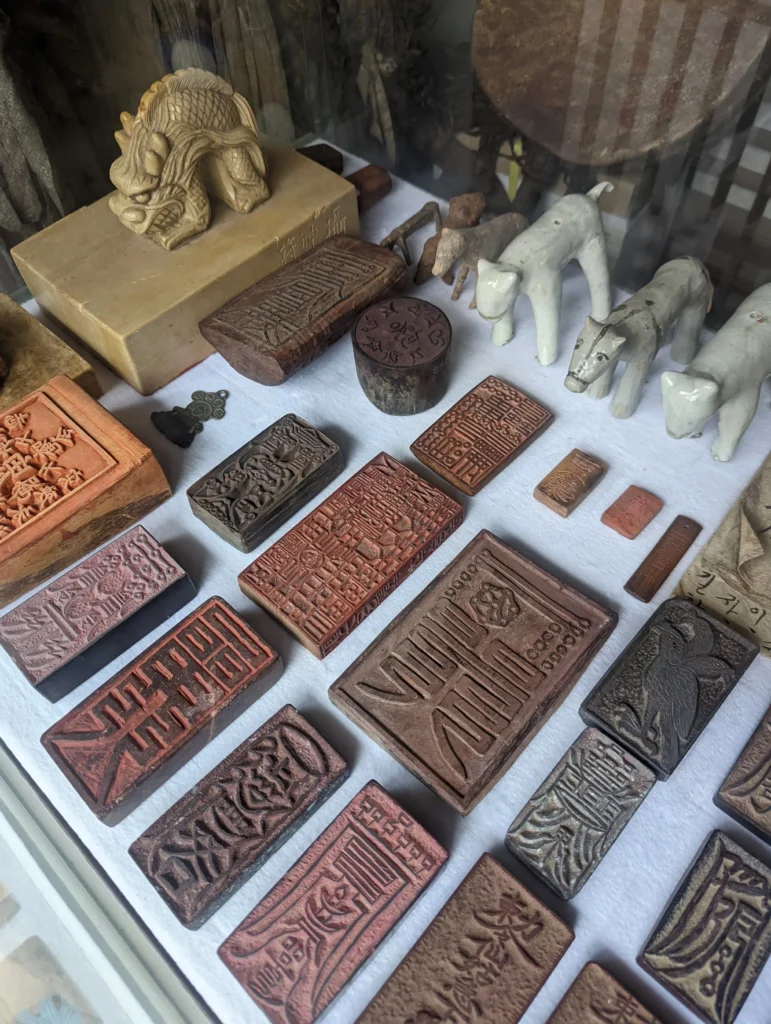
While many imagine bujeok as hand-drawn works of mystical calligraphy, archaeology reveals a more nuanced past. At the Museum of Korean Shamanism in Seoul, a collection of centuries-old wooden stamp blocks tells another story. These carved tools suggest that earlier generations of shamans—many of whom were women—used them to produce talismans in greater numbers.
Because women were historically denied formal education, some mudang may not have been literate in Chinese characters. Wooden stamps allowed them to replicate sacred symbols precisely, preserving both accuracy and ritual potency. The use of carved stamps also parallels Buddhist woodblock printing traditions, hinting at a cross-pollination between Korea’s spiritual and artistic worlds.
Modern Transformations: From Sacred Ink to Digital Code
The bujeok’s power lies in its adaptability. Once confined to temple walls and shamanic shrines, it now exists in homes, wallets, and even smartphones. During major exams or New Year festivals, it’s common to see Koreans—especially students and parents—carrying small bujeok papers for luck.
But the 21st century has taken the tradition further. Telecommunications giants like SK Telecom and tech portals such as MSN Korea have introduced digital bujeok downloads—virtual charms users can store on their phones. What once required a ritual at a mountain shrine can now be accessed through an app in seconds. To skeptics, this may seem like superstition repackaged for the digital age; to believers, it’s proof that magic evolves with technology.
Faith, Psychology, and the Persistence of Ancient Magic
Despite the advance of science, the human longing for protection and meaning persists. Psychologists in Korea note that talismans like bujeok offer not just spiritual security, but emotional grounding. In moments of uncertainty—before an exam, a business deal, or a medical diagnosis—holding a bujeok can provide comfort, focus, and a sense of agency.
As one Seoul-based scholar of religion put it, “Bujeok are less about controlling fate than about participating in it.” They represent a delicate balance between belief and self-assurance—a reminder that even in an age of algorithms, humans still seek symbols that connect the visible and invisible worlds.
An Unbroken Thread
From Neolithic carvings on cave walls to downloadable digital charms, the bujeok embodies Korea’s remarkable continuity between past and present. It stands at the crossroads of archaeology, art, and spirituality—a fragment of ancient magic that refuses to vanish in a rational age.
In a nation known for its futuristic cities and scientific innovation, the humble yellow paper serves as a whisper from antiquity: that beneath all progress, the oldest human desire remains—to find protection, purpose, and a little bit of luck.
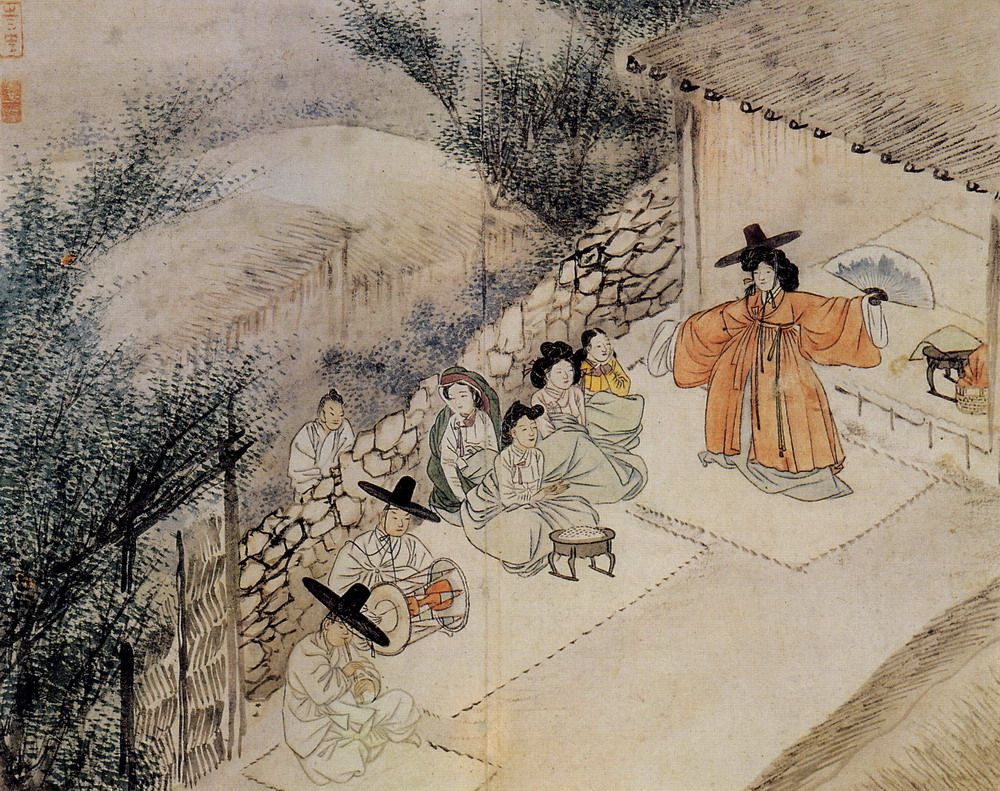
Cover Image Credit: A mudang performs a gut in a painting titled Munyeo sinmu (무녀신무; 巫女神舞), made by Shin Yunbok in 1805. Credit: Wikipedia Commons
