
18 January 2026 The Future is the Product of the Past

Exciting Discovery “Kybele Cave” in Anatolian Archeology

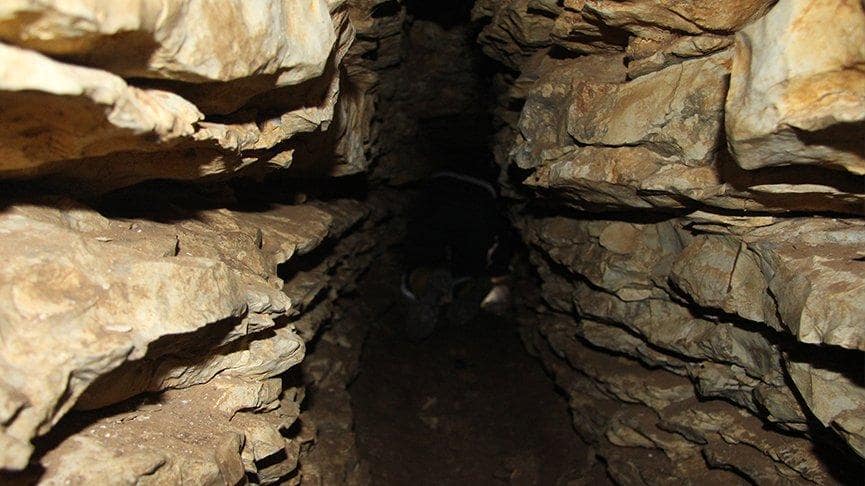
A cave determined to be from the Roman period was found in Kocaeli’s Kandıra district. It turned out that this cave was dedicated to the Mother Goddess Kybele, who had a special place in Anatolian culture.

It was announced that the altar in the cave, which is very important for Anatolian and world archeology, was stolen by illegal excavators and this unique altar was seized by the police forces.

The cave, which was discovered in Yağbolu locality of Hacılar village of Kandıra district, was found as a result of scientific studies conducted by Kocaeli Museum Directorate under the name of “Kandıra Kybelesi”.

It was revealed that a cave dedicated to the Mother Goddess Kybele (Goddess Kybele), which is classified among the most important goddesses of Anatolian culture, was discovered for the first time in the region.

According to the news in the İhlas News Agency, it was stated that with the discovery of the cave, a very important development was experienced for Anatolian and world archeology. It is noteworthy that the cave is covered with trees in the forest and located in an area near the water source, the water source, and pine trees around the cave, which are indispensable for “Kybele” cult ceremonies.


📣 Our WhatsApp channel is now LIVE! Stay up-to-date with the latest news and updates, just click here to follow us on WhatsApp and never miss a thing!!


kandıra kybelesi
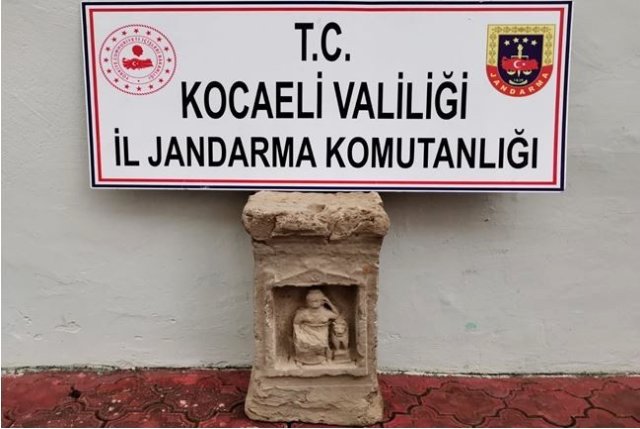
Kandira Kybele captured by Kocaeli Provincial Gendarmerie Command.

On the other hand, it was learned that an altar, which was determined to be kidnapped by the treasure hunters, was seized by the security teams. Scientific studies on the captured altar revealed that the altar was a unique work.

Kocaeli Provincial Gendarmerie Command teams reached the knowledge of people trying to sell the Kybele statue they found in the cave. As a result of the follow-up, the teams, which determined the identity of the historical artifact smuggler, carried out an operation to the specified address. The suspect named was taken into custody with the Roman period sculpture he was trying to sell. It was determined that the captured statue was the Kybele altar.

While the statue was handed over to the officials of the museum, the gendarmerie teams launched an investigation into the incident.

It is thought that the Kandira Kybelesi is a unique work from the Roman Period and it may have been produced by a local master.

Related Articles

Library Wars in the Old Age!

12 February 2021

12 February 2021

One of, the world’s oldest and largest library, the other was born 100 years later as a rival to it....

To The West of Turkey Ancient Quarry Found

28 March 2021

28 March 2021

Turkey is very lucky in terms of ancient settlements. It is home to many unexplored artifacts, along with well-preserved ancient...

Mysterious ruins discovered at the bottom of Lake Van, Türkiye’s largest lake

16 August 2023

16 August 2023

At the bottom of Lake Van, Türkiye’s largest salty soda lake with 3,712 square kilometers, divers discovered a cemetery and...

Column of Arcadius: “The Roman Column That Fed Istanbul”

28 December 2025

28 December 2025

Rising once above the seventh hill of Constantinople like a carved chronicle in stone, the Column of Arcadius—known in Turkish...

An Urartian fortress was discovered at an altitude of 3,300 meters in eastern Turkey

2 July 2022

2 July 2022

In the Gürpınar district of Van, located in eastern Turkey, a fortress ruin, which is considered to be used by...

Sacred Sanctuary of Phrygian Mother Goddess Matar Unearthed in Attouda Ancient City

2 October 2025

2 October 2025

A groundbreaking archaeological discovery has been made in Attouda Ancient City, located in the Sarayköy district of Denizli, Turkey. Excavations...

4,000-year-old cylinder seal found in Blaundos excavations

29 September 2022

29 September 2022

A 4,000-year-old cylinder seal was found during the excavations of the ancient city of Blaundus (or Blaundos, as it is...

Private lodges were uncovered in the colosseum of the ancient city of Pergamon

24 September 2021

24 September 2021

Private lodges built for the elite-class people to watch gladiator or wild animal fights shows have been unearthed in the...

Life in Trabzon Started in This Cave 13,000 Years Ago

12 March 2021

12 March 2021

Karadeniz Technical University Archeology Department academicians found that life in Trabzon started 13,000 years ago in the Koskarlı Cave. Koskarlı...

The rich-poor distinction draws attention in the nutrition of the inhabitants of the Ancient City of Pergamon

27 November 2021

27 November 2021

The hegemony of wealth to the poor, arising from the ruler, elite structure, property ownership, unjust acquisition, and distribution of...

Well-Preserved Hittite “Bird Omen Text” Discovered at Kayalıpınar–Samuha, a Key Religious Hub of the Ancient Empire

24 July 2025

24 July 2025

Archaeologists working at the ancient Hittite settlement of Kayalıpınar, located in Türkiye’s Sivas province, have uncovered a remarkably well-preserved clay...

Lost Kingdom of Purušhanda? Archaeologists Unearth Ancient Ovens and Hearths in Üçhöyük, Türkiye

29 September 2025

29 September 2025

Archaeologists excavating at Üçhöyük in Bolvadin, Afyonkarahisar (western Türkiye) have uncovered remarkable new evidence that may help identify the long-lost...

A tiny 2,300-year-old votive vessel presented to the gods by the poor was found in the Ancient City of Troy

27 August 2022

27 August 2022

A 3-centimeter in size tiny vessel made of clay was found in the ancient city of Troy located at Hisarlik...

3 mummified skeletons were found in Iznik, western Turkey

8 October 2021

8 October 2021

Archaeologists discovered mummified skeletons dating from the 2nd century A.D. within two sarcophagi at the Hisardere Necropolis in Bursa’s Iznik...

A 2,000-year-old whistle was found in a child’s grave in the ruins of Assos, Turkey

18 October 2022

18 October 2022

A terracotta whistle believed to be 2,000 years old from the Roman era and placed as a gift in a...