
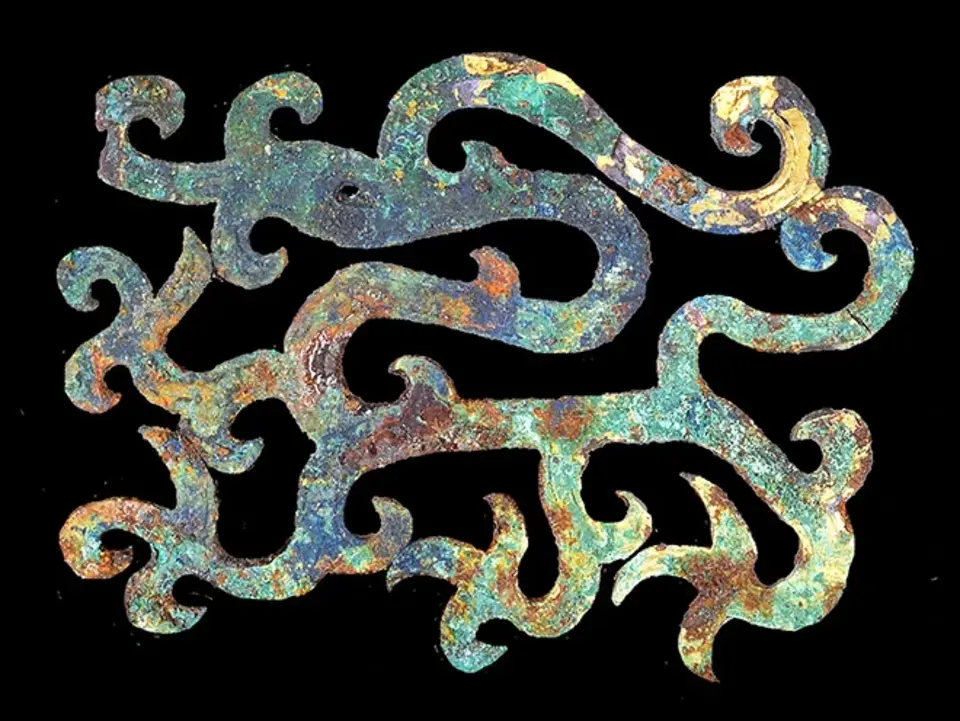
Archaeologists in Japan have announced a remarkable discovery that could reshape scholarly understanding of elite craftsmanship and power networks in the Kofun period. A set of gilt-bronze armor fittings decorated with an intricate openwork dragon motif—believed to date to the fifth century—has been identified as one of the most artistically sophisticated examples of dragon-themed military ornamentation ever found in Japan. The fragments, unearthed decades ago from a kofun burial mound in Takasaki, Gunma Prefecture, are now being hailed as a discovery of major archaeological significance.
The seven armor fragments, currently preserved and exhibited by the Meiji University Museum in Tokyo, measure roughly 35 centimeters in length and 22 centimeters in width when reconstructed. Experts say the form and curvature indicate that the decorative plate once adorned the neck guard of a suit of armor. The design features a gilt-bronze dragon rendered in delicate openwork and riveted to an iron backing—evidence of sophisticated metalworking techniques and high-status symbolism.
What makes the discovery especially compelling is its potential connection to another celebrated artifact: the national-treasure-designated saddle fittings from the Konda-Maruyama kofun in Osaka Prefecture. Two leading researchers note striking similarities in both style and craftsmanship, raising the possibility that the two sets of fittings were created in the same workshop—or even by the same artisans—during the mid-fifth century. Some scholars also suggest that stylistic influences may reflect cross-regional exchange with northeast China or the Korean Peninsula, underscoring the cosmopolitan networks that shaped elite culture in early Japan.
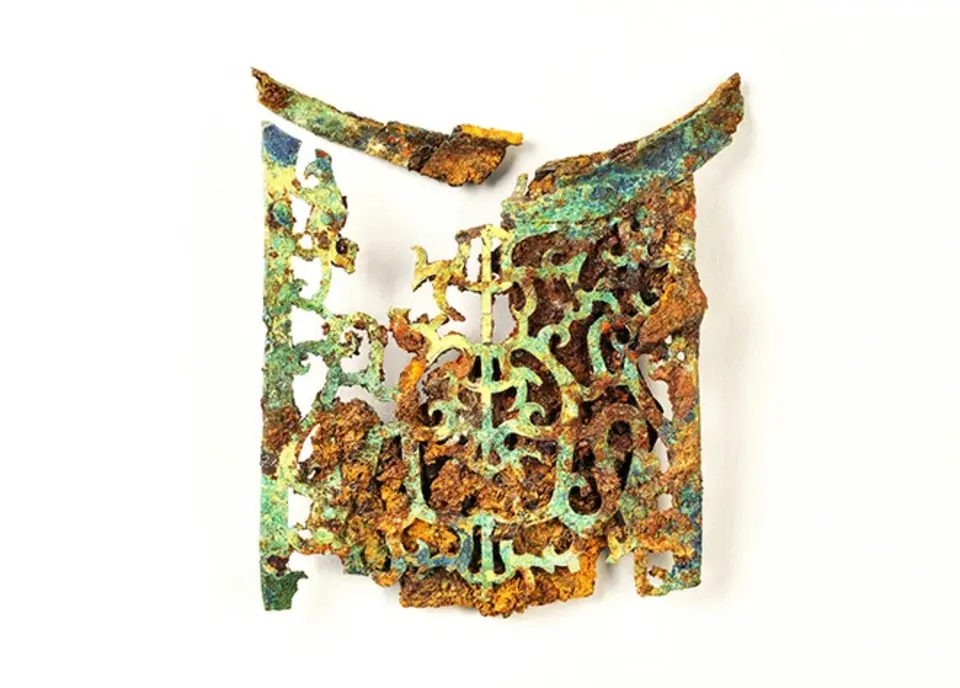
Curator Keizo Kutsuna of Meiji University explains that the dragon imagery is particularly significant. Dragons in East Asian iconography were often associated with authority, vitality, and divine protection, making the motif an unmistakable marker of political power. Because the heavy gilt-bronze plates would have added unnecessary weight to the armor, Kutsuna and other experts believe the fittings were ceremonial rather than practical. Instead of protecting the wearer in battle, they likely served as a powerful visual emblem of rank—perhaps worn during processions, diplomatic encounters, or funerary rites.
The provenance of the fragments traces back to the Watanuki kofun cluster in Takasaki, a region known for its large keyhole-shaped tombs associated with local rulers of the Kofun period (ca. 3rd–7th century). The fittings were stored in a box labeled as having originated from the site and are reported to have been excavated prior to World War II. Researchers are still investigating whether they came from the 94-meter-long Fudoyama mound or the now-lost 115-meter-long Iwahana-Futagoyama mound, both part of the same tumulus complex.
The discovery also invites renewed attention to kofun culture itself. Kofun burial mounds—massive earthen tombs constructed for powerful chieftains and early rulers—rank among Japan’s most iconic archaeological landmarks. Many feature colossal keyhole-shaped designs visible only from above and were built with elaborate grave goods such as armor, weapons, horse gear, and ritual objects. These tombs reflect the emergence of centralized authority and social hierarchy in ancient Japan. Several kofun sites, including the Mozu-Furuichi Kofun Group, are today recognized as UNESCO World Heritage properties, highlighting their global cultural value and the insight they offer into state formation during the early Japanese archipelago.
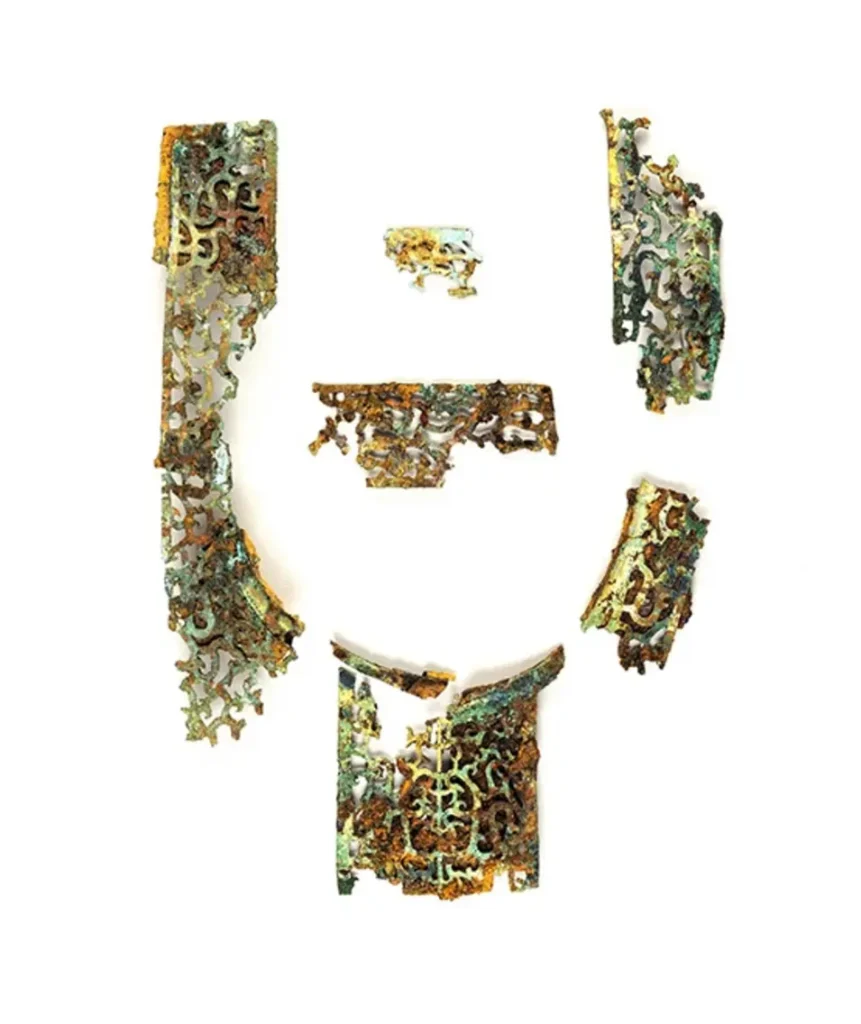
Scholars say the newly identified fragments add an important layer to this broader historical picture. Professor Toru Wakasa of Meiji University notes that, if the origin and dating are confirmed, the fittings indicate that a regional ruler in fifth-century Gunma controlled luxury artifacts on par with the highest-quality objects found anywhere in East Asia.
Professor Tatsuya Hashimoto of Kagoshima University emphasizes the rarity of decorated neck guards, observing that the find could reshape longstanding debates about where Japan’s most refined equestrian and armor fittings were produced. Meanwhile, Takehiro Hatsumura of the Gangoji Institute for Research of Cultural Property points to subtle adjustments in the metalwork that suggest the piece was custom-fitted—strong evidence that it was crafted domestically, rather than imported fully finished.
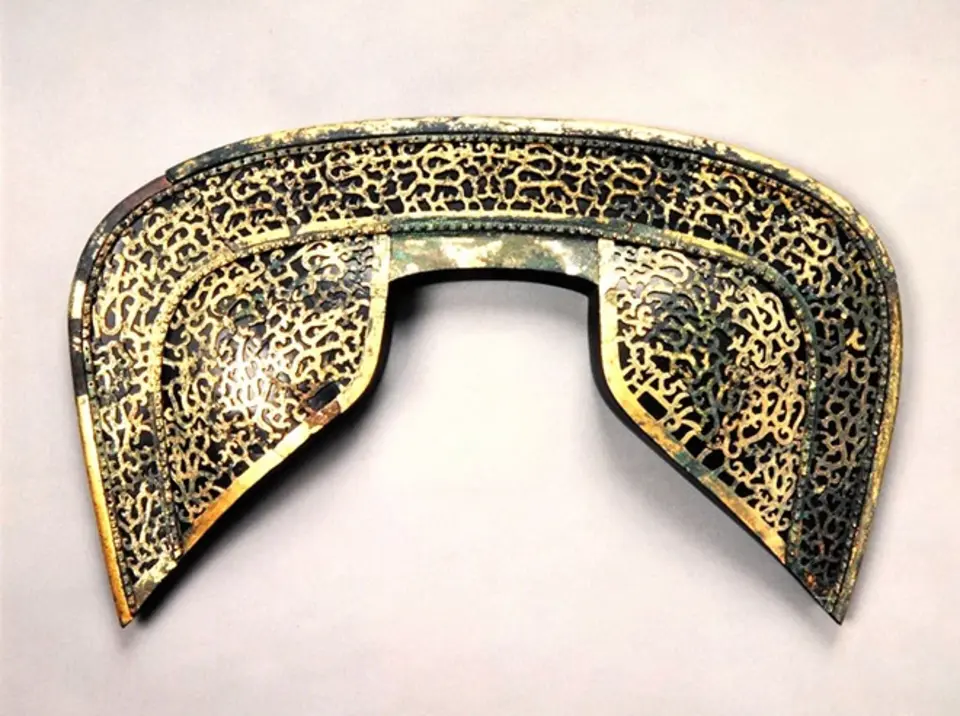
Today, the fragments are on public display at the Meiji University Museum in Chiyoda Ward as part of an exhibition showcasing new acquisitions. For archaeologists and visitors alike, the discovery not only illuminates the artistic brilliance of the Kofun era, but also deepens our understanding of how symbols of power, craftsmanship, and political identity were expressed through ceremonial armor in early Japan.
Dragon-motif gilt-bronze armor fragment from a fifth-century Kofun tomb discovered in Gunma Prefecture. Meiji University Museum
