
5 December 2025 The Future is the Product of the Past

Archaeologists Reveal First Settlement of Cimmerians in Anatolia

Continuing excavations in Türkiye’s central Kırıkkale province have revealed new findings indicating that Büklükale village was the first settlement of the Cimmerians, an ancient equestrian nomadic people, in Anatolia.

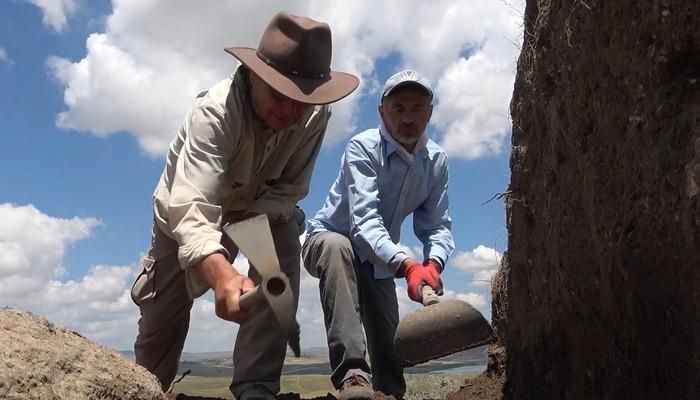
Büklükale excavations are carried out on behalf of the Japanese-Anatolian Archeology Institute, under the direction of Kırşehir Ahi Evran University, associate professor Kimiyoshi Matsumura. The excavation works, initiated by the Ministry of Culture and Tourism in 2009, have been ongoing for 14 years at Büklükale, located in the Karakeçili district of Kırıkkale.

Büklükale is thought to be the first settlement of the Cimmerians in Anatolia. The artifacts shed light on the Cimmerians and reveal evidence of warfare within the constructed fortress. Notably, an image of a person on horseback, an animal motif from the Scythian period, and arrowheads believed to date back to the Cimmerian era, which was used in battles, draw attention.

Büklükale is located about 100 kilometers from Ankara, Turkey’s capital city, where the road from Ankara to Kaman passes the Kızılrmak, Turkey’s longest river. Since ancient times, this region has been a major transit junction, and Büklükale has had control over it.

During an interview with Ihlas News Agency (IHA), Kimiyoshi Matsumura said they have determined multiple civilizations in Büklükale.


📣 Our WhatsApp channel is now LIVE! Stay up-to-date with the latest news and updates, just click here to follow us on WhatsApp and never miss a thing!!


Matsumura explained they found a fortress associated with the Cimmerians during the excavation in the region.
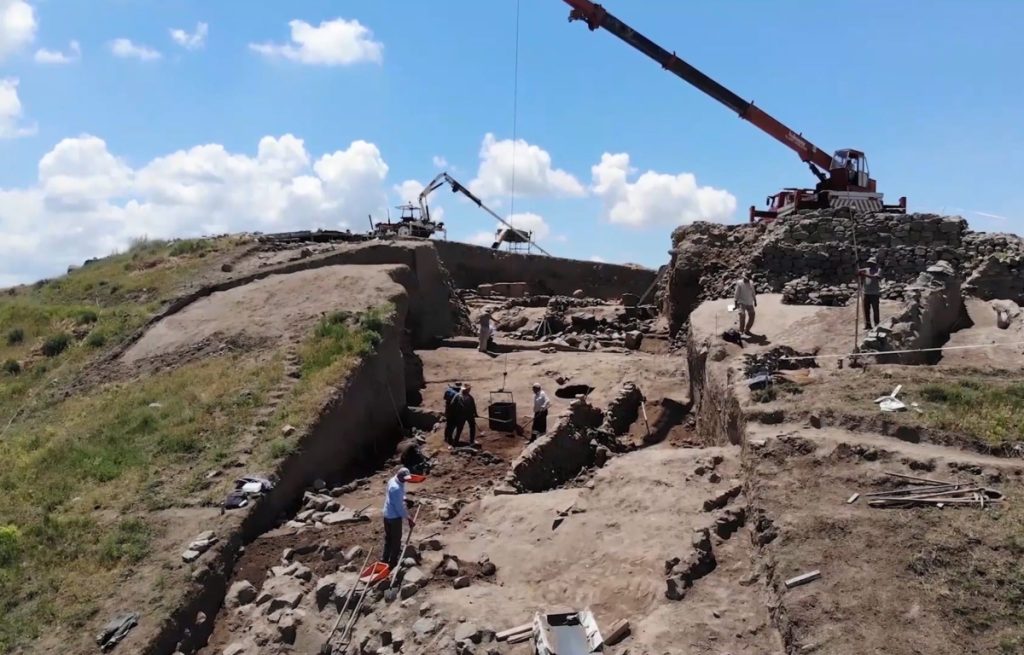
Photo: IHA Photo

“On the top layer, we found remnants from the Ottoman period. Below that, we discovered artifacts from the Hellenistic period, the time of Alexander the Great’s arrival. Beneath that, we identified architectural remains. Before that, we found traces of the Lydians. Below that, we found the fortress constructed by the Cimmerians, which is what we were aiming for. And beneath that, we discovered settlements dating back to 2,000 B.C. in the Hittite period. Currently, we have reached that level,” he said.

“Excavations are still ongoing, but, interestingly, we have uncovered nearly seven arrowheads from the fortress. Among them, we found some that were bent. This indicates that there was a battle here, and arrows were shot, resulting in the bending of the arrowheads. This suggests that during that period, most likely during the time of the Cimmerians or the subsequent era, a war took place here,” he elaborated.

Matsumura emphasized the arrival of the Cimmerians in Anatolia was mentioned in the book of Herodotus, known as the “father of history.”
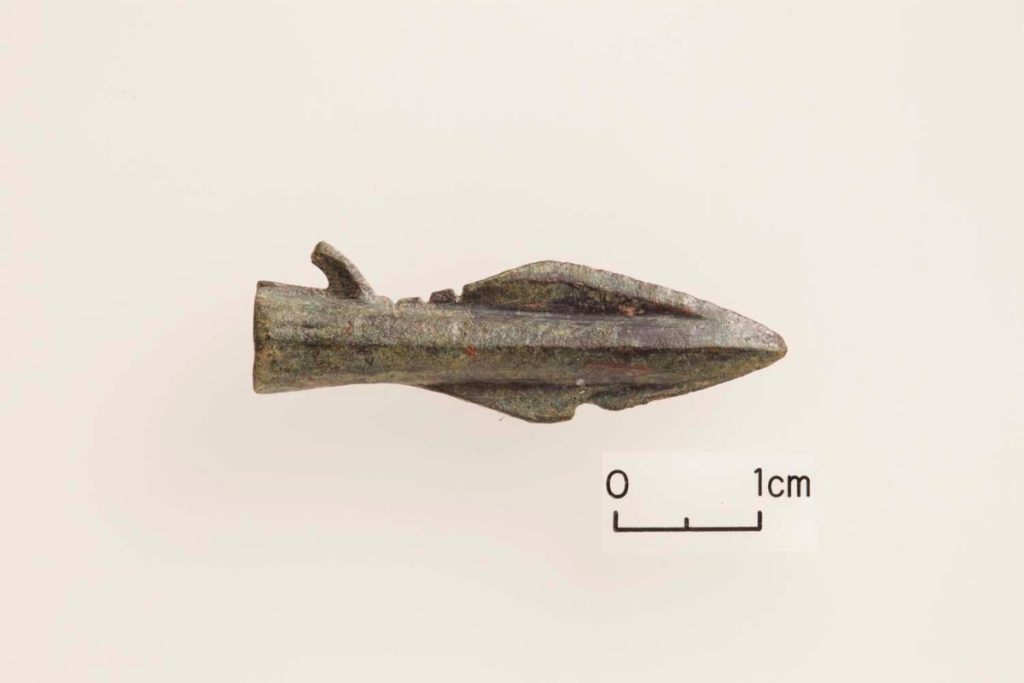
An arrowhead discovered during the excavation works in Kırıkkale under the leadership of a Japanese archaeologist, Türkiye, June 18, 2023. Photo: IHA Photo

“Within this fortress, we found animal motif materials belonging to the Scythians. Additionally, we discovered a small figurine of a person riding a horse, which we believe is likely associated with the Cimmerians. Hopefully, we have identified their first settlement or fortress in Anatolia. In this year’s excavations outside the city walls, we also determined that a significant fortress was constructed. It will be fascinating. There is no information about what they did in Anatolia,” he added.

Matsumura highlighted they will shed light on the historical position of the Cimmerians through future excavation works.

The Cimmerians, a nomadic people, are known from several Assyrian texts calling them Ga-mir or Gi-mir-aa. These peoples, about whom we do not know much, may have lived in southern Ukraine, where the Crimea is, according to some scholars.

Archaeologists have identified them with the Novocerkassk culture on the grass plains between the river Prut and the Lower Don (c.900-c.650 BCE).

Related Articles

Scientists Find Aztec ‘Death Whistles’ do Weird Things to the Listeners’ Brains

18 November 2024

18 November 2024

New research reveals that one of the Aztecs’ most chilling artefacts, clay death whistles, which resemble a human skull and...

Stone Penis Found in Medieval Spanish ruins Had Violent Purpose

11 June 2023

11 June 2023

Archaeologists found a six-inch stone penis while excavating the Tower of Meira (Torre de Meira) in the city of Ría...

Needle-Carved Image of a Sasanian King Unearthed in Southern Iran’s Ancient City of Istakhr

13 November 2025

13 November 2025

Archaeologists have uncovered a rare needle-carved rock image believed to depict a Sasanian king, etched into the cliffs of the...

Orkney dig reveals ruins of huge Neolithic tomb

21 October 2023

21 October 2023 1

A 5,000-year-old tomb was unearthed in Orkney, north-east Scotland. The discovery was announced by the Guardian, describing the tomb structure...

2,000-year-old Roman Military Sandal with Nails Found in Germany

25 June 2024

25 June 2024

Archaeologists have discovered the remains of a 2,000-year-old Roman Military Sandal near an auxiliary Roman camp in Germany. Archaeologists from...

Well-Preserved Wooden Houses Over 2,000 Years Old Discovered in Zhejiang, China

15 March 2025

15 March 2025

In a remarkable archaeological find, researchers in Shaoxing, Zhejiang Province, China, have uncovered exceptionally well-preserved wooden houses dating back over...

Crusade period grave field and a sword discovered in Finland

15 October 2023

15 October 2023

A large cemetery from the time of the Crusades was discovered near a medieval stone church in Salo Perttel, a...

A section of one of Britain’s most important Roman roads unearthed under Old Kent Road in south-east London

15 November 2024

15 November 2024

Archaeologists have found a section of a Roman road under Old Kent Road in south-east London, part of one of...

Unearthed in Perthshire: GUARD Archaeologists Discover Hidden Iron Age Settlement

1 November 2025

1 November 2025

A vanished community that once thrived on a windswept hilltop near Perth, Scotland, has resurfaced after lying buried for over...

15 new sculptures discovered in Turkey’s sculpture paradise Yesemek

8 December 2021

8 December 2021

Archaeologists discovered 15 new sculptures during recent digs around the Yesemek Open Air Museum and Sculpture Workshop in the Islahiye...

A previously unknown Roman fort discovered in Pembrokeshire in Wales

8 August 2024

8 August 2024

A previously unknown Roman fort has been discovered in north Pembrokeshire. The site, which has excited archaeologists, had been hidden...

Time Team Cracks Sutton Hoo Mystery: ‘Master Count’ Bucket Was a Burial Urn

20 May 2025

20 May 2025

In a remarkable breakthrough at the historic Sutton Hoo site in Suffolk, England, archaeologists have revealed that a 6th-century Byzantine...

Underfloor Heating System Discovered in 1,700-Year-Old Roman Bath

25 August 2025

25 August 2025

Archaeologists in eastern Türkiye have uncovered a 1,700-year-old Roman bathhouse equipped with an advanced underfloor heating system, shedding new light...

Israeli researchers uncover earliest evidence silver used as currency in Levant

9 January 2023

9 January 2023

On Sunday, Israeli archaeologists revealed that they had found the earliest proof of silver being used as money in the...

Archaeologist Reconstructs 2,000-Year-Old Roman Frescoes from Thousands of Fragments in ‘World’s Toughest Jigsaw’

19 June 2025

19 June 2025

What started as a pile of broken plaster fragments has become one of the most remarkable reconstruction projects in British...