
25 June 2026 The Future is the Product of the Past

An unexpected shipwreck was unearthed at the Tallinn construction site

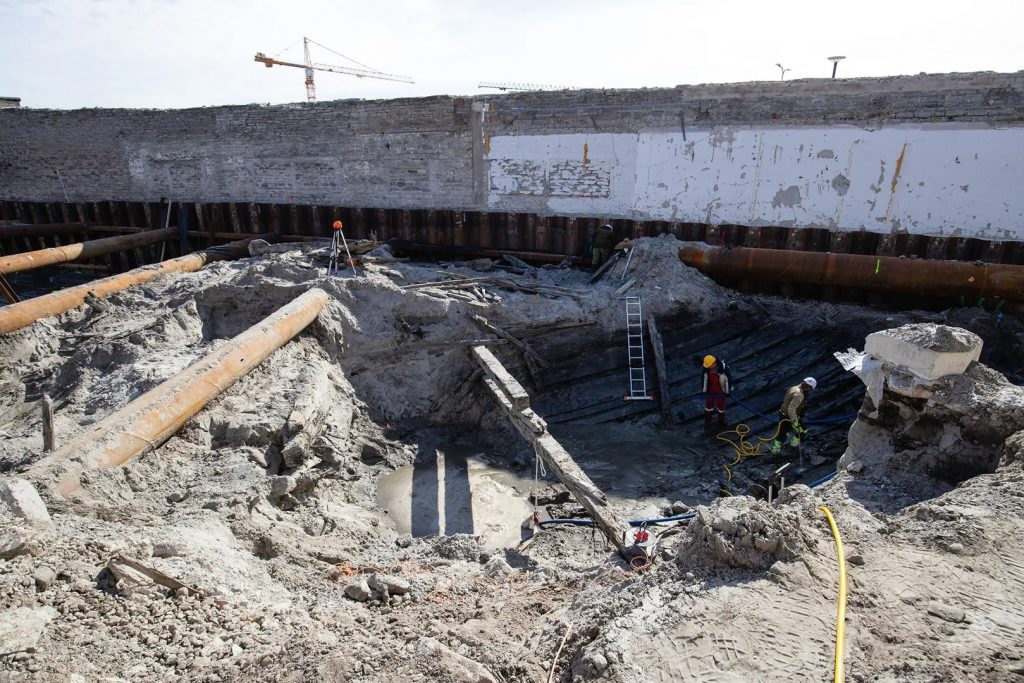
During the construction of the office building on Lootsi Street in Tallinn, Estonia’s capital on the Baltic Sea, a shipwreck was found underground, exceeding the size of any wreck previously excavated here.

The surprise didn’t stop there; Construction at Lootsi 8 began with the knowledge of a shipwreck on the property that wouldn’t be affected by planned work, however, an unexpected second wreck was unearthed as well, and it may be one of the best-preserved in the region.

The wreck was found at the mouth of the Härjapea River. The wreck was measured to be 24.5 meters long by 9.5 meters wide, and experts hope to unearth it in as large of pieces as possible.

“We have another 13th-century wreck on our property whose location is known, but the second one came completely unexpectedly,” said EHC Lootsi representative Tarmo Mill.

Ragnar Nurk, an archaeologist in Tallinn City Planning Board’s Department of Heritage Conservation, said the previously known wreck was three to four meters deep, but the newly found wreckage was much closer to the ground, about one and a half meters deep.


📣 Our WhatsApp channel is now LIVE! Stay up-to-date with the latest news and updates, just click here to follow us on WhatsApp and never miss a thing!!


 Shipwrecks were found at Lootsi 8 construction site in Tallinn. Photo: Scanpix
Shipwrecks were found at Lootsi 8 construction site in Tallinn. Photo: Scanpix

Although the site is 200 meters (ca. 220 yards) from the water today, for centuries it was a port. In the late 1930s, the area was infilled with ash and household refuse. It’s not clear if the ships sank there are were gradually buried over time by siltification, or if they were deliberately sunk after reaching the end of their natural lives.

Archaeologist Mihkel Tammet, who led the excavations at OÜ Muinasprojekt, thinks that next Thursday the debris will be cleared, the water will be pumped out and all details of the wreck can be seen.

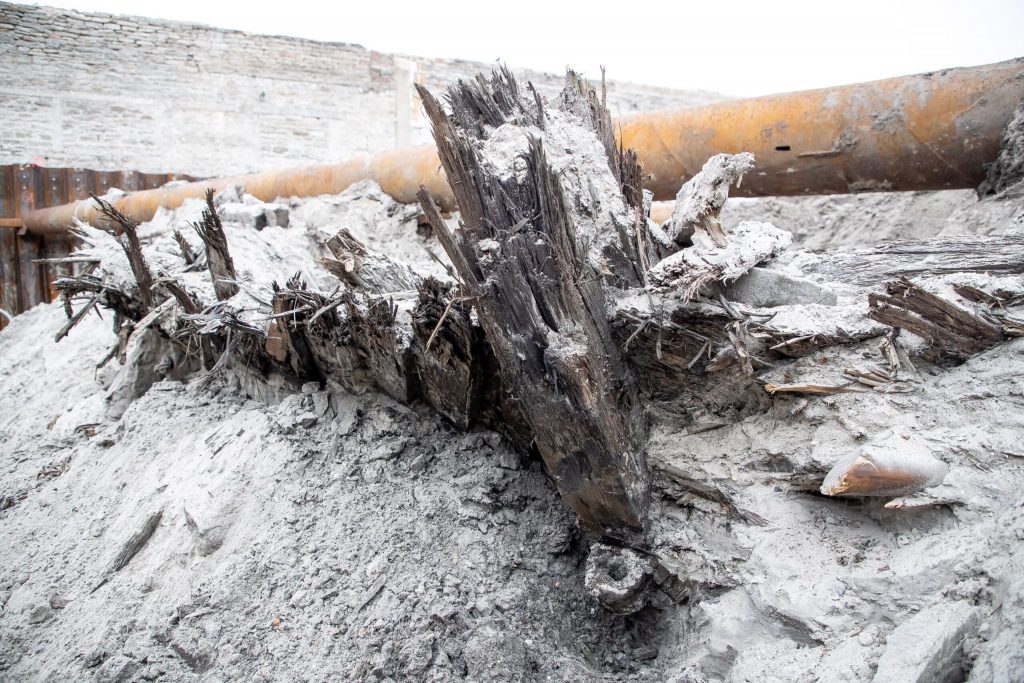
According to Estonian Maritime Museum Priit Lätti, initial dendroanalyses indicated that the recently discovered wreck may date back to the late 13th or early 14th century, an estimate which is being increasingly supported as more details are unearthed, but that further analysis would be necessary to confirm the dating.

According to Tammet, “Definitely one of the best-preserved shipwrecks ever found.”
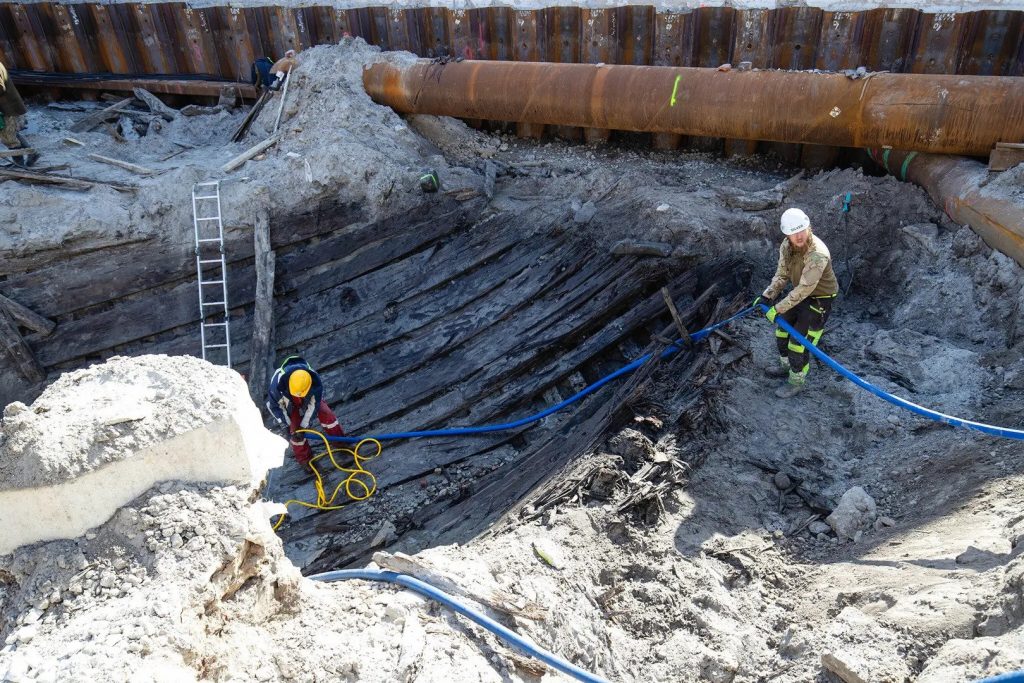
An unexpected shipwreck was unearthed by construction work at Lootsi 8 in Tallinn's Sadama neighborhood, near the Port of Tallinn.  Photo: Patrik Tamm/ERR
An unexpected shipwreck was unearthed by construction work at Lootsi 8 in Tallinn’s Sadama neighborhood, near the Port of Tallinn. Photo: Patrik Tamm/ERR

Finding the wreckage brought some controversy. Heritage conservationists have suggested that the overall goal might be to get the wreckage underground as much as possible.

“We will do everything we can to get these wreck out of the ground, but what’s sad is that the state’s contribution to preserving our common heritage is nonexistent,” said EHC Lootsi representative Tarmo Mill, stressing that the wreck doesn’t belong to the company and the state should support its excavation.

Small interesting finds were also found from the wreckage. One of the interesting finds is a mallet. It is a tool made of pigskin, used by sailors to tie the ends of a rope.

Postimees

Related Articles

Archaeologists Uncover Extensive Ancient Irrigation Network in Eridu, the World’s First City

8 March 2025

8 March 2025

Recent research by a multidisciplinary team of archaeologists and geologists has revealed that the Eridu region of southern Mesopotamia, inhabited...

A Rare 4th-Century BCE Celtic Brain Surgery (Trepanation) Tool Discovered in Poland

24 October 2025

24 October 2025

Archaeologists in Poland have made a fascinating discovery that sheds new light on Celtic presence and medical practices in ancient...

New Discoveries of Sanxingdui Ancient City to be Announced

19 March 2021

19 March 2021

Sanxingdui, which literally means “Stacks of Three Stars”, is a cultural relic of the Kingdom of Shu in ancient China....

2,000-Year-Old Iron Age Temple Discovered in Denmark Reveals Powerful Northern European Center

12 February 2026

12 February 2026

A 2,000-year-old Iron Age temple discovered in Denmark reveals a powerful fortified center with Roman, Celtic, and Mediterranean connections. Archaeologists...

UK’s Oldest Hospice Discovered: Anglo-Saxon Monastery Unearthed in Cookham Reveals Early Medical Care

11 August 2025

11 August 2025

An extraordinary archaeological discovery in Cookham, Berkshire, is rewriting our understanding of healthcare in early medieval England. Unearthed behind the...

5,000-Year-Old Matrilineal Society Discovered in China: DNA Unveils Ancient Female-Led Clans

30 July 2025

30 July 2025

In a remarkable study, scientists have uncovered genetic evidence of a rare matrilineal society in Neolithic China, where women determined...

Women with Sart Renovate Largest Synagogue of Ancient World

4 August 2023

4 August 2023

Village women take part in the renovation works of the largest synagogue in the ancient world, located in the ancient...

Anatolia’s first company was founded 4000 years ago with 15 kilos of gold!

26 May 2024

26 May 2024

A 4,000-year-old tablet found in Kültepe shows that the first company in Anatolia was established by 12 people with 15...

1-meter tall bronze statue found in China’s Sanxingdui Ruins-Video

17 June 2022

17 June 2022

Chinese archaeologists have discovered a 1-meter tall bronze statue at the site of ancient Sanxingdui ruins site in southwest China’s...

Gravitational Wave Researchers Shed New Light on the Mystery of the 2,000-Year-Old Computer Antikythera Mechanism

28 June 2024

28 June 2024

Astronomers from the University of Glasgow who specialize in studying tiny ripples in space-time have shed new light on the...

Hidden Gods of Kurul Castle: Dionysus and Pan Figurines Capture Spotlight as Dig Resumes

10 July 2025

10 July 2025

Excavations are set to resume next week at the ancient Kurul Castle in Ordu, the first scientifically excavated archaeological site...

Astonishing Find in the Czech Republic: Hikers Discover a 3.7 Kilogram Serbian/Bosnian Gold Treasure

29 April 2025

29 April 2025

A leisurely hike on the slopes of Zvičina Hill in the Czech Republic turned into an extraordinary discovery for two...

Archaeologists discover three extraordinary 1,800-year-old residential-style tombs featuring rooms and windows, Filled with Han Dynasty Treasures

19 May 2024

19 May 2024

Archaeologists discovered three remarkable 1,800-year-old, residential-style tombs featuring rooms and windows, where a wealthy family was laid to rest alongside...

Hornelund Brooches: Exquisite Viking Gold Ornaments with Norse and Christian Symbolism Unearthed in Denmark

5 August 2025

5 August 2025

The Hornelund Brooches are rare and captivating examples of Viking Age goldsmithing, discovered in southwestern Jutland, Denmark. These two intricately...

Rare Celtic Princely Grave with Gold and Chariot Discovered in Germany’s Taunus Mountains

8 June 2026

8 June 2026

According to a report by Hessenschau, archaeologists in Hesse have uncovered the first known Celtic “princely grave” in the Taunus,...