
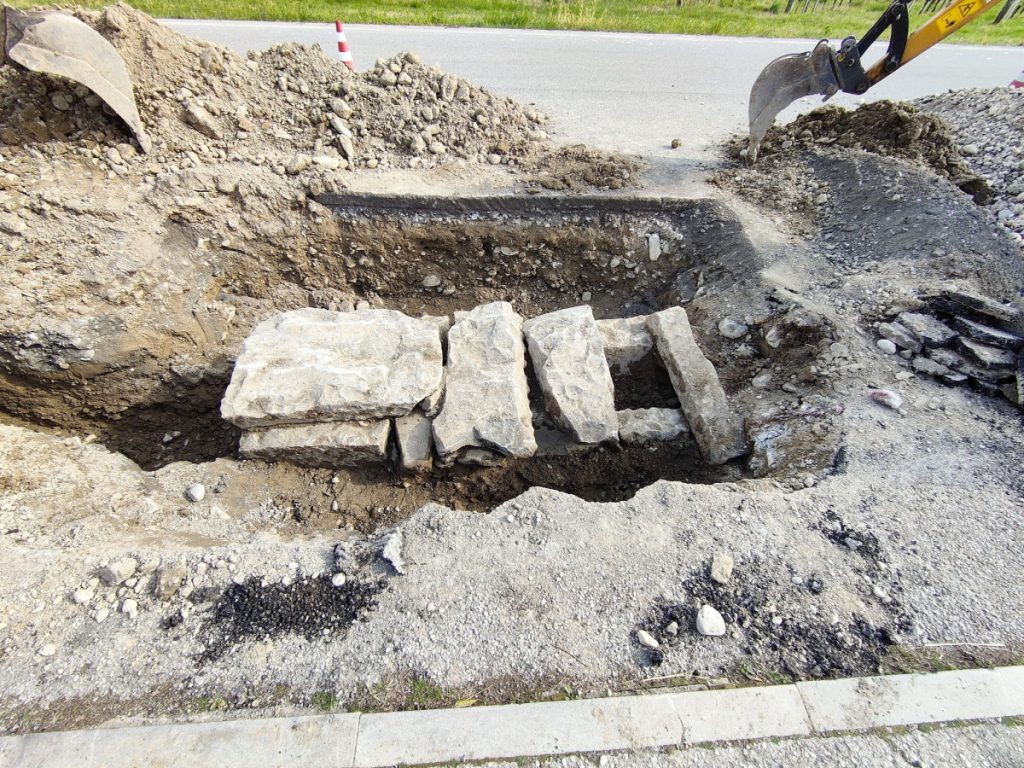
A mysterious structure of unknown purpose has been unearthed in the Friuli Venezia Giulia region in northeastern Italy.
The discovery was made during excavations for the fiber optic installation in the town of Torreano, near Udine.
The ancient structure is made of heavy stone slabs that form a rectangle — two long walls and a short back topped by a “roof.” Archaeologists initially thought it was a burial cist, but an excavation of the structure revealed no evidence of human remains. It only has silty, muddy soil typical of waterways.
The discovery was publicly reported by Ivano Dorbolo’, a scholar of history and archeology, and administrator of the group “Valli del Natisone – Ricerche ed indagini archeologiche“.
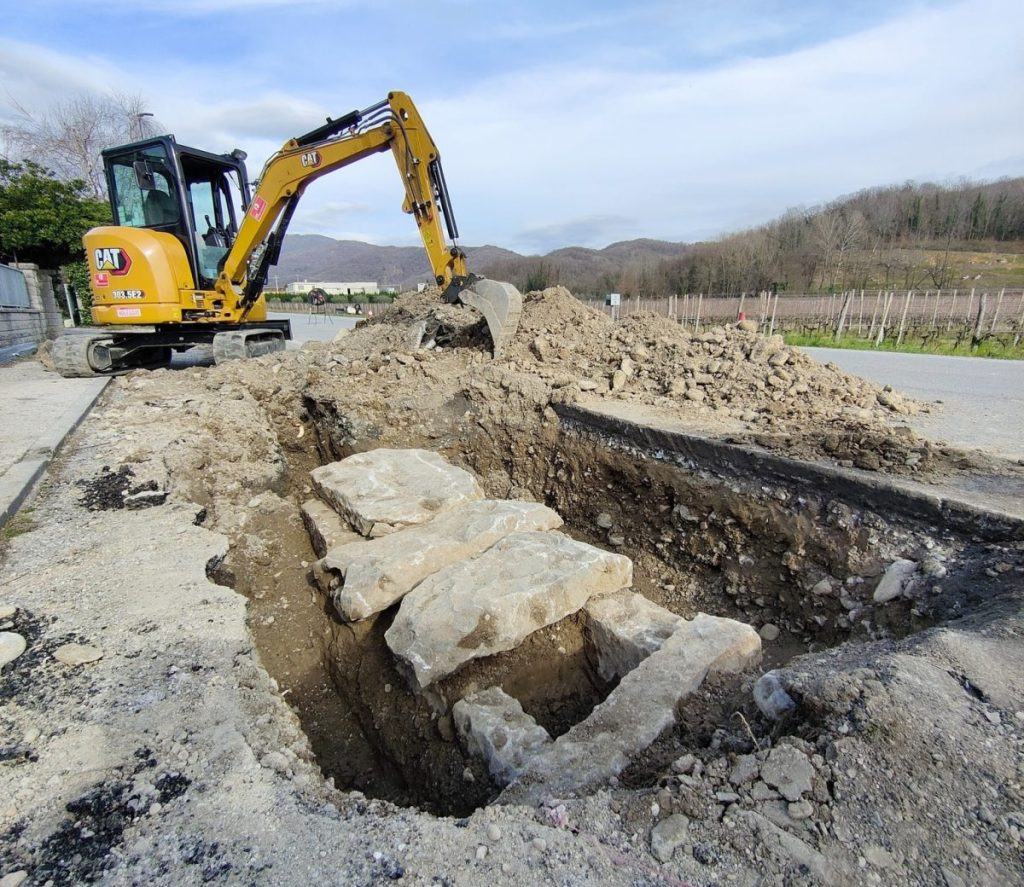
Dorbolo said in a statement that the most plausible hypothesis at the moment is that it was a causeway, built to allow carts to pass through an ancient water course that flowed through the structure.
Another option is a culvert or drainpipe, but rough-hewn, heavy stone slabs are not the best choice for that purpose. Given the weight and size of the stones, it is likely that this was not a quick structure built by a local farmer but rather a significant infrastructure project requiring financial and human investment.
This discovery contains no stratigraphic data, and it would be nearly impossible to date a collection of heavy stone slabs in the absence of associated artifacts or remains suitable for radiocarbon or dendrochronological analysis. In conclusion, we have no idea what it is or how old it is.
After the necessary controls in the field, the work continues. The structure has now been reburied for its own protection.
