
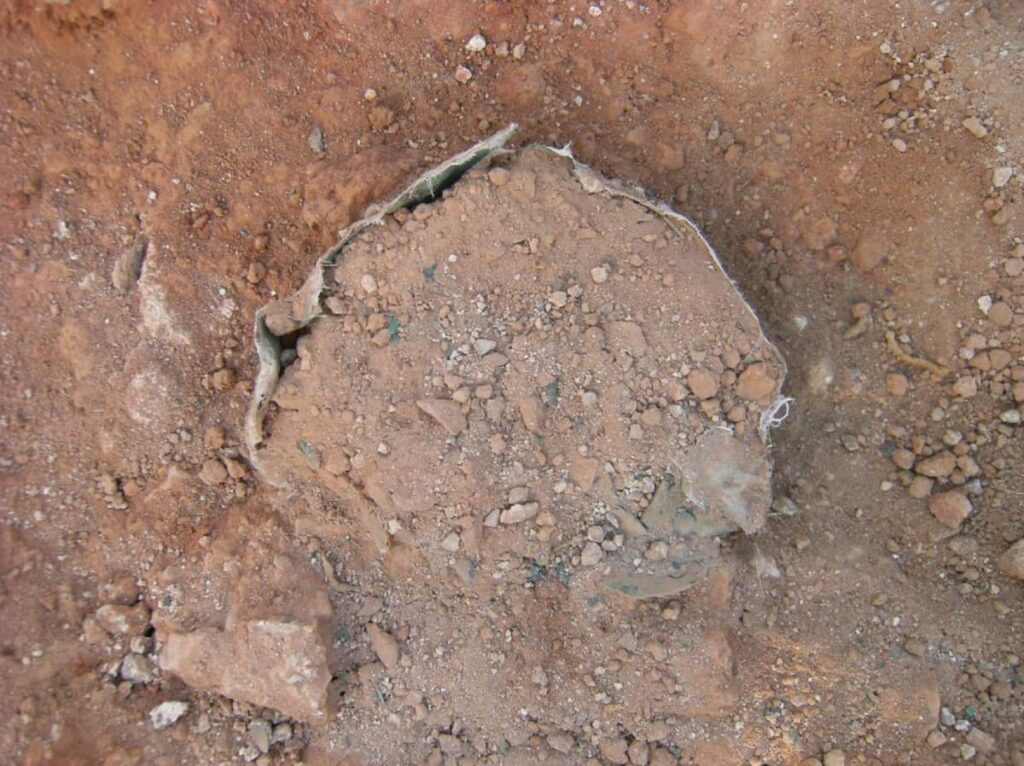
The recent discovery of a Roman inscription in Cartagena has illuminated an obscured chapter of Hispania Citerior’s history, revealing the name of an unknown Roman governor and offering rare, tangible evidence of lot-casting rituals in the late Republic.
Unearthed in the Molinete Archaeological Park, the metal vessel emerged from the collapsed remains of the Atrium Building, a once-public structure later transformed into domestic spaces before a sudden fire in the late 3rd century AD sealed its final moments. Although crushed beneath the debris of a collapsing upper floor, the fragmented copper-alloy vessel has proven to be one of the most significant archaeological finds in Carthago Nova in recent decades, providing new insight into political power, economic interests and ritual practices in ancient Hispania.
The object, a hammered copper sitella with a broad circular mouth and once globular body, carries a finely engraved inscription whose delicate strokes survived despite being reduced to more than 250 pieces.
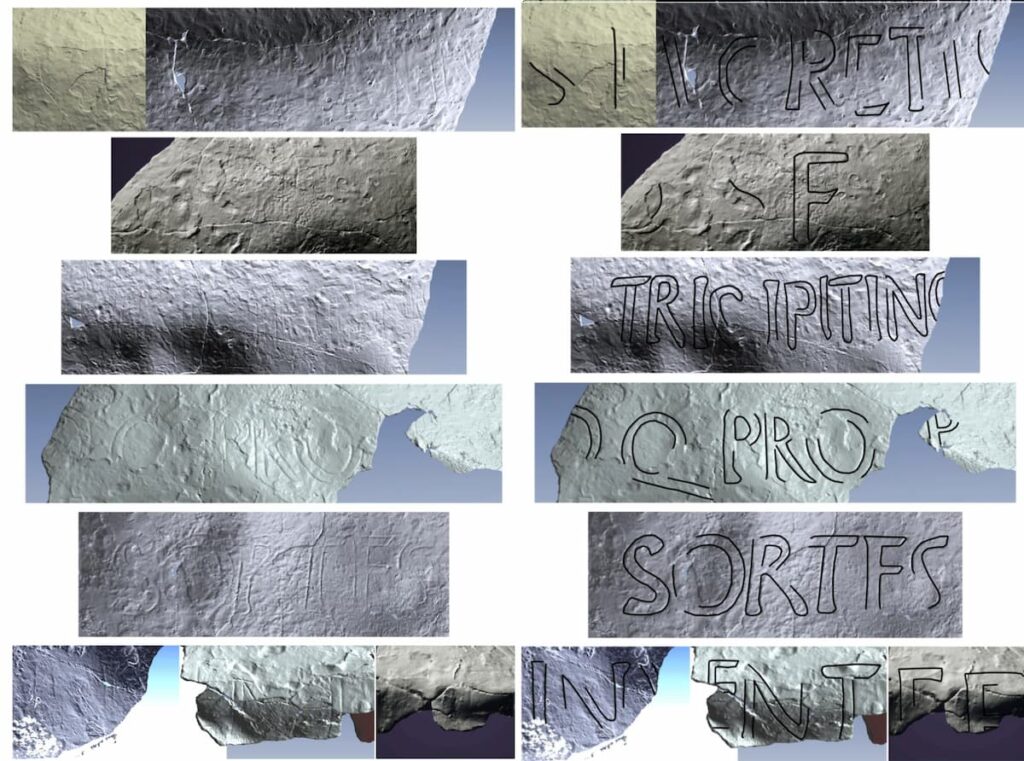
Restoration efforts revealed three clear lines of text containing the name Spurius Lucretius Tricipitinus, identified as quaestor pro praetore, a rare emergency post in which a quaestor was granted praetorian authority to govern a province. Only one other example of such a magistracy had previously been documented in Hispania Citerior. The discovery therefore not only introduces a new provincial governor but also fills a long-standing gap in the region’s administrative history.
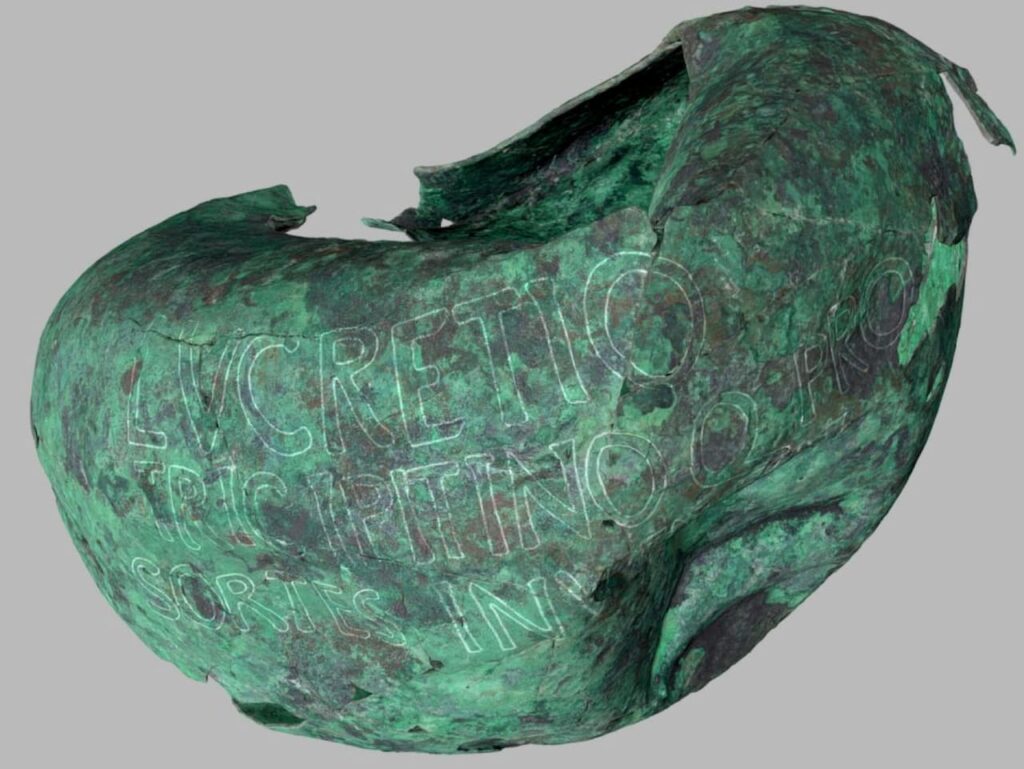
Dating from approximately 47 to 27 BC, the sitella captures a transitional era before Augustus restructured provincial governance, making the inscription a direct link to the fragile final decades of the Roman Republic.
The Lucretii, among Rome’s oldest families, are known from the earliest years of the Republic, including the legendary story of Lucretia, whose tragic death catalyzed the fall of the monarchy. Their cognomen Tricipitinus had vanished from the record after the 4th century BC, making its unexpected reappearance in Hispania particularly striking.
The vessel becomes even more significant when considered alongside lead ingots from the Cartagena-Mazarrón district stamped with the abbreviated name S·LVCRETI·S·F, a formula identical to the one used on the sitella. These ingots date to the 1st century BC and suggest that the family, or the governor himself, held direct commercial interests in the region’s mining industry. Carthago Nova was one of the most economically valuable territories in the western Mediterranean, renowned for its silver and lead deposits, which played a central role in Roman coinage and military logistics. For a man such as Spurius Lucretius Tricipitinus, holding authority here would have meant controlling one of the most lucrative resources of the Republic.
The inscription’s most enigmatic element appears in its final line, where the word sortes—the tablets used in lot casting—clearly identifies the vessel’s ceremonial function. The phrase following it, though fragmentary, implies that an action or decision resulted from the drawing of lots. This reference brings to life the process of sortitio, a fundamental mechanism in Roman political culture. Before the invention of the rotating urn (urna versatilis), the sitella was the standard device used to mix and draw wooden or metal tablets for assigning provincial offices, selecting jurors, distributing land or even consulting divine will in oracular rituals.
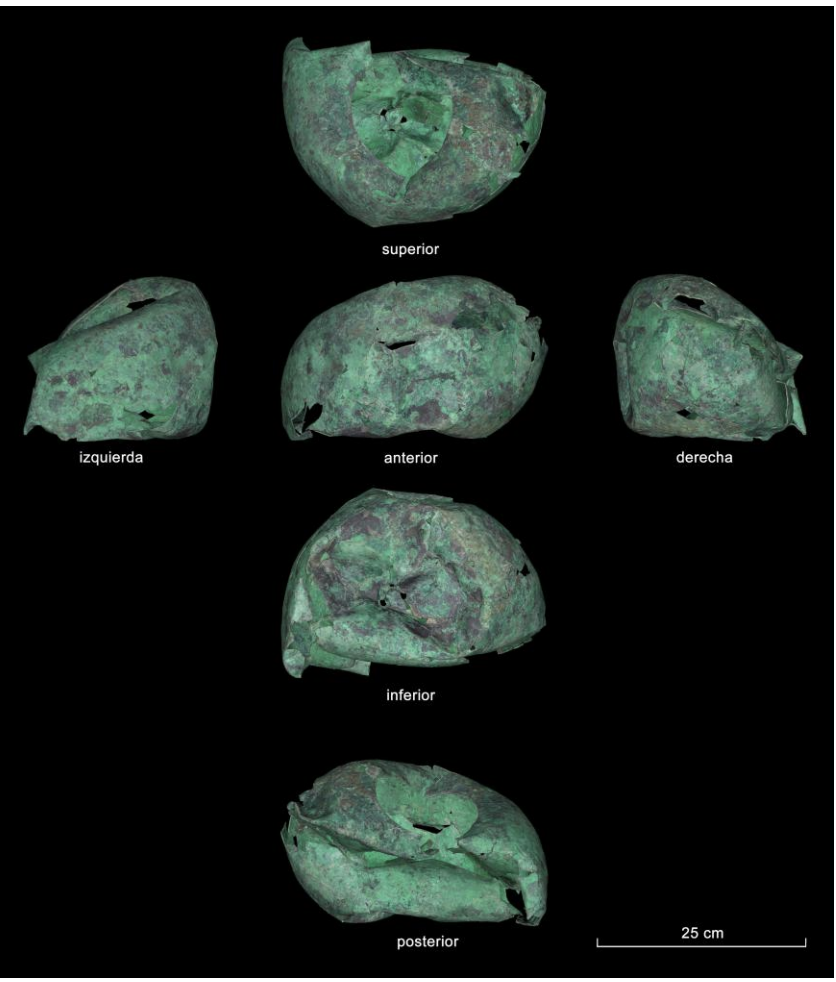
In the late Republican period, sortes could be used in both civic and religious settings, and the location of the find deepens this ambiguity. The Atrium Building stood adjacent to a sanctuary of Isis, and within the same destruction layer archaeologists uncovered a large cornucopia associated with Fortuna, the goddess of prophecy and chance. This opens the possibility that the sitella may have been used not only for administrative sortition but also for ritual consultations, echoing famous Italian oracle sites such as Praeneste where bronze tablets were drawn from urns to reveal cryptic messages.
That the vessel survived at all is largely due to the catastrophic fire that destroyed the building around 300 AD. By that time, the sitella was already an antique, likely preserved as a family relic or repurposed for mundane domestic use. Its presence on the upper floor shows that Roman households in late antiquity often retained objects far older than themselves, sometimes without understanding their original significance. The fire carbonized the wooden floor above it, collapsed the beams and sealed the ancient object beneath a dense layer of debris that ironically protected it from further corrosion. When excavators uncovered it centuries later, its broken form concealed a historical treasure that could only be revealed through advanced restoration techniques and careful epigraphic study.
The discovery also highlights the broader historical context of Hispania Citerior, a province whose importance to the Roman state has often been underestimated. Stretching along the Mediterranean coast from the Pyrenees to modern Alicante, it functioned as a strategic corridor linking Italy to the Atlantic and North Africa. It was home to thriving Romanized cities, Punic traditions, Iberian communities and waves of Italian settlers whose commercial ambitions tied them to the empire’s expanding economy.
Carthago Nova, with its sheltered harbor and mineral wealth, was the beating heart of this vibrant provincial landscape. The sitella therefore stands as more than an isolated artifact; it embodies the intersection of political authority, commercial networks and spiritual practices that shaped Roman rule in the region.
In the words of the researchers who published the find, this modest vessel “illuminates a dark period of Roman administrative history in Hispania and opens a rare window onto the political, economic and religious systems of the time.” From the crushed remains of a burned building, the name of a forgotten governor has resurfaced, the mechanism of Roman lot casting has been revived and a deeper understanding of Hispania Citerior has emerged.
The sitella is a reminder that even the smallest objects, when preserved by chance and rediscovered by science, can transform the narrative of an entire province.
Abascal Palazón, J. M., Noguera Celdrán, J. M., Martínez Peris, I., Ruiz de Arbulo Bayona, J., Madrid Balanza, M. J., & García-Aboal, M. V. (2025). S(Purius) Lucretius Tricipitinus, quaestor pro praetore, y la extracción de sortes en una nueva inscripción de Carthago Nova. Boletín del Archivo Epigráfico, 12, 21–62.
Cover Image Credit: Discovery of the Sitella under study, Atrium Building (UE 31161) (late 3rd century AD). Equipo Molinete, Abascal Palazón et al., 2025, Boletín del Archivo Epigráfico.
