
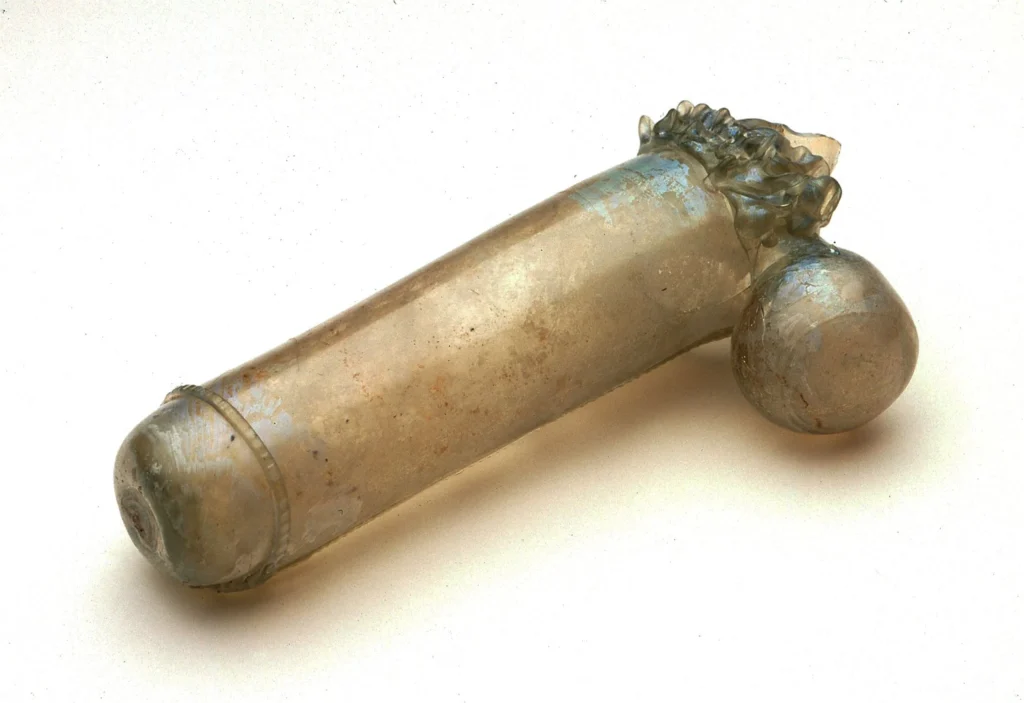
When archaeologists excavated the remains of a former convent complex in the German town of Herford, they expected the usual fragments of pottery, tools, and household waste. Instead, buried in a two-meter-deep latrine shaft, they uncovered an object that would spark international curiosity and challenge assumptions about life behind cloister walls: a 20-centimetre, phallus-shaped piece of greenish glass.
The 16th- or 17th-century artifact — now known as the “Glass Phallus of Herford” — invites more questions than answers, blending humor, symbolism, and historical nuance in a single, striking piece of Renaissance craftsmanship.
Rather than scandal or accusation, researchers see the glass object as a reminder that the past was often more playful, ironic, and socially expressive than modern stereotypes allow. Found in a two-meter-deep former latrine shaft connected to the living quarters of a noblewomen’s religious house, the object has sometimes been compared to items associated with intimacy today. But scholars emphasize that the evidence points in a different direction.
Most experts now interpret the artifact as a novelty or ceremonial drinking vessel — a conversation piece used in festive or symbolic contexts, perhaps at social gatherings or humorous occasions within elite circles. Such objects were not uncommon in early modern Europe, where satire, banter, and theatrical gestures were part of aristocratic culture.
In this light, the Glass Phallus of Herford doesn’t expose hidden scandal; instead, it highlights how Renaissance society — even within the walls of a religious foundation — could embrace irony, wit, and visual provocation without viewing them as moral transgressions. The object is displayed today in the permanent exhibition of the LWL Museum of Archaeology and Culture in Herne, where it continues to puzzle and delight visitors.
Historians note that women’s convent foundations of the period often functioned not as cloisters of strict isolation, but as semi-courtly residences for daughters of noble families. Education, music, intellectual exchange, and ceremonial gatherings formed part of daily life. The glass artifact, therefore, fits into a broader cultural landscape where symbolism, humor, and ritualized performance played meaningful roles.
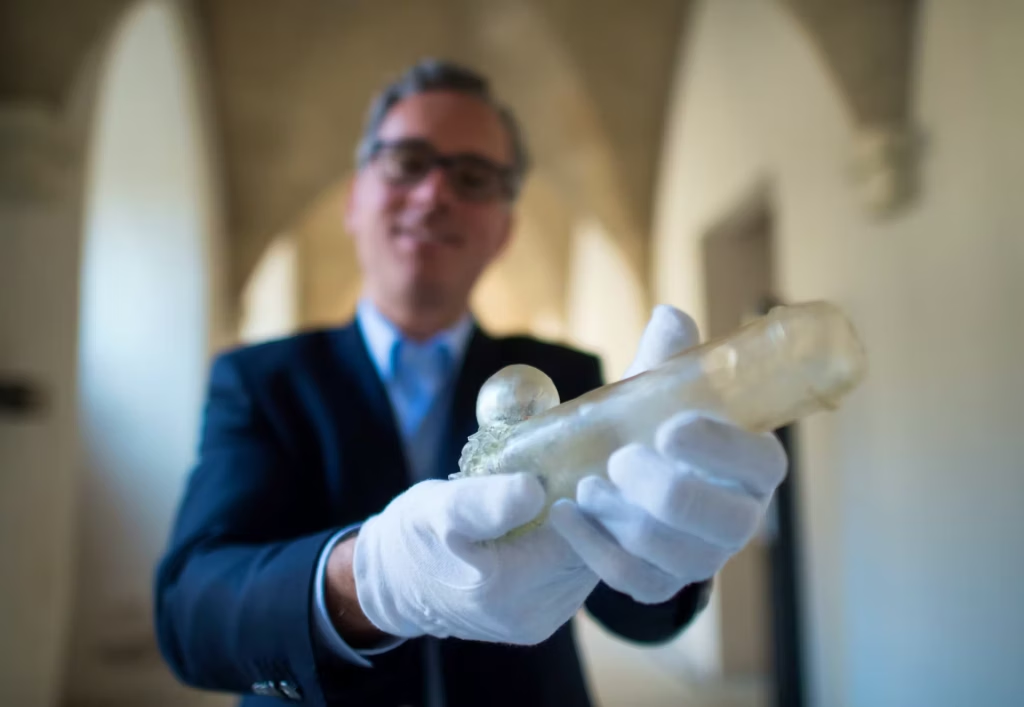
The Herford discovery is one of many unusual archaeological stories featured in journalist Guido Kleinhubbert’s book Düstere Geheimnisse (“Dark Secrets”) — a collection that explores mysterious and sometimes unsettling finds from across German history. Rather than chasing sensationalism, Kleinhubbert focuses on how unexpected artifacts illuminate the complexities of past societies.
Among the cases he presents are a mummified finger from a bog body, a 7,000-year-old skull fragment linked to ritual violence or cannibalism in the Palatinate, and the enigmatic “Blood Glass of Stade,” reportedly used in a grim 19th-century ritual. Each object opens a window into forgotten fears, beliefs, hopes, and social tensions.
In another chapter, archaeologists uncover ritual-like figurines in a former Roman military camp near Straubing — items that resemble curse or magic dolls. Their meaning remains unresolved. Were they symbols of anxiety, gestures of defiance, or fragments of spiritual practice? The book reminds readers that responsible archaeology often means accepting ambiguity rather than inventing convenient explanations.
What makes these stories compelling is their ability to humanize the past. The people who lived in Renaissance and Baroque Europe laughed, joked, experimented, believed, doubted, and improvised — much like we do today. The Glass Phallus of Herford, with its mix of humor and mystery, reflects that shared humanity more than it reflects judgment or scandal.
In the end, the object’s true purpose may never be known with certainty. But perhaps that uncertainty is precisely what makes it so engaging: it challenges us to rethink simple narratives about virtue and severity, reminding us that history is textured, ironic, and often delightfully unpredictable.
Kleinhubbert’s Düstere Geheimnisse weaves finds like this into a thoughtful, research-grounded narrative, guiding readers through the strange, curious, and sometimes haunting corners of Germany’s archaeological past — and showing how even a small glass object can inspire big questions about culture, humor, and the many ways people have expressed themselves across the centuries.
If you’d like to explore more of these dark and fascinating archaeological discoveries, you can find Guido Kleinhubbert’s Düstere Geheimnisse here…
Cover Image Credit: The Glass Phallus of Herford: Currently on display in the special exhibition ‘Mahlzeit!’ in Herne. A replica will be featured at the Archaeological Window at the Münster.b LWL/Brentführer.
