
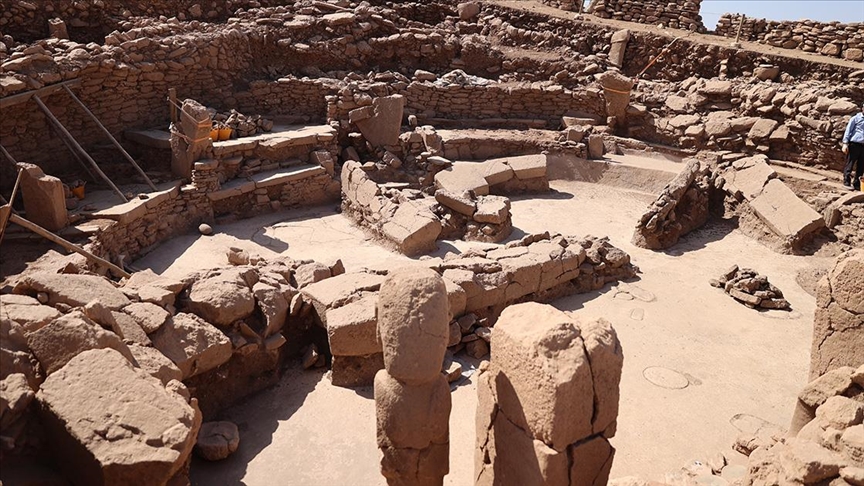
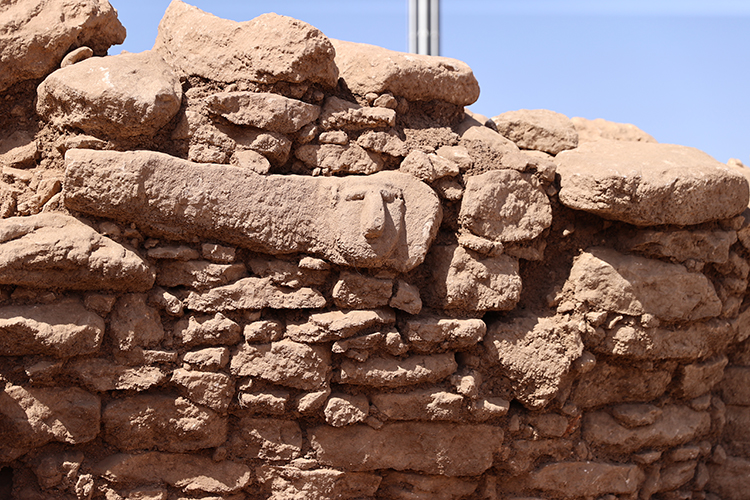
Archaeologists working in the arid hills of southeastern Türkiye have uncovered one of the most intriguing architectural discoveries of the last decade: a large Neolithic structure resembling an amphitheater at the Karahantepe archaeological site in Şanlıurfa. The circular building—nearly 17 meters in diameter—features tiered stone benches, human sculptures, and carved heads embedded within its walls, offering an unprecedented glimpse into the social and ritual life of some of the world’s earliest settled communities.
The discovery emerges from the “Legacy to the Future” initiative led by Türkiye’s Ministry of Culture and Tourism, which supports extensive excavations across the Tek Tek Mountains National Park. Karahantepe, along with the nearby and more widely known Göbeklitepe, forms part of the Taş Tepeler (“Stone Hills”) Project—an ambitious scientific effort aiming to understand the dawn of settled life between 9,400 and 8,000 BCE.
A Window Into the Early Neolithic World
According to excavation director Prof. Dr. Necmi Karul, Karahantepe was inhabited for roughly 1,400 years, beginning around 9,400 BCE. Archaeologists have identified three major settlement phases, each reflecting evolving architectural styles: early circular rooms carved partly into bedrock, later rounded-corner rectangular buildings, and eventually fully rectangular structures. These transitions document a transformative period when human groups were shifting from mobile hunter-gatherer bands to more complex, settled communities.
What makes this site particularly compelling is the blend of domestic and communal architecture. From early houses to monumental structures decorated with sculptures, Karahantepe provides rare, tangible evidence of how social organization and symbolic expression evolved hand in hand during the Neolithic Revolution.
The Monumental Structure: A Stage for Ritual, Performance, or Community Life
The newly revealed building stands out among the site’s many architectural features. Excavations have exposed its entire floor, carved directly into the bedrock, revealing human heads sculpted into the walls and several seated human statues placed on the ground. The presence of these carved figures suggests a dramatic shift from the earlier symbolic world dominated by wild animal imagery—common across Taş Tepeler—to a new emphasis on the human form. This growing focus on human representation signals a changing worldview, where people themselves were becoming central to ritual and communal identity.
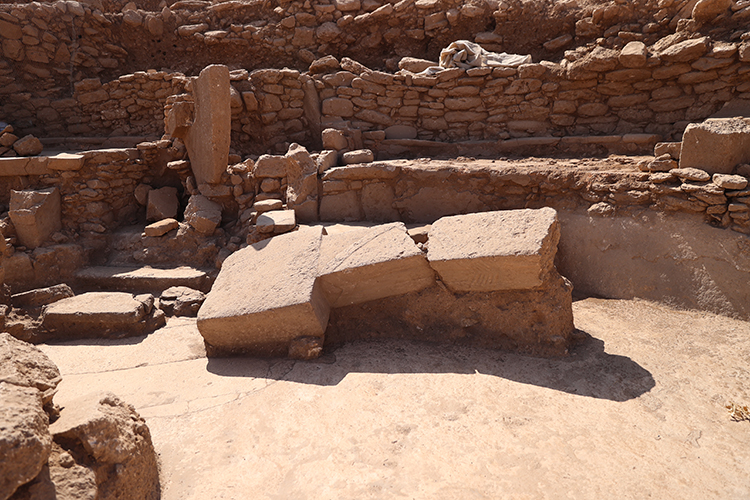
Most striking of all is the building’s internal layout. Three wide, tiered stone benches curve around a central focal point, where a prominent sculpture is positioned. The arrangement strongly recalls an amphitheater or odeon. Although thousands of years older than classical examples, the parallels hint at a deep-rooted human inclination to gather in shared spaces to listen, observe, and participate in communal activities. Karul notes that the design clearly suggests organized group gatherings, and that the architecture likely served as a place for people to come together rather than a temple dedicated strictly to worship.
Not a Temple—A Social Engine
Archaeologists are increasingly cautious in labeling Neolithic structures as “temples,” since such terms impose later religious concepts onto much earlier societies. Instead, Karul proposes that the building’s primary function may have been to strengthen social cohesion. As communities transitioned into settled life, new social challenges emerged: cooperation, resource management, leadership, and shared cultural practices. Monumental spaces like this amphitheater-like structure could have provided venues for rituals, storytelling, decision-making, or communal ceremonies that helped reinforce unity and identity among early inhabitants.
In this sense, Karahantepe demonstrates that monumental architecture was not only about belief systems but also about creating physical spaces that helped people live together. The structure’s scale, design, and elaborate symbolism underscore the importance of shared experiences during one of humanity’s most transformative eras.
Karahantepe in the Wider Taş Tepeler Landscape
Although Karahantepe shares certain architectural and symbolic features with nearby Göbeklitepe, including T-shaped pillars and elaborate carvings, it also introduces unique elements that reshape our understanding of early settled life. The site holds one of the largest concentrations of human face depictions known from the Neolithic era, and its bedrock-carved architecture is more extensive than that of Göbeklitepe. Its interconnected chambers, corridors, and monumental rooms point to a highly organized society capable of sophisticated construction, ritual choreography, and coordinated labor.
Together, these characteristics position Karahantepe as one of the most significant archaeological sites of the 21st century. Its discoveries illuminate not only how people lived more than 11,000 years ago but also how they perceived themselves and their place within their communities.
A New Chapter in Understanding Human Beginnings
As restoration continues and standing pillars are gradually re-erected, Karahantepe is expected to become a cornerstone of global Neolithic research. Its amphitheater-like structure—possibly one of the world’s earliest designed gathering spaces—stands as a testament to humanity’s enduring desire to come together, create meaning, and share experiences.
Rather than a silent ruin, the site speaks clearly: long before cities, writing, or metal, humans were already builders of community.
Cover Image Credit: Eşber Ayaydın/AA
