
13 January 2026 The Future is the Product of the Past

Historic Discovery in Karahantepe: The First T-Shaped Pillar with a Human Face Unearthed

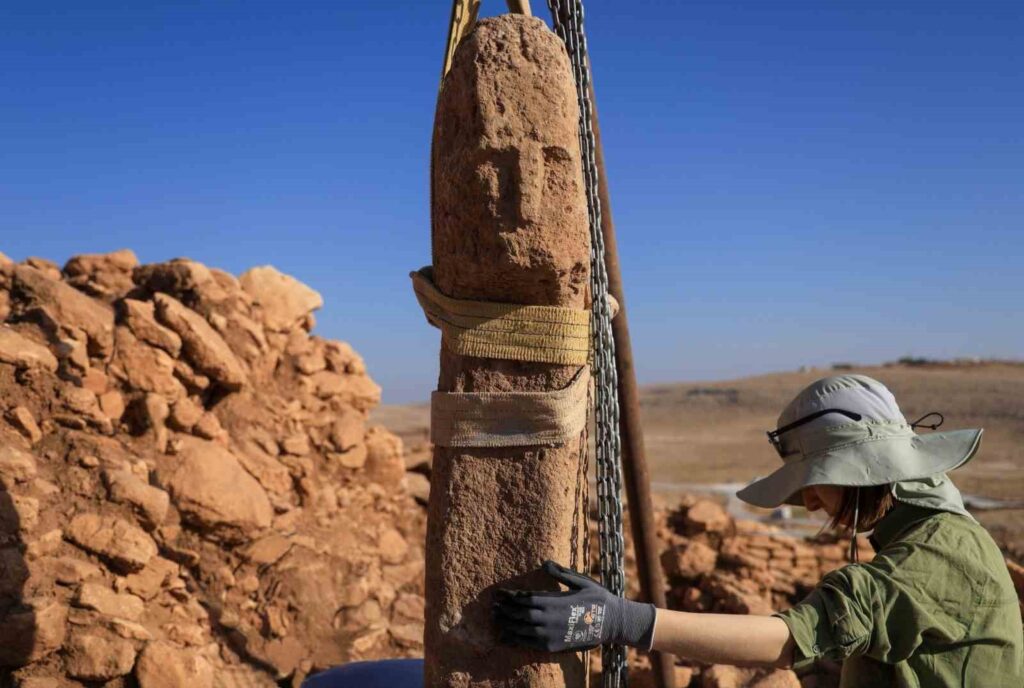
Archaeologists working under the Taş Tepeler Project, led by Turkey’s Ministry of Culture and Tourism, have made a groundbreaking discovery at Karahantepe—one of the most significant Neolithic archaeological sites in the world. For the first time in history, a T-shaped pillar carved with a human face has been unearthed, marking a new milestone in our understanding of prehistoric symbolism and human expression.

A Turning Point in Neolithic Archaeology

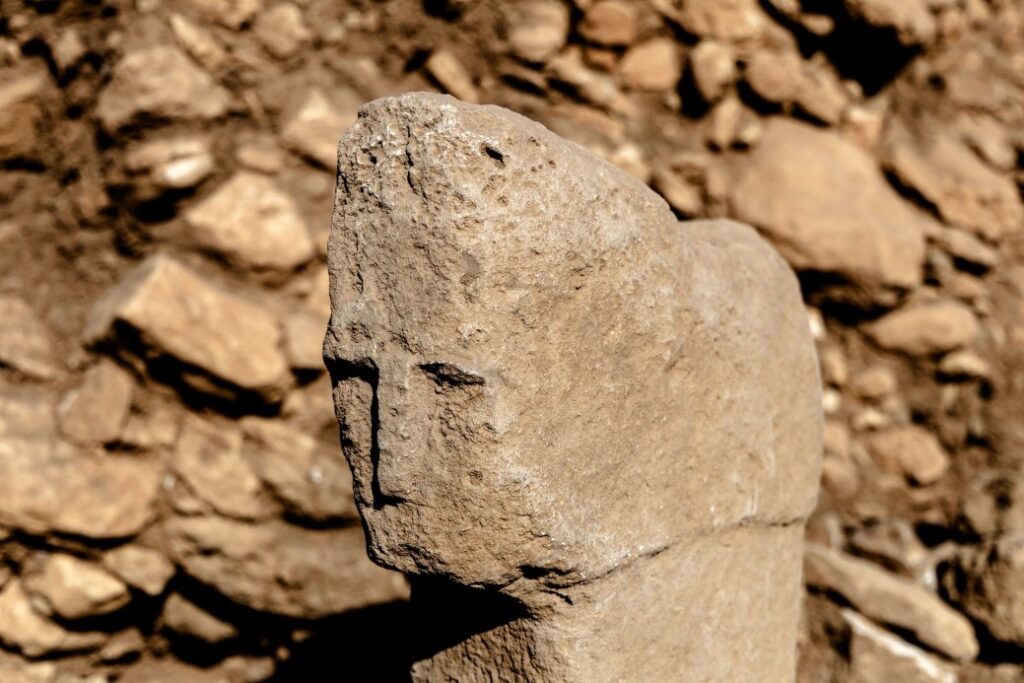
The recently unearthed T-shaped monolith features a distinctly carved human face with deep eye sockets, a broad nose, and sharply defined facial lines. This artistic style closely resembles other human statues previously found in Karahantepe, suggesting a shared cultural and symbolic language among early Anatolian communities around 12,000 years ago.

For decades, researchers have known that the T-shaped pillars of Göbeklitepe and Karahantepe symbolized human figures, as indicated by the engraved arms and hands on their surfaces. However, this is the first time that a pillar directly portrays a human face—transforming abstract symbolism into direct representation. Experts describe it as a major leap in understanding the emergence of self-awareness and identity in the prehistoric mind.
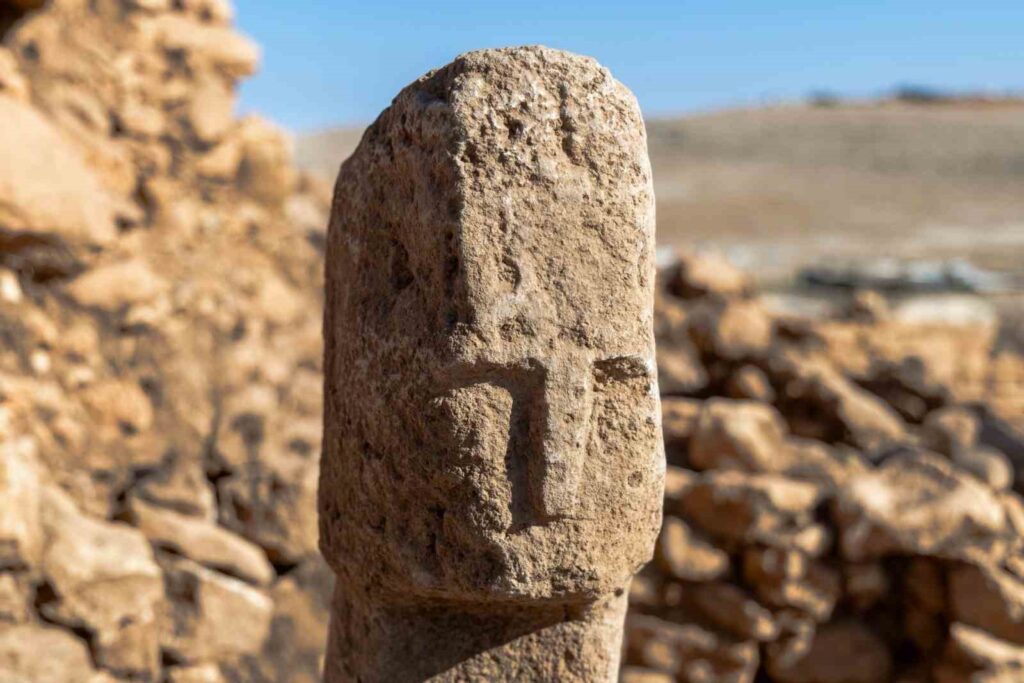
Image Credit: Republic of Türkiye, Ministry of Culture and Tourism

Karahantepe: The New Star of the Taş Tepeler Project

Located about 35 kilometers east of Göbeklitepe, Karahantepe is one of 12 interconnected Neolithic sites collectively known as Taş Tepeler (Stone Hills). These sites represent the earliest known monumental architecture built by hunter-gatherer societies before the advent of agriculture. Excavations at Karahantepe have revealed more than 250 T-shaped pillars, enclosed communal structures, and intricately carved sculptures depicting humans and animals.

According to archaeologists, Karahantepe offers a more advanced architectural layout than Göbeklitepe, with evidence of early forms of settlement and social organization. The newly found human-faced pillar reinforces the idea that these communities possessed not only remarkable technical skill but also a profound spiritual and symbolic understanding of the world around them.


📣 Our WhatsApp channel is now LIVE! Stay up-to-date with the latest news and updates, just click here to follow us on WhatsApp and never miss a thing!!


Credit: İHA

A Window into the Dawn of Humanity

The Taş Tepeler Project, one of the world’s most ambitious archaeological initiatives, continues to reshape our understanding of the Neolithic Revolution—the period when humans transitioned from nomadic life to permanent settlements. The discovery in Karahantepe provides tangible evidence of how early humans began to represent themselves and their beliefs through art, architecture, and ritual.

Experts believe that the human-faced T-shaped pillar could represent one of the earliest known depictions of humanity itself, bridging the gap between abstract symbolism and portrait-like representation. As excavation continues, Karahantepe is fast emerging as the new epicenter of Neolithic discovery, potentially even surpassing Göbeklitepe in historical and cultural importance.

Cover Image Credit: Republic of Türkiye, Ministry of Culture and Tourism

Related Articles

İnscriptions in Turkey is Showing How Romans Tackled İnflation

21 March 2021

21 March 2021

The largest marble city in the world, located in western Turkey in the province of Muğla, draws attention with large...

New Roman Settlement Discovered in Türkiye May Be Linked to the Lost City of Arsameia

17 October 2025

17 October 2025

Archaeologists in southeastern Türkiye have discovered a previously unknown Roman settlement dating to the 4th century AD — a site...

In a Wisconsin lake, archaeologists discover a 1,200-year-old dugout canoe

6 November 2021

6 November 2021

Maritime archaeologists from the Wisconsin Historical Society have discovered a dugout wooden canoe in Lake Mendota, Wisconsin, USA. Carbon analysis...

Archaeologists discovered floor mosaics with early Christian designs in Roman town of Marcianopolis, in Bulgaria

16 January 2024

16 January 2024

Archaeologists discovered floor mosaics with early Christian designs and nearly 800 artifacts in the archaeological reserve of Marcianopolis in Devnya,...

Britain’s first Roman funerary bed is discovered in central London after 2,000 years

7 February 2024

7 February 2024

Archaeologists excavating a construction site in London have unearthed the first Roman “flat-packed” funerary furniture – a fully intact Roman...

A 4000-Year-Old Seal Found in the prehistoric coastal site of Kalba on the Gulf of Oman

5 April 2024

5 April 2024

Archaeologists discovered a Gulf-type seal made of soft stone dating to the end of the third millennium BC at Kalba,...

New Evidence could Change the Date People First Arrived in North America

2 June 2021

2 June 2021

While investigating the origins of agriculture, researchers made an unexpected discovery. According to an unexpected finding made by an Iowa...

New Discoveries on the İsland of Skokholm

29 March 2021

29 March 2021

New discoveries dating back 9000 years have been found in Skokholm, located in the Celtic Sea two miles off the...

Remarkable Roman Villa Full of Strange Artifacts Discovered from a Bronze Age Site in England

3 April 2024

3 April 2024

Archaeologists have uncovered a “richly decorated” remarkable Roman villa complex during excavations at Brookside Meadows in Grove, a village in...

1,800-Year-Old Sanctuary to Mithras discovered in Spain

8 February 2023

8 February 2023

Archaeologists excavating at Villa del Mitra in Cabra, Spain, have uncovered a sanctuary dedicated to the god Mithras, along with...

Evidence of Medieval Plague Victims Buried With “Significant Care” Found

23 June 2021

23 June 2021

The Black Death, which killed between 40 and 60% of Europe’s population in the mid-14th century, was a devastating epidemic...

Erotic Symbolism on a Potter’s Tool? Rare 5th Century BC Bone Stylus Found in Sicily

11 January 2026

11 January 2026

An extraordinary archaeological discovery in southern Sicily is reshaping scholarly understanding of ancient Greek craftsmanship and ritual symbolism. Excavations in...

2,000-Year-Old Unique Composite Fish Scaled Armor Found in Ancient Tomb

20 December 2024

20 December 2024

Chinese researchers have recently found fish-scaled armor in the tomb of Liu He, Marquis of Haihun from the Western Han...

Medieval Hub of Arts & Crafts Center discovered in Nola: The discovery could rewrite the history of early medieval Nola

23 August 2023

23 August 2023

On the outskirts of Nola, a district from the early Middle Ages has been discovered. According to the Soprintendenza Archeologia,...

2,500-Year-Old Saka Warrior Found Holding Bronze Sword in Pristine Burial

11 November 2025

11 November 2025

Archaeologists in central Kazakhstan have unearthed an exceptionally well-preserved tomb of a Saka warrior, revealing a pristine 2,500-year-old bronze sword...