13 January 2026 The Future is the Product of the Past

A 3,600-Year-Old Bronze Minoan Dagger Discovered in Antalya Underwater Excavation

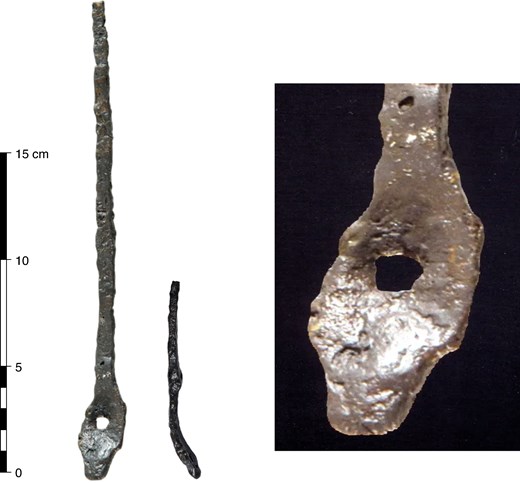
A bronze dagger with silver rivets that dates to the Minoan civilization approximately 3,600 years ago was discovered during an underwater excavation off the coast of Kumluca, Antalya.

Work on the vessel, which sank in ancient Lycia, began in July and August 2019 with the permission of Turkey Ministry of Culture and Tourism, under the chairmanship of the Antalya Museum Directorate.

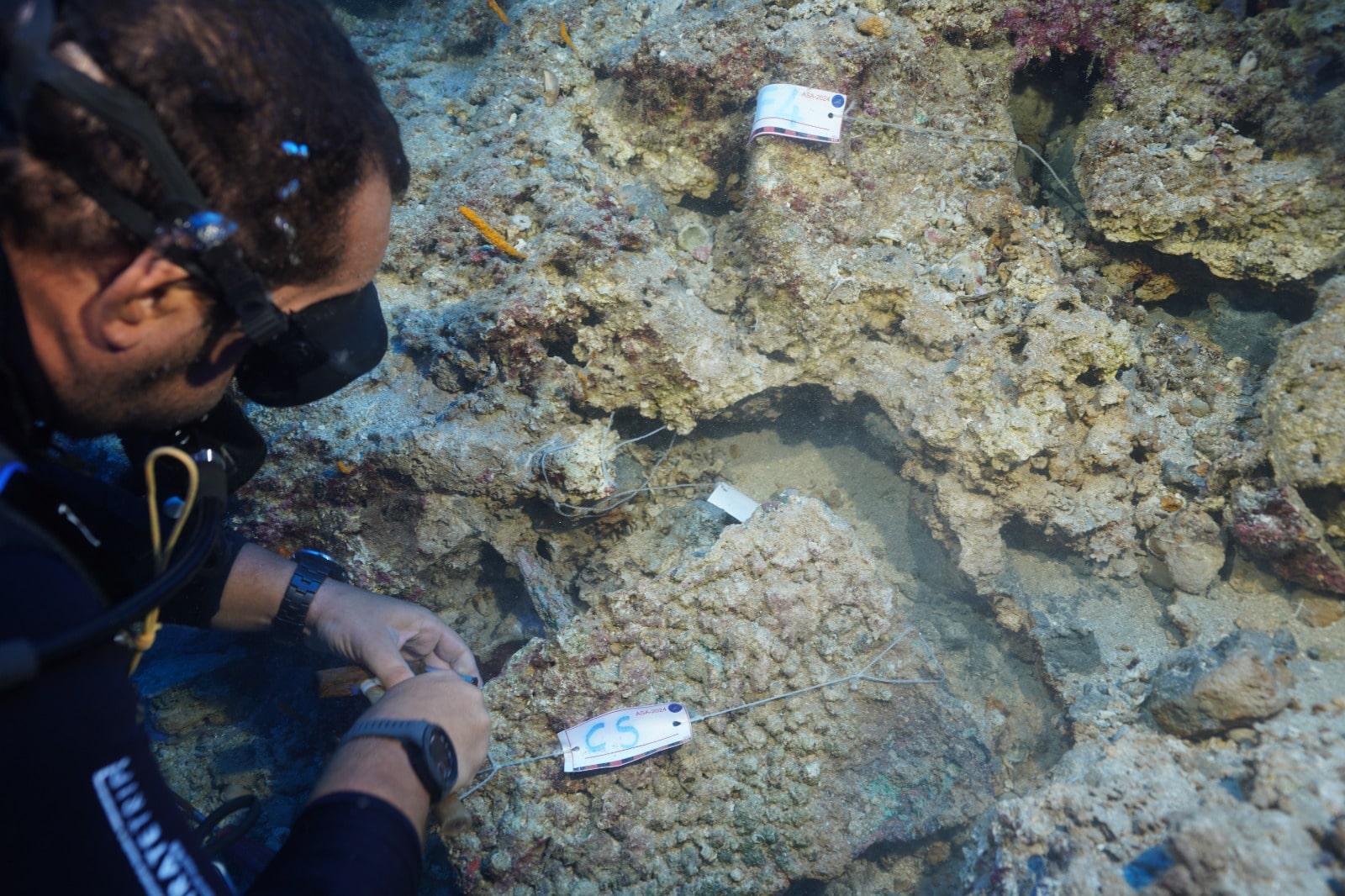
Under the leadership of Assoc. Prof. Dr. Hakan Öniz from Akdeniz University, the sunken ship carrying copper pillow ingots, previously thought to have been extracted from the Troodos Mountains, was found 50 meters deep in the sea during excavations off the Kumluca district of Antalya. The findings suggest the ship was en route to Crete when it sank.
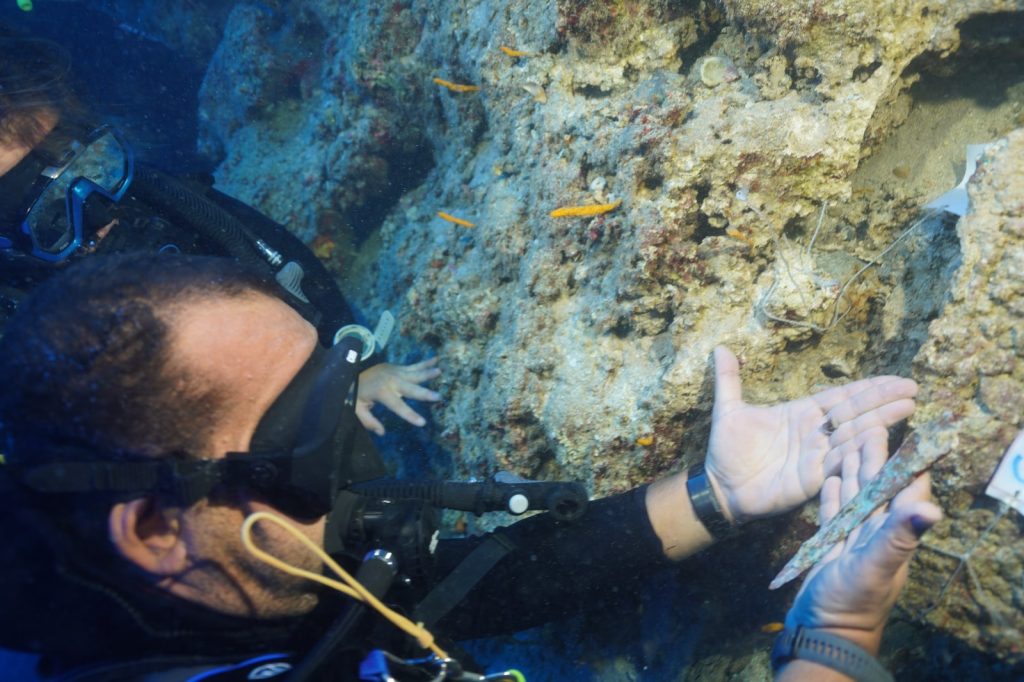
Photo: Ministry of Culture and Tourism of the Republic of Türkiye

Culture and Tourism Minister Mehmet Nuri Ersoy shared the images of the wreck and the dagger on his social media account and said, ‘A 3,600-year-old secret from the depths of the Mediterranean Sea has come to light. A bronze dagger with silver rivets belonging to the Minos civilization was found during underwater excavations off the coast of the Kumluca district of Antalya. This wreck may be one of the most important discoveries not only in Turkey but also in the world of underwater archaeology,’ he said.

He expressed gratitude to the Akdeniz University and the Directorate of Excavations and Research for their meticulous work in revealing the ancient artifact.


📣 Our WhatsApp channel is now LIVE! Stay up-to-date with the latest news and updates, just click here to follow us on WhatsApp and never miss a thing!!
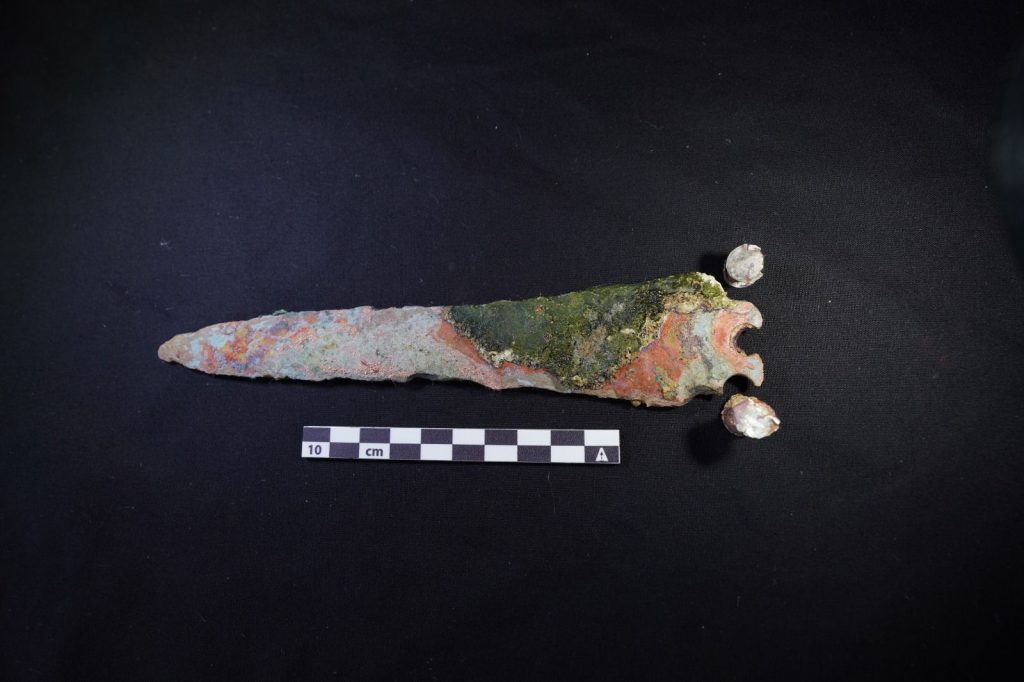


Photo: Ministry of Culture and Tourism of the Republic of Türkiye

The archaeological studies conducted in 2019 on the Bronze Age shipwreck in Antalya Kumluca focused on in situ documentation, with a small number of samples excavated with the permission of Türkiye’s Ministry of Culture to gain more information about the wreck. In the studies, the latest technology and current methods were applied and the margin of error was minimized. The works on this important shipwreck will be pursued in the following 5 years.

Cover Image: Ministry of Culture and Tourism of the Republic of Türkiye
Related Articles

5,000-Year-Old “Küllüoba Bread” Discovered in Türkiye Reveals Ancient Baking and Fertility Rituals

30 May 2025

30 May 2025

5,000-year-old bread found in Küllüoba Höyük, Turkey reveals ancient baking methods and fertility rituals. Unique archaeological discovery with rich nutritional...

Archaeologists may have found the lost 2,000-year-old ancient city of Bassania in Albania

19 June 2022

19 June 2022

Polish archaeologists may have discovered the 2,000-year-old lost city of Bassania in Albania. The remains of two large ancient stone...

Remains of a Roman stylobate found in Montenegro

19 July 2023

19 July 2023

In ancient Rhizon (Risan) in Montenegro, remains of a Roman stylobate (a shared base for multiple columns) were uncovered. In...

Viking Ship Burials Shrouded in Mystery on Danish Island

25 May 2021

25 May 2021

Archaeologists studying the origins and makeup of the Kalvestene burial field, a famed place in Scandinavian legend, have undertaken new...

The ability to produce ceramic vessels came to Europe via Siberia and the Caspian Sea region

6 January 2023

6 January 2023

A new study suggests that the knowledge for making ceramic vessels came to Europe from the Middle East and the...

Human Activity on Curaçao Began Centuries Earlier Than Previously Believed

28 March 2024

28 March 2024

New research co-led by Simon Fraser University and the National Archaeological Anthropological Memory Management (NAAM Foundation) in Curaçao extends the...

One of the Oldest Tin-Bronze Knife in the Eurasian Steppe Discovered in a Unique Bronze Age Cemetery in Uygur ­Autonomous Region

29 January 2025

29 January 2025

Chinese archaeologists have recently uncovered a large and uniquely structured cemetery dating back to 2800-2600 BC, located about two kilometers...

The excavation, which started in a cave in Turkey’s Mardin, turned into a huge underground city

19 April 2022

19 April 2022

In an underground city known used as a settlement in the early Christian era, in the Midyat district of Mardin,...

The discovery of a 380-million-year-old heart sheds new light on our bodies’ evolution

16 September 2022

16 September 2022

Researchers from Curtin University have discovered the world’s oldest heart in a ‘beautifully preserved’ ancient jawed fish fossil 380 million...

The Colossal Nordic Bronze Age Hall Unearthed in Germany May Be the Legendary King Hinz Meeting Hall

5 November 2023

5 November 2023

A colossal hall from the Bronze Age was discovered during excavations near the “royal grave” of Seddin (Prignitz district) northwest...

Saxon ‘London’ was Bigger Than Previously Believed

23 February 2024

23 February 2024

Archaeologists digging at the northern end of Trafalgar Square found evidence that Saxon London’s center was bigger and extended further...

A previously unknown Roman fort discovered in Pembrokeshire in Wales

8 August 2024

8 August 2024

A previously unknown Roman fort has been discovered in north Pembrokeshire. The site, which has excited archaeologists, had been hidden...

Egypt’s Tanis bronze figurines shed light on ancient commerce

19 July 2021

19 July 2021

A research team told that the newly discovered 3,000-year-old bronze figurines recently unearthed in Tanis, Egypt, can answer questions about...

2,000-year-old Roman Silver Hoard Unearthed Near Borsum: One of Germany’s Largest Finds

19 October 2025

19 October 2025

A remarkable archaeological discovery has come to light near Borsum, a village in the district of Hildesheim in Lower Saxony....

War and Exodus in the Mysterious Kingdom: New Clues to Sanxingdui’s Bronze Age Collapse

30 September 2025

30 September 2025

A bold new theory is reshaping how scholars view one of China’s most enigmatic archaeological sites. According to Professor Sun...