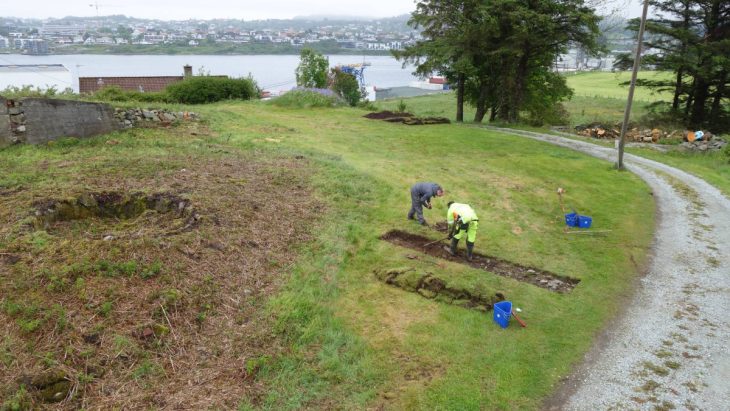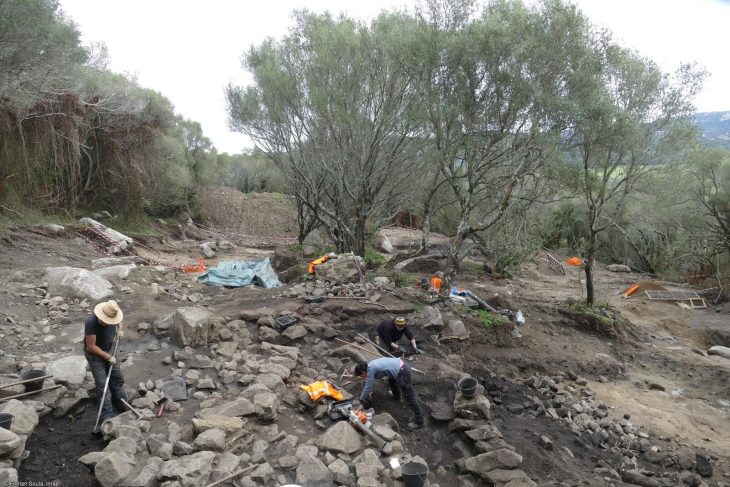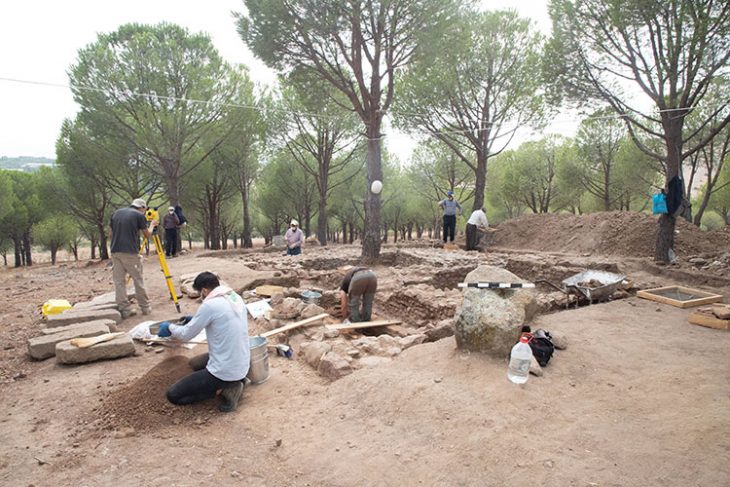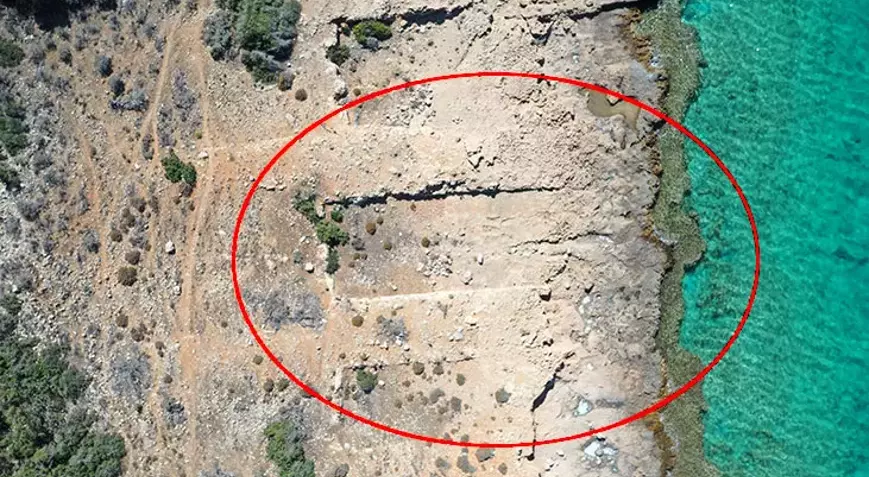
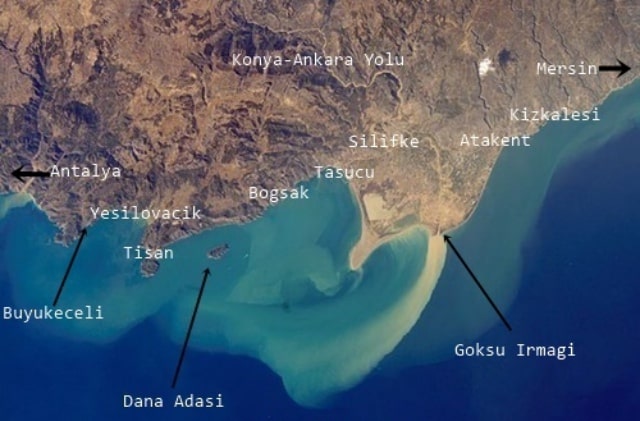
Associate Professor Hakan Öniz, who discovered the world’s largest and oldest shipyard dating back to the Bronze Age in 2015 in Mersin’s Silifke district off Dana Island in southern Türkiye, announced that they found new artifacts in the shipyard.
Öniz, Akdeniz University (AÜ) Head of the Preservation and Restoration of Underwater Cultural Heritage Department and Director of Kemer Underwater Archaeology Research and Application Center said that they had so far found a total of 294 ancient boatyards during their studies.
Noting that the shipyard could build 300 ships simultaneously, he also pointed to new findings indicating that smaller boats and dinghies were constructed behind where the larger ships were produced. Öniz’s findings were also published as an article in an international scientific journal.
He said that these ramps were easily accessible from the sea and were used for either constructing new ships or for the maintenance of ships. Finding 100 ramps from archaeological periods is quite remarkable, he noted, adding: “We were very excited when we found them. We immediately reported it to the Ministry of Culture and Tourism. In 2016, with the permits from our ministry, we started working on these 100 ramps on Dana Island again, and in the years 2016-2017, we identified a total of 294 ship ramps in our studies. Having 294 ship ramps means being able to build 294 ships simultaneously, and we know that in ancient times, it took about six months to build a ship.”
“So, in this context, the construction of 500-600 warships within a year was significant enough to change all balances in the Mediterranean,” he added.
📣 Our WhatsApp channel is now LIVE! Stay up-to-date with the latest news and updates, just click here to follow us on WhatsApp and never miss a thing!!
“A magnificent shipyard, large enough to produce approximately 300 ships, was unearthed with all its infrastructure, not only the boatyards but also workshops, prayer areas, security towers, a castle structure, and many similar archaeological infrastructures. Such a shipyard changed history in the Mediterranean 2500-3000 years ago and made great steps in maritime history. What is this? For example, the Salamis Naval Battles took place in the 5th century B.C. The battles that have been the subject of many Hollywood movies, such as the ‘300 Spartans’ movie, took place in Athens, in front of Piraeus. These were the wars between the Persian fleet and the Athenians, that is, the Greek fleet. We know that the Persians were a land-based society, while the Cilicians were a mariner society because they had no other choice. The majority of Persian ships were built on the Cilician coast. We think that this shipyard is where most of the Persian ships were built. Furthermore, we believe that the ships of Antony and Cleopatra were also built in this region”
Öniz also said the famous Gen. Antigonus’s shipyard was in this area during the Hellenistic period and that many ships built on Dana Island were used in naval battles during this period. He further explained that famous Cilician pirates also held a strong influence in the area.
“In the first century B.C., approximately 1,000 ships of Cilician pirates raided 500 settlements in Greece, and they even challenged the Roman Empire for a period. We can say that the majority of the ships of these Cilician pirates were built on Dana Island. We have archaeological evidence for this.
“In our recently published article, we discussed that besides the large ships, there is evidence that the smaller boats and dinghies behind these ships were also constructed in a special design at another location behind the ships,” he said.
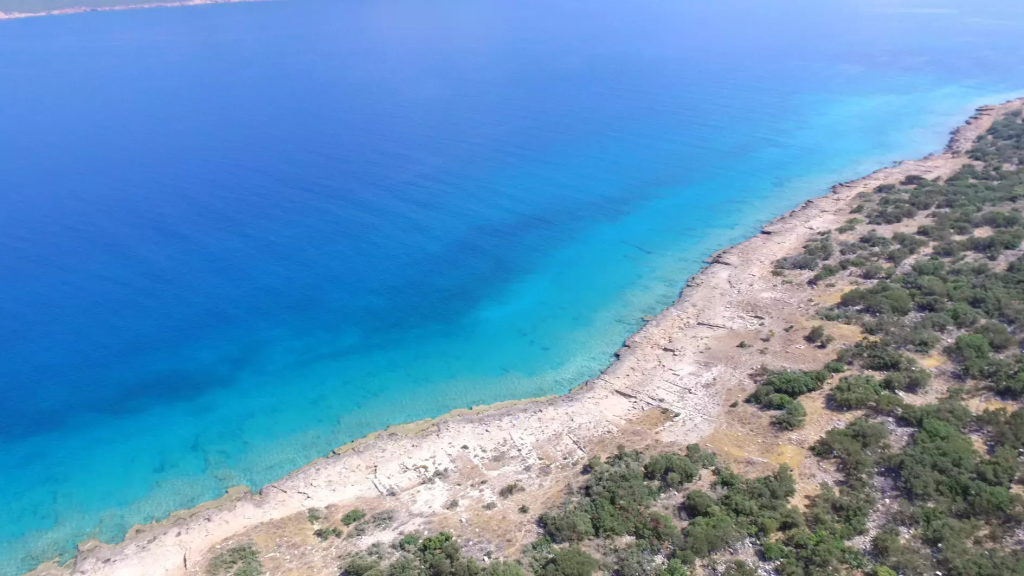
Öniz also noted that their work on Dana Island dates back to the Paleolithic period.
“In other words, we found stone tools on Dana that we know were used between 8,000 and 10,000 B.C. Of course, Dana Island was not a shipyard at that time. The stone tools were probably used by people who transitioned from a hunting society to an agricultural society. But archaeological evidence shows us that Dana Island served as a shipyard, especially since the Late Bronze Age. It is the largest and oldest untouched shipyard in the world,” he said.
Öniz said that the cedar trees growing in the Taurus Mountains, just across from Dana Island, were used in ship construction. He said: “Cedar trees for this shipyard are just one to two hours away, so there are no raw material problems. We know that the shipyard is in a secure harbor area. Along a continuous 1.5-kilometer (0.93-mile) stretch, there are about 300 slipways side by side. The most important aspect of this is the availability of raw materials. Ships can easily dock from the sea without any problems. It’s secure; enemy forces cannot easily attack the shipyard on the island.”
“That’s why it is recorded that in the seventh and sixth centuries B.C., the Assyrians attacked Dana Island, as mentioned in the emperor’s memoirs. He says, ‘There is Dana Island rising like a mountain in the middle of the sea. Thousands of people resisted us there.’ Thousands of people can live on Dana Island. At the time, they were mainly soldiers, carpenters, and other workers of the shipyard,” he added.
DOI: 10.1007/s11457-024-09394-7
Cover Photo: Anatolian Archaeology