
23 June 2026 The Future is the Product of the Past

Ancient Dog Figurines Mini Tea Utensils on Display in Nara

Nara was the capital of Japan from 710 to 794, also known as the Nara period, before moving to the capital Kyoto. It is on the UNESCO World Heritage list with its Ancient Nara Monuments.

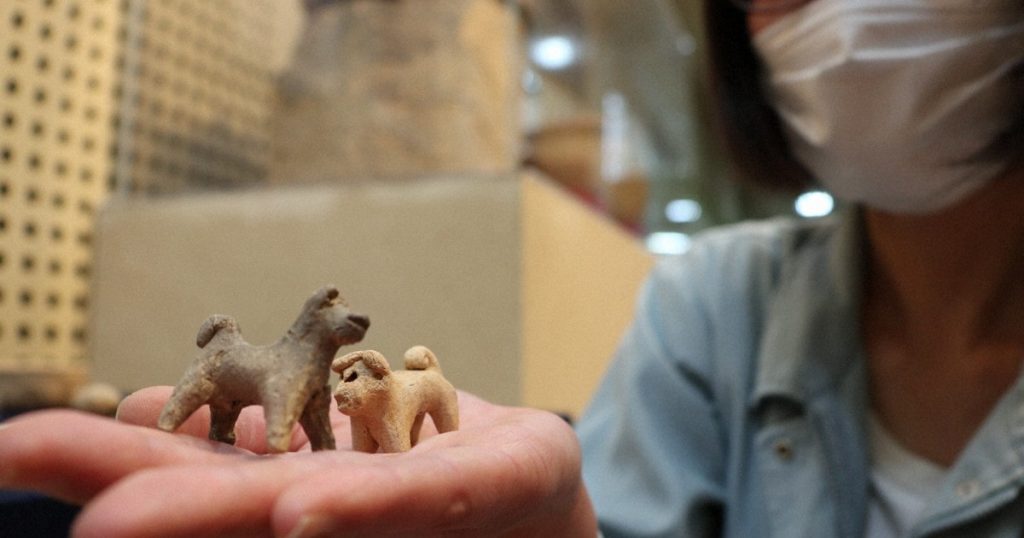
Dog figurines and miniature tea dishes excavated in this ancient Japanese capital are among the exhibits at the free archaeological exhibition held in the city until the end of March.

The exhibition, which began Feb. 15 at the Nara City Archaeological Research Center, features artifacts that the center’s researchers unearthed this fiscal year. Dog figurines and miniature tea utensils were found near an ancient grave where a child is believed to have been buried.

The Akishino-amidadani ruins in the city’s Akishino district are believed to have been a tomb since the burial mound period, and items unearthed include human bones cremated in the Muromachi period (1336-1573), among other items. A miniature “hagama”, or wide-brimmed pot, was unearthed near a stone monument engraved with a posthumous Buddhist name and the date “10 October Tensho 17 (1589)”. It contained a small pot and figurines of dogs whose tails and other parts showed features of a Japanese breed.

Satoko Nagano, a 41-year-old researcher at the center, commented, “A child’s grave with burial goods in that period is rare nationally, and we can imagine with a sense of reality that they were the toys the kid loved. I hope these spark people’s interest.”


📣 Our WhatsApp channel is now LIVE! Stay up-to-date with the latest news and updates, just click here to follow us on WhatsApp and never miss a thing!!


What is Hagama?

It means, broad-brimmed cooking pot.

Source: https://mainichi.jp/english/articles/20210220/p2a/00m/0na/029000c

Related Articles

New Discoveries at 12,000-Year-Old Karahantepe: Human Statues, Animal Carvings, and Surprising Diet Uncovered

27 April 2026

27 April 2026

In southeastern Türkiye, a prehistoric landscape continues to reshape how we understand the origins of settled life. At Karahantepe, archaeologists...

‘Astonishingly Preserved’ Ancient Roman Well Found in Cambridgeshire was An Engineering Failure

22 August 2024

22 August 2024

In an excavation at the site of future highway improvements in Cambridgeshire, the team from MOLA (Museum of London Archaeology)...

Traces of the Battle of Thymbra: Two Lydian Soldier Skeletons and A Helmet Found in the Ancient City of Sardis

13 August 2024

13 August 2024

During the archaeological excavations in the ancient city of Sardes, the capital of the Lydian Kingdom in western Türkiye, traces...

The 1,000-year-old Church found under a cornfield in Germany

2 July 2021

2 July 2021

The foundation walls of the large church of the rediscovered Royal Palace of Helfta in Eisleben in the German state...

Byzantine-Era Monastic Complex Discovered in Sohag, Egypt

8 January 2026

8 January 2026

Archaeologists in Upper Egypt have uncovered the remains of a remarkably well-preserved monastic residential complex dating back to the Byzantine...

Stonehenge’s Altar Stone May Be From Scotland, Over 700 Kilometers Away

14 August 2024

14 August 2024

Recent research led by Curtin University suggests that the Altar Stone at Stonehenge may have originated in northeast Scotland, at...

2,000-Year-Old Roman ‘Fridgerator’ and Luxury Terra Sigillata Unearthed in Germany

7 November 2025

7 November 2025

Archaeology students from the University of Cologne have made a remarkable discovery during a four-week excavation at the LWL-Römermuseum in...

Archaeologists discovered floor mosaics with early Christian designs in Roman town of Marcianopolis, in Bulgaria

16 January 2024

16 January 2024

Archaeologists discovered floor mosaics with early Christian designs and nearly 800 artifacts in the archaeological reserve of Marcianopolis in Devnya,...

12,000-Year-Old Grid-Plan Structures and Water Channel Discovered at Çayönü Mound

29 July 2025

29 July 2025

New Neolithic-era discoveries at Çayönü in southeastern Türkiye, dating back to approximately 10,200–6,500 BCE, include four grid-plan buildings and a...

Rare bronze hand discovered in Roman Vindolanda, England

11 July 2023

11 July 2023

One of Europe’s most important Roman archeological sites is the Fort of Vindolanda, one of the earliest Roman garrisons built...

Rare 2,500-Year-Old Leather Cap Resembling a Croatian Lika Hat Found in Scythian-Era Burial in Ukraine

15 June 2026

15 June 2026

Archaeologists in Ukraine have uncovered a rare leather cap and belt in a woman’s burial at the Skorobir necropolis near...

Anatolia’s first company was founded 4000 years ago with 15 kilos of gold!

26 May 2024

26 May 2024

A 4,000-year-old tablet found in Kültepe shows that the first company in Anatolia was established by 12 people with 15...

50 Lost War Helmets Found Near Wrocław University

16 June 2025

16 June 2025

In a remarkable archaeological discovery, over 50 military helmets from both World Wars have been unearthed just steps away from...

Frankfurt Uncovers Its Oldest Known Roman Military Camp in Höchst Excavations

1 April 2026

1 April 2026

A remarkable archaeological discovery in Frankfurt am Main is shedding new light on the region’s earliest interaction with the Roman...

Unique Ancient Pottery Found in Siberia Could Belong to a Previously Unknown Bronze Age Culture

22 October 2025

22 October 2025

Archaeologists in Western Siberia have unearthed unique Bronze Age ceramics that could belong either to the little-known Ust-Tartas culture or...