
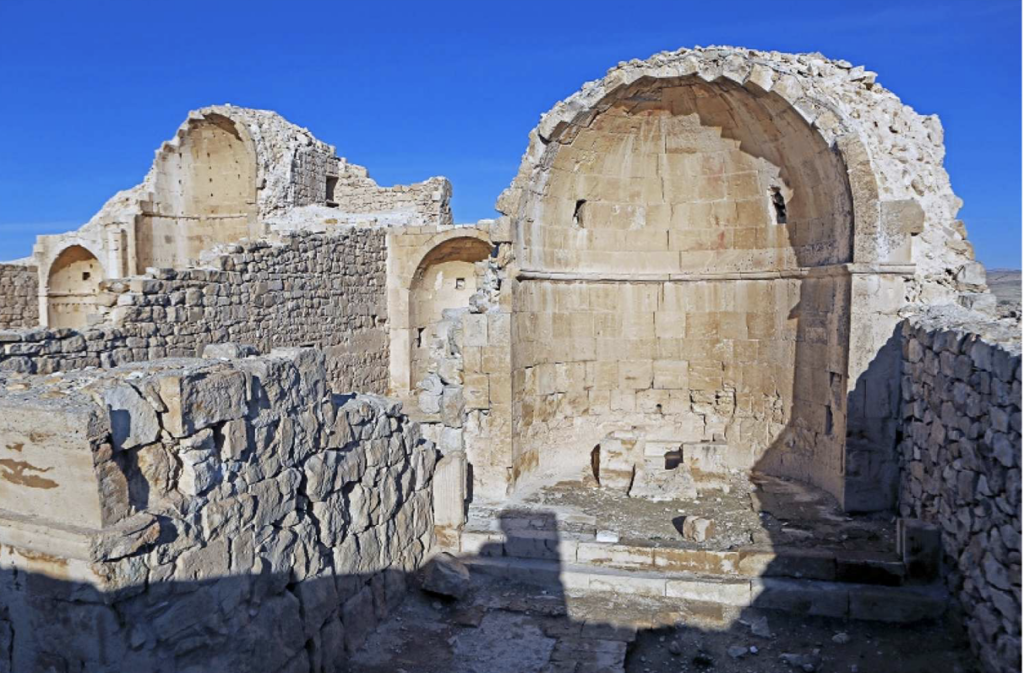
Two photographs taken nearly 90 years ago have revealed an unusual burial tradition inside a Byzantine church in Israel’s Negev Desert. A chapel originally intended for Christian baptisms also became a burial place for priests and members of influential families. A chapel originally intended for Christian baptisms also became a burial place for priests and members of influential families.
According to the researchers, no comparable use of a baptistery as a burial chapel is known elsewhere in the Negev or Palestine.
In a study published in Palestine Exploration Quarterly, Emma Maayan-Fanar of the University of Haifa and Yotam Tepper of the Israel Antiquities Authority reconstructed the forgotten arrangement of the graves and explored the lives behind their inscriptions.
The archaeological findings at Shivta provide compelling evidence of a Christian community that endured warfare, religious turmoil, and possible epidemic outbreaks approximately 1,400 years ago.
A Baptistery That Became a Burial Chapel
Shivta was home to three monumental churches that reflected the importance of Christianity in this desert settlement. The North Church was the largest of the three monumental churches in this Byzantine settlement. Its baptistery contained a cross-shaped baptismal font, while a painting of Christ’s baptism adorned the apse above it.
By the early seventh century, this chapel had become a place where prominent families buried their dead. Over time, it evolved into an exclusive burial ground, reserved largely for priests and young members of influential families.
Although burials inside churches were common in the Byzantine world, the use of a baptistery as a burial chapel was highly unusual. Researchers know of no comparable example in the Negev or Palestine, although similar arrangements existed elsewhere in the Mediterranean.
The distinction carries particular religious significance. Baptism represented a spiritual new beginning, while Christian burial conveyed faith in resurrection and everlasting life. It’s unclear whether the chapel kept performing baptisms once burials started taking place there.
Two Old Photographs Restore a Lost History
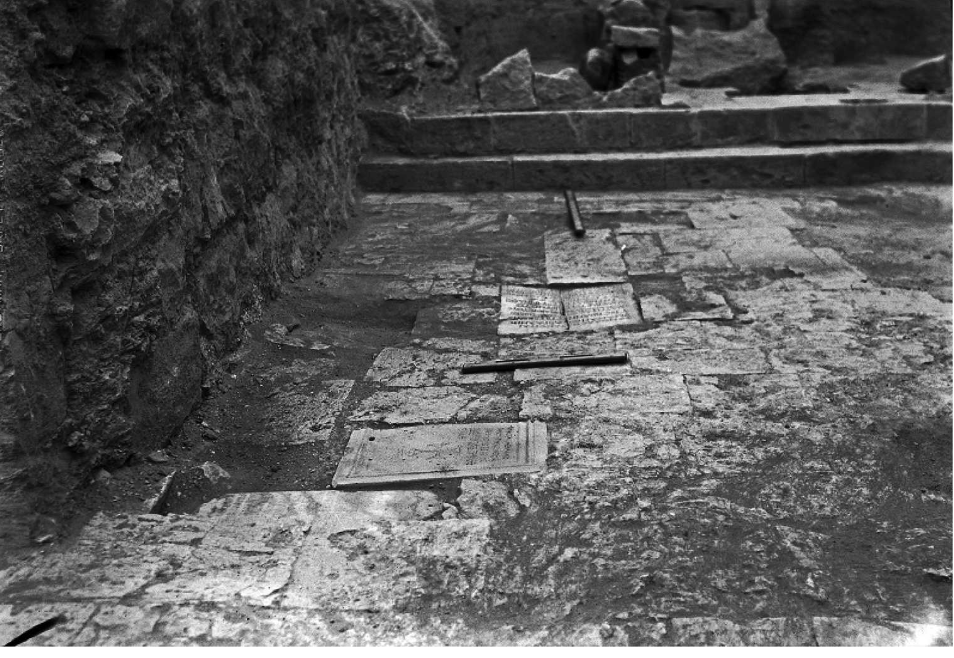
The evidence emerged from two previously unpublished photographs preserved in the archives of University College London. Archaeologist H. D. Colt’s expedition took the images during excavations in 1933–1934, before removing the ancient tombstones from their original positions.
Although the excavators recorded the Greek inscriptions, they left no comprehensive final report explaining precisely where the graves stood. Their removal erased important evidence about the relationships between the dead.
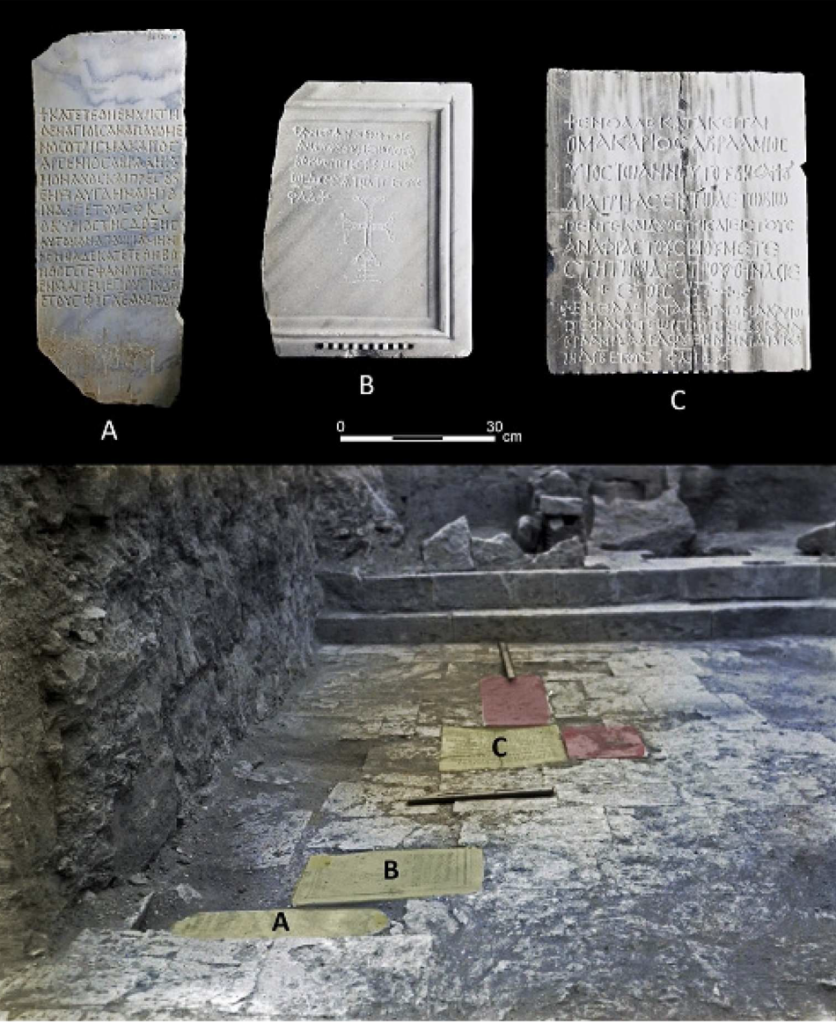
By examining the photographs and comparing distinctive marble slabs, inscriptions, and carved crosses, Maayan-Fanar and Tepper identified the original positions of three of the seven graves.
The seven tombs belonged to nine individuals who died between AD 612 and 679. Six were priests, including one who was also a monk, while others belonged to families closely connected to the church’s leadership.
A Child’s Grave and a Powerful Family
The earliest burial belonged to Abraham, a child who died in AD 612. His father, John, held the title vicarius, an important military and administrative position, and had close connections to the North Church.
Thirty-one years later, another young relative, Stephanos, joined him in the same tomb. Stephanos was the son of Abraham’s brother George, linking different generations through a shared resting place.
The researchers believe that burial locations reflected a social hierarchy. Priests and particularly privileged family members occupied the baptistery, while other influential residents received graves in the church’s entrance hall and courtyard. Even in death, family connections and religious authority determined who could rest closest to the community’s sacred spaces.
A Cross Carved in an Age of Uncertainty
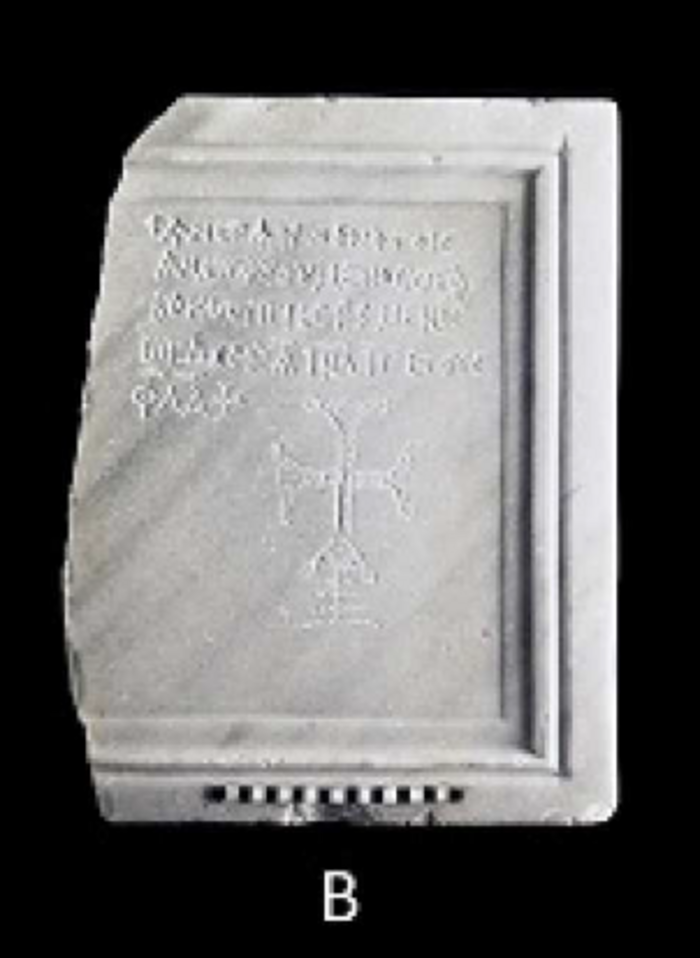
Another tombstone belonged to Stephanos, a priest who died on December 17, AD 636, during a period when the eastern Mediterranean was undergoing profound political and religious change.
Beneath his Greek epitaph, someone had carved an unusual Golgotha Cross. The design depicts a cross rising from a stepped base representing Golgotha, the place where Christians believe Jesus was crucified. In Christian tradition, the symbol evokes Christ’s sacrifice, resurrection and the hope of life after death.
Its appearance at Shivta is particularly intriguing. The Byzantine-Sasanian wars had ended only a few years earlier, and Emperor Heraclius had restored the True Cross to Jerusalem in AD 629–630. Meanwhile, Muslim armies were advancing across the region.
The researchers cannot link the cross to a specific historical event, but they suggest that it may reflect the religious concerns of this turbulent period and perhaps a desire for divine protection.
Three Deaths in Seven Days
The tombstones also preserve evidence of a troubled period in Shivta’s history. The Byzantine-Sasanian wars of AD 602–628 and the subsequent Islamic conquests transformed the region, while recurring epidemics added another threat to communities already living through decades of uncertainty.
Against this turbulent backdrop, three people associated with the North Church died within just seven days, on November 5, 8, and 11, AD 643. The researchers suggest that a local outbreak linked to the first plague pandemic, commonly known as the Plague of Justinian, may explain this unusual concentration of deaths. However, the inscriptions offer no direct evidence of what caused them.
The final known burial in the baptistery dates to AD 679, decades after the Islamic conquest. Its roughly executed inscription and locally sourced stone contrast with the expensive marble tombstones of earlier generations, perhaps reflecting the settlement’s declining prosperity.
Yet this late grave also shows that Christian religious life continued despite the political changes. Shivta did not simply disappear after the conquest; its community gradually changed as powerful families lost influence and religious institutions adapted.
Nearly 90 years after the original excavations, two photographs have restored more than the locations of ancient graves. They have revealed how one community connected faith, family, social privilege, and death inside a place originally dedicated to new life.
Maayan-Fanar, E., & Tepper, Y. (2026). Old Photographs, New Discoveries: Privileged Burials in the North Church Baptismal Chapel in Shivta, Israel. Palestine Exploration Quarterly, 1–33. https://doi.org/10.1080/00310328.2026.2716943
