
24 June 2026 The Future is the Product of the Past

2,700-Year-Old Assyrian Stele Discovered at Nineveh’s Ancient Sun Gate

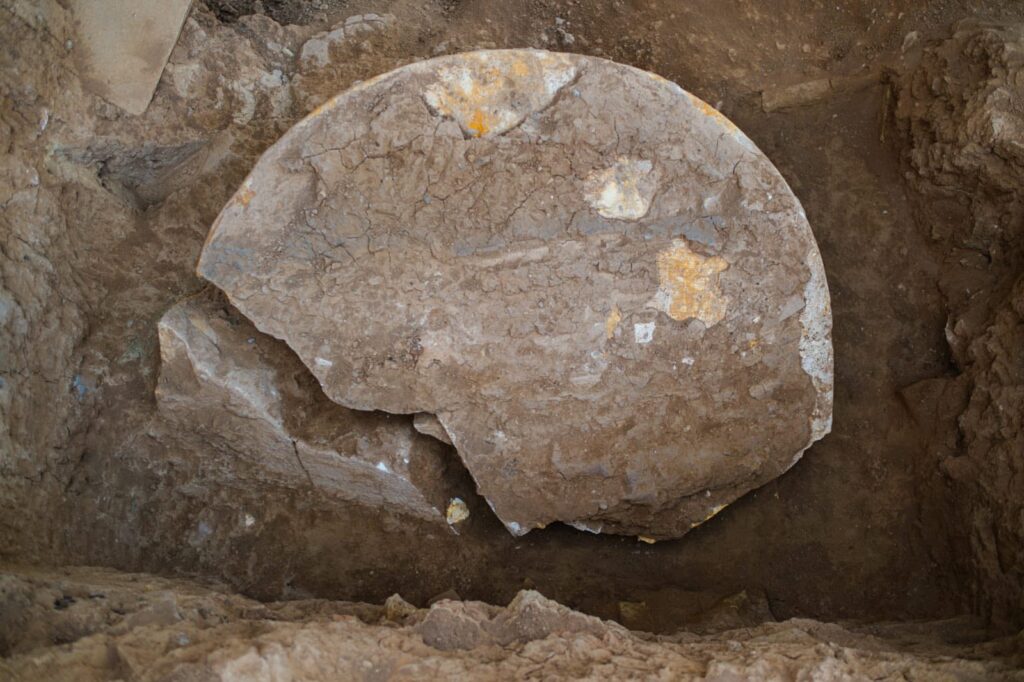
Archaeologists in northern Iraq have uncovered a large Assyrian stone stele at Bab Shamash, one of the ancient gates of Nineveh, in a discovery that may add a new written record to the final century of the Assyrian Empire.

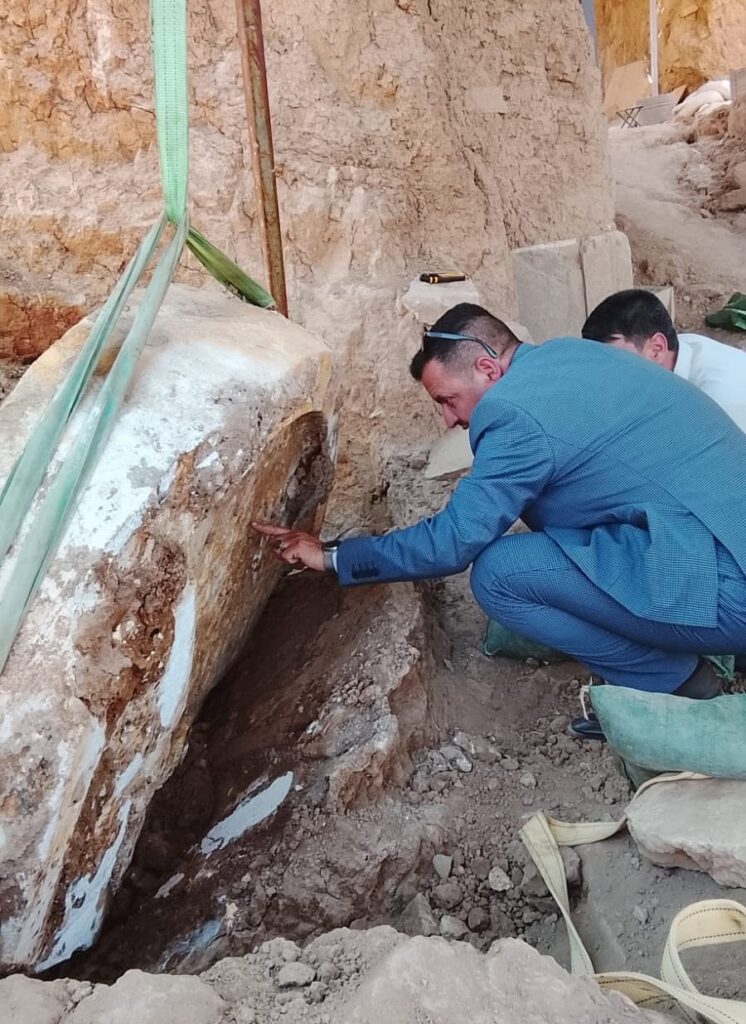
The find was announced by Iraq’s State Board of Antiquities and Heritage following ongoing excavation work in Nineveh Governorate. According to the board, the stele dates to the seventh century BC, when Nineveh stood at the centre of one of the most powerful empires of the ancient Near East.

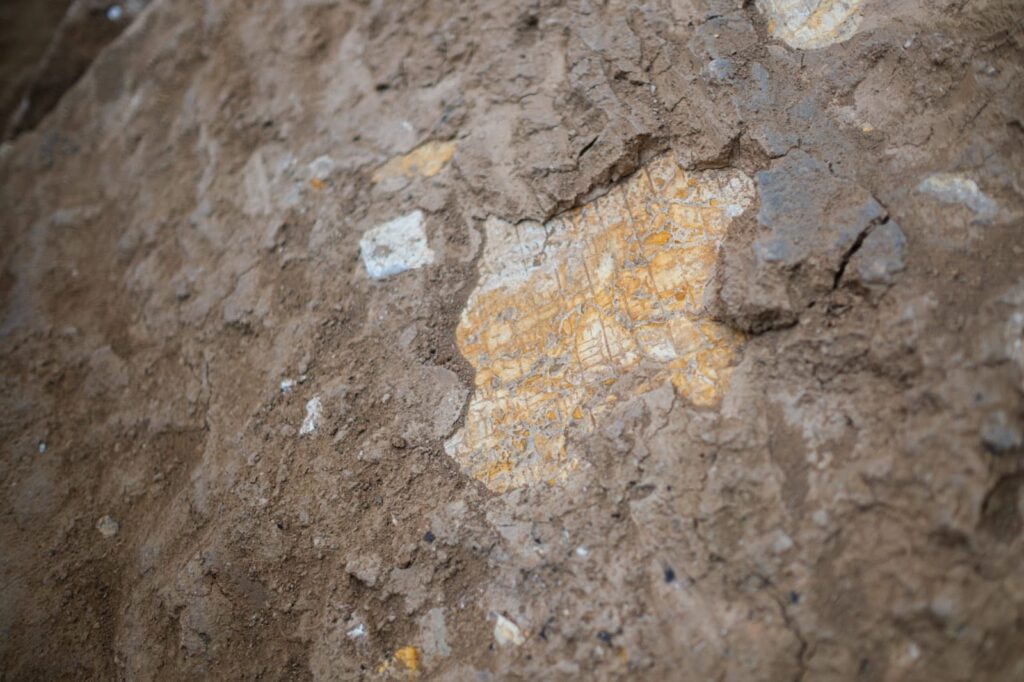
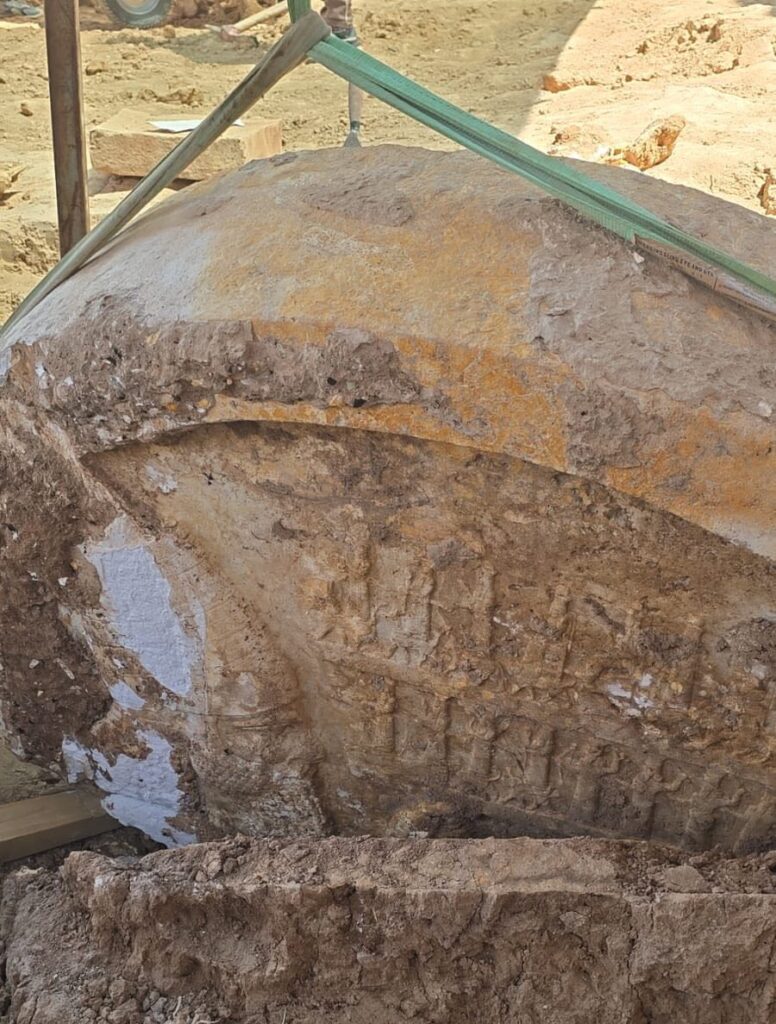
The stone monument bears prominent Assyrian inscriptions. Full details of the text have not yet been released, but officials described the object as an important historical document for understanding ancient Nineveh and its political, religious and urban life.
Credit: Iraq’s State Board of Antiquities and Heritage via Facebook

A written monument from the Assyrian capital

Stone stelae were among the most visible forms of royal and official communication in the Assyrian world. They could record royal decrees, military victories, building works, divine dedications or acts of authority meant to be remembered across generations.

That makes the Bab Shamash discovery especially significant. If the inscription is preserved well enough to be read in detail, it may help scholars clarify who commissioned the monument, why it was placed near the gate, and how this part of Nineveh functioned during the last great phase of Assyrian power.


📣 Our WhatsApp channel is now LIVE! Stay up-to-date with the latest news and updates, just click here to follow us on WhatsApp and never miss a thing!!


The seventh century BC was Nineveh’s imperial moment. Under kings such as Sennacherib, Esarhaddon and Ashurbanipal, the city became a monumental capital filled with palaces, temples, defensive walls, carved reliefs and archives. It was not simply a royal residence. It was a stage on which Assyrian kings projected power, order and divine legitimacy.
Credit: Iraq’s State Board of Antiquities and Heritage via Facebook

Bab Shamash and the road into Nineveh

Bab Shamash, meaning “Sun Gate,” formed part of Nineveh’s defensive system. The gate was associated with Shamash, the Mesopotamian sun god linked with justice, truth and judgment. In Assyrian and Babylonian religious thought, Shamash was more than a solar deity. He was a divine witness to law, kingship and moral order.

The gate stood on the eastern side of Nineveh and controlled access toward the road leading in the direction of Arbela, modern Erbil. This location gave Bab Shamash both defensive and symbolic importance. A monument found there was not hidden away in a private space. It stood near one of the city’s major thresholds, where movement, authority and ritual meaning could meet.

Ancient Nineveh was surrounded by a powerful wall system with a series of fortified gates. These gates were practical military structures, but they also carried names and religious associations that tied the city’s architecture to the divine world.
Credit: Iraq’s State Board of Antiquities and Heritage via Facebook

From Assur to Nineveh

The new discovery also fits into the broader history of Assyria itself. Before Nineveh rose to imperial prominence, the city of Assur, on the Tigris River, served as the first capital and religious centre of the Assyrians. Assur gave its name to the civilisation and was closely connected with the god Ashur, the supreme deity of the Assyrian state.

Over time, political power shifted between major Assyrian centres, including Kalhu, Dur-Sharrukin and Nineveh. Yet Assur retained deep religious prestige. Nineveh, by contrast, became the spectacular late imperial capital, especially in the seventh century BC.

This is why a stele from Bab Shamash matters. It belongs to the world of late Assyrian kingship, when Nineveh was at its height but also approaching the crisis that would end the empire. In 612 BC, the city fell to a coalition of Babylonian and Median forces, a turning point that reshaped the political map of Mesopotamia.

For now, the inscription remains the key unanswered question. Once specialists publish a full reading, the Bab Shamash stele may offer more than a striking archaeological object. It could become a new voice from the gates of Nineveh, speaking from the final century of Assyrian imperial power.

Iraq’s State Board of Antiquities and Heritage

Cover Image Credit: Iraq’s State Board of Antiquities and Heritage via Facebook

Related Articles

An extraordinary medieval belt loop found near Kamień Pomorski in Poland

18 March 2024

18 March 2024

A late medieval belt loop for hanging keys or a bag was found near the town of Kamień Pomorski in...

A large hall from the time of Viking Harald Bluetooth discovered

26 December 2022

26 December 2022

A large hall from the reign of King Harald Bluetooth of Denmark and Norway was unearthed during housing construction work...

Extraordinary Polychrome Mural Reveals 1,400-Year-Old Zapotec Tomb in Oaxaca

25 January 2026

25 January 2026

An extraordinary polychrome mural uncovered in a 1,400-year-old Zapotec tomb in Oaxaca reveals new insights into ancient rituals, art, and...

3000 years old wooden wishing well discovered in Germany

7 January 2023

7 January 2023

In the town of Germering, in the Germany state of Bavaria, archaeologists have unearthed the remains of a well-preserved Bronze...

Exceptional Iron Age Artifacts Discovered at Celtic Necropolis in France

18 April 2025

18 April 2025

An archaeological excavation in Creuzier-le-Neuf, a small town located six miles north of Vichy, has unveiled a remarkable Celtic necropolis,...

Massive Bronze Age City Uncovered in Kazakhstan: Archaeologists Reveal a 3,500-Year-Old Metallurgical Hub on the Steppe

19 November 2025

19 November 2025

In a discovery poised to reshape our understanding of early urbanism in Central Asia, an international team of archaeologists has...

8,000-year-old Musical Instrument found in northwest Turkey

4 July 2021

4 July 2021

Archaeologists in northwestern Turkey’s Bilecik on Tuesday discovered a musical instrument that dates back to an estimated 8,000 years. During...

A Discovery That Defies the Bronze Age: Unusual Metal Artifact Found in China May Have Extraterrestrial Origins

30 March 2026

30 March 2026

A groundbreaking archaeological discovery in southwestern China is reigniting global curiosity about ancient technologies—and even the possibility of materials originating...

According to researchers, the bones discovered underneath St. Peter’s Basilica may not be his

5 June 2021

5 June 2021

Three Italian researchers have voiced doubts about whether St. Peter’s bones are buried underneath the Rome basilica that bears his...

New Discoveries in Nineveh: Archaeologists Unearth Fifteen Lamassu and Stunning Reliefs in Ancient Assyrian Palace

6 October 2025

6 October 2025

Just weeks after the September 21 announcement of the “Colossal Assyrian Winged Bull Unearthed in Iraq: Largest Ever at Six...

Significant Archaeological Discovery on Failaka Island: Hellenistic Courtyard and Building Unearthed

17 February 2025

17 February 2025

The National Council for Culture, Arts and Letters (NCCAL) has announced a remarkable archaeological find on Failaka Island, revealing a...

From Destruction to Discovery: Ancient Greek Tombstone Discovered in Libya After Storm ‘Daniel’

2 March 2025

2 March 2025

The Libyan Antiquities Authority has officially confirmed that an ancient artifact uncovered in the torrents caused by Storm “Daniel” in...

Anthropologists discovered a bone in the Grotte du Renne cave in France that could indicate the presence of a previously unknown lineage of Homo sapiens

9 August 2023

9 August 2023

A bone discovered in the Grotte du Renne cave in France may represent the existence of a previously unknown lineage...

3,000-Year-Old Pottery Workshop Discovered in Iraqi Kurdistan

26 December 2025

26 December 2025

Archaeologists working in Iraqi Kurdistan have uncovered a remarkably well-preserved 3,000-year-old pottery workshop that is reshaping what researchers know about...

“Let the Envious Burst!”: 1,500-Year-Old Mosaic with Surprising Message Discovered in Türkiye’s Syedra

14 March 2026

14 March 2026

Archaeologists working in the ancient city of Syedra, located near Alanya on Türkiye’s Mediterranean coast, have uncovered a remarkably well-preserved...

Comments
Leave a Reply

Your email address will not be published. Required fields are marked *